

Europe is experiencing a sustained acceleration in defence procurement. Programmes across land, air, maritime, cyber and space domains are moving forward at compressed timelines. Production rates are increasing, supply chains are under pressure, and delivery milestones are advancing. These developments reflect a clear and widely shared objective: strengthening Operational Capability within a demanding security environment.
Within this acceleration, Operational Availability of Systems in defence, implementing the necessary capabilities, deserves particular attention. Operational Availability describes the proportion of time a system is ready for use under defined operational conditions. It is the opposite of downtime, which means non-available. It connects acquisition decisions with field performance, not only in defence. In rapid acquisition, delivery metrics naturally dominate the discussion. Production output, contractual progress and fielding schedules provide visible indicators of momentum. At the same time, system readiness depends on how a system is available and ready to perform throughout the utilisation and in-service stages of its life cycle. Operational Availability is a life cycle outcome, shaped by design decisions in early System Life Cycle stages and sustained through well-structured processes as well as standardised and well-organised information flow throughout all stakeholders. Design decisions include and determine, next to others, contractual design, system architecture and functional-to-physical breakdown, configuration management, risk management, management of complexity, i.e., system-of-system and/or system-of-sub-systems, business setup, stakeholder incorporation, organisational design, etc. These aspects have to be managed and continuously optimised throughout the whole life cycle and throughout the network of stakeholders, including their interactions.
System Availability & LCM
As the availability of a system is depending on its operational environment, first identified in the pre-concept and concept stages, as of ISO/EN 15288 and/or NATO System Life Cycle Management terminology, this is to be continuously updated throughout all life cycle stages. During the transition from pre-concept to concept stage, the so-called capability funnel, possible business and operational models are to be decided, as soon as decisions are made, on what kind of system is to be developed or procured to close the capability gap. A capability gap may be identified by a military organisation and/or by an industry organisation with regards to a need on a market. In the next step possible suppliers or partners are to be identified and their scope and workshare is to be determined. These decisions establish the structural conditions under which systems will be designed, produced and supported.
When partner selection considers well-structured Integrated Lifecycle Support competences, maturity in Support Analysis and Design, configuration and risk governance disciplines, as well as life cycle information management capabilities, alongside performance engineering expertise, the foundation for operational availability of systems becomes stronger. Clear allocation of responsibility for enabling systems at this stage supports coherence during the entire life cycle.
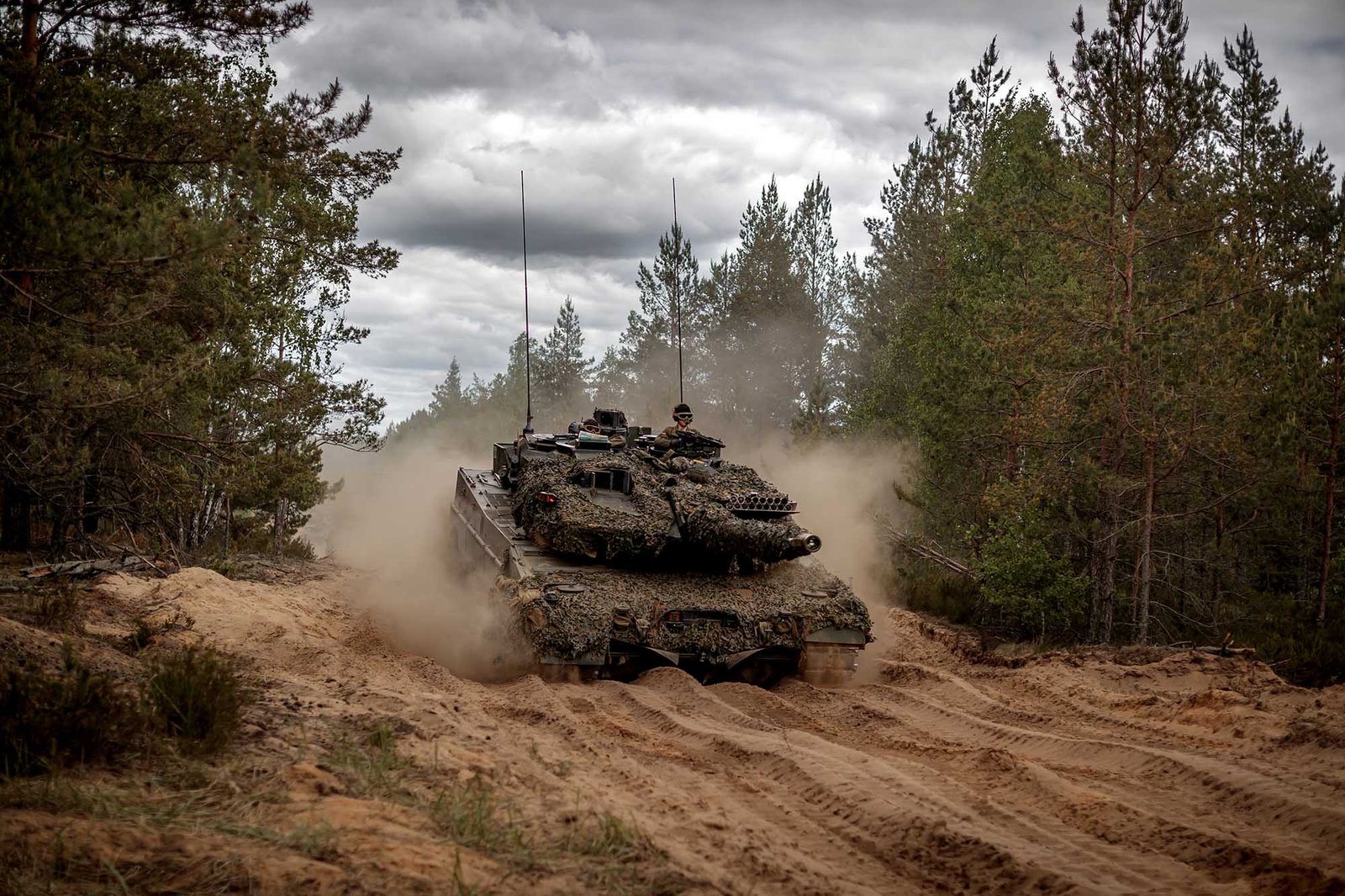
Canadian Forces during Exercise Maple Resolve held at Canadian Forces Base Valcartier, Quebec, in April 2026. NATO forces can benefit from a proven Life Cycle Management (LCM) structure. (Image: Canadian Armed Forces Combat Camera)
Life-Cycle
This perspective reflects a broader shift from product-centric procurement toward life cycle-centric systems and support engineering. An operational system consists of more than its hardware or software, often called the System of Interest. It includes the necessary enabling systems within standardised, flexible processes, like necessary infrastructure, personnel, flexible maintenance and support concepts, well organised value chains, standardised information exchange, material management and supply, technical documentation and training, configuration management logic and governance and risk management frameworks that enable a System to remain available along its Life Cycle in ever-changing operational environments. To support the alliance military and industrial organisations, NATO offers System Life Cycle Programme management in AAP-20, as well the necessary System Life Cycle Process environment in AAP-48, both based on ISO/EN 15288, covered in STANAG 4728. In addition, with regards to determine and continuously adjust and update the necessary enabling systems, NATO offers guidance and direction, as well as means of assessment for the Integrated Lifecycle Support elements in STANAG 4876, also referred to as ALP-10. Their integration defines the life cycle behaviour of the system.
STANAG 4876 (ALP-10) provides a framework for modularising systems into defined elements within a system-of-systems architecture. It offers a coordinated workflow model, the flexibility to choose from a variety of standards, guidance on how to customise these to the respective needs, as well as direction on how to interact along the life cycle stages. Each System Design Authority retains responsibility for its system, secures its intellectual property, while standardised data structures enable structured information exchange along the digital thread across a network of stakeholders. The aim is to establish a flexible, re-usable, environment, that fosters fast reaction and adaption while ensuring Operational Availability and Performance.
Current conditions across Europe underline the importance of this integration. Both industries and the armed forces have the need to expand their capabilities while operating within limited personnel pools. Ramping up the personnel pool requires training, time, and the ability to gain experience. So, standardisation of processes and information flow, based on a sound re-use strategy, offer significant benefits. Systems are increasingly complex and digitally interconnected. Multinational cooperation among European nations is required. Harmonised workflows and standardised data structures are means to reduce frictions in this environment. It is to facilitate interoperability at the maintenance and support level and accelerate coordination across the value chain, including both supply chain and service activities.
Support activities are activated, when Systems experience degradation or failure, or preventive to mitigate the risk of failure, which is vital for defence. A structured identification of probable failure modes, an assessment of the operational impact, and the definition of mitigation strategies determine the Operational Availability and Performance of a System in defence. Mitigation may involve design changes, maintenance and support concept adjustments, supplier and defence partner alignment or workforce preparation, with the aim to increase the resilience of the System and to set a proper, flexible process as well as standardised information environment, facilitating fast reaction and adoption to the ever-changing operational environment.
Such a structured approach enhances systems engineering to include recoverability alongside functionality. Performance and sustainment become interdependent elements of a coherent architecture. When reliability and recovery are addressed systematically, the Operational Availability of a system becomes a logical result of design choices, rather than the result of corrective ad-hoc actions during defence operation, which are often very resource intensive and time consuming.
Support Analysis provides the analytical foundation for defence. It determines and optimises maintenance and support concepts, identifies repair levels, skill requirements, material demand, support equipment and infrastructure needs, as well as workload implications. Its outputs form the basis for material management and supply, as well as technical publications and training and in-service feedback as a basis for in-service maintenance optimisation.
STANAG 4876 offers guidance and direction for a sound Integrated Life Cycle Support setup. The use of widely adopted industry standards facilitates implementation within national, across multinational programmes and complex industrial ecosystems. Material management activities are the outcome of Support Analysis. Early identification of material provisioning requirements, analytical stock modelling and supplier coordination enhance predictability while optimising life cycle costs.
Obsolescence represents a certainty within System Life Cycles in defence and are to be managed based on sound analysis, standardised information, and well-defined strategies. Technologies evolve, the availability of components may be discontinued, and suppliers adjust portfolios. The System Design Authority, as the owner of the system, shall gain early visibility of emerging obsolescence risks. Sound contractual models, structured governance and unique identification can support transparent communication and mitigation of such risks from the design authorities throughout the value chain to the customers.
Transformation in Defence
In multinational environments, systems and components frequently cross borders. When export classification awareness is integrated during early design stages and included in the analysis activities, documentation and configuration management methods can reflect these constraints. Structured data exchange simplifies compliance processes and supports cooperative operations among allied nations.
Technical publications and training material are derived from reliability, supportability, and maintainability analysis activities in parallel with the design effort. Modularised and structured documentation based on a common configuration controlled functional to physical system breakdown, enables standardisation and re-use, reducing unnecessary overhead and efforts, while facilitating fast adoption.
Digitalisation reinforces the importance of structured life cycle data. As defence organisations and industries adopt digital engineering approaches, predictive analytics, and integrated configuration management systems, consistent, standardised data models become increasingly relevant. Data continuity in defence, across all stakeholders involved, along the whole digital thread, from design, through sustainment, to disposal is required to support Operational Availability on a system level. Engineering platforms, maintenance and support management in defence, configuration control, production, material management, commercial processes, resource planning, and supply chain software generate and consume large volumes of data. Alignment with standardised life cycle data models enhances traceability and fosters information exchange across these tools. STANAG 4876 offers widely adopted industry standards, which facilitate such alignment.
Data governance plays an increasingly important role in the Life Cycle Management of Systems, not only in the defence sector. Life Cycle data accumulates over decades of operation. Support and maintenance records, configuration updates, modification histories and supply chain developments create a substantial information environment. When this data is structured consistently, from the outset, analytical capabilities increase. Trends can be identified, predictive maintenance strategies can be refined, and short-term flexible adoption, as well as long-term planning can draw on reliable evidence. Structured data governance therefore contributes not only to operational readiness but also to strategic decision-making.
The evolution toward performance-based and outcome-oriented service models also benefits from this transparency. When availability metrics are supported by harmonised data structures, contractual arrangements can align incentives around sustained performance. Industries gain visibility of life cycle conditions, and customers gain measurable insight into system readiness.
The value of STANAG 4876 lies in enabling interoperability at the support level. Modular configuration management clarifies accountability boundaries. Defined interfaces between systems enable the integration of suppliers and partners. Life cycle optimisation can therefore be approached at enterprise or force-structure level instead of confined within individual projects. The inclusion of STANAG 4876 in contracts provides a practical means to enable the contracting of operational availability and outcome- and performance- based contracting.
For industry, STANAG 4876 provides scalability, standardisation and reuse. The industrial value chain extends beyond manufacturing to include maintenance, upgrades, and life cycle support services. When processes are standardised and data structures are harmonised, inconsistencies across this extended value chain tend to decrease, while enhancing the collaboration among European partners more efficiently. STANAG 4876 reduces the need for repeated adaptation across programmes and projects as well as inconsistencies that would negatively affect the delivery of a capability. For Ministries of Defence, as well as for industries, structured life cycle engineering contributes to the improvement of Operational Availability of Systems, implementing capabilities, while facilitating Life Cycle Cost transparency. During utilisation and support stages of a Systems’ Life Cycle, the maintenance and support activities as well as the required resources determine approximately 70% of the costs.
Transformation towards a structured life cycle alignment typically evolves incrementally. Organisational cultures gradually expand from project-centric focus toward System Life Cycle Management, realised in methods that optimise processes, supported by tools. Even partial adoption of harmonised and/or optimised processes tend to yield measurable efficiency gains and improved Operational Availability of Systems.
Incremental adoption remains a realistic pathway. Organisations differ in maturity, legacy, and contractual history. Structured alignment and optimisation in defence can evolve programme by programme, function by function. Even partial harmonisation tends to produce measurable improvements. Over time, cumulative alignment strengthens organisational coherence.

Europe’s current defence acceleration offers a strategic opportunity to embed life cycle discipline at scale. Investment in new platforms and capabilities creates a natural inflection point for reviewing contracting frameworks, data governance structures and sustainment processes. When new programmes incorporate harmonised Integrated Life Cycle Support principles from the early design phases, long-term benefits extend across decades of utilisation and support.
The Operational Availability of a system is the result of coherent Life Cycle engineering. It reflects structured collaboration between System Design Authorities, suppliers, partners, and customers, harmonised data governance, modular configuration management and proactive risk mitigation. It is shaped by decisions taken during partner selection for defence partners, architectural design and contract formulation.
For industry leaders and defence authorities across Europe, the opportunity lies in strengthening shared understanding of STANAG 4728 and STANAG 4876 principles and integrating them into organisational practice, especially in the defence sector. Reflecting these principles within contractual language, alignment of information exchange, and continuous optimisation of processes can support Operational Availability of Systems and enable performance, which is vital for defence. Embedding structured Support Analysis from the concept stage of a Systems’ Life Cycle onward enhances coherence between design and sustainment. It facilitates flexibility, rapid adoption and re-use, reduce Total Cost of Ownership, while providing a basis for long-lasting business models, and this is important for defence.
As European nations continue to deepen cooperation, interoperability at the support level gains importance alongside platform compatibility. Harmonised sustainment practises reduce inconsistencies in multinational operations and facilitate coordinated modernisation. Structured Life Cycle governance supports resilience in a dynamic environment. When support is engineered with the product, Europe’s investment in defence capability yields enduring operational effect.
Author: Andreas Kirchhofer is the Global Head of System Life Cycle Management (SLCM) for Sopra Steria, and also holds positions as Vice-Chair of the Customer Support Services Training Operational Group of the Service Commission of the Aerospace, Security and Defense Industries Association of Europe, and Vice Chair at the NIAG Industrial Interface Group (NIIG).
Click here to read the latest issue of ESD.
