

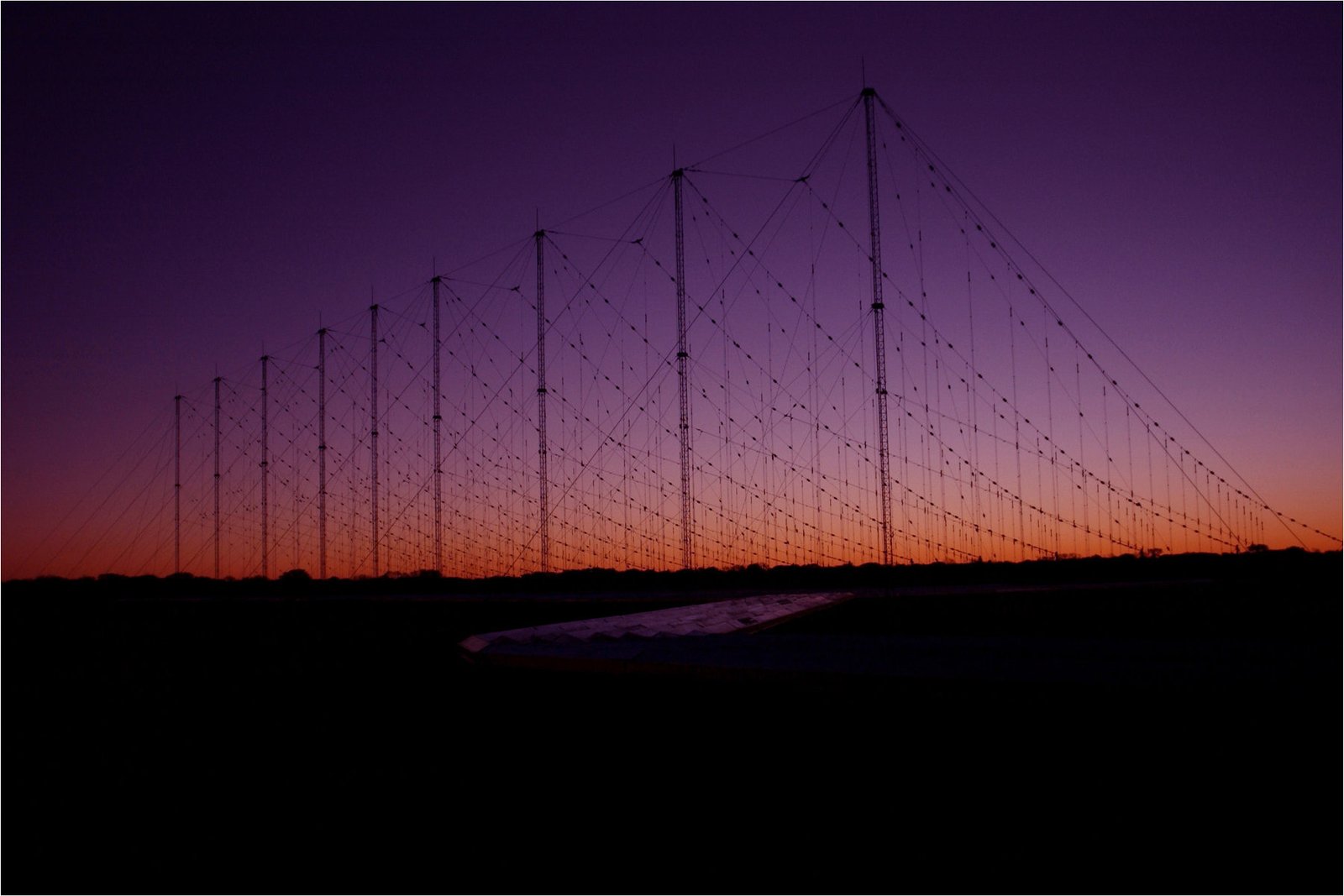
Australia has concluded its largest-ever defence sale, as Canberra and Ottawa signed four separate but associated agreements to deliver an Arctic Over-The-Horizon Radar (A-OTHR) system to Canada. The sale is worth A$2.5 billion (US$1.75 billion).
The deal was signed on 22 June, with Ottawa stating the government-to-government acquisition arrangement “establishes the framework for Canada’s procurement of Australia’s proven OTHR technology”.
Additionally, an OTHR rights agreement with Australia and BAE Systems Australia, as well as a comprehensive industrial and technological benefits agreement with BAE Systems Australia, were signed the same day.
Ottawa also stated: “A production contract between Australia and its subcontractor, BAE Systems Australia, was signed. The signing formalises Canada’s partnership with Australia and enables the delivery of Australia’s proven OTHR technology in support of Canada’s A-OTHR programme. It marks a major milestone in the programme, transitioning A-OTHR from the planning phase into delivery phase.”
Canada’s radar system will be based on Australia’s own Jindalee Operational Radar Network (JORN), a system that monitors the skies and sea around Australia, particularly to the north.
The OTHR system works by refracting high-frequency electromagnetic waves off the ionosphere to detect objects thousands of kilometres away. These objects would otherwise be invisible to conventional radars because of the Earth’s curvature.
Canada will also be using its future A-OTHR system to scan to the north, but a major difference is that the environment features arctic rather than tropical conditions.
Canada is seeking to monitor the Arctic, an area experiencing increased strategic competition. The A-OTHR will thus give Canada early-warning radar coverage of the frigid region. Some 40% of Canadian territory lies above the Arctic Circle, so it needs to maintain domain awareness on its icy periphery.
The Australian Department of Defence stated, “Working together on OTHR systems will support the delivery of early-warning and surveillance capabilities in the Indo-Pacific and North Atlantic, contributing to our collective security in an increasingly complex strategic environment.”
BAE Systems Australia is the primary beneficiary of this contract, and it will begin delivery of the A-OTHR on 1 July. The system is expected to reach an initial operational capability by December 2029. The contract should create 300 jobs in Australia, and joint research and development could also result in mutual enhancements to the JORN system.
Craig Lockhart, CEO of BAE Systems Australia, remarked, “Canada’s acquisition of a cutting-edge Australian OTHR system supports the strategic interests of both nations through enhanced detection and tracking of threats to North America, strengthening Five-Eyes situational awareness.”

JORN, believed to have a range of approximately 3,000km, has been operating for more than 40 years. BAE Systems Australia has been managing it since 2018, relying on three radar antenna arrays in Longreach, Queensland; Laverton, Western Australia; and Alice Springs, Northern Territory.
Canadian Prime Minister Mark Carney had announced in March 2025 that his country intended to partner with Australia to develop this OTHR technology. At that time, Canada was expected to invest more than C$6 billion (US$4.3 billion). The A-OTHR will also contribute to the North American Aerospace Defense Command (NORAD) modernisation plan.
Ashley Searl, Director of BAE Systems Australia’s Battlespace Integrated Solutions, told Asian Military Review that ionosphere conditions “are very important to how the system operates. I guess a lot of the smarts in JORN is understanding what different ionospheric conditions can give you in terms of performance.” Indeed, one of its strengths is the ability to adjust to conditions of the day.
Searl added: “You can select how you operate it. You can do it over broader areas or narrower areas, depending on where your mission set is.”
BAE Systems Australia is currently leading a decade-long upgrade of JORN under Project Air 2025 Phase 6. This contract awarded in 2018 is essentially a midlife upgrade that introduces new digital waveform transmitters and receivers, and extends JORN’s operational life till at least 2042.
by Gordon Arthur
