

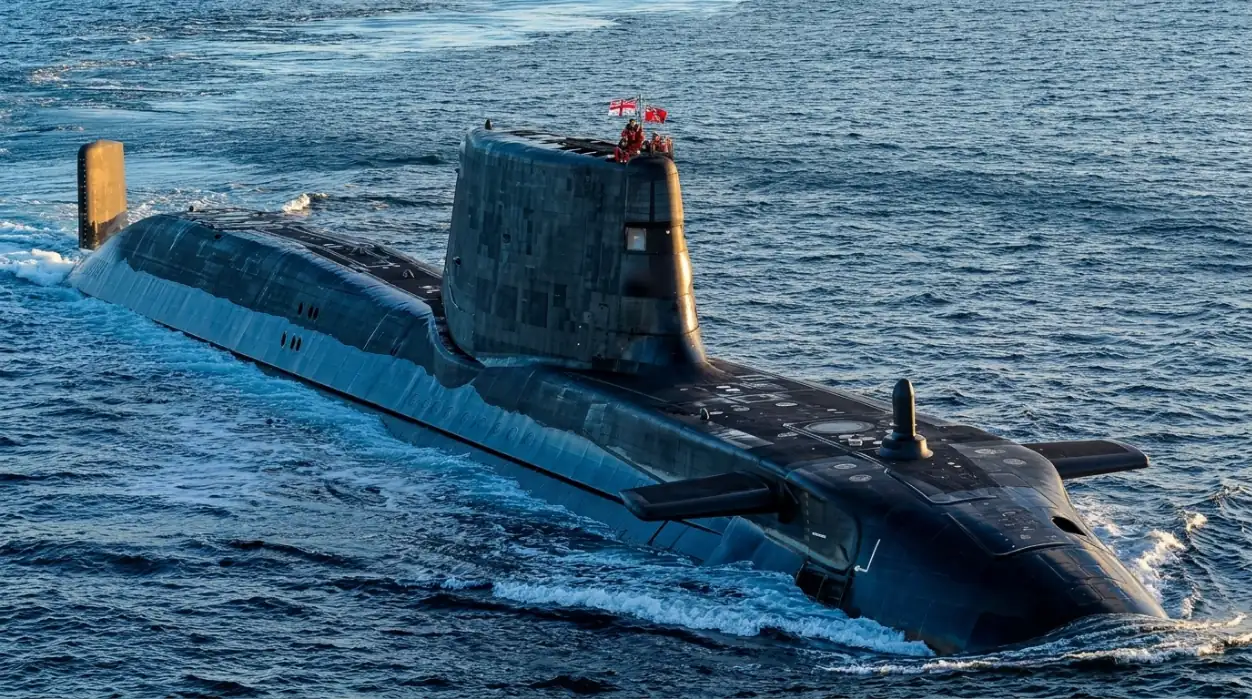
Britain’s most advanced attack submarine was not born from a smooth success story. The Astute-class submarine emerged from one of the Royal Navy’s most troubled major procurement programmes, marked by delays, rising costs and a painful loss of industrial experience.
The first boat, HMS Astute, was originally expected to enter service in 2005. Instead, it was commissioned in 2010. Earlier National Audit Office assessments identified a 41-month delay and £1.22 billion in cost overruns at one stage of the programme.
But the more revealing problem sat underneath those numbers.
Britain had experienced a lengthy gap in submarine production after the Vanguard programme, and with that gap came a loss of experienced personnel and industrial knowledge. Parliamentary evidence later highlighted difficulties in rebuilding the design, construction, testing and commissioning expertise needed for complex nuclear submarines.
Yet the story didn’t end in failure.
The Astute-class submarine programme eventually produced a class of highly capable nuclear-powered attack submarines. The Royal Navy describes the class as its largest and most advanced attack-submarine family, combining sophisticated sonar with heavyweight torpedoes and long-range strike capability.
That contradiction makes the Astute-class submarine far more interesting than a simple submarine specification sheet.
How did Britain turn a badly delayed programme into a seven-boat submarine class and what did the painful process teach the UK about maintaining the industrial skills behind nuclear naval power?
What Is the Astute-Class Submarine?
The Astute-class submarine is the Royal Navy’s nuclear-powered attack submarine, or SSN, designed to hunt other submarines and surface ships while also providing long-range strike, intelligence and special-forces support. Seven boats make up the planned class, built by BAE Systems at Barrow-in-Furness.
Unlike Britain’s Vanguard and forthcoming Dreadnought submarines, Astute is not part of the UK’s nuclear deterrent force. It carries conventional weapons and is intended to operate as a highly versatile attack platform.
That distinction matters because an Astute submarine can perform several jobs during the same deployment. Its missions include anti-submarine warfare, anti-surface warfare, intelligence gathering, land attack and support for special operations. The Royal Navy describes the class as its largest and most advanced attack-submarine type.
The design replaced two earlier generations of British attack submarines: the Swiftsure class and the Trafalgar class. That meant Astute wasn’t simply another incremental update. It represented the next major step in Britain’s SSN capability.
The Astute-class submarine’s nuclear propulsion is particularly important. Unlike a conventional diesel-electric submarine, an Astute-class submarine does not need to surface periodically to recharge batteries. Its nuclear power plant provides effectively unlimited endurance, with food and crew stamina becoming more important constraints than fuel.
Then there is the quiet part, literally.
An attack submarine’s value is heavily tied to its ability to find an opponent without being found first. The Astute-class submarine therefore combines nuclear endurance with sophisticated sonar, weapons and combat systems rather than relying on speed or firepower alone.
That combination gives the class its real identity: a submarine designed to remain hidden, gather information and strike when necessary.
And understanding that role makes the programme’s troubled development even more significant. Britain wasn’t merely trying to build another submarine; it was trying to rebuild a highly specialized capability while simultaneously creating one of its most sophisticated warships.
Read also: Gotland-class Submarine: Sweden’s Revolutionary AIP Attack Submarine
Astute-Class Submarine Specifications and Weapons
The Astute-class submarine combines the endurance of nuclear propulsion with a weapons and sensor suite designed for missions far beyond traditional submarine hunting. Its size also reflects the amount of technology packed inside the hull.
| Specification | Astute Class |
| Type | Nuclear-powered attack submarine |
| Length | 97 m |
| Displacement | Approx. 7,400 tonnes |
| Speed | 30+ knots |
| Propulsion | Nuclear |
| Crew | Approx. 98 |
| Main weapons | Spearfish torpedoes, Tomahawk missiles |
| Sonar | Sonar 2076 |
| Planned class size | 7 submarines |
The Royal Navy lists the Astute-class submarine at approximately 97 metres long, with a submerged displacement of around 7,400 tonnes and a speed of more than 30 knots. Its nuclear propulsion provides effectively unlimited range, meaning the submarine’s endurance is constrained more by its crew and supplies than by fuel.
The weapons are equally important. Astute-class submarine carries the Spearfish heavyweight torpedo, designed for use against submarines and surface ships, while its vertical launch capability allows the class to employ Tomahawk Land Attack Cruise Missiles for long-range strikes against targets ashore.
Then there is the Astute-class submarine’s sensing capability.

The Sonar 2076 system combines multiple sonar arrays, including hull-mounted and towed systems. For an attack submarine, this is arguably more important than raw speed. Finding another submarine first can determine the outcome long before either vessel launches a weapon.
That is why the Astute-class submarine should not be judged simply by the size of its weapons inventory.
Its real strength comes from the combination of stealth, endurance, sensors and weapons. The Astute-class submarine can remain at sea for extended periods, build an acoustic picture of its surroundings and potentially engage targets without exposing itself.
In other words, the specifications tell only half the story.
The Astute-class submarine was designed less like a floating arsenal and more like a hidden intelligence-and-strike platform, one that happens to carry some very serious weapons.
Read also: Top 5 Biggest Submarines in the World Ever Built
Why the Astute-Class Submarine Programme Went So Wrong
The biggest problem with the Astute-class submarine programme wasn’t that Britain suddenly forgot how to build submarines. It was that the country was trying to rebuild a highly specialized industrial capability after years of reduced production and discovering that some knowledge is much harder to recover than a document or a drawing.
Britain had experienced a significant production gap following the Vanguard programme. Parliament later identified the need to re-establish nuclear submarine design, construction, testing and commissioning capability, with the loss of experienced personnel contributing to the difficulty.
The Astute-class submarine programme also ran into technical and management problems. Parliamentary evidence highlighted difficulties with computer-aided design, alongside an inexperienced workforce and weaknesses in project management. The National Audit Office subsequently recorded major delays and cost increases as the programme struggled through development.
That combination is important.

Building a nuclear-powered submarine is not like assembling a commercial product from a mature production line. It requires specialized engineers, naval architects, welders, designers, nuclear expertise, suppliers and managers who understand how thousands of individual decisions interact.
When that ecosystem loses experienced people, the effects can appear years later.
The first Astute-class submarine therefore became more than a new submarine design. It became a test of whether Britain’s industrial base could still deliver one.
And the consequences were substantial. The original target for HMS Astute’s entry into service was 2005, but the submarine eventually entered service in 2010. Earlier NAO reporting identified a 41-month delay and £1.22 billion cost overrun at a particular stage of the programme.
The lesson was uncomfortable but valuable.
The difficult part wasn’t only designing the submarine. It was rebuilding the people, processes and institutional knowledge needed to turn that design into a working nuclear warship.
The Price of the Delay: Cost, Time and Capability
The problems surrounding the Astute-class submarine programme were not measured only in years. They also translated into higher costs and, more importantly, pressure on Britain’s existing attack-submarine fleet.
The original plan called for HMS Astute to enter service in June 2005. By 2009, Parliamentary evidence showed that the expected in-service date had moved to March 2010. At the same time, the projected cost for the first three submarines had risen from approximately £2.578 billion to £3.933 billion.
| Programme measure | Original / earlier figure | Later figure |
| Planned first in-service date | June 2005 | March 2010 |
| Cost for first three boats | £2.578 billion | £3.933 billion |
| Cost increase | — | £1.355 billion |
Those figures make the problem look like a procurement spreadsheet gone badly wrong. But the operational consequences were more serious.
When a replacement submarine arrives late, the Navy cannot simply leave the capability gap empty. Existing boats have to remain available for longer, creating additional pressure on maintenance schedules, crews and aging platforms.

Parliamentary evidence specifically highlighted the need to keep existing submarines in service beyond their planned retirement dates because of the Astute delays.
There’s another lesson here that is easy to miss.
A delay in a major weapons programme can have a compounding effect. The new platform arrives late, older platforms remain in service longer, maintenance becomes more complicated, and the next programme can inherit some of those pressures.
For Britain, the Astute-class submarine therefore wasn’t merely an expensive construction project. It was part of a continuous chain of undersea capability.
The financial figures were painful, certainly. But the bigger strategic cost was measured in time and industrial momentum; exactly the things a country needs when maintaining a small but highly specialized nuclear submarine fleet.
How Britain Turned the Astute-Class Submarine Programme Around
The Astute-class submarine programme eventually moved from a troubled development effort toward a more disciplined production process. The turning point wasn’t one dramatic engineering breakthrough. It was a series of changes aimed at fixing the way Britain was designing, managing and building nuclear submarines.
Following the early problems, the Astute-class submarine programme introduced stronger project-management disciplines and changed how risks and responsibilities were handled between the Ministry of Defence and industry. The National Audit Office reported that, after the 2003 agreement, the Astute-class submarine programme established new management arrangements and subsequently met its revised anchor milestones.
Experience also became a surprisingly important piece of the puzzle.
The first Astute-class submarine was effectively the programme’s giant learning exercise. As construction progressed, engineers and shipyard workers accumulated practical knowledge that cannot easily be captured in a design document. That experience could then be applied to the next boat.
The results were measurable.

Parliament reported that HMS Astute took around 170 months from manufacture to operational handover, while the second boat, HMS Ambush, took approximately 149 months. The reduction was evidence that the shipyard was becoming more efficient as it gained experience with the class.
That might not sound like a spectacular improvement, but in nuclear submarine construction, shaving months from a complex production cycle matters.
It also illustrates why the Astute story is really about industrial learning.
Britain wasn’t simply correcting mistakes in one submarine. It was rebuilding the institutional knowledge needed to produce a succession of nuclear-powered attack submarines.
The first boat paid much of the learning bill.
The boats that followed could benefit from it.
And that became one of the most important achievements of the entire programme: turning a difficult first-of-class project into a repeatable production capability.
Astute-class submarine: From Troubled First Boat to a Seven-Submarine Fleet
The real test of the Astute-class submarine programme was never whether Britain could eventually launch HMS Astute. The harder question was whether the country could turn that difficult first boat into a repeatable production programme.
That is where the later submarines become important.
The Royal Navy’s Astute programme calls for seven boats, creating a succession rather than a one-off engineering project. The class includes HMS Astute, HMS Ambush, HMS Artful, HMS Audacious, HMS Anson, HMS Agamemnon and HMS Achilles. The Royal Navy currently lists the first five as active, with Agamemnon commissioned and Achilles under construction.
The progression between boats also tells its own story.

HMS Astute was the programme’s difficult first example. HMS Ambush, the second boat, benefited from lessons learned during the construction and commissioning of its predecessor. Parliamentary evidence showed the time from manufacture to operational handover falling from approximately 170 months for Astute to 149 months for Ambush.
That improvement is more significant than it might initially appear.
A submarine programme becomes strategically useful when knowledge moves from individual engineers and shipyard workers into a repeatable production system. Every subsequent boat can then inherit lessons from the previous one — design adjustments, construction techniques, supplier knowledge and better estimates of how long difficult tasks actually take.
But the learning process hasn’t eliminated every problem.
Recent UK government project data has continued to identify risks around productivity and the in-water phase of later Astute boats.
So the programme shouldn’t be presented as a perfect recovery story.
Instead, its evolution demonstrates something more realistic: Britain gradually rebuilt a production rhythm that had been badly disrupted, while continuing to encounter the enormous complexity inherent in nuclear submarine construction.
The achievement wasn’t simply reaching seven boats.
It was rebuilding enough knowledge and industrial continuity to make the next generation possible.
What the Astute-class submarine Programme Taught Britain About Submarine Power
The most important lesson from the Astute-class submarine programme may have little to do with the submarine itself. It is about the industrial knowledge required to build one.
Britain’s experience showed that nuclear submarine capability cannot simply be switched on when a new class is needed. The engineers, designers, welders, suppliers, project managers and specialist technicians all form part of the capability. If that ecosystem becomes too thin, rebuilding it can take years and the first new programme may absorb much of the pain.
Astute-class submarine exposed that problem clearly. The gap between major submarine programmes contributed to the loss of experienced personnel and created difficulties when Britain attempted to develop and build a new generation of attack submarines. Parliamentary evidence specifically highlighted the challenge of re-establishing nuclear submarine design and construction expertise.
There was also a lesson about production continuity.
The difference between HMS Astute and HMS Ambush demonstrated how experience accumulated during one boat could improve the next. The time from manufacture to operational handover fell from about 170 months to 149 months between the first two submarines.
That is why the Astute-class submarine programme matters beyond its seven hulls.

It demonstrated that a submarine-building industry is itself a strategic asset. Losing that capability can create a vulnerability that cannot be fixed simply by increasing a budget line.
This lesson is especially relevant as Britain moves through the Dreadnought era and prepares for the next generation of nuclear-powered submarines.
The uncomfortable truth is that advanced submarines are not just products.
They are the physical expression of decades of accumulated engineering knowledge.
The Astute-class submarine’s hardest-won achievement, therefore, may have been rebuilding that knowledge before it disappeared completely.
Why the Astute Class Still Matters in 2026
The Astute-class submarine is ultimately a story about what happens when a difficult programme produces something the Royal Navy genuinely needs. Despite the troubled road to service, the class has become a central part of Britain’s undersea combat capability.
The Royal Navy describes Astute-class submarine as its largest and most advanced attack-submarine class, combining nuclear propulsion with sophisticated sonar, heavyweight torpedoes and long-range strike capability.
That combination matters because an attack submarine can influence a battlefield without being visible on it.
An Astute-class submarine can remain submerged for extended periods, gather intelligence, track other submarines and surface vessels, and potentially launch weapons without exposing itself. Its Sonar 2076 system, Spearfish torpedoes and Tomahawk land-attack capability give the class a broad mission set rather than a single specialty.
But its strategic importance goes beyond individual boats.

The Astute-class submarine programme helped Britain recover from a period when submarine-building expertise had been allowed to erode. The difficult first boat exposed weaknesses in skills, design management and production continuity; the later boats demonstrated that those weaknesses could be reduced through sustained production and institutional learning.
That’s particularly relevant in 2026, as Britain continues developing the Dreadnought-class ballistic-missile submarines while maintaining Astute as its attack-submarine fleet.
The lesson is almost bigger than the submarine itself.
Advanced naval power depends on industrial continuity. A country can possess the money, strategic requirement and technology for a nuclear submarine, but without the people and production system capable of turning those ingredients into a functioning boat, the capability can still slip away.
The Astute-class submarine therefore represents both a warning and an achievement.
Its early history showed how expensive lost expertise can become. Its eventual success showed the value of rebuilding that expertise.
And perhaps that is the Astute-class submarine’s hardest-won lesson: Britain didn’t just build a new submarine class. It relearned how to build the capability behind one.
