

Paul Morando Thank you, it’s great to be here.
Terry Gerton Many Americans have very vivid memories of September 11th, where they were, what they were doing. But your new exhibit focuses on the Army Corps of Engineers response after the attacks. Why did the museum decide that that was the story it wanted to tell, especially this year on the 25th anniversary of the attack?
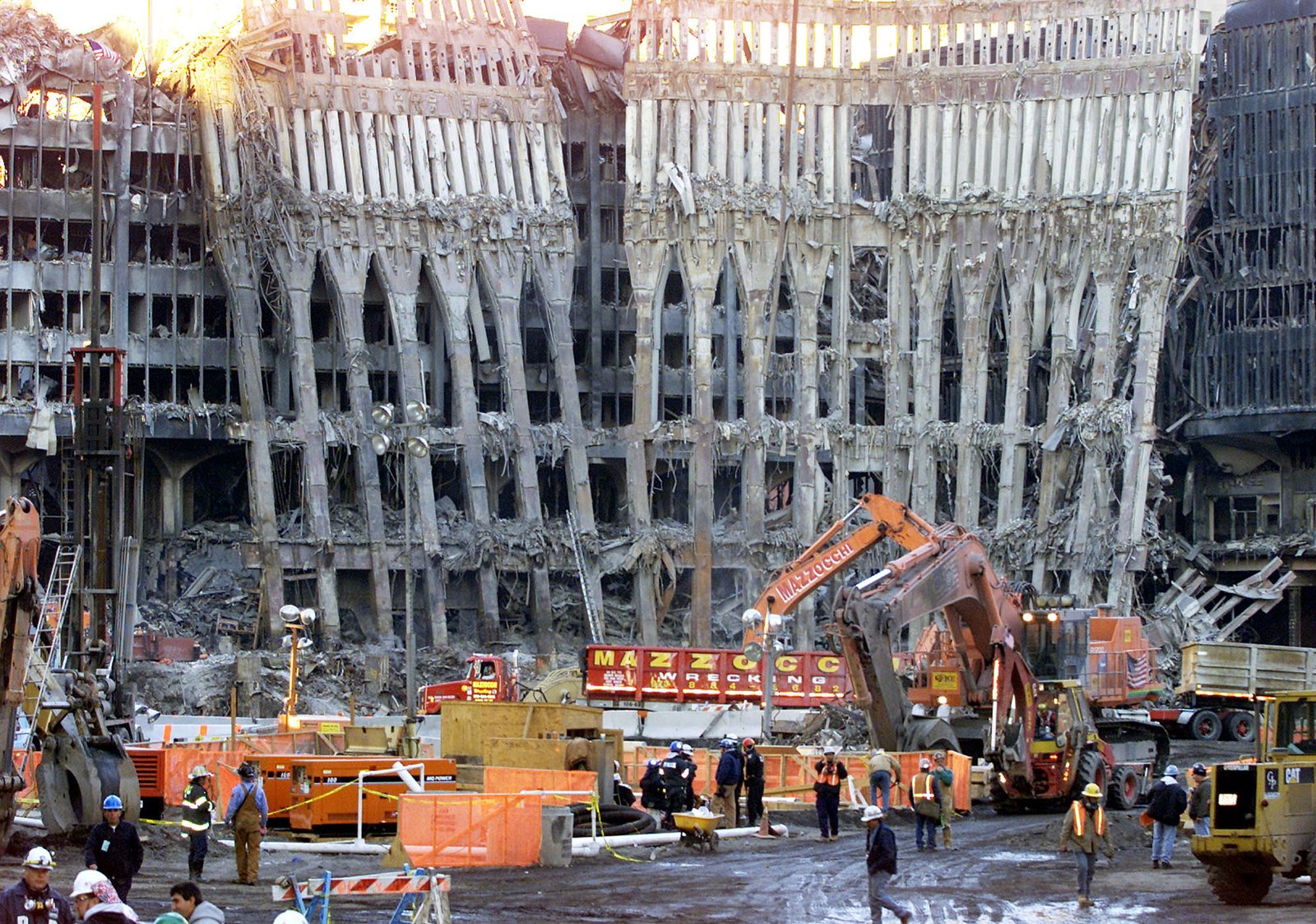
Paul Morando Well, over two years ago, we started thinking about how we wanted to honor the 25th anniversary of 9/11. We already told the story of the terrorist attacks and the Army’s role in fighting the global war on terrorism in our main galleries. So we wanted it to be more specific, highlight a story that I don’t think a lot of folks know about, and that’s the U.S. Army Corps of Engineers and their response and recovery effort on 9/11.
Terry Gerton And as you began to research and assemble this exhibit, what did you learn about the Corps’ role that you think most visitors wouldn’t know today?
Paul Morando Well, we often think, and certainly they should be recognized, of the first responders, the medical personnel, the NYPD, the fire department, and they did just heroic work. But what was the second wave of recovery efforts? How did they move tons of rubble from Ground Zero in New York City? How did the make sure that inside the Pentagon was safe so rescue workers could go back in there and rebuild? And that was all up to the Corps of Engineers. That was their mission, to figure out how to get 1.5 million tons of debris and rubble off of Lower Manhattan to the landfill on Staten Island, to process that debris, to look for human remains, to identify personal items. It was just an extraordinary task, and it was up to The Corps to figure that out, logistically, also from an organization. How do you even get there? How do you set up command operations? How do set up communication outlets? All that had to be done quickly and it took a lot of energy, took a sort of decision making and command climate and they set up and did the task.
Terry Gerton There are still a lot of emotions around this day and this event. What was it like for you and your team to spend months immersed in these stories and artifacts as you built this exhibit?
Paul Morando It was tough. We wanted to, like we always do here at the museum, we tell the army’s story through soldier experiences. So the artifacts that we chose, most of them are tied directly to a soldier who either responded to ground zero or 9/11. And so sifting through those images, artifacts, those personal stories was hard because it brought back, you know, It was 25 years ago and we started thinking where were you and what did you experience and essentially the world changed and so trying to tell that story now and the impact that it had back then, we’re living in it now, right? So as an Army museum, the National Museum of the United States Army certainly we impact soldiers, families and you know, but I think we were able to tell That story but also specifically to what the U.S. Army Corps of Engineers and other soldiers, National Guard soldiers, Army reservists and their response to 9/11.
Terry Gerton Was there a particular story or artifact that stayed with you long after the work was done?
Paul Morando A Couple. One is a clock that was in the Pentagon. It was a World War II era wall clock, hardwired into the back of the Pentagon, and the moment of impact from the plane is when that clock stopped. So this is a simple everyday object that we take for granted, but it kind of represented what happened in a very sort of powerful, powerful way. So that was impactful for me. The other is a military ID card that belonged to Rick Rescorla, who was a Vietnam veteran on the security team for Morgan Stanley and helped rescue his fellow or colleagues and co-workers or at least got them out of the building and it’s a sacrifice in his own life in doing that. So that simple card, ID card, you know, thousands, hundreds of thousands of soldiers have that, and that was found in lower Manhattan, right? Part of that process of sifting through those personal items. And just we have that on display. And that I think is a powerful reminder of what 9/11 represented.
Terry Gerton Paul Morando is the Director of the National Museum of the United States Army, located near Fort Belvoir, Virginia. Mr. Morando, tell us more about the specific artifacts in this exhibit. You have some really unique things.
Paul Morando Right, so we partnered with curators and historians from the U.S. Army Corps of Engineers history office. So we have a car door, New York Police Department door, right? So you saw a lot of images and video, you know, of the attack and you see fire engines smashed up and car doors and all those things. So that kind of connects with visitors. This is very sort of symbolic of what they went through. And other objects are pieces of steel from the Twin Towers, pieces from the Pentagon. All these objects are there to tell the story of that day.
Terry Gerton You also have the large American flag that was draped across the side of the Pentagon. What does that flag represent today, 25 years later, beyond the moment that’s captured in that very famous photograph?
Paul Morando It’s become a symbol of resolve. It was put up a day after the attack, kept up there, and to, I think, remind people of certainly what was lost that day, but also the resilience of our nation, which is supported by soldiers of the United States Army. So, the flag has many symbols, different people depict it differently, but for us, that flag is extremely important. And you know, I made it a point that we needed to display this flag somehow in the museum. Now it’s right now, you know on display in the Museum’s lobby, but it will be brought up to be permanently part of this Steel and Stone exhibit. So we had to figure out how to display it. It’s a large flag even when it’s folded, right? So we have to make a custom-made case properly put it on display, but we made it work. Because we knew this artifact needed to be part of this exhibit.
Terry Gerton The exhibit opened just recently. What have you been hearing from visitors, especially maybe those who lived through the attack on September 11th?
Paul Morando Very powerful. People are definitely connecting with the stories that are in the exhibit. Some get emotional, which we understand why. But we do it, as I said before, it’s really focused on the recovery and response effort from the US Army Corps of Engineers. However, that story in itself is extremely powerful as well, right? Identifying victims, pulling through Personal items. That’s, I think, where the connections are coming from. Because we can all relate to that, right? We can all have sensitivity to it, regardless if you knew someone or not, or experienced 9/11 or not. It’s still a strong, powerful story. And one of the components of the exhibit is sort of this timeline or time lapse depiction from, you know, of the of the terrorist attacks and then the aftermath, and then the rebuilding in Lower Manhattan and at the Pentagon as well. So it is a story of resolve where a tragic event, and then there’s a movement towards rebuilding and being unified as a nation. So I think people are connecting to that, connecting to those stories and connecting to these artifacts.
Terry Gerton It sounds like it may be a way to bring the experience full circle. So as people leave the exhibit, what do you hope they take away with them?
Paul Morando Well, you know Twenty-five years ago, I hope they are connecting to those stories in a way where they then go learn more about what happened on 9/11 and, you know, because it’s a small exhibit, but it tells a very, very big, big story, and if they just connect with a personal story with a soldier, you know, what they experienced or what that person went through, then, And you know, we achieved something with this exhibit. Take that with them, learn more about what happened in 9/11 and the aftermath of 9/11, and then hopefully know more about what the US Army and the US Army Corps of Engineers do on a daily basis. And this weekend, we honor the 25th anniversary with a special program. We have a flower memorial where folks can create a paper flower as a special remembrance display. We have an honor walk, where you can, it’s sort of a reflective walk around Warriors Field, which is in front of the museum. We have, you know, a story time and then also outdoor memorial stones from the Pentagon. So it’s a place where we interpret that story. This museum, you now, that weekend or this weekend coming up would just be a space to reflect what happened 25 years ago.
Copyright
© 2026 Federal News Network. All rights reserved. This website is not intended for users located within the European Economic Area.
