

Systematic opened a new office in Canberra on 19 November 2026 as it expands its footprint in the region. The major catalyst for the deeper footprint was an A$98 million (US$65 million) contract awarded by the Australian Department of Defence on 19 June 2026.
However, Systematic already had a presence in Australia. On 21 February 2022, it opened its Asia-Pacific Headquarters in Canberra.
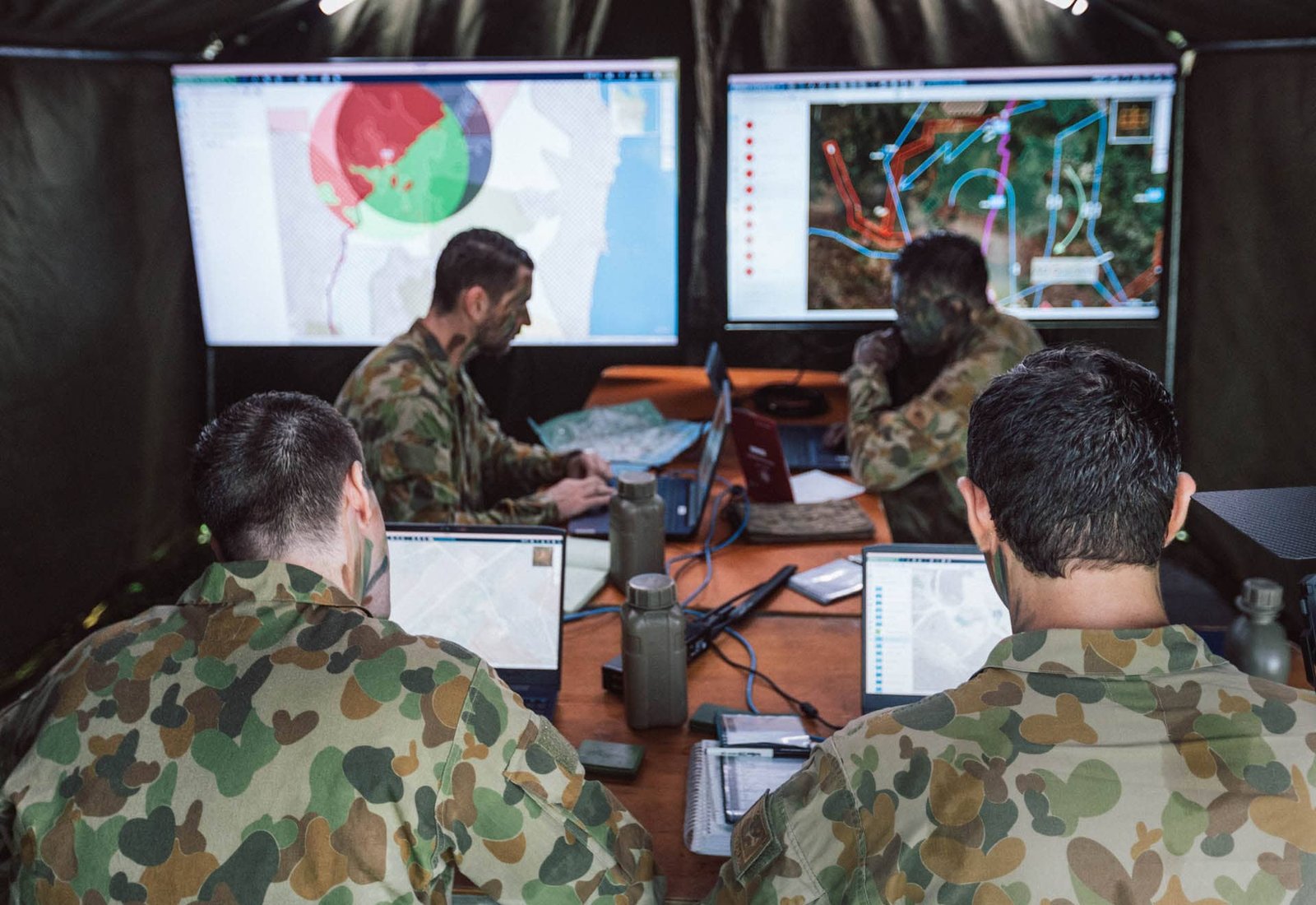
Under its Land 4140 contract, Systematic is supplying the Australian Army with a battle management system (BMS) based on its SitaWare Headquarters software suite. This falls under the first tranche of Land 4140, and its ambit extends till 30 June 2031 plus two one-year extension options.
Systematic noted the new office “will serve as a base for Systematic’s growing Australian team, bringing together local engineering, technical support and programme delivery expertise”.
Mark Gainsford, Vice President for Business Development at Systematic Australia, said, “Having our team in Canberra means local engineering, local support and local programme delivery for Land 4140. We provide the software but they own it, and they own the data inside it.”
The Australian Army first trialled the system during Exercise Talisman Sabre 2021, not long after the service cancelled a prior BMS contract with Elbit Systems. It has been using Headquarters as its interim BMS solution following a 16 April 2021 contract, so the Land 4140 deal was no surprise.
Gainsford told Asian Military Review that the interim BMS contract involved Headquarters, some SitaWare Frontline capability and underlying communications protocols for risk reduction testing.
The Land 4140 contract will see “a much larger rollout and a much more deliberate programme, where the software is fully accredited and then it’s rolled out across multiple years,” Gainsford explained.
SitaWare Headquarters presents information to users at various command echelons – from the division level, brigade level and even lower.” Another important function is for planning purposes.
Furthermore, “That system scales across the battlespace, and there’s some smart technology in there to allow communications to work when it’s denied, when it’s low bandwidth. The way in which it manages information flow and how that’s presented and distributed is also a key part of our Headquarters,” Gainsford explained to AMR.
Systematic was expecting the software system to be accredited by the end of 2026, after a six-month test and evaluation process to verify the software met requirements. Gainsford said Systematic has helped develop more than 20 bespoke standards and formats for Australian networks already.

This Land 4140 contract does not take the BMS down to lower tactical levels, such as individual tablets for dismounted use, or screens in combat vehicles. Instead, it covers command posts and compute environments. Nonetheless, future phases of Land 4140 should see greater dispersion of the BMS.
The company also noted, “The opening of the Canberra office marks a further step in Systematic’s growing investment in the Asia-Pacific region. The company will continue to engage with regional defence partners and industry…”
Across the Tasman Sea, for example, the New Zealand Army is using SitaWare software for its Network-Enabled Army (NEA) programme. During Exercise Hill 60 at Waiouru in August 2026, some NZLAV armoured vehicles employed a digital suite comprising L3Harris radios and laptops using SitaWare’s Frontline BMS.
Furthermore, an NEA solution for dismounted infantry underwent a final evaluation during Exercise Alpha Dracula with the 2nd/1st Battalion in September 2026. This networked solution, allocated to section commanders and their deputies, involves an L3Harris personal radio coupled to a Samsung end-user device loaded with SitaWare Frontline.
More than 50 militaries use SitaWare software, including all Five Eyes partners.
by Gordon Arthur
