

GLASGOW, Scotland — Two German one-way attack drone variants passed live-fire trials this month, clearing a step toward initial deliveries and troop training before the end of the year, Germany’s military procurement office said.
Though the systems have yet to complete qualification, the German Army plans to begin equipping its armored brigade in Lithuania in 2027.
The trials, held the week of Nov. 9, tested whether Stark’s Virtus and Helsing’s HX-2 could reliably hit designated targets and whether their warheads worked as intended on impact. The Bundeswehr conducted key parts of the testing at its weapons and ammunition test center in Meppen. The procurement office announced that both systems passed but did not disclose how many shots it fired or the weapons’ success rates.
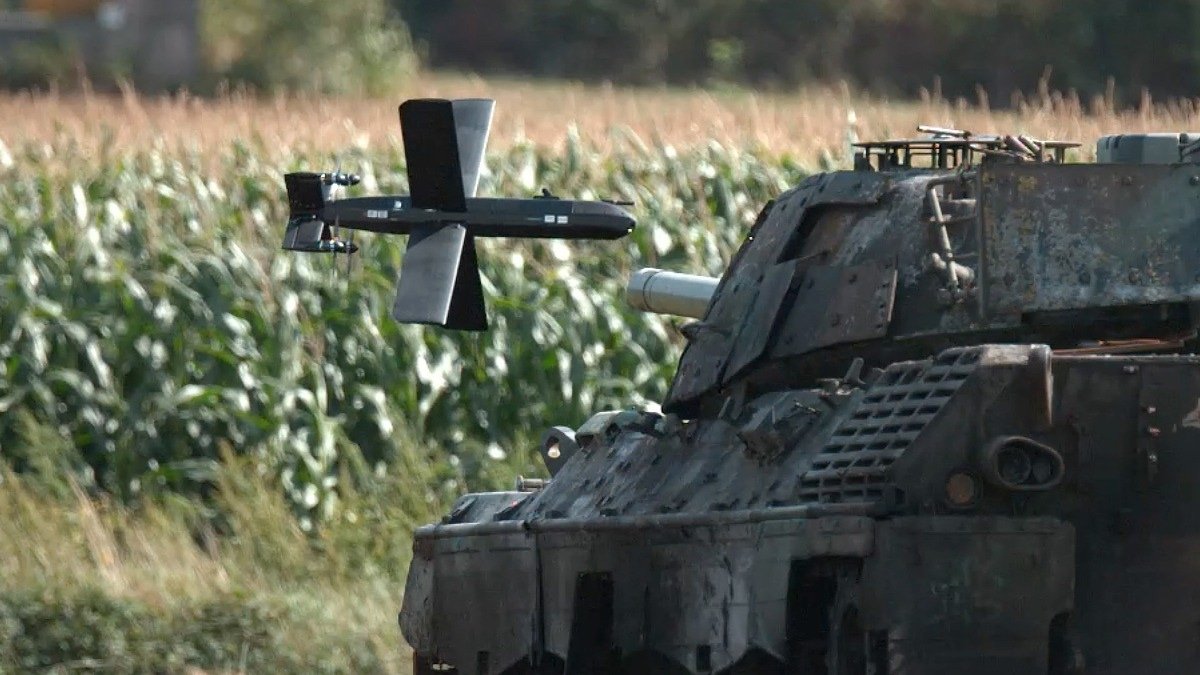
Photos attached to the statement showed both an OWE-V Virtus and an HX-2 loitering munition moments before impact into a tank.
Both systems are loitering munitions, weapons that can remain airborne over an area while searching for targets before a human operator decides whether to authorize a strike. The live-fire campaign focused on the final part of that process, from the approach to the target through the effect of the warhead, rather than certifying the systems for service.
The military noted that before loitering munitions can be used within the German Armed Forces, they must be thoroughly tested on the “interaction of the various system components.”
German lawmakers were previously skeptical of approving armed drones for the country’s military, and some arms control researchers have raised concerns about autonomous targeting in loitering munitions.
The tests follow a Feb. 25 vote by Germany’s parliamentary budget committee approving contracts worth €268 million ($294.4 million) apiece for Stark and Helsing. Options could add €1 billion to each deal, but further purchases depend on the systems proving technologically mature and lawmakers approving the spending, Defense News reported in February. The vote marked a shift that’s part of a larger rethinking of Germany’s military posture in the wake of Russia’s full-scale invasion of Ukraine in 2022.
Germany is trying to shorten the time between signing a contract and getting the weapons to troops by allowing concurrent development, testing, qualification and preparations for use. The procurement office said it brought soldiers into testing early so their feedback could inform changes to the systems. Lawmakers attached reporting requirements to the spending plan, and cancellation clauses allow the government to walk away if a system fails qualification.
The procurement office said it expects initial deliveries this year so troops can begin training. It did not say how many weapons would arrive in that first batch. The army intends eventually to link the munitions with its reconnaissance and strike systems, with the 45th Armored Brigade in Lithuania slated to become the first major formation to receive them starting in 2027.
