

As private wealth continues to grow to levels never before seen in modern history, a powerful idea is taking hold in the West: the accumulation of great fortunes poses an existential threat to democracy. This idea is not novel. Over a decade ago, the political scientists Jacob Hacker and Paul Pierson asserted that the rise of plutocracy has been a defining trend of American politics since the late 1970s. The economist Paul Krugman argued in 2011 that the “extreme concentration of income is incompatible with real democracy.”
Lately, however, it has begun to gain traction in the halls of power of Western democracies. In his farewell address, former U.S. President Joe Biden argued that an “oligarchy of extreme wealth, power, and influence” was threatening “our entire democracy, our basic rights and freedoms.” Spanish Prime Minister Pedro Sánchez echoed the sentiment at a 2025 G-20 summit, warning that concentrated wealth “corrodes democratic institutions.”
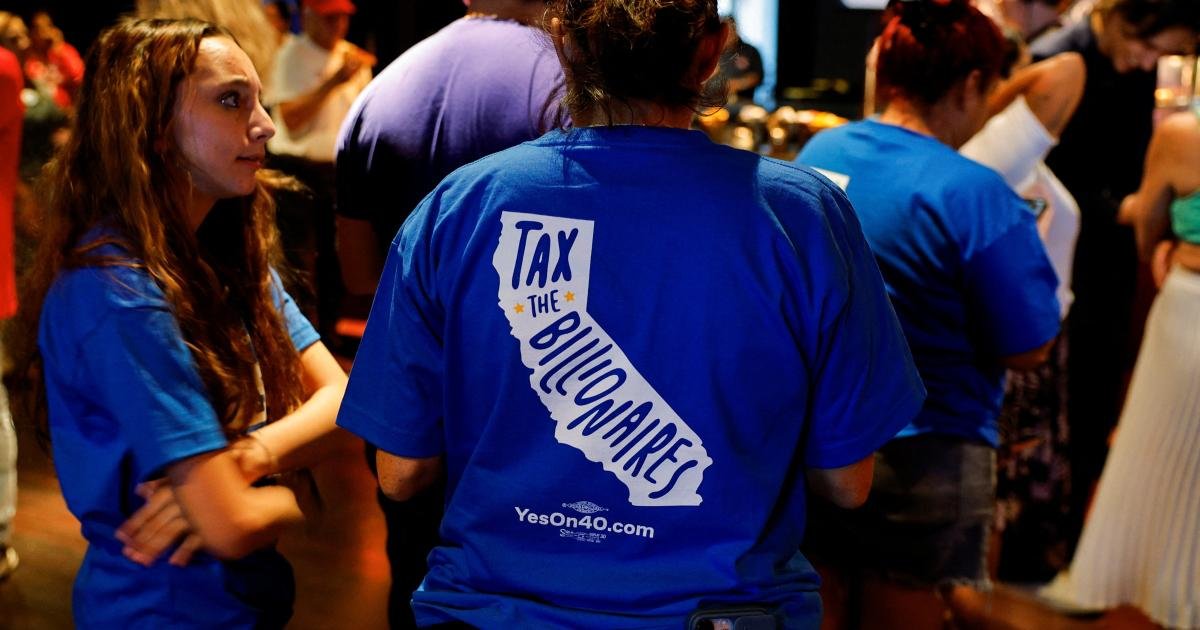
Some now see confiscation as the answer. After a bitter debate and over $300 million of cumulative spending by supporters and opponents, Californians rejected a statewide “billionaires’ tax” ballot measure in this week’s midterm elections. But the proposal counted among its proponents six Nobel laureates in economics, including Daron Acemoglu, Peter Diamond, and Joseph Stiglitz, who endorsed the tax in a letter framing it as “a turning point in the battle between democracy and oligarchy.” The French economist Gabriel Zucman called the measure’s defeat “just the beginning” and vowed that though “Silicon Valley billionaires have won this battle … they will lose this war.” Several European political leaders, including the former German Green Party leader Annalena Baerbock and Danish Prime Minister Mette Frederiksen, have floated wealth tax proposals of their own in recent years.
The risk they have identified is genuine. Democratic societies are not doing enough to prevent the superrich from unduly influencing politics. But their diagnosis—not to mention their preferred solution—is incorrect. Billionaires’ participation in politics does not in itself indicate that a democracy has been captured by moneyed interests. The strength of the political and civil institutions meant to protect against the exercise of those interests is a far more important indicator.
Instead of imposing wealth taxes, countries that are serious about safeguarding their political systems should take their cues from those democracies that have successfully insulated their politics from the influence of large fortunes. They should adopt transparent election laws and restraints on private campaign contributions and encourage a strong, independent media. Such measures will help make societies more democratic. Taxing wealth will simply make them poorer.
THE EIGHT PERCENT OF THE ONE PERCENT
Arguments in favor of taxing wealth in the name of democracy often hinge on an understanding of billionaires as a monolithic bloc, committed to an agenda that runs counter to the public interest. These claims contain a kernel of truth. According to the benchmark V-Dem and Freedom House indices, the United States has indeed been in a state of democratic decline since the early 2010s. But it does not follow that billionaires as a group are responsible for this decline—or that such a unified group even exists.
To empirically determine its existence, I classified the richest Americans in the 2026 Forbes 400 listing according to their traceable political donations, analyzing both their average annual giving and their total giving over the past three decades. This method is no doubt imperfect—donations can be informal or hidden and are not the only way to achieve political influence—but the pattern that emerges should nonetheless cast doubt on the idea of a single billionaire class marching on Washington.
The evidence shows that roughly 30 individuals, or eight percent of U.S. billionaires in the Forbes 400, are high-level donors, giving more than $1 million each year for political purposes. Roughly half of American billionaires give on average less than $30,000 a year, 35 percent give less than $10,000, and 15 percent, or 60 of the listed billionaires, have no visible political footprint. Just 16 donors—four percent—have given more than $50 million over the last 30 years. This small minority may well plow enough money into elections to make up for the majority of billionaires with no apparent interest in politics (although if Elon Musk’s midterm outlay is any indication, even vast sums of money are no guarantee of political outcomes). But the very fact that both these groups exist suggests that the presence of the ultrawealthy alone is not necessarily responsible for American democratic decay. The weakness of the institutions meant to check their influence, on the other hand, is.
BUYING POWER
For the American billionaires who do engage in politics, federal rules and institutions make it easy to achieve disproportionate influence through large-scale private spending. Super PACs are permitted to receive unlimited contributions from individuals, corporations, unions, and other political committees. The hollowing out of independent public-service media and the consolidation of private media make matters worse, allowing a small number of wealthy owners to shape the dominant narrative unchecked.
Much of the momentum behind a wealth tax comes from the United States. But it is hardly the only country with a high proportion of superwealthy residents. Sweden and Switzerland have among the most billionaires per capita in the world, with around 4.7 and 5.0 billionaires per million inhabitants, respectively—higher than the United States’ 2.9 and dwarfing the average of 1.3 for Organization for Economic Cooperation and Development (OECD) countries. If wealth tax proponents were correct about the relationship between extreme wealth and democratic health, one would expect both Sweden’s and Switzerland’s democracies to be in dire shape.
But in neither country has the presence of large private fortunes significantly damaged democracy. Both rank highly among liberal democracies when assessing the fairness of elections, the rule of law, checks on the executive, trust in government, and media freedom. Sweden ranks fifth in the 2026 World Press Freedom Index, and Switzerland ranks eighth. As of 2025, they were tied for sixth in Transparency International’s Corruption Perceptions Index; the United States ranked 29th. According to the OECD’s 2025 trust survey, 62 percent of Swiss respondents had confidence in their national government, the highest of all countries polled. Sweden, at 42 percent, ranked 15th among the countries polled, higher than the OECD average of 40 percent and far exceeding the United States’ 27 percent, as measured by the Partnership for Public Service.
It might be tempting to point to tax policy as an explanation. Indeed, social democratic Sweden, with its 41 percent tax-to-GDP ratio as of 2024, has one of the world’s highest tax levels. Switzerland, however, maintains a tax-to-GDP ratio of roughly 27 percent, well below the OECD average of 34 percent and about even with the U.S. level of 25 percent. That these countries can support large entrepreneurial fortunes without sacrificing their democracies is in fact not the result of draconian restrictions on how those fortunes are spent in politics. Two other shared institutional features offer more compelling answers.
In Sweden, political parties receive funding mainly through public structures. Private contributions are allowed, but individual donors represent a relatively small share of total party funding, and disclosure rules make all large private contributions visible. Sweden’s constitution grants citizens and journalists the right to access almost any official document. Ministers hold little direct influence over administrative agencies, allowing the agencies to operate independently of executive authority. These rules do not eliminate lobbying, but they largely prevent private money from discreetly entering and influencing the political process.
Switzerland’s barriers between private wealth and the levers of government, although similarly sturdy, stop money from influencing politics in slightly different ways. The country’s federal system diffuses power across 26 regional cantons and over 2,000 municipalities, and frequent regional and federal referendums give citizens veto power over legislation. Switzerland has no direct federal funding of parties and no general spending ceiling, but national disclosure rules introduced in 2022 require major campaigns and large donors to identify their financing. The country does have a wealth tax dating back to the nineteenth century, but it is administered at the canton level and its highest marginal rate is nowhere near as punitive as the California proposal. Dispersing authority and enshrining accountability over government decisions through direct democracy are far more responsible for the success of Swiss democracy.
Both countries also have long traditions of private journalism and independent public-service media. A mix of private outlets and public-service media, which has been shown to foster greater public trust in the news and resilience to online disinformation, prevents any single news provider from monopolizing the airwaves or suppressing information.
These institutions are not perfect, and private donations still play a role in Swedish and Swiss politics. That countries with nearly twice the number of billionaires per capita as the United States have thriving democracies should, however, give the lie to the idea that the superrich, by their mere existence, deform democracy.
CAPITAL PUNISHMENT
The proposals currently in vogue are presented as a novel solution to the novel problem of concentrated wealth. But societies have attempted to tax wealth before. Throughout the twentieth century, many European countries imposed similarly designed taxes on household net wealth for redistributive purposes. Problems quickly emerged. Taxing individuals who rarely generated cash income and whose fortunes were thus not easily estimated outraged entrepreneurs, lowered investment, and hampered growth. In the 1970s and 1980s, governments on both the left and the right took note. They tried to discount certain business assets and exempt closely held firms from taxation to mitigate the distortions. But tinkering around these edges only caused new problems of unfairness. Revenues, which at that time constituted less than half a percent of GDP across Europe, compared with total taxes that often stood at 40 percent of GDP, slumped. Ultimately, most countries scrapped the tax.
Many of today’s proponents are more likely to cite the threat of unprecedented fortunes to democracy than the need for redistribution as the impetus for a wealth tax. But they offer no new solutions to the problems of old. Nor would a wealth tax stop billionaires from financing politics, since the wealthiest hardly need to throw the full weight of their fortunes around to wield political influence.
Supporters might argue that the pro-democracy case for a wealth tax is much broader in scope. After all, the superrich exert influence on politics in more ways than just their donations. A wealth tax might not stop a billionaire from buying a state election, but it might stop one from, for example, buying Paramount or The Washington Post. Imperfect a solution as it is, a billionaires’ tax referendum represents a more achievable goal than amending the Constitution to wrest power from the executive.
Countries need entrepreneurs who are willing to take risks and build wealth.
But a wealth tax has never been an efficient fiscal tool or a substitute for substantive democratic renewal. Whatever small democratic gains it might feasibly bring would be outweighed by the threat to business ventures, capital formation, and long-term economic development it would pose. As anything more than a symbolic measure, a tax on uncertain, often illiquid values is essentially a tax on entrepreneurial risk-taking. But the case against it should not be mistaken for a broadside against all capital taxation. Governments should still seek to raise substantial revenue from taxes on the returns on capital and should set rates and brackets how they please. They must not, however, forget the crucial distinction between taxing already realized income and taxing assets that may yet generate new returns.
A better agenda to safeguard democracy against the influence of money should prioritize reforming the institutions whose weaknesses make such influence possible. Limits on campaign and party finance and more transparent disclosure of lobbying and conflicts of interest would, at the very least, make elections more difficult to buy. Increased funding for public media and stricter antitrust rules to block media mergers would create a more diverse landscape of both private and independent public-service outlets. These measures would affect just the few American billionaires who plow significant parts of their fortunes into politics, leaving the majority of the country’s wealthiest to keep doing what they do best—creating value and driving growth.
Democracies should, of course, always fear oligarchy. They should actively work to curtail the influence of money on politics. They should not, however, confuse economic success with political capture. Countries need entrepreneurs who are willing to take risks and build wealth. Democracy will survive in an era of extraordinary fortunes not by antagonizing successful people but by making political power harder to buy.
Loading…
