

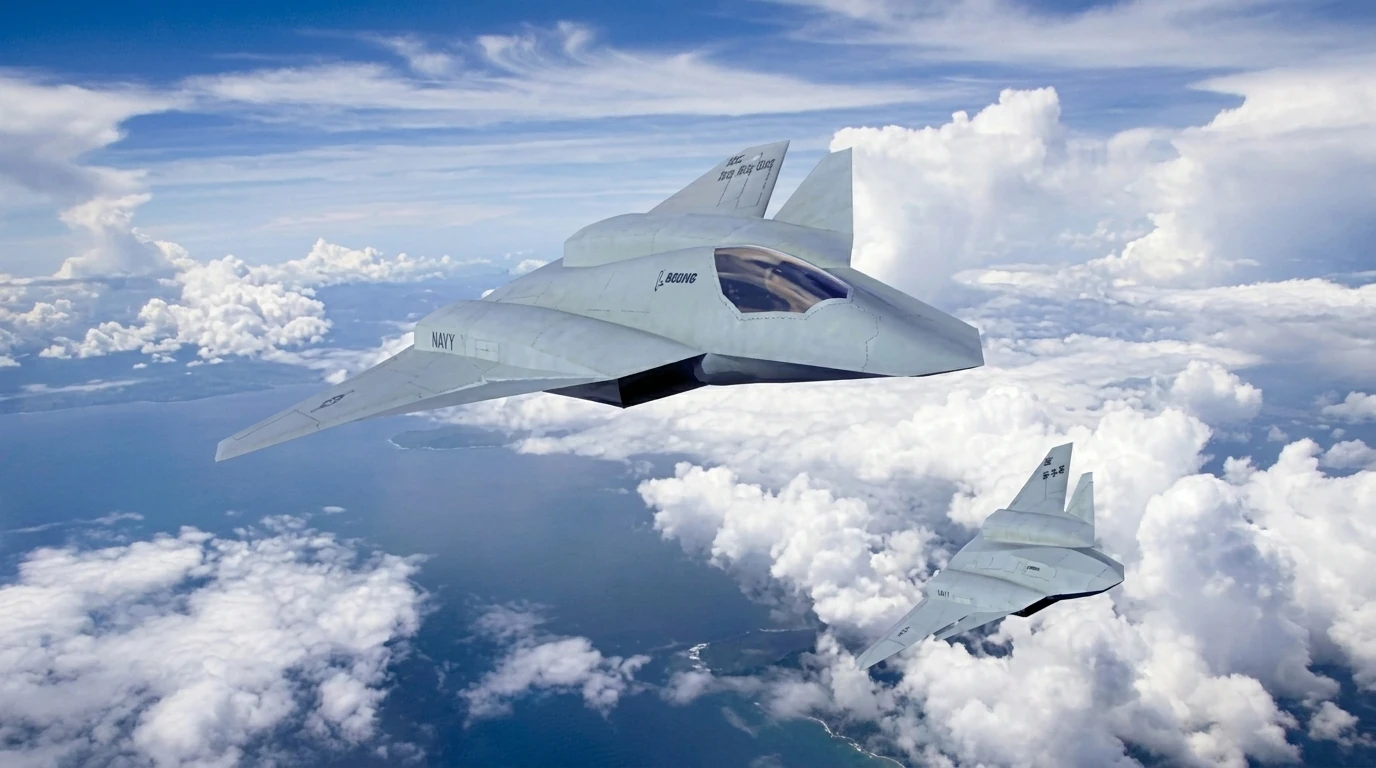
Imagine a U.S. Navy carrier operating hundreds of miles from hostile territory. Its aircraft must reach distant targets, avoid increasingly capable air defenses, and share battlefield information before an opponent even realizes an attack is coming. That’s the challenge the F/A-XX Fighter is being designed to address.
The Navy’s planned sixth-generation fighter is more than a successor to today’s combat aircraft. It represents a shift toward longer-range operations, advanced stealth, networked sensors, and closer cooperation between crewed fighters and unmanned aircraft. In a future conflict, surviving may depend as much on what a fighter can detect and coordinate as on its speed or weapons.
There’s also an important distinction to understand. The F/A-XX is a naval aviation program, built around the demanding realities of carrier operations. Unlike land-based fighters, it must eventually operate from aircraft carriers, where limited deck space, demanding launch and recovery procedures, and exposure to harsh maritime conditions shape nearly every design decision.
The program has reached a major milestone. On September 29, 2026, Boeing was selected for the F/A-XX program under a contract valued at more than $20 billion for full-scale development. That decision moves the project forward, although it does not mean the aircraft is ready for operational service.
So, what will make this fighter different? How might it work with drones, and how will it compare with the F-35C and the Air Force’s F-47? The answers reveal why the F/A-XX matters far beyond the flight deck.
What Is the F/A-XX Fighter?
The F/A-XX Fighter is the U.S. Navy’s planned sixth-generation carrier-based combat aircraft, developed to meet the demands of future air warfare. It is intended to combine strike missions, air superiority, advanced sensing, and networked operations in a single next-generation platform.
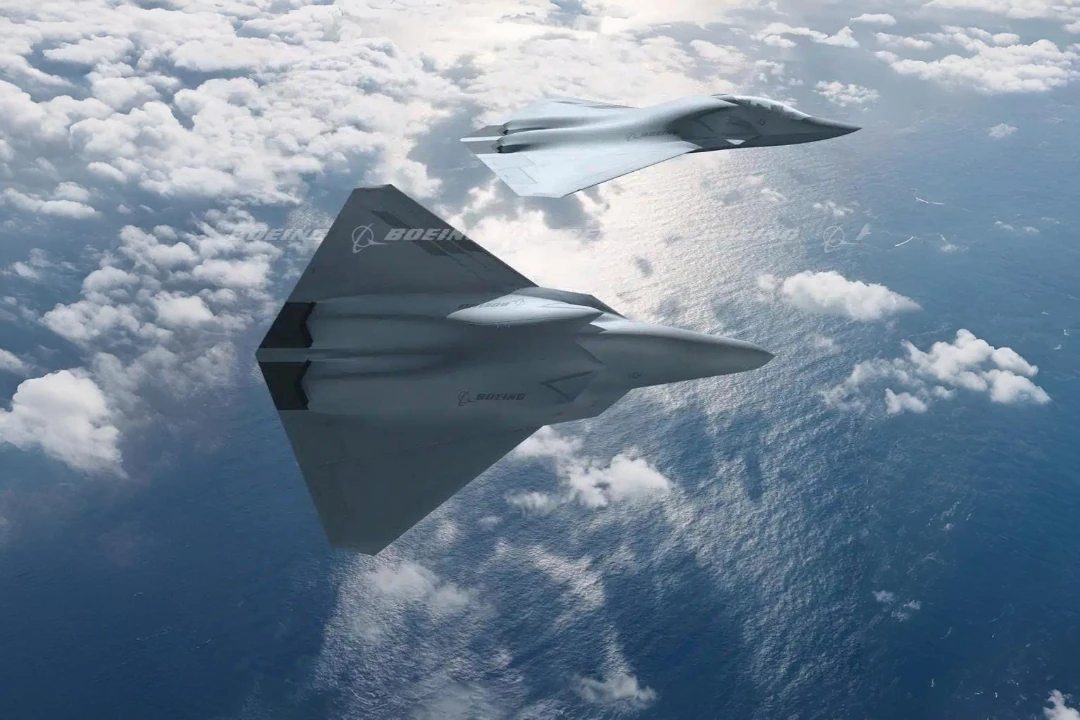
Think of it as a future centerpiece for the carrier air wing, rather than simply a faster replacement for an existing jet. Its job will involve reaching distant operating areas, surviving sophisticated air defenses, and coordinating with other aircraft across a connected battlefield.
The program falls under the Navy’s Next Generation Air Dominance (NGAD) effort. Although the Air Force also uses the NGAD name for its own next-generation fighter initiative, the two services are pursuing distinct aircraft for different operational environments.
For the Navy, that environment begins at sea. The F/A-XX must be designed around carrier launches and recoveries, limited deck space, and the challenges of operating far from friendly land bases. Those requirements make its development different from that of a conventional land-based fighter.
Why Is It Called F/A-XX?
The designation offers a useful clue. “F/A” refers to the fighter/attack role, indicating an aircraft intended to perform both air-combat and strike missions. The “XX” is a provisional designation rather than the aircraft’s final operational name.
The Navy has not publicly released a complete set of specifications. Its precise dimensions, maximum speed, combat radius, weapons capacity, and detailed propulsion arrangements remain undisclosed. Claims about these figures should therefore be treated cautiously.
One major milestone arrived on September 29, 2026, when the Navy selected Boeing for full-scale development under a contract valued at more than $20 billion. The contract covers multiple test aircraft and associated testing, including weapons integration.
That award marks a transition from competing design proposals toward developing and testing a selected aircraft. But there is still plenty of engineering work ahead.
The central idea is straightforward: the F/A-XX must help naval aviation remain effective when distance, sophisticated defenses, and rapidly changing technology make traditional combat missions harder. Its eventual success will depend on how well those demands come together in one carrier-ready system.
Why Does the US Navy Need a Sixth-Generation Fighter?
The Navy’s challenge is not simply defeating another fighter in a dogfight. It is reaching targets across vast stretches of ocean while facing modern air defenses, long-range missiles, and opponents capable of contesting access to the skies. That changes what a carrier-based aircraft must deliver.
Distance is one of the biggest reasons the F/A-XX Fighter matters. In the Indo-Pacific, the distances between bases, carriers, and potential operating areas can be enormous. A fighter that needs frequent refueling or must launch closer to hostile territory can place additional demands on the entire carrier strike group.
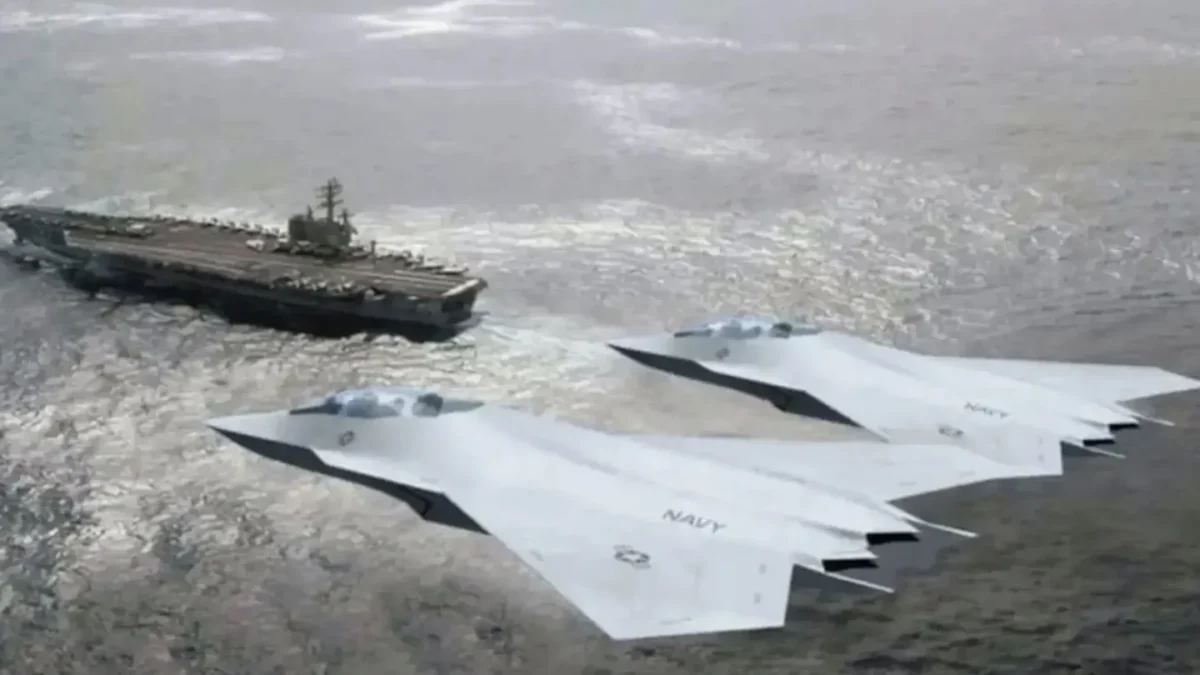
The Navy has identified extended operational range as a central objective. In April 2025, Rear Adm. Michael Donnelly, then the service’s director of air warfare, said the F/A-XX was expected to fly more than 25% farther before refueling than existing Navy tactical fighters. That was a stated program expectation, not a confirmed performance figure from a flying aircraft.
Surviving in Contested Airspace
Range alone won’t solve the problem. Modern surface-to-air missile systems and increasingly capable combat aircraft can make traditional flight routes dangerous. The F/A-XX is therefore expected to combine greater reach with advanced stealth and improved sensing capabilities.
Stealth helps reduce the distance at which an aircraft can be detected and tracked, although it does not make a fighter invisible. Better sensors and information-sharing could also help pilots understand threats without relying on a single source of information.
There is another consideration: the carrier itself. A carrier strike group needs aircraft that can conduct missions without bringing the ship unnecessarily close to hostile weapons. Extending the air wing’s reach could give commanders more options for positioning the carrier and planning operations.
The F/A-XX is intended to complement the F-35C rather than replace every aircraft aboard the carrier. Together, they are expected to provide a combination of stealth, strike capacity, and advanced combat capabilities.
The strategic idea is simple, even if the engineering isn’t. The Navy wants to project air power farther while exposing its aircraft and carriers to fewer risks. Whether the F/A-XX achieves that goal will depend on its eventual performance, supporting systems, and ability to enter service on schedule.
What Capabilities and Technologies Will the F/A-XX Fighter Have?
A sixth-generation fighter needs more than a sleek shape and powerful engines. Its real advantage may come from how effectively it combines stealth, sensors, weapons, and information from other aircraft.
The F/A-XX Fighter is being developed around that broader idea, although many technical details remain classified.
Advanced Stealth for Contested Airspace
Stealth will be a central feature of the Navy’s next-generation fighter. By reducing its radar signature, the aircraft should make it harder for hostile forces to detect, track, and engage it at useful distances.
But stealth isn’t invisibility. Detection depends on radar characteristics, viewing angles, operating conditions, and other factors. The practical goal is to complicate an opponent’s response and give the aircraft more opportunities to complete its mission.
Greater Range and Endurance
Distance is another major priority. Navy officials stated in 2025 that the F/A-XX was expected to fly more than 25% farther before refueling than existing Navy tactical fighters. That remains a program objective, not a verified performance result from a completed aircraft.
Longer range could allow carrier aircraft to operate farther from threats while reaching targets that might otherwise require additional tanker support. The challenge is balancing fuel capacity with weapons, stealth, and the physical limits of carrier operations.
Sensors, Data Fusion, and Artificial Intelligence
Future combat aircraft must process enormous amounts of information. Radar, electronic-support systems, infrared sensors, and data from other platforms can each reveal different parts of the battlefield.
The F/A-XX is expected to benefit from advanced mission systems that help pilots interpret this information and make decisions faster. Artificial intelligence and machine learning could assist with identifying patterns, prioritizing threats, and coordinating complex missions, although specific operational functions have not been publicly confirmed.
Weapons and Modular Systems
The aircraft is expected to support modern weapons and future upgrades. Boeing has also highlighted open mission systems architecture, which can help make software and subsystems easier to update as technology evolves.
The key distinction is between ambition and evidence. Exact speed, weapons capacity, engine configuration, and combat radius have not been publicly established.
The F/A-XX’s eventual advantage will depend on how well these technologies work together, not on any single headline-grabbing specification.
Why Did Boeing Win the F/A-XX Fighter Contract?
The F/A-XX program has reached a turning point. After years of competition and uncertainty over funding, the U.S. Navy selected Boeing to develop its next-generation carrier-based fighter. The decision puts the company in charge of turning a future combat-aircraft concept into a testable, flyable system.

The award also highlights a wider challenge for the Navy: developing an advanced aircraft while balancing cost, schedule, and the demands of a changing security environment.
A Major Development Contract
On September 29, 2026, Boeing was selected for the F/A-XX program under a contract valued at more than $20 billion for full-scale development. The award covers the next phase of engineering and testing, rather than immediate mass production or operational deployment.
The distinction is important. A development contract funds the work needed to mature the design, build test aircraft, and evaluate whether the system meets its requirements. It does not guarantee that every planned capability will work as intended or that the aircraft will enter service on a particular date.
Boeing’s selection also means Northrop Grumman will not lead this phase of the program. Both companies had experience relevant to advanced military aircraft, but the Navy ultimately chose Boeing’s proposal for its carrier-based fighter initiative.
Why Boeing’s Experience Matters
Boeing brings experience building carrier-based aircraft, including the F/A-18E/F Super Hornet, and it is also developing the Air Force’s F-47 sixth-generation fighter. Some engineering expertise and manufacturing investments could be relevant across both programs, although the Navy’s aircraft has its own requirements.
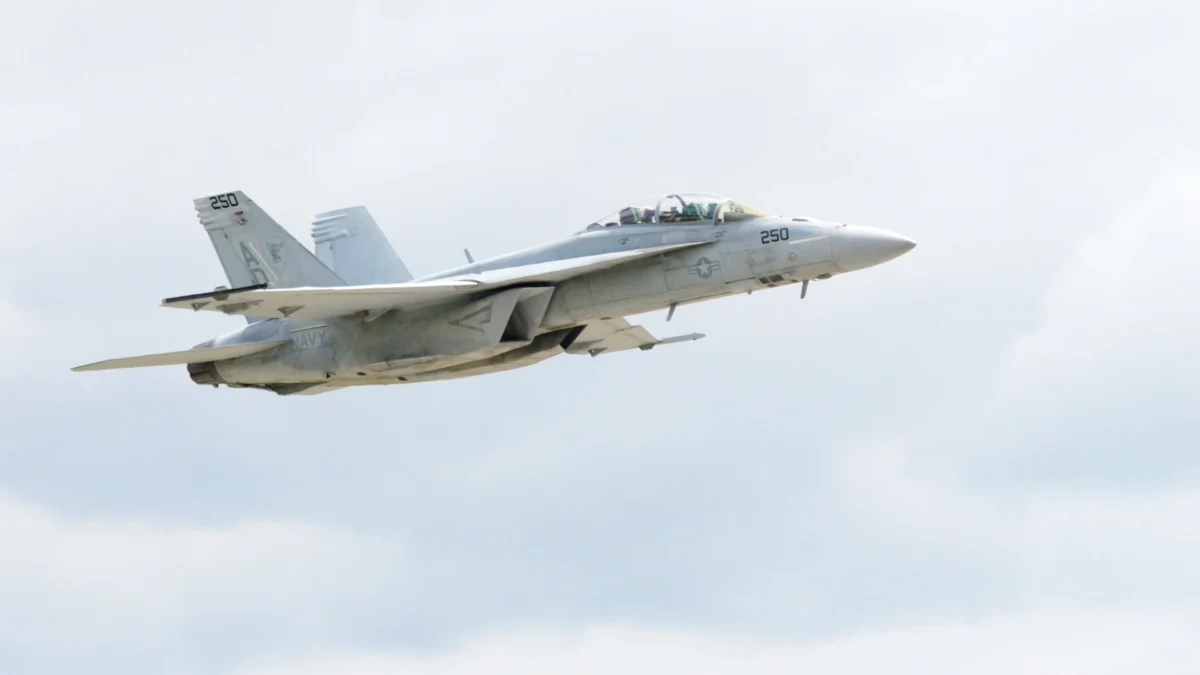
The selection also raises a practical question: can Boeing deliver two advanced fighter programs while managing its other defense commitments? Manufacturing capacity, specialist labor, supplier reliability, and testing schedules will all influence progress.
The contract is a major milestone, not a finish line. The next test will be whether Boeing can turn its proposal into a reliable aircraft that meets the Navy’s demanding requirements without costly delays.
F/A-XX vs. F-35C vs. F-47: What Are the Differences?
The F/A-XX Fighter is often discussed alongside two other advanced American combat aircraft: the Navy’s F-35C and the Air Force’s F-47. All three are intended to help the United States maintain air-combat capabilities, but they serve different purposes and occupy different stages of development.
The easiest way to understand the distinction is to consider where each aircraft operates, what missions it is designed to perform, and how it fits into its service’s wider strategy.
F/A-XX vs. F-35C vs. F-47: Key Differences
| Feature | F/A-XX | F-35C | F-47 |
| Service | U.S. Navy | U.S. Navy and Marine Corps | U.S. Air Force |
| Generation | Sixth-generation | Fifth-generation | Sixth-generation |
| Primary role | Future naval fighter and strike aircraft | Stealth multirole combat | Next-generation air superiority |
| Operating environment | Aircraft carriers | Aircraft carriers and land bases | Land-based air operations |
| Program status | Full-scale development | Operational | Development |
| Expected service timeline | 2030s target | In service | Under development |
How Does the F/A-XX Differ From the F-35C?
The F-35C is already operational, providing stealth, sensor fusion, and multirole capabilities to carrier air wings. The F/A-XX is intended to complement it, adding future capabilities and greater operational reach rather than simply duplicating its missions.
Think of the F-35C as an established tool that the Navy can deploy today. The F/A-XX is being developed for a future battlefield where greater distance, advanced defenses, and coordination with unmanned aircraft may become even more important.
Why Is the F-47 Different?
The F-47 is the Air Force’s sixth-generation fighter program. Although it shares the broader objective of maintaining air superiority, it is designed for land-based operations rather than the Navy’s demanding carrier environment.
That difference matters. Carrier aircraft must accommodate launch and recovery systems, demanding structural requirements, and limited deck space. Land-based fighters do not face precisely the same constraints.
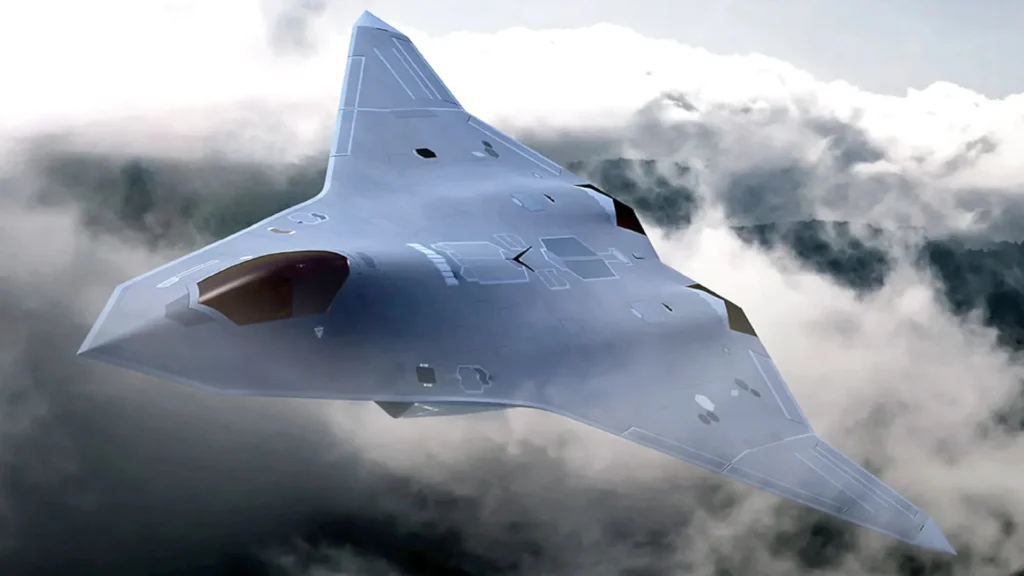
Boeing’s selection for both programs could create opportunities to share technologies and development expertise. However, the two aircraft should not be assumed to have identical designs or capabilities.
Ultimately, the F/A-XX’s significance lies in its naval mission. It must extend the carrier air wing’s reach while working alongside existing fighters and emerging unmanned systems. Its real performance will become clearer as Boeing progresses through development and testing.
When Will the F/A-XX Enter Service?
The F/A-XX Fighter is expected to enter U.S. Navy service during the 2030s, but the exact date remains unannounced. On September 29, 2026, the U.S. Department of War awarded Boeing a contract worth more than $20 billion to begin the aircraft’s full-scale development phase. The announcement confirmed the Navy’s long-term goal of introducing the aircraft beginning in the 2030s.
However, awarding a development contract does not mean the fighter is close to operational service. Boeing must first develop the design, build test aircraft, and demonstrate that the platform can operate safely and reliably.
The initial development phase will include several important activities:
- Aircraft development: Finalizing the design and integrating its major systems.
- Ground and flight testing: Evaluating structural integrity, flight performance, and airworthiness.
- Systems integration: Testing avionics, sensors, communications, and other mission equipment.
- Weapons integration: Ensuring the aircraft can safely employ its intended weapons.
- Carrier suitability: Demonstrating that the fighter can operate within the demanding environment of U.S. Navy aircraft carriers.
The Pentagon’s announcement specifically identifies ground, airworthiness, systems, and weapons integration testing as part of the contract.
The transition will also take time. The F/A-XX is intended to augment and eventually replace the Navy’s F/A-18E/F Super Hornets and EA-18G Growlers, while operating alongside the F-35C Lightning II. These changes are expected to occur gradually rather than through an immediate fleet-wide replacement.
Several factors could influence the schedule, including development challenges, supply-chain capacity, testing results, and the complexity of integrating advanced technologies. The program has also faced earlier funding and scheduling disputes, making execution a key issue to watch.
For now, the 2030s is the clearest publicly stated timeframe, not a guaranteed operational date. Future announcements about the first flight, testing milestones, production decisions, and delivery of initial operational aircraft will provide a better picture of when the F/A-XX will join the carrier air wing.
