


Babcock International Group has broken ground on a new integrated logistics hub to support growing UK demand for submarine maintenance output, the UK-based global defence company said in a 23 October statement.
The announcement also noted the company’s launch of the ‘Babcock Skills Centre’ at Devonport Dockyard, Plymouth. The setup is designed to bring what the statement called “hands-on training to the waterfront” to support UK defence programmes.
The two developments are designed to underpin key UK defence programmes by supporting the government’s defence industrial strategy and investing in the infrastructure and personnel frameworks needed for the UK Royal Navy’s (RN’s) submarine fleet and future requirements, the statement added.
As a major NATO naval power tasked with providing underwater capability to support alliance deterrence and defence requirements, the logistics hub – located at Sherford, Plymouth – will play a key role in supporting the UK’s multiple submarine programmes.
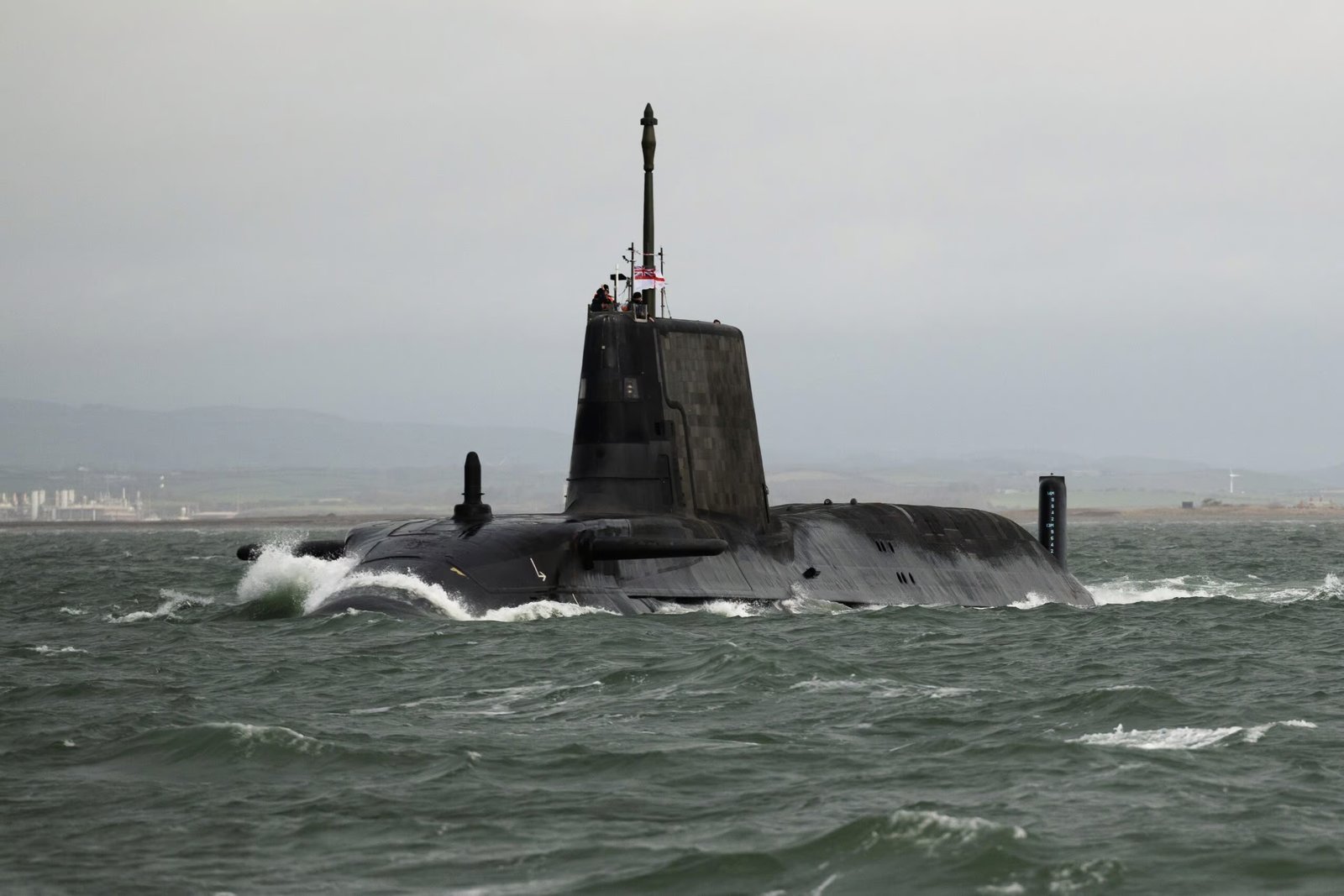
These programmes include: operating and maintaining the four in-service Vanguard-class nuclear-powered ballistic missile submarines (SSBNs); delivering, operating, and maintaining the seven Astute-class nuclear-powered attack submarines (SSNs), six of which are in RN service; building the incoming Dreadnought-class SSBNs, to replace Vanguard; developing and building the incoming SSN-A AUKUS boats, to replace Astute; and starting work on a successor submarine to Dreadnought.
The Sherford hub “will optimise space across Babcock’s Devonport estate, and increase operational capacity and resilience in support of critical submarine sustainment and deep maintenance activities,” the statement said. The 18.8-acre site could accommodate a 30,000 square metre facility.
The UK’s strategic importance as a generator of high-end submarine capability in the North Atlantic and elsewhere, in support of national and NATO interests, has created a challenge for the UK and the RN in recent years due to limited availability of submarine support infrastructure. At times, this challenge has contributed to fewer SSNs and SSBNs being available; in the former case, this has occasionally meant none were available.
Under the UK’s latest Defence Investment Plan (DIP), published in June 2026, and the RN’s Submarine Maintenance Recovery Plan (SMRP), launched in January 2026, steps are now being taken to build the support capacity needed to regenerate submarine availability levels.
Under the DIP, steps include upgrading submarine maintenance docks at HM Naval Base Devonport in Plymouth and improving infrastructure at HM Naval Base Clyde, Faslane, to support all RN submarine classes, including the planned acquisition of three floating docks and other infrastructure to enable out-of-water engineering.
Under the SMRP, work was already underway to provide pierside maintenance at Faslane. This concept has been progressed to a forward-deployed maintenance capability. When the Astute-class SSN HMS Anson made a port call in Perth, Western Australia, early in 2026, the RN supported the boat alongside with a containerised maintenance capability, including capacity for 3-D printing spare parts.
by Dr. Lee Willett
