

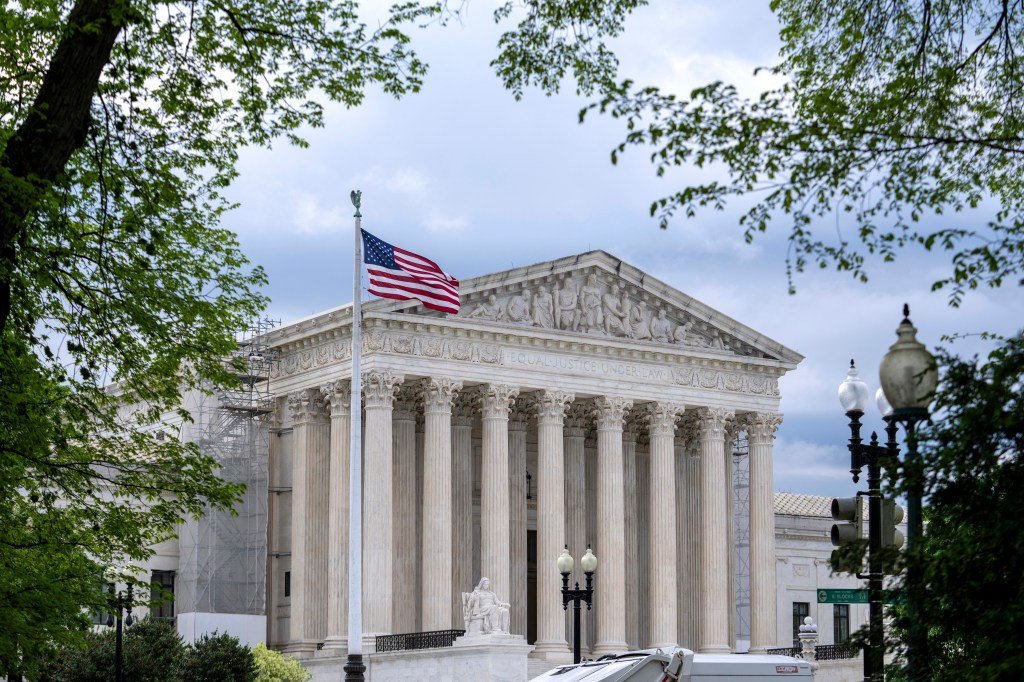
Four years after Navy Lt. Craig Becker was convicted of pushing his wife out a seventh-floor window to her death while the couple was stationed in Belgium, an attorney for the officer is making a last-chance petition to the Supreme Court, saying key evidence was omitted from the trial.
Becker, a decorated explosive ordnance disposal officer, was sentenced in 2022 to life without parole in the 2015 death of 32-year-old Johanna Hove-Becker, with a jury finding he was guilty of premeditated murder, assault consummated by a battery and conduct unbecoming an officer and a gentleman. The trial followed years of dispute over who would prosecute the case; Becker remained in the custody of Belgian legal authorities for two years after Hove-Becker’s death while the Navy declined to take jurisdiction. Then-Defense Secretary Jim Mattis ultimately ordered the Navy to take the case in 2018.
While prosecutors said Becker had had a “visceral” reaction to learning Hove-Becker had a new boyfriend and was thus motivated to later drug her with sleeping pills and push her from the window to her death, Becker’s attorney says evidence left out of trial points to the deceased woman’s own mental instability.
In an Oct. 16 petition for writ of certiorari, or formal review request to the Supreme Court, Becker’s attorney David Sheldon, a former Navy Judge Advocate General, argues that a series of text messages between Becker and his wife seven months before her death constitute evidence that she was suicidal and should have been included as part of Becker’s defense. Both Becker and Hove-Becker, the petition states, were separated at the time of her death and had other partners, though they continued to live together and co-parent.
In the messages, included in the petition, Hove-Becker allegedly tells Becker she’s “trying to work on not being nuts” and “terrified” of “losing my memory and my wits … losing my mental faculties against my will.”
The texts were excluded by the trial judge as hearsay, Sheldon states, but should have been included as key evidence of a “history of mental health problems,” particularly in light of other testimony from the prosecution that sought to establish Hove-Becker’s soundness of mind.
It’s the last in a series of appeals and follows previous disputes over hearsay in the case. A 2021 decision by the Navy-Marine Corps Court of Criminal Appeals, or NMCCA, overturned a decision by the trial judge, Navy Capt. Aaron Rugh, which had excluded statements Hove-Becker made in 2013 accusing her husband of physical violence. She had claimed Becker had thrown her “around their hotel room and strangled her” after learning she’d had an affair, but she later recanted the statements in a joint counseling session, court documents show.
Later in 2021, though, the United States Court of Appeals for the Armed Forces, or CAAF, reversed the lower appellate court’s ruling, finding the judge was right to suppress the statements.
Texts Hove-Becker allegedly sent on the night of her death, including one stating “I f—ing hate my life,” also complicate the picture, though Becker was later accused of sending those messages himself.
In an interview, Sheldon said he believed the lower appellate courts should have allowed for admission of evidence supporting Becker’s claim that his wife had died by suicide.
“The government paints this picture throughout the trial that she somehow is sane right before she dies,” he said. “And that just didn’t match reality.”
In a 111-page opinion issued late last December, NMCCA declined to overturn Becker’s conviction, finding the prosecution had “presented overwhelming evidence of preparation, including [Becker] retrieving pills from his former desk one day before [Hove-Becker’s] death that match a description of zolpidem, and buying wine for someone he described as having a drinking problem.”
The court also noted that Hove-Becker was described by friends and co-workers as “happy and moving on with her life” around the time of her death.
CAAF, the last military appeals court before the Supreme Court, announced in June that it would not reconsider the case, and denied reconsideration a month later.
Becker has been incarcerated at the U.S. Disciplinary Barracks in Fort Leavenworth, Kansas, since his sentencing, Sheldon said. The Supreme Court is likely to make a decision within the next 90 days on whether it will take up the case, he said.
