

The next generation of durable, high-tech and alternative materials used by the U.S. military could come from Milwaukee, Wisc.
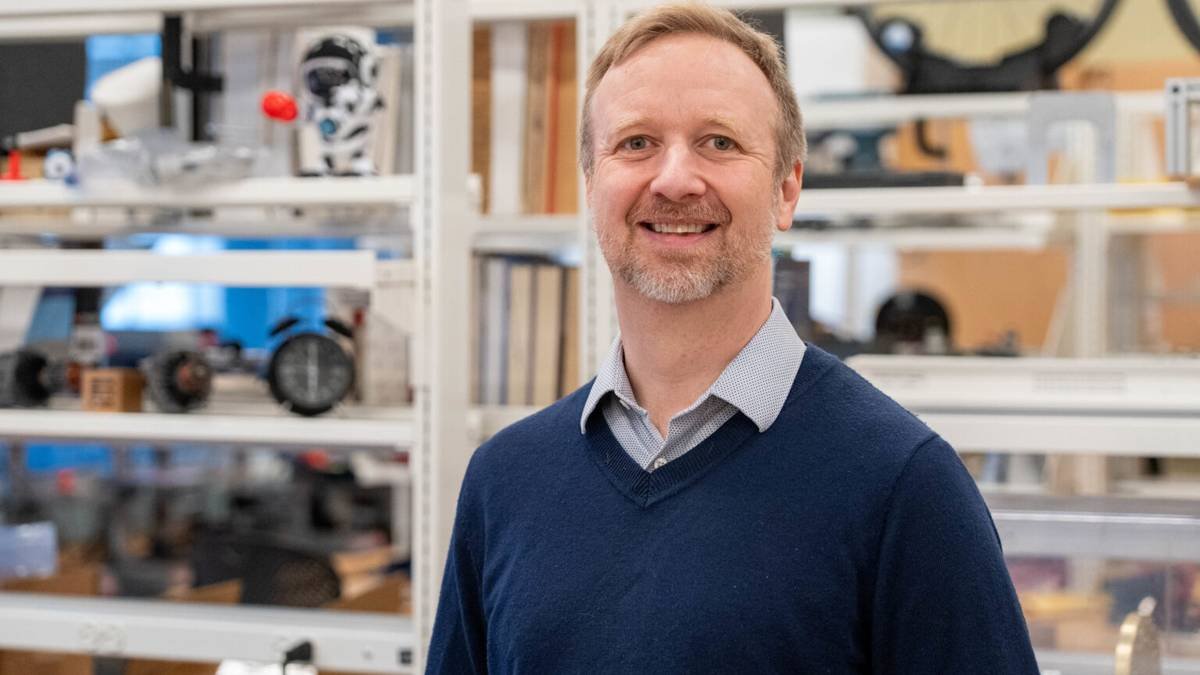
John Moore, an associate professor of mechanical engineering at Marquette University in Milwaukee, will share part of a new $600,000 research grant from the U.S. Army. The money will fund a cooperative agreement to develop more efficient ways to test new high-performance materials including water, synthetic fuels, indestructible fabrics and solid surfaces that will serve the military of the future.
“We’re exploring what’s called the equation of state (EOS) of materials,” Moore told Military.com. “What this means is understanding how a material is going to behave in a lot of different situations—if it’s very cold, if it’s very hot, if it’s hit really hard, if it’s hit with high pressures, if it can ignite. We’re developing ways to test all of those things.”
Moore will partner with the U.S. Army Research Office and the private engineering firm Pisale, based in Hawaii. Together, all will develop a process for testing a variety of materials, in an expedited amount of time, that will eventually be used by troops in the U.S. and abroad.
“A lot of the bottleneck in developing new materials is that it takes a lot of long-term experiments to characterize and understand how a material is going to behave in different scenarios,” Moore said. “So, instead of having a lot of expensive, time-consuming experiments, we hope to have just one experiment, and have that experiment be complex and fruitful.”
Testing Mechanisms Will Help ‘Train Next Generation of Scientists’
The work will be complicated, involving computational simulations that are then verified through additional testing.
For example, by determining a certain material’s velocity, or how it moves, Moore said his team will be able to utilize physics simulations and a certain algorithm to establish the EOS.
“The research will be collaborative, with me at Marquette, with researchers at Pisale, and with a program officer at the Army research office. So we’re kind of getting the best of everyone,” Moore said. “We’re hiring a postdoctoral student. I think we’re going to hire several graduate students. So, some of what we’ll do is train the next generation of scientists.”
Dr. Kristina Ropella, dean of the Opus College of Engineering at Marquette, called Moore’s work cutting-edge and necessary.
“Dr. Moore’s approach to more efficient experimentation methods is essential for future innovations in materials science,” Ropella said in a statement. “I am grateful for his collaborative leadership and expertise to advance discovery in his field. This work will accelerate the pace of scientific breakthroughs in material performance.”

The driving force behind the three-year research agreement will be improving the speed of materials testing, to benefit military and civilian life.
“Our work will accelerate new material technology from the lab to the field,” Moore added. ‘So, something that maybe would have taken years in the past as a new idea, we hope to be able to test it much faster.
“And if it’s something that will give our troops an advantage or protect our troops, we’ll get that to scale and trust it and understand it much quicker.”
Providing a ‘Military Advantage’
Moore cited several examples of what will be tested to make military life faster, more efficient and, ultimately, safer.
“We’re starting very simple,” he said. “We’re trying to understand water in a lot of extreme situations. But also, what we’re envisioning is perhaps a new fuel that is more efficient for military transport.
“Maybe you have a new explosive that is going to meet military goals, or you have a new armor material that’s going to protect our troops. Those are the applications where we could see something really new and cutting edge.”

Moore said there are materials in use today that were once tested by researchers years ago in a similar process. Testing may involve carbon composite materials or woven materials “that you see all over the place now,” he said, referring to cars, bicycles and golf clubs, etc.
A research deadline as part of the grant is set for August 2029. Moore said that by then, tests for a series of new and innovative materials should be complete.
“Materials testing and development used to take decades,” he said. “Now, we’re starting to be able to develop materials for things like fail-safe landing gear in a few years or less. That’s an advantage for us and our military.”
