


Recent conflicts in the Middle East have shown the damage drone attacks can inflict, and the limits of air defences that rely on expensive interceptor missiles.
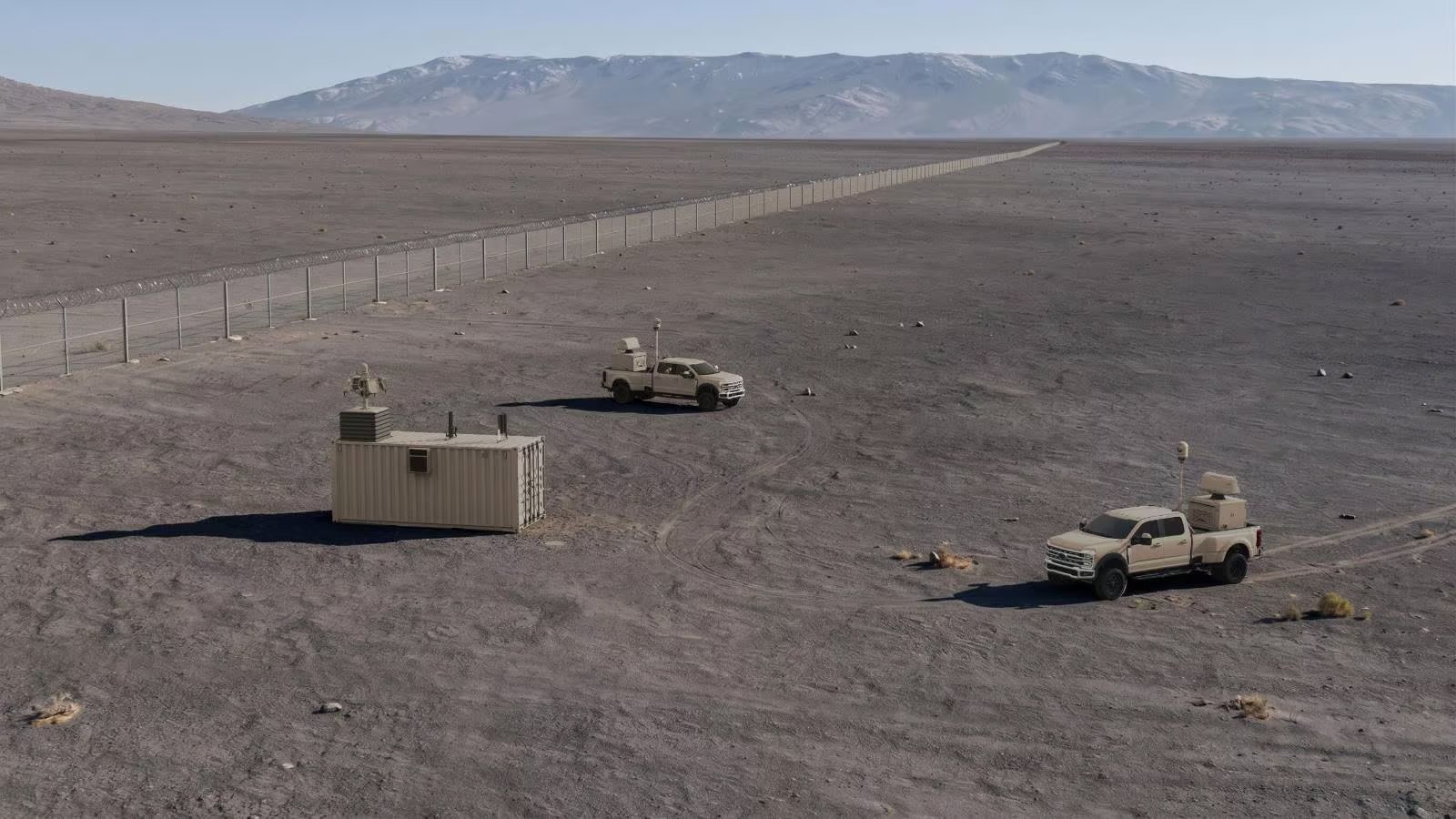
MARSS, a UK EOS company, has won a £370 million contract to supply a vehicle-mounted C-UAS system to Kuwait, covering threats from the air and sea. The contract calls for the rapid deployment of a cellular system built around NiDAR, MARSS’ AI-enabled command-and-control (C2) system designed for multi-domain surveillance and counter-drone defence. MARSS will install electro-optical, radar and sonar sensors across a network of sites to feed central command centres. NiDAR will fuse the data into actionable threat assessments, providing hemispherical coverage against airborne and coastal seaborne drones. The contract also includes initial supply of hard-kill interceptors and soft-kill jammers. NiDAR dramatically shortens the decision cycle from detection to defeat by using AI to automatically classify threats, recommend engagement, and reduce operators’ cognitive burden.
In response to the evolving drone threat, Thales UK has demonstrated the ForceShield ground-based air defence system’s ability to track and intercept hostile drones. It integrates Ground Master radars, which deliver high-performance surveillance and target acquisition, and the ControlView C2 system, an open, data-centric solution. Thanks to its open architecture, it allows seamless integration of third-party sensors and effectors.
The Spanish company Indra has showcased its C-UAS capability to respond to saturation attacks in which a large number of threats must be detected and neutralised simultaneously. One key component is the company’s AirDef air defence C2 system, which offers high interoperability with all types of systems and sensors. This integrated air defence system can also operate alongside land-based electronic warfare (EW) systems, such as radar and communications EW stations. All these capabilities are decisive in enabling a true drone wall to protect Europe’s border.

Developed by the Turkish company ASELSAN, GÖKALP detects drones using radar and electro-optical systems and autonomously neutralises hostile drones. Its vehicle-integrated design includes a AURA radar that detects the target drone and transmits real-time data to the GÖKALP E1 interceptor drone through the DRONEDEF system’s C2 software. GÖKALP E1 then intercepts and destroys the target using the direct-impact method. DRONEDEF is ASELSAN’s C-UAS layer within STEELDOME, Türkiye’s integrated, layered air defence architecture.

by David Oliver
