

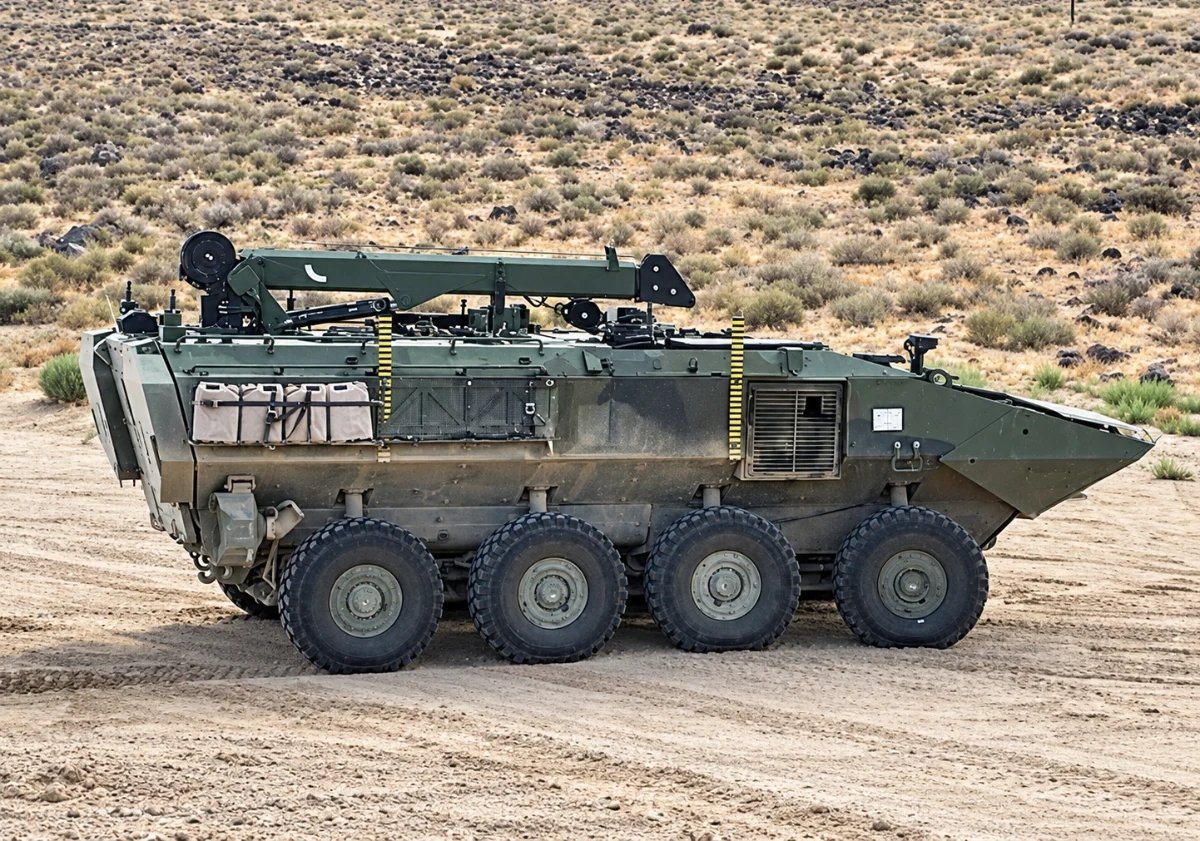

The US Marine Corps’ latest October 2026 order to BAE Systems for thirty-two Amphibious Combat Vehicle Recovery variants (ACV-R) gives the Corps a critical new capability to support its amphibious assault and sustained operations ashore.
The ACV-R uses the same ACV platform as the previously fielded ACV-30, the ACV-Personnel (ACV-P) troop transport, and the ACV-Command (ACV-C) command-and-control vehicle. It supports these systems by providing vehicle recovery, forward maintenance and field repair, and mobile workshop capabilities. The ACV-R can transition from ship-to-shore and operate with ACV-equipped Marine units.
The ACV-R has onboard capabilities to support other ACV operations. These include a heavy-duty hydraulic recovery winch with a pulling capacity exceeding 30 tons. This allows retrieval of stuck or disabled 35-ton vehicles from mud or trenches, including in the surf zone. An extending, rotating Palfinger crane is provided for lifting tasks such as hoisting the engine pack from other ACVs Finally, the vehicle is outfitted with a range of onboard repair tools, including cutting and welding equipment. In addition, rigid tow bars are provided to pull damaged vehicles out of danger and to repair facilities.
The wheeled 8 X 8 ACV-R has a crew of four, a maximum land speed of 105 km/h (65 mph) and a water speed of six knots. It can traverse Sea State 3 open ocean and navigate a 2.75-meter (9-foot) plunging surf. Its modular H-drive offers on– and off-road mobility, while dual water jets provide propulsion and steering.
The US$230.1 million production contract will run through 2029. Fielding the ACV-R expands the Marine Corps’ ability to support its execution of amphibious warfare, a mission it pioneered in the 1930s.
by Stephen W. Miller
