

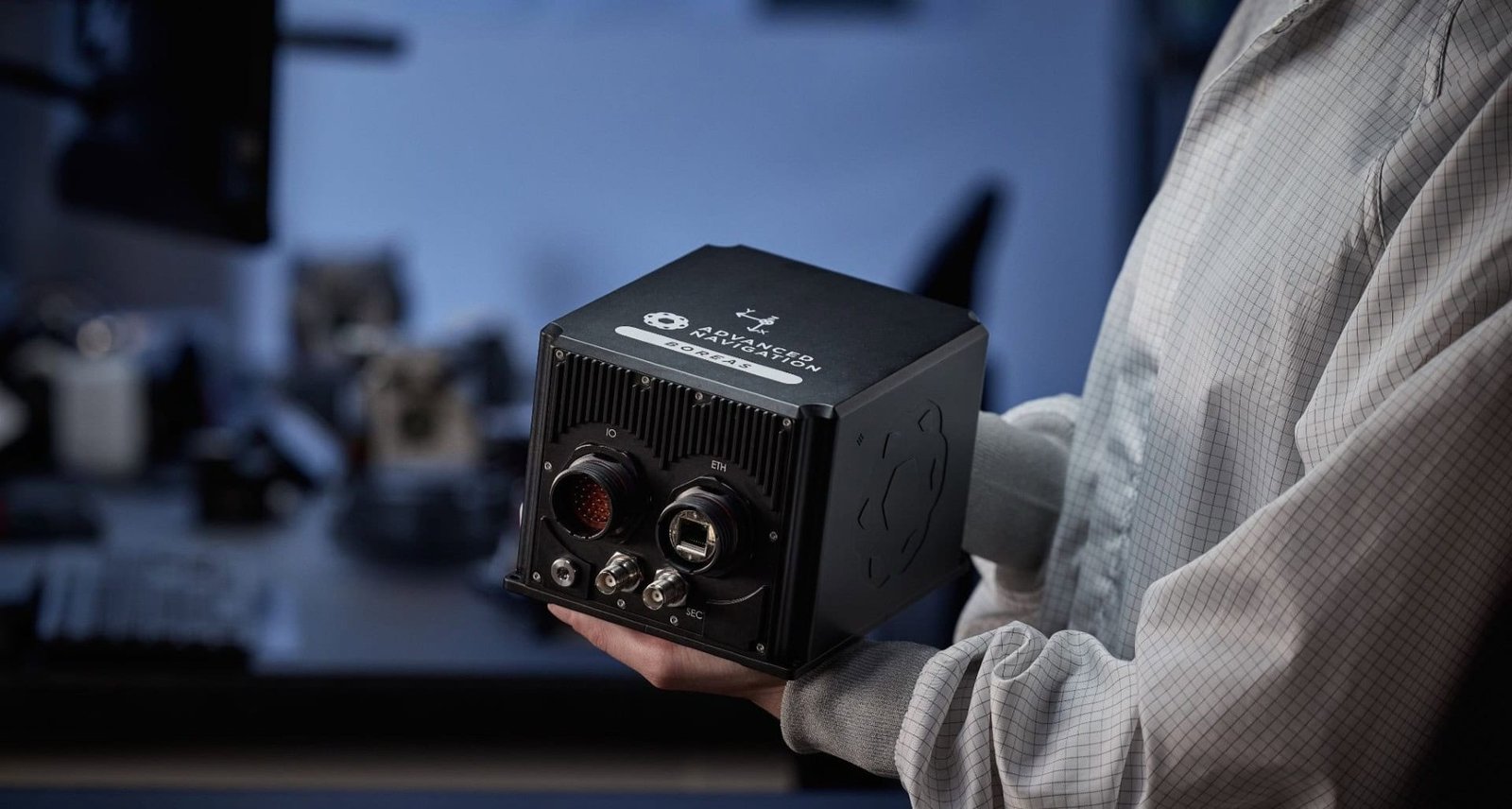
From its centre of gravity for research and development and production in Australia, Advanced Navigation is establishing a presence in the USA via a centre of excellence in Huntsville, Alabama.
“This is a key part of our global expansion that we’re in the midst of now,” enthused Michelle Toscan, Head of Asia-Pacific at Advanced Navigation.
As the company’s name suggests, it produced advanced positioning, navigation and timing technologies. With the USA joining the roster, Advanced Navigation will have greater speed and scale when it comes to responding to global demand from defence forces.
US base
Huntsville was selected because it has a high concentration of engineers. It is also surrounded by Redstone Arsenal, the Missile Defense Agency, NASA’s Marshall Space Flight Center and the headquarters of US Space Command.
The expansion into the USA was funded by an A$158 million (US$110 million) raise of capital, and “this new PNT Centre of Excellence will allow specific components, systems and builds to be produced on US soil where required for security, classified programmes or customer requirements,” explained a press release.
Chris Shaw, CEO and Co-Founder of Advanced Navigation, remarked, “Expanding into the United States allows us to take that capability directly into one of the world’s largest defence markets. It gives us additional capacity to support US programmes while continuing to invest in the advanced manufacturing and R&D capability we have built here in Australia.”
The facility will start producing in 2027, as sensitive calibration engineering is needed first. The USA is one of the firm’s largest customers, and it is a strategic client.
Growing demand
Speaking to Asian Military Review at the Land Forces 2026 exhibition in Perth, Toscan explained that the advent of GPS interference in areas like Ukraine and its environs has caused demand to spike. “For a long time, we all thought GPS would always be available, but as we’re seeing with those conflict areas it can be jammed and spoofed.”
Toscan said her company’s inertial navigation products are found in vehicles like the Boxer and AS21 Redback, as well as in Kongsberg’s Protector remote weapon stations. She noted that these devices are needed in any platform that needs to know which direction it is pointing.
So that includes unmanned systems like drones, unmanned ground vehicles, uncrewed underwater vehicles and radars. Asian Military Review therefore assumes that unmanned underwater vehicles currently in production in Australia include these sensors.
As well as inertial measurement units, the two main types of inertial navigation sensors in the company’s catalogue are micro-electrical-mechanical systems and fibre-optic gyroscopes. They work by detecting the rotation of the Earth, and this requires precise engineering similar in intensity to semiconductor fabrication. This reliance on pure physics means they cannot be jammed or spoofed, as GPS can.
Technology is having two effects, Toscan shared – greater precision and miniaturisation of sensors. The latter factor becomes important where size, weight and power considerations are vital. One of its newest units is the Boreas 50, which is about the size of a soft drink can.
Regarding Asia-Pacific, Toscan said the region is growing in importance, and Advanced Navigation is in an expansion phase there. Activities are occurring in countries like India, Japan, Southeast Asia, South Korea, Taiwan and Vietnam, especially through local partners.
Advanced Navigation is one of only a few companies globally with the capability to produce strategic-grade fibre-optic gyroscopes and laser velocity sensors at scale. Advanced Navigation already has its sensors integrated into more than 100,000 systems worldwide.
Toscan said Europe is likely to be the next site for her company to set up a facility, “but I wouldn’t rule out Asia-Pacific as well”.
by Gordon Arthur, Perth
