

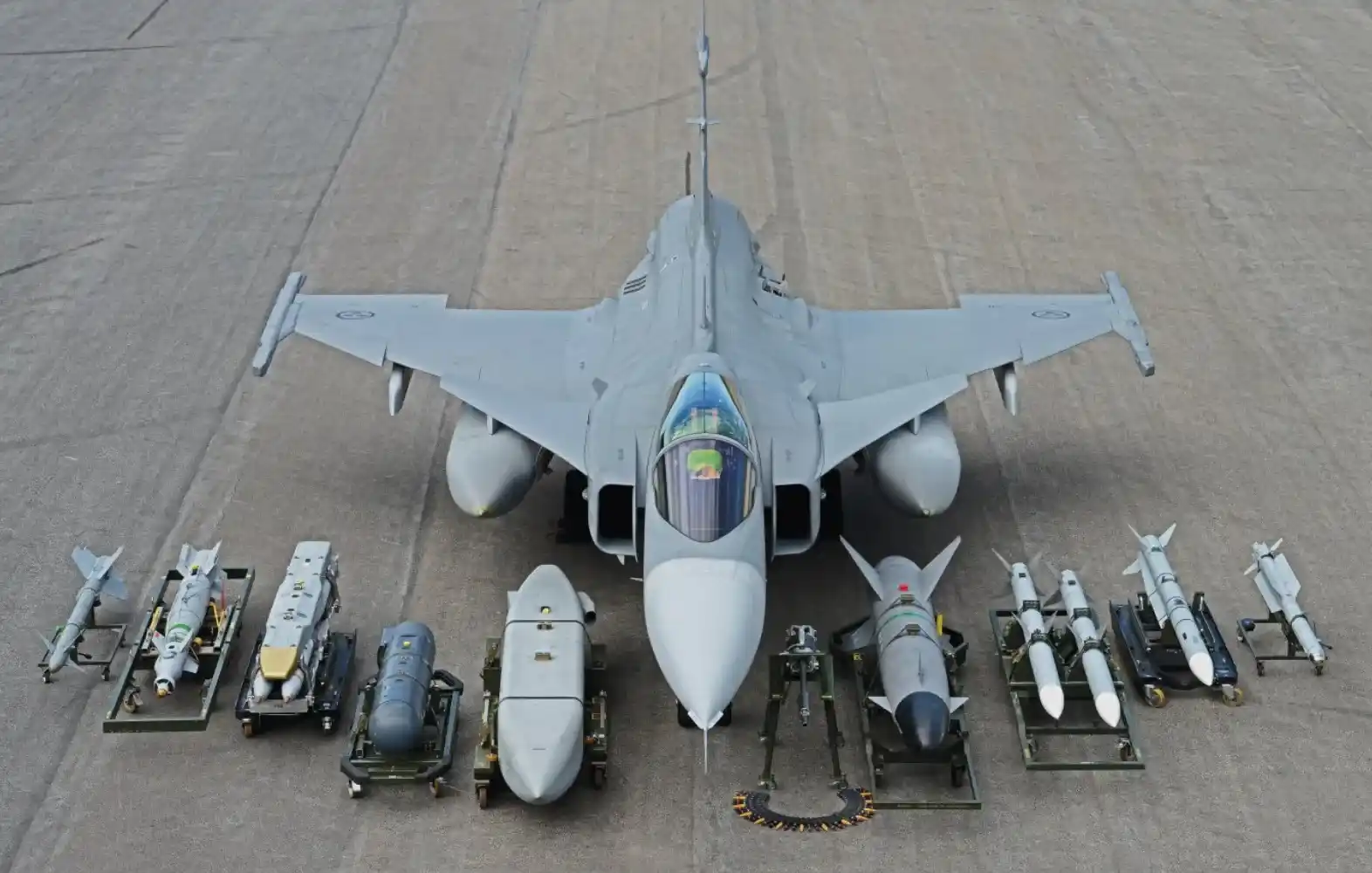
The JAS 39 Gripen was built around a simple Swedish idea: one fighter should do several jobs, take off from places a large air base cannot, and get back into the air quickly.
That sounds ordinary today. It wasn’t in the 1980s.
Sweden wanted a replacement for the Saab Viggen that could handle jakt, attack and spaning, meaning fighter, attack and reconnaissance missions. That trio gives the aircraft its JAS name. Instead of buying separate aircraft for each role, Sweden put them into one compact platform.
The first JAS 39 Gripen prototype flew on December 9, 1988. The first production aircraft reached the Swedish Air Force in 1993, while the type entered official service in 1996.
But the interesting part isn’t the timeline. It’s the design logic behind it.
The Gripen is small by modern fighter standards. The JAS 39C/D, for example, is 14.9 meters long with an 8.4-meter wingspan. Its published maximum takeoff weight is 14,000 kilograms. FMV also lists a 400-meter takeoff run and a 500-meter landing run for the C/D.
Those numbers make more sense when you picture Sweden’s operating concept.
A Gripen wasn’t meant to live its whole life beside a giant runway and a huge maintenance crew. It was designed to use dispersed road bases and operate with relatively small ground teams. That makes the fighter harder to cripple by simply attacking a few major airfields.
And here’s the detail that often gets missed: Gripen isn’t just a small fighter with modern electronics bolted on. Its size, flight controls, maintenance needs and operating method were tied together from the start.
That philosophy still shapes the JAS 39 Gripen today, even as the newer Gripen E pushes the design far beyond the original aircraft.
How the Gripen’s Design Makes It Different
The Gripen’s strangest feature isn’t its delta wing. It’s the runway.
Sweden designed the JAS 39 Gripen to survive and operate without depending on a few large air bases. That sounds like a small detail until you consider what happens when an enemy targets runways, fuel stores, hangars, and command centers. A fighter that can move between prepared road strips is much harder to pin down.
The idea came from Sweden’s Bas 90 air base system, which built on an earlier dispersed-base concept. Gripen was designed with this way of fighting in mind. Its relatively short takeoff and landing distances mattered because Swedish road bases could not offer the long runways found at major air stations.
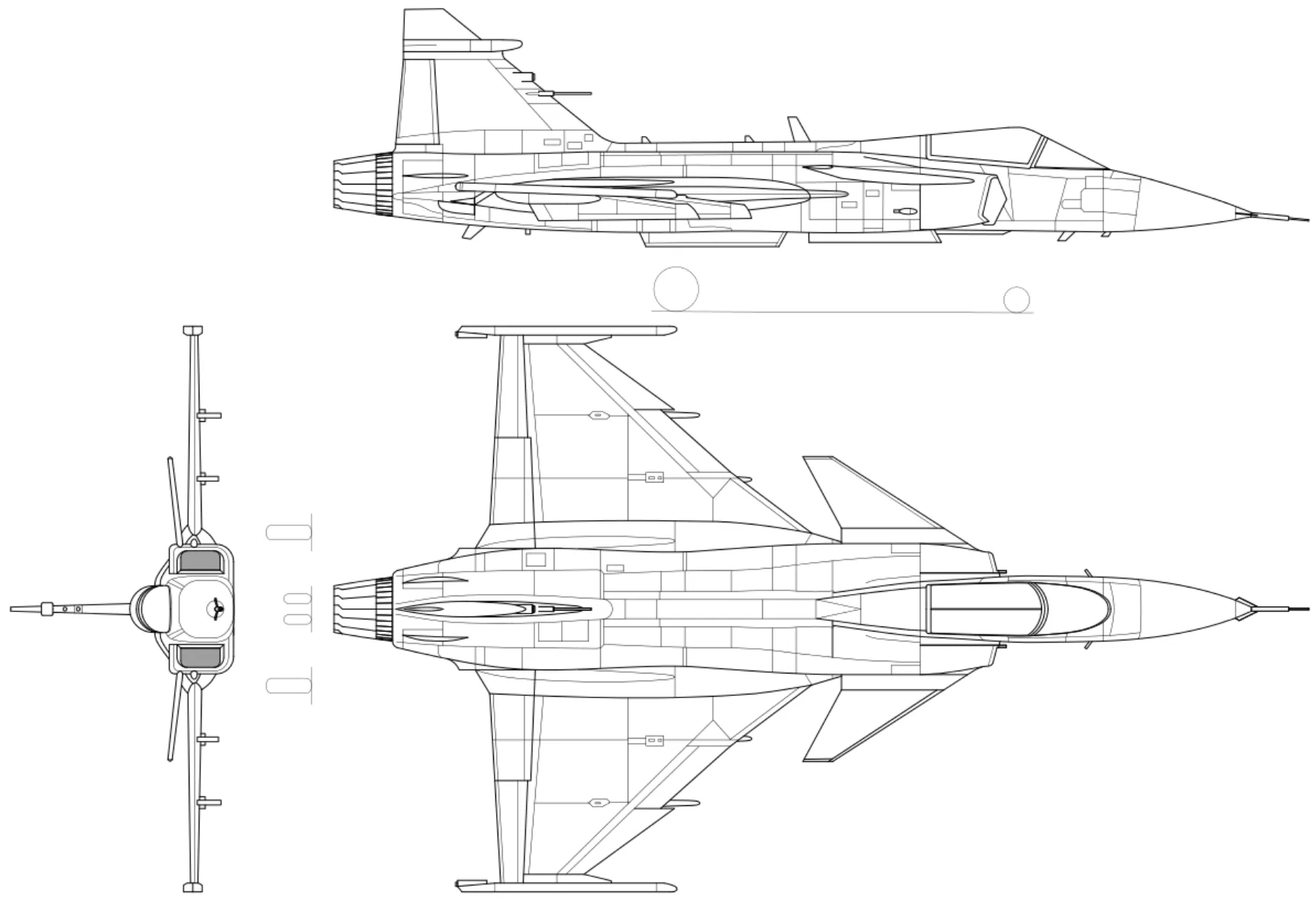
The JAS 39C/D has a published takeoff run of about 400 meters and a landing run of about 500 meters under stated conditions. Those figures are not magic numbers, though. Load, weather, runway surface, fuel, and mission profile all affect real performance. Anyone quoting them as universal combat distances is overselling the point.
The aircraft’s compact design also helps ground crews. Gripen was built for quick servicing by relatively small teams, with maintenance carried out in dispersed locations rather than only inside a large air base.
Then there are the canards and delta wing.
This layout gives the fighter useful lift and control authority while keeping the airframe compact. The Gripen also uses fly-by-wire controls, which allow the flight computer to manage an aircraft that can otherwise be demanding to handle at the edge of its flight envelope.
But agility isn’t the whole story.
A fighter can turn beautifully and still lose a fight before the first missile is launched. The Gripen’s real advantage comes from connecting its flight performance with sensors, data links, electronic warfare and dispersed operations.
That’s why calling the JAS 39 Gripen simply a “small Swedish fighter jet” misses the point.
Its small size was a consequence of the mission, not the mission itself.
Gripen C/D vs. Gripen E/F: What Changed?
Calling the Gripen E a “new version” of the Gripen C is technically true, but it hides just how much changed.
The Gripen C/D grew out of Sweden’s original Gripen family and became the main export version for several operators. The Gripen E/F keeps the same basic idea, but adds a larger airframe, more fuel, more weapons capacity, and a far more capable sensor and electronic warfare package.
That matters because modern air combat is less about squeezing another few knots from the airframe and more about seeing first, sharing information, and staying useful when the electromagnetic environment gets ugly.
| Feature | Gripen C/D | Gripen E/F |
| Engine | Volvo RM12 | GE F414G |
| Radar | PS-05/A | Raven ES-05 AESA |
| Hardpoints | 8 | 10 |
| Fuel capacity | Lower | Higher |
| Airframe | Smaller | Larger |
| Electronic warfare | Modernized | Major new EW suite |
| Crew | C: 1, D: 2 | E: 1, F: 2 |
The engine change is a good example. Gripen C/D uses the Volvo RM12, while Gripen E uses the GE F414G, giving the newer aircraft more thrust.
Saab lists the E at a maximum takeoff weight of 16,500 kilograms, compared with 14,000 kilograms for the C/D. That extra mass isn’t there for show. It supports more fuel, more equipment and a heavier weapons load.
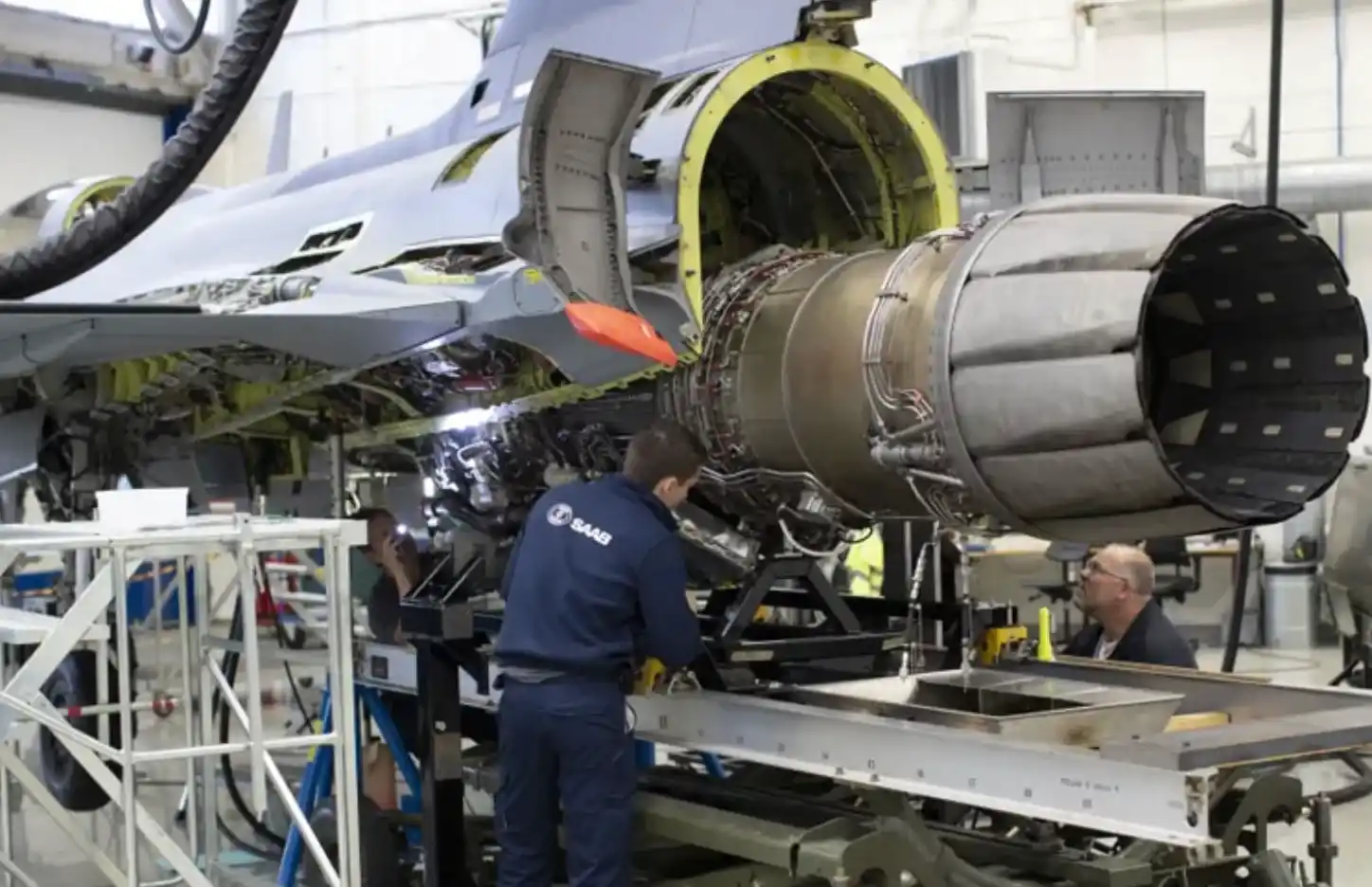
The radar change may matter even more.
Gripen E uses the Raven ES-05 electronically scanned array radar, paired with the Skyward-G infrared search and track system. The aircraft also gets a new electronic warfare system and upgraded data links. Saab designed these systems to work together rather than treating each sensor as a separate gadget.
And there’s a practical difference in weapons carriage. Gripen E has 10 hardpoints, two more than the C/D.
But don’t make the common mistake of treating E as simply “C/D with better radar.” The airframe itself was enlarged and redesigned. The result is a heavier fighter with more room for fuel, systems and weapons, while keeping the Gripen’s basic operating concept intact.
That is the real story of the transition: Gripen E isn’t abandoning the original Swedish formula. It is stretching it to handle a much harder air war.
Saab JAS 39 Gripen Performance and Specifications
Numbers tell you what the Gripen can do. They don’t always tell you why it was built that way.
The JAS 39 Gripen C/D can reach about Mach 2, while FMV lists a maximum load factor of +9G. Its compact 8.4-meter wingspan and 14.9-meter length reflect the same design priority seen elsewhere in the aircraft: keep the fighter small enough to work from Sweden’s dispersed bases without turning it into a lightweight compromise.
Here are the headline figures, with one warning: Gripen specifications vary by version and operating condition, so mixing C/D and E figures can produce nonsense.
| Specification | Gripen C/D | Gripen E |
| Length | 14.9 m | About 15.2 m |
| Wingspan | 8.4 m | About 8.6 m |
| Maximum takeoff weight | 14,000 kg | 16,500 kg |
| Maximum speed | Mach 2 | Mach 2 class |
| Engine | Volvo RM12 | GE F414G |
| Hardpoints | 8 | 10 |
| Crew | 1 or 2 | 1 or 2 |
The +9G figure deserves some context. A fighter rated for that load can withstand forces far beyond normal passenger aircraft, but a high-G turn is expensive. It burns energy, fuel and pilot stamina. Being able to pull 9G doesn’t mean a pilot should do it every time a fight gets close.
Speed has the same caveat.
Mach 2 looks impressive on paper, but modern fighters rarely win simply because one aircraft has a higher top speed. Radar range, missile performance, altitude, fuel state and the ability to detect an opponent without giving away your own position can matter much more.
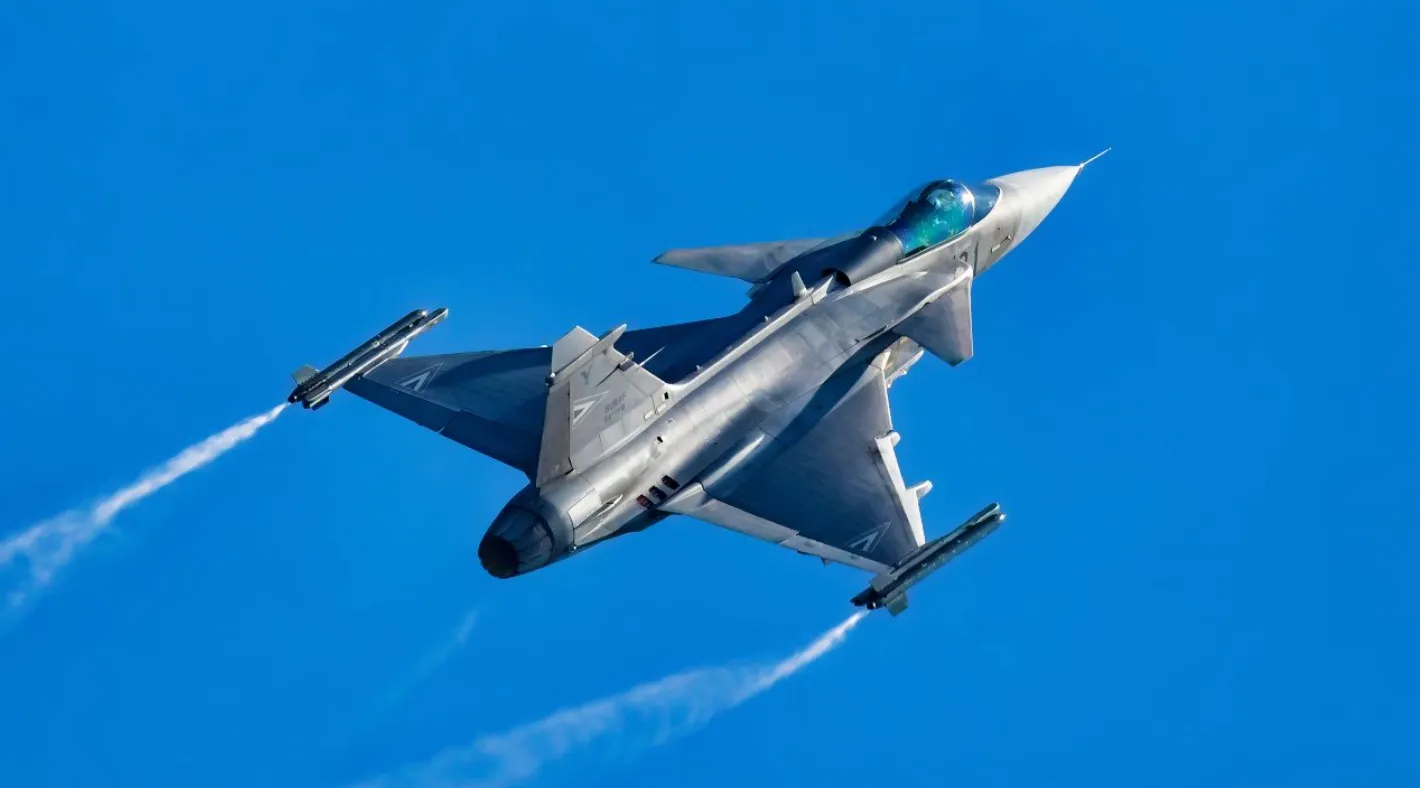
This is where Gripen E’s heavier design starts to make sense. Its 16.5-ton maximum takeoff weight gives Saab more room to carry fuel, weapons and new mission equipment. The aircraft pays for that extra capability with additional mass, but it gains something more useful than a flashy specification: greater flexibility during real missions.
And the short-field design remains part of the equation. FMV gives the C/D a roughly 400-meter takeoff run and 500-meter landing run under specified conditions. Those are useful reference figures, not promises for every combat load or runway.
I think that’s the best way to read Gripen’s numbers: not as a race card, but as evidence of the compromises Saab chose to make.
Sensors, Radar and Electronic Warfare
A fighter pilot cannot shoot at what the aircraft cannot find. That is why the Gripen’s sensor suite matters more than its Mach 2 headline.
The Gripen E brings together the Raven ES-05 AESA radar, Skyward-G infrared search and track system, electronic warfare equipment, and data links. The point isn’t to give the pilot four separate screens full of information. The aircraft is built to combine those inputs into a clearer tactical picture.
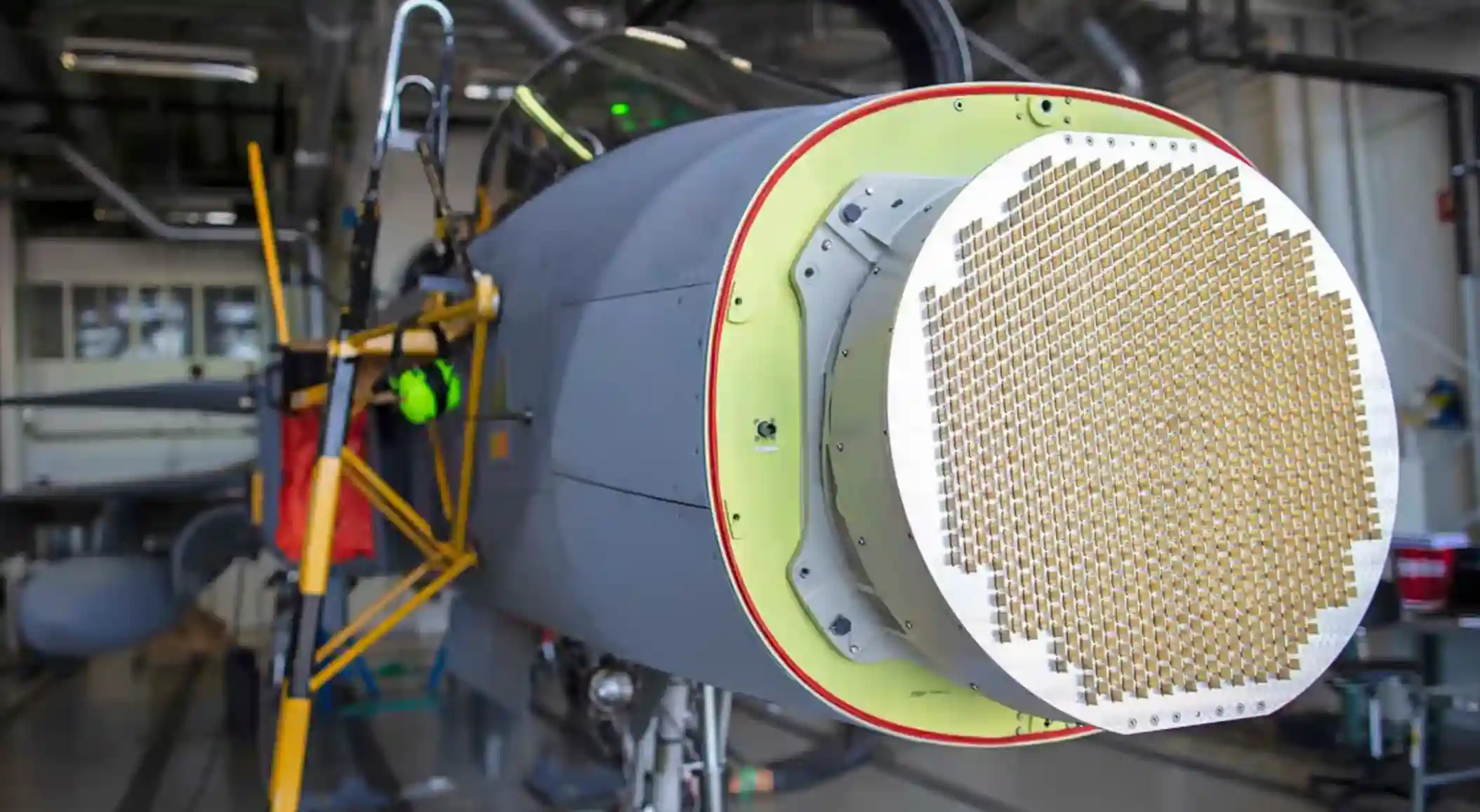
The Raven ES-05 is especially important. Unlike the older PS-05/A radar used by earlier Gripen variants, it uses an electronically scanned array. That allows the radar to manage multiple tasks rapidly without physically moving the antenna in the traditional way. The antenna is also mounted on a repositionable system, giving the radar a wider field of regard than a fixed forward-facing array.
Then comes Skyward-G, an IRST system that can detect and track targets using infrared energy. That gives Gripen another way to find aircraft without relying entirely on active radar emissions.
That distinction matters.
Radar is powerful, but turning it on can reveal something about your presence. Passive sensors don’t remove that risk from air combat, but they give the pilot another source of information when remaining electronically quiet matters.
The electronic warfare system adds another layer. Saab’s Gripen E uses dedicated electronic support and countermeasure functions to detect, assess and respond to hostile radar and other electromagnetic threats. In a fight where jamming and deception can affect whether a missile gets a clean track, that is not secondary equipment.
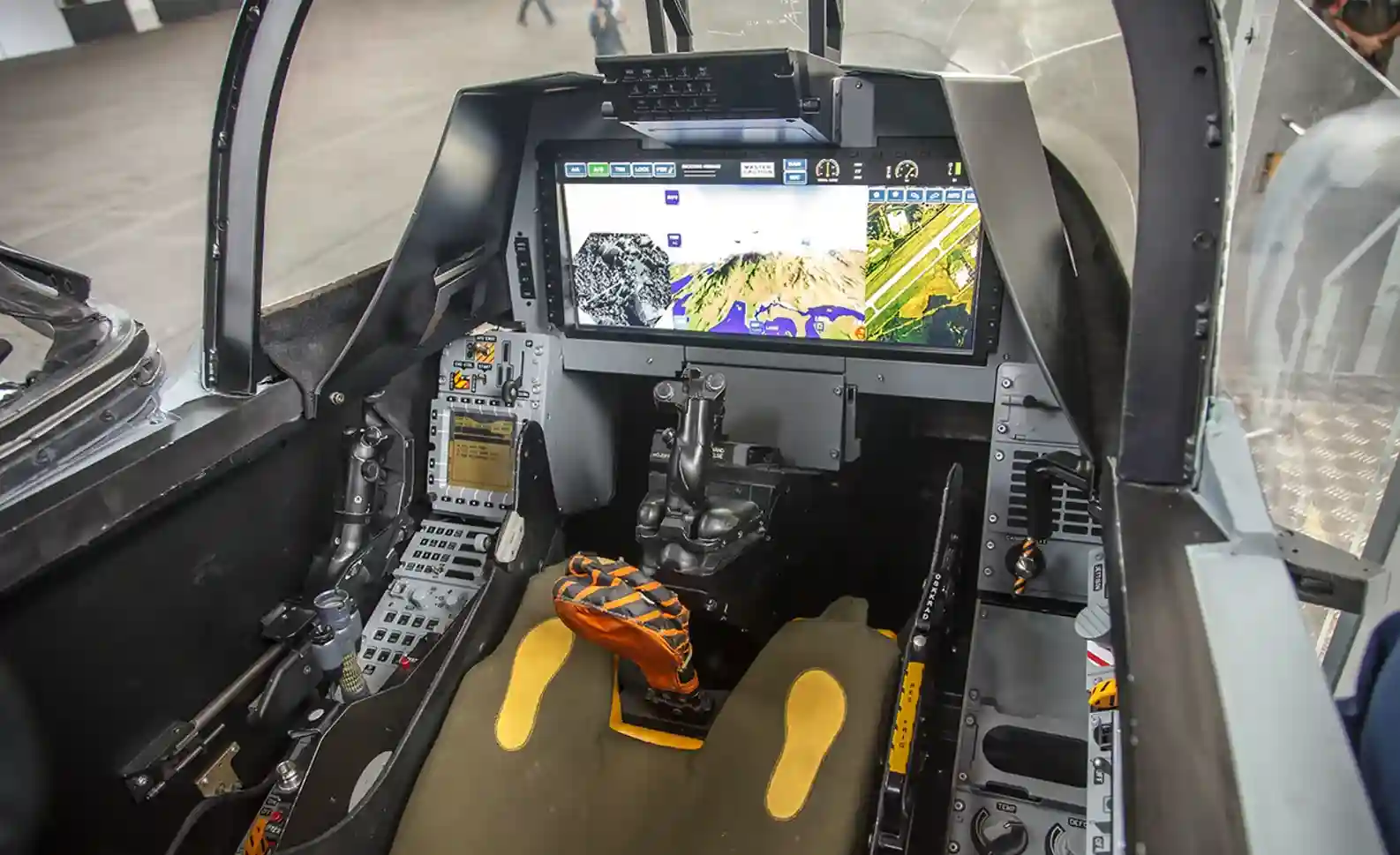
And Gripen is designed to share what it finds.
Its data-link architecture lets the aircraft exchange tactical information with other Gripens and external systems. A pilot may therefore receive useful information without personally detecting every target first.
That’s the part of Gripen I find more interesting than its raw radar range claims. The fighter is designed around information flow.
A radar sees something. An infrared sensor may confirm it. Electronic warfare equipment adds another clue. A data link can bring information from somewhere else. The pilot gets the picture and decides what to do.
The hardware matters. But the way those pieces work together is where the JAS 39 Gripen starts to look like a very modern fighter.
Weapons and Combat Capabilities of the Gripen
The Gripen’s weapons story is less about carrying the biggest load and more about carrying the right weapon for the mission.
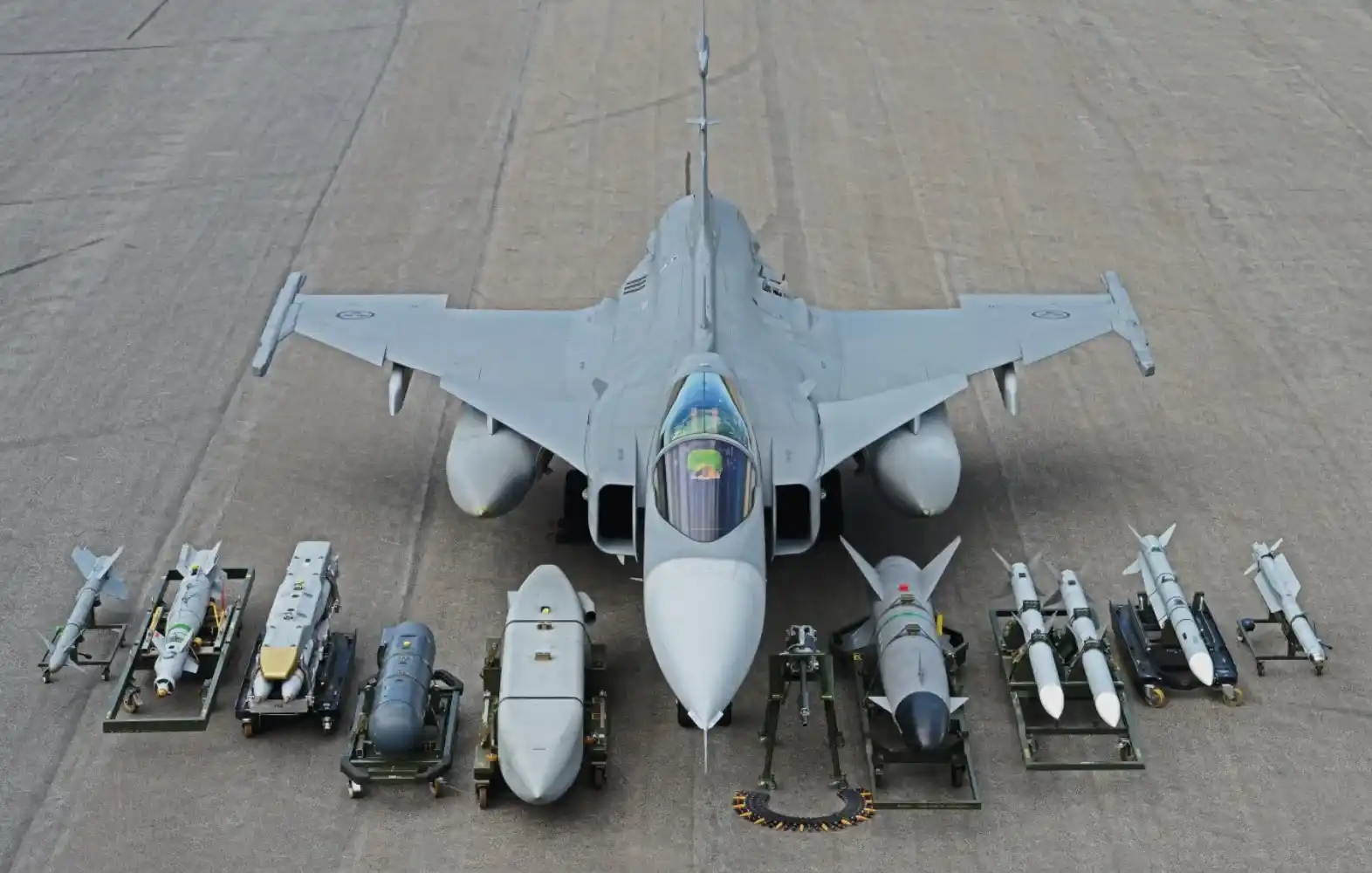
That fits the aircraft’s original purpose. Sweden needed one fighter that could defend airspace, strike ground targets, conduct reconnaissance, and change roles without bringing a different aircraft into the fight. The result is a platform that can use a wide range of Western weapons.
Air-to-Air Weapons
For air combat, the Meteor is one of the Gripen’s most notable weapons. The European beyond-visual-range missile uses a ramjet engine, allowing it to sustain high speed during much of its flight rather than relying only on the brief boost from a conventional rocket motor.
That matters because a missile’s useful reach isn’t just the distance it can physically travel. The target can turn, climb, accelerate, or run away. A weapon that retains energy late in the engagement can give the launching fighter more options.
Gripen can also carry weapons such as the IRIS-T and AIM-120 AMRAAM, depending on operator and configuration.
Air-to-Ground Weapons
The Gripen can shift from air defense to strike work without changing aircraft.
Its air-to-ground options include precision-guided bombs and stand-off weapons. The exact inventory depends on the customer, but the design allows the aircraft to carry guided weapons while retaining air-to-air missiles for self-defense.
Anti-Ship Weapons
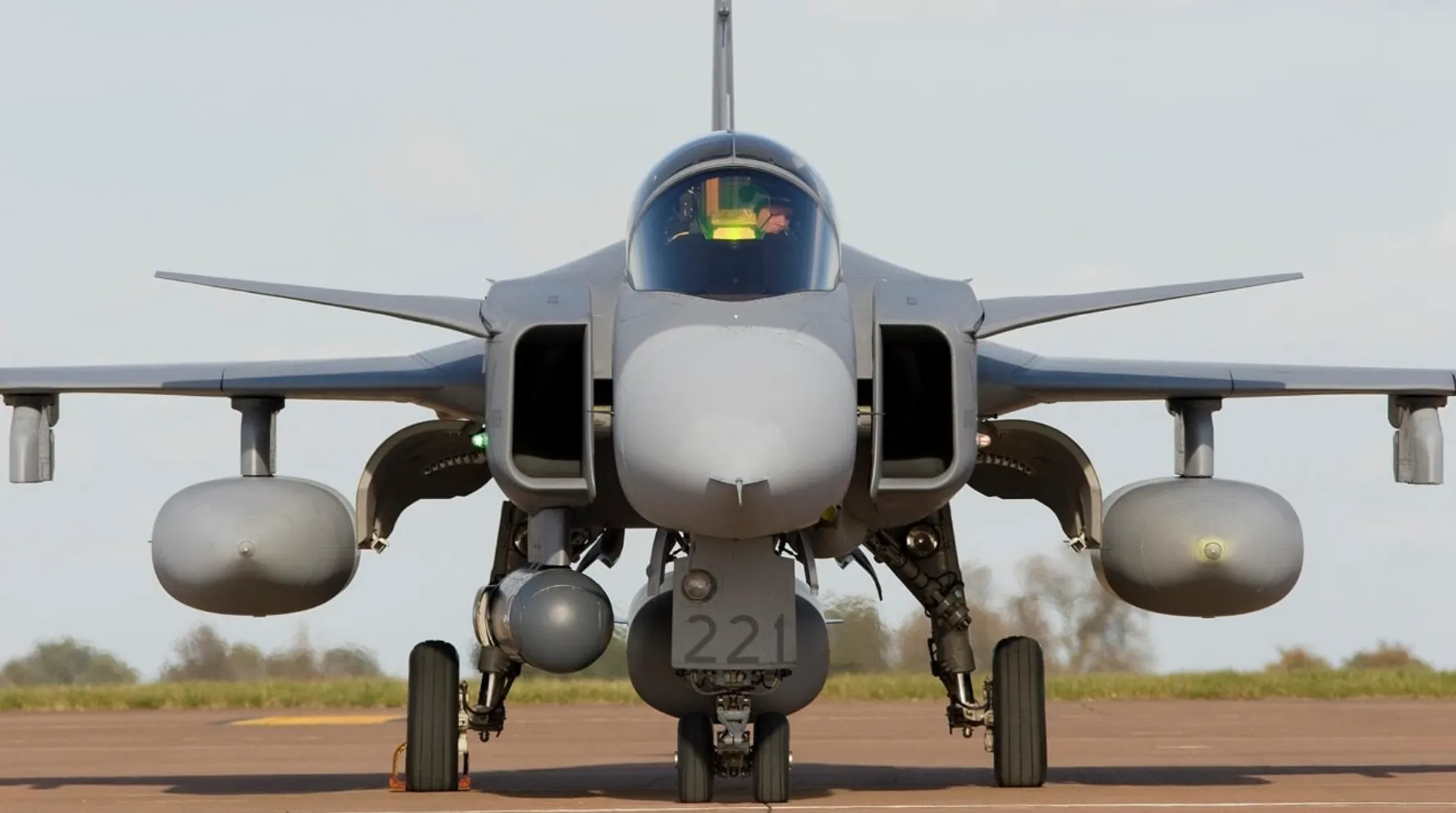
Sweden also developed the Gripen with operations over the Baltic region in mind, where naval targets are part of the threat picture. The aircraft can carry anti-ship weapons, including the RBS 15 family used by Swedish forces.
That gives the fighter another role without requiring a dedicated strike aircraft.
| Mission | Example weapons | What they provide |
| Air-to-air | Meteor, IRIS-T, AIM-120 | Beyond-visual-range and short-range combat |
| Air-to-ground | Guided bombs, stand-off weapons | Precision strike |
| Anti-ship | RBS 15 family | Maritime strike |
| Reconnaissance | Reconnaissance systems/pods | Target and battlefield intelligence |
The common mistake is to judge the JAS 39 Gripen by its maximum weapon load alone. A fighter carrying every available weapon is not automatically more effective.
Fuel, altitude, range, drag and the need to defend itself all change the equation.
Gripen E’s 10 hardpoints give it more carriage options than the C/D’s eight. But the real advantage is flexibility. A mission commander can build a loadout around air defense, strike, maritime attack, or a mixed mission instead of treating the aircraft as a single-purpose platform.
That’s exactly what the JAS name promised decades ago: one aircraft, several jobs.
Why the Saab JAS 39 Gripen Still Matters Today
The Gripen’s strongest selling point today isn’t that it can outfly every rival. It is that Sweden built the aircraft around a problem many air forces still struggle with: how do you keep fighters useful when bases, budgets, and support crews are limited?
That question has become harder, not easier.
The Gripen E carries more fuel and weapons than the C/D while adding newer radar, electronic warfare equipment, and sensor systems. But Saab has kept the basic idea of dispersed operations. A fighter that can operate from less elaborate bases has more options when major airfields become targets.
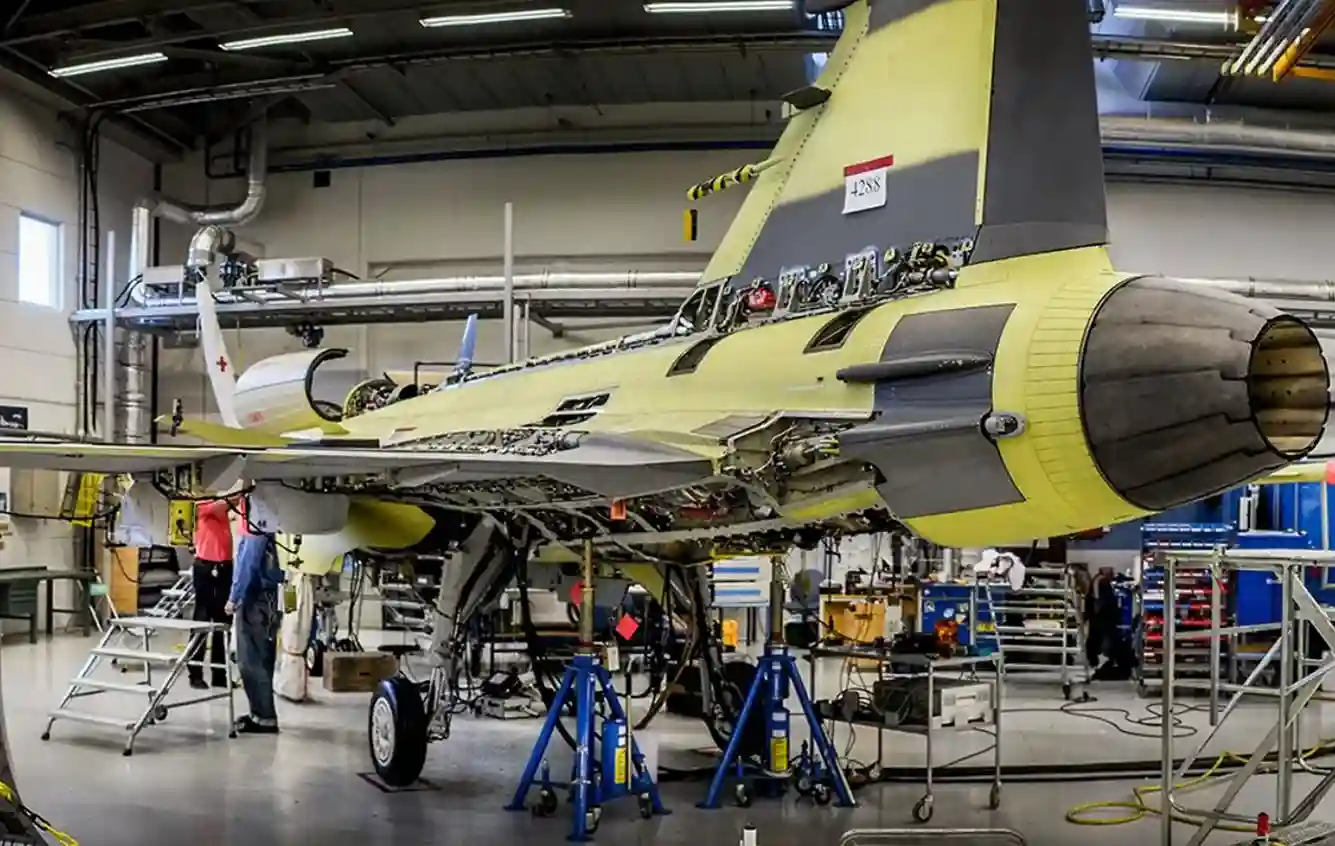
Brazil is a useful example of how the Gripen concept has expanded beyond Sweden. Brazil selected the Gripen for its fighter program and is involved in local production and development of the Gripen E/F.
In March 2026, Saab and Brazilian partners marked the rollout of the first Gripen E produced in Brazil. That matters because the program is no longer just about importing finished Swedish aircraft. It has become part of Brazil’s own aerospace industry.
NATO membership also changes the conversation around Gripen. Sweden joined NATO in 2024, bringing the Swedish fighter into a different defense framework than the one it was originally designed for. Gripen was already built around data sharing and cooperation, so that shift is easier to understand than it might appear at first glance.
Then there’s software.
Saab has continued testing new capabilities for Gripen E, including artificial intelligence trials in 2025. That points toward a fighter that is meant to keep gaining new functions rather than being replaced every time sensors or weapons change.
Still, there is a limit to the sales pitch.
Gripen isn’t a cheap, small F-35. It isn’t a stealth fighter. Its value comes from a different set of choices: dispersed basing, relatively compact size, strong electronic warfare, modern sensors, flexible weapons, and the ability to keep upgrading the aircraft.
That makes the JAS 39 Gripen unusually interesting.
It was designed for Sweden’s problems, but the underlying problem has become much more common. Air forces need fighters that can survive the first attack, keep operating, and adapt to the next one.
If you’re comparing Gripen with another modern fighter, don’t start with top speed. Start with the question Sweden asked first: where can the aircraft actually operate when its main air base is no longer s
