

Key Points
- Roketsan’s KARAOK anti-tank missile struck an aerial target for the first time, following a pattern seen in Ukraine of anti-tank missiles adapted against drones.
- The Turkish Army has used KARAOK against ground targets since 2022, and Roketsan has not disclosed further details on the aerial test.
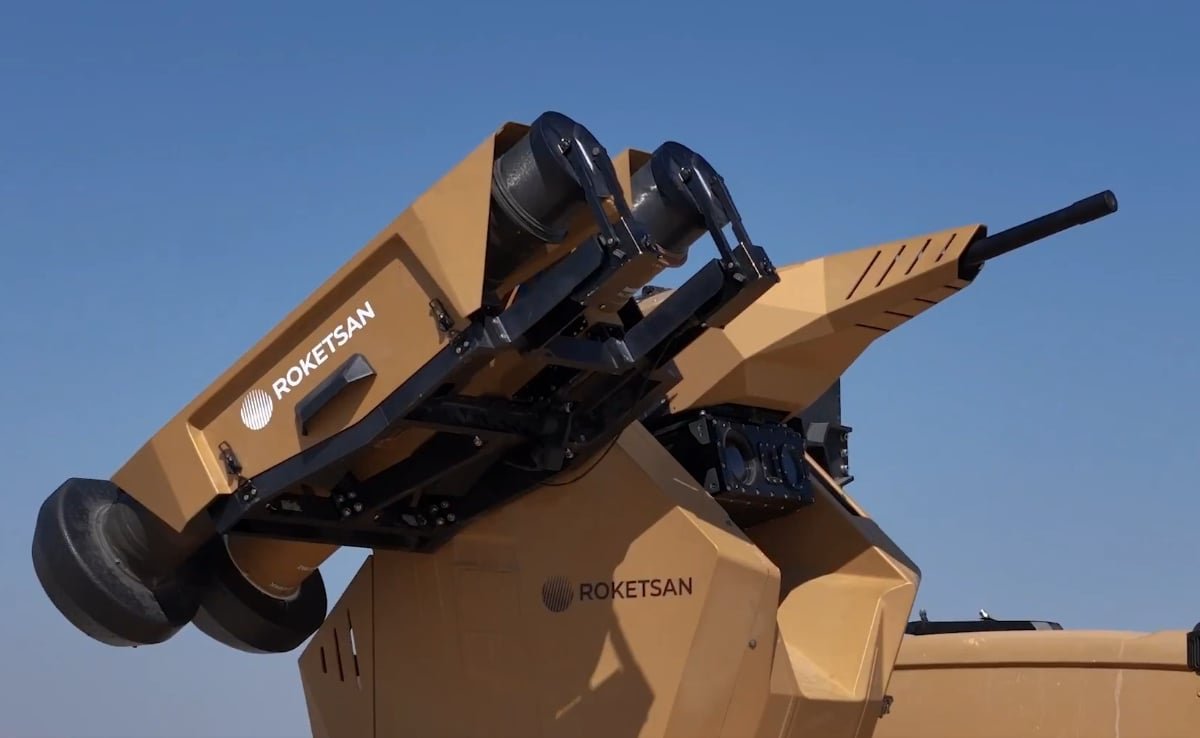
Roketsan, the Türkiye-based missile manufacturer, said its KARAOK anti-tank missile struck an aerial target for the first time, firing the shoulder-launched weapon from a turret mounted on a light tactical vehicle. The company announced the milestone in a Sept. 23 post on X, along with footage showing the missile launching from a turreted mount on a pickup truck and intercepting a target drone built to mimic a Shahed-type one-way attack drone.
KARAOK is a man-portable, fire-and-forget anti-tank guided missile designed to be operated by a single soldier from a shoulder-fired tube. It weighs less than 16 kg (35 pounds) including its launch tube, measures 125 mm in diameter, and uses an imaging infrared seeker to track targets in day or night conditions, with an effective range beyond 2,500 meters. Mounting the missile on a vehicle-based turret lets it be aimed and fired without a soldier holding the launcher, a configuration more common among dedicated air-defense systems than infantry anti-tank weapons. Türkiye’s army has used KARAOK against ground targets since it entered service in 2022.
The test follows a pattern that has become common in Ukraine’s war with Russia, where anti-tank guided missiles built for armor have repeatedly been adapted to hit aerial targets, including the Shahed-type drones Russia has used extensively against Ukrainian cities and infrastructure. Ukraine’s 1021st Anti-Aircraft Artillery Regiment demonstrated its Stugna-P anti-tank system shooting down a Russian drone on Sept. 13, and Ukrainian forces have separately built an improvised air-defense system called STASH that pairs U.S.-made AGM-114 Hellfire anti-tank missiles with a RADA radar to intercept jet-powered Shahed-type drones traveling too fast for interceptor drones to catch.
– ADVERTISEMENT – CONTINUE READING BELOW –
That overlap exists because many anti-tank guided missiles already carry the sensors needed to track a moving target and the terminal guidance to steer into it, qualities that work against a drone or slow cruise missile almost as well as against a tank. The U.S. Javelin was designed with some capability against slow, low-flying aircraft from the outset, and Hellfire missiles fired from Apache helicopters have long been used against aerial drones in addition to their primary anti-armor role.
KARAOK has also drawn interest beyond Türkiye. Malaysia signed a contract to become the system’s first foreign buyer, with Roketsan planning to deliver an initial batch of launchers and missiles to the Malaysian Armed Forces in early 2026 to replace the Russian-made Metis-M anti-tank system already in service there. Roketsan has not said whether the turreted, anti-drone configuration shown in this test will become a standard offering or remains experimental.
