

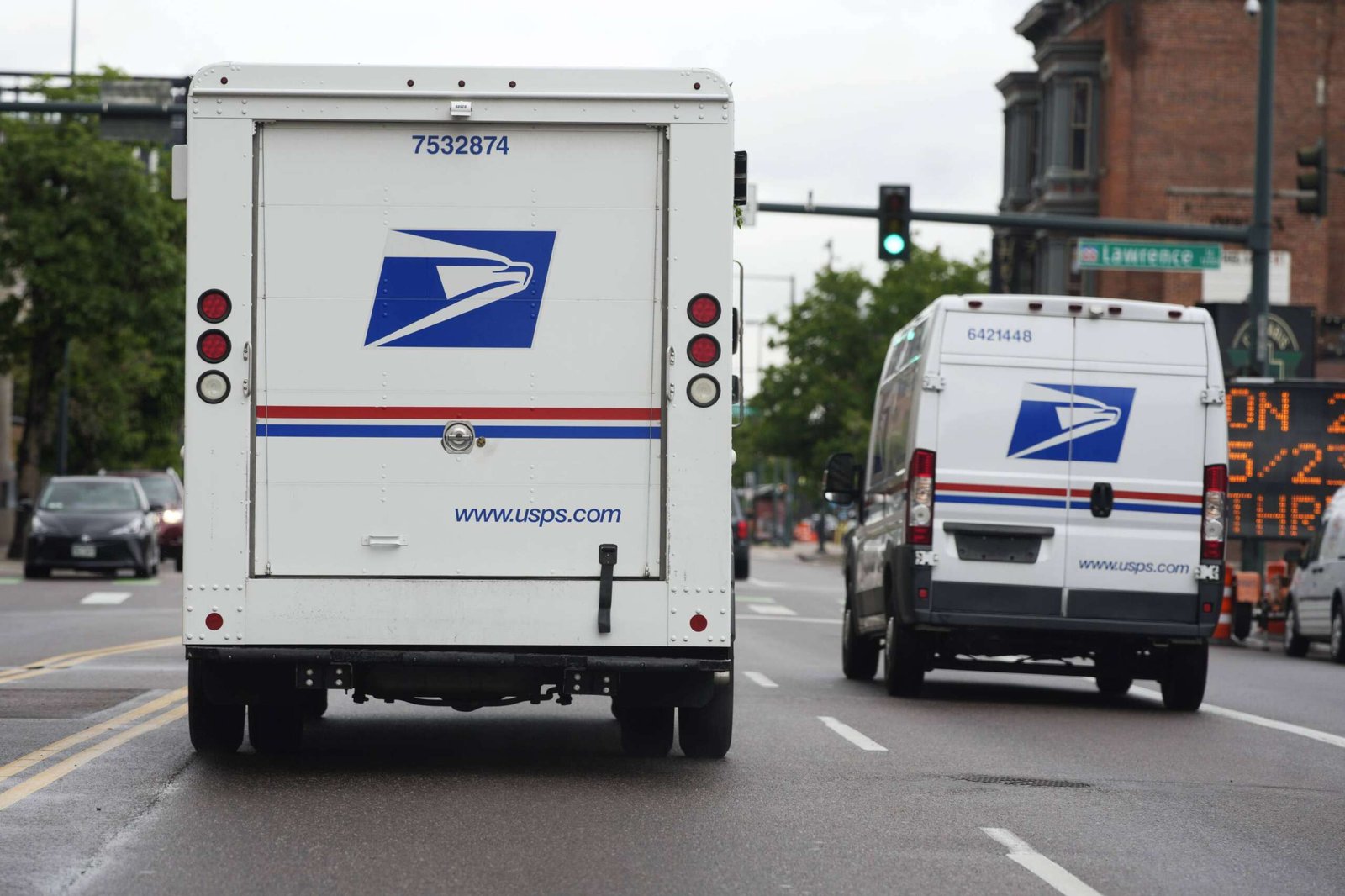
Efforts from some Postal Service employees to manipulate customer service surveys compromised survey integrity at the agency and artificially inflated customer satisfaction ratings, according to a new audit by the organization’s independent watchdog.
The USPS Office of Inspector General published findings about two alleged survey manipulation efforts by Postal Service employees. The Postal Service rejected the OIG’s six recommendations, but the oversight office warns that without corrective action, customer surveys will remain compromised and the Postal Service could face fines from the Postal Regulatory Commission.
The report found that some employees created fake issues on the Postal Service’s customer service system so that when a customer satisfaction survey was then sent to their personal email, they could fill out the survey with positive results. In the other effort, employees improperly entered everyday interactions, such as daily mail delivery, into the system to generate surveys and inflate scores.
Pressure from supervisors to deliver higher scores was a factor in the schemes, the OIG found. It also found gaps in policy, deterrence measures and other processes that allowed the manipulative actions to continue.
“Although management was aware of these schemes, it did not address the underlying culture driving score manipulation,” the report reads. “Some employees faced pressure, at times, from supervisors who benefited from the misconduct.”
The OIG’s recommendations include measures to address pressure and improve systems and procedures. After USPS’ rejection of all the recommendations, the OIG said it will pursue the disagreement through the audit resolution process.
The OIG conducted its evaluation specifically to assess the integrity of USPS’ customer surveys after the agency reported one scheme of manipulated surveys to the office. In its investigation, the OIG analyzed 40.2 million customer service requests covering from FY 2023 to 2025.
In those years, the Postal Service reported a 5% increase in customer service satisfaction. But the OIG found the spike was caused in part by the employee manipulation efforts. The report identified 124,000 out of 3.8 million surveys, or about 3.3%, that auditors believe were affected by those efforts.
USPS employees document and resolve customer service issues in the Customer 360, or C360, system. That documentation triggers a survey to be sent to the customer. Feedback collected from the survey results are then submitted to the Postal Regulatory Commission as part of USPS’ annual customer satisfaction reports, which are mandated through the Postal Accountability and Enhancement Act of 2006.
The Postal Service initially identified employee misconduct regarding customer surveys in FY24 and, after establishing mitigation measures, referred the issue to the OIG, which began its audit last September. The OIG found the Postal Service’s Customer Experience team successfully addressed the initial scheme, but employee manipulation continued in other areas.
Because of the manipulation, local and district customer scores rose, with one Post Office’s score seeing an increase of 21%.
The OIG found about 119,000 surveys that were tied to employees posing as customers. Employees would create false customer profiles with real delivery addresses that were linked to their own personal email addresses, then submit service requests to generate customer surveys.
The other scheme, according to the OIG, was a coordinated “booster” campaign in the Western Pacific, or WestPac, region. The “booster” scheme saw employees improperly submit service requests that had already been resolved and did not require follow-ups. Employees created almost 22,000 of these requests, which generated about 5,200 surveys, the OIG found.
Though “excessive pressure” to raise customer satisfaction scores led to the widespread manipulation, the WestPac region especially experienced unrealistic targets from leadership, including by setting a customer satisfaction score target of 65% rather than the C360 target of 48.2%.
“We found that leadership set artificial, unrealistic targets, sent constant reminders, and tracked daily status of C360 results, creating an environment where altering surveys became routine,” the report says.
The OIG identified at least 83 postmasters, managers and supervisors who directly manipulated scores, and sometimes directed their employees to do the same. The Postal Service itself also identified two managers and seven Customer Service supervisors who manipulated customer contact information for surveys.
Other factors that amplified the schemes’ impact were the lack of consideration of survey response quality, such as time spent on the survey or presence of detailed comments, and lack of holistic action to address employee misconduct.
“Ongoing performance pressure and unaddressed misconduct created an environment where score manipulation became routine, compromising customer data and the integrity of the C360 results,” auditors wrote. “As a result, reported C360 scores are not fully reliable and may not reflect actual customer sentiment.”
The OIG said the Postal Service should:
- Issue guidance telling area vice presidents and district management not to issue artificial, unrealistic performance goals
- Evaluate its current Customer 360 scoring system and implement scoring system changes to address pressure to manipulate survey scores, including specifically evaluating fraud or quality indicators
- Monitor booster activity during the upcoming year and take action if it increases
- Set up deterrents, including rules and system controls to temporarily or permanently suspend Customer 360 system access to address known, repeat offenders
- Develop a holistic escalation process for documenting, escalating, and addressing suspected misconduct schemes
- Examine and update their survey impact analysis to include all suspected fraudulent surveys and report updated Customer 360 scores for fiscal years 2023, 2024, and 2025 to the Postal Regulatory Commission.
USPS management disagreed with the findings and rejected each recommendation, however. Officials argued the findings lacked context and said the OIG declined an earlier request for assistance in March 2024.
USPS management also said that the 119,000 surveys the OIG had identified as high-risk were “not substantiated, inconsistently explained, and could not be replicated,” and disagreed that it set unrealistic customer satisfaction goals that pressured employees.
The OIG in turn disagreed with USPS managements’ responses.
“Regarding the finding, the Postal Service disagreed with the OIG’s methodology and could not replicate it, and stated the OIG denied it access to the data,” according to the report. “However, the OIG used Postal Service data, and the audit team provided detailed descriptions of the filters it applied to that data in writing, including in this report.”
“The OIG maintains that to fully comply and meet its legal obligations, the Postal Service must comprehensively evaluate and update C360 scores across all fiscal years, enabling management to identify genuine service issues that support continued customer use of Postal Service products,” it concludes.
The report on survey manipulation comes as the Postal Service continues to face financial woes. The agency has consistently faced significant budget losses and has projected facing a cash crisis sometime between 2031 and 2035.
Another recent report, from the Government Accountability Office, found USPS is struggling to meet service standards, even as it’s lowered those standards partially due to cost-cutting initiatives.
Copyright
© 2026 Federal News Network. All rights reserved. This website is not intended for users located within the European Economic Area.
