

A cruise missile doesn’t need to fly at Mach 5 to be terrifyingly effective. Sometimes, the smarter weapon is the one that stays low, hides from radar, changes course, and arrives hundreds of miles from where anyone expected it.
That’s why ranking the most advanced cruise missiles in 2026 isn’t as simple as lining them up by speed or range.
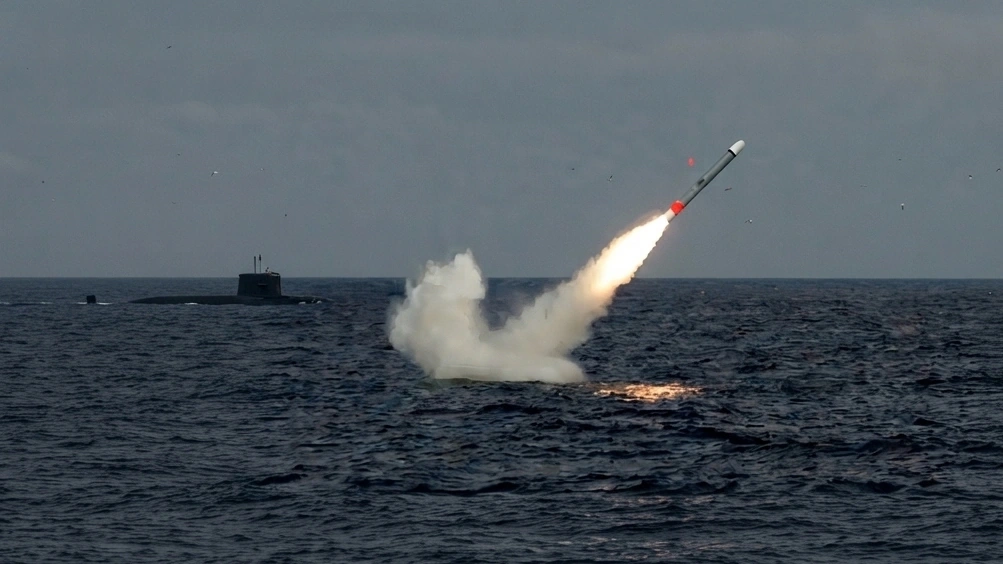
Take the U.S. Tomahawk. It’s a subsonic missile, yet the latest Block V retains roughly 1,600 km of publicly listed range, flies at very low altitude, and uses a mix of inertial navigation, terrain matching, digital scene matching, and GPS. The U.S. Navy also says Block V retains in-flight target update capability.
Then there’s BrahMos, which takes the opposite approach. Its established configuration reaches about Mach 2.8, using a solid booster followed by a liquid-fueled ramjet. The missile can also attack from several launch platforms, giving it a very different kind of flexibility.
So which one is actually more advanced?
That’s the interesting part.
For this list, I’m looking beyond raw speed. I’m weighing guidance, survivability, range, precision, launch flexibility, propulsion, and how mature the weapon is in real service. JASSM-ER, for example, combines a stealth-focused airframe with infrared terminal guidance, GPS/INS navigation, and a publicly listed range above 926 km.
Storm Shadow/SCALP adds another lesson. Its navigation system combines INS, GPS, and terrain referencing before an infrared seeker takes over during the terminal phase.
In other words, the best cruise missile isn’t necessarily the one with the biggest number on its specification sheet.
It’s the missile whose design solves the hardest problems at the same time.
The five systems below show five different ways to do exactly that.
1. Tomahawk Block V, Long-Range Precision and Flexibility
The Tomahawk Block V makes a strong case for being one of the most advanced cruise missiles in service, even though it isn’t remotely the fastest.
That’s the point.
Tomahawk was designed around a different problem: how do you launch a precision weapon from far away, send it across difficult terrain, and still give the operator useful control over the mission? Its answer combines long range, low-altitude flight, layered navigation, and a steady stream of upgrades.
| Specification | Tomahawk Block V |
| Country | United States |
| Type | Subsonic cruise missile |
| Launch platforms | Surface ships and submarines |
| Publicly listed range | About 1,000 nautical miles, roughly 1,600 km |
| Guidance | INS, GPS, TERCOM, DSMAC |
| Flight profile | Low altitude, terrain-following |
| Block Va | Maritime Strike Tomahawk |
| Block Vb | Joint Multiple Effects Warhead System |
| Primary roles | Land attack, maritime strike |
The range is the first number that stands out. The U.S. Navy lists the Tomahawk’s reach at about 1,000 nautical miles, giving ships and submarines the ability to strike targets far beyond the immediate battlefield.
But range alone doesn’t explain its staying power.
Tomahawk combines inertial navigation with GPS, terrain contour matching, and digital scene matching. In simple terms, the missile doesn’t depend on one navigation method for the entire flight. Terrain data can help it follow a planned route at low altitude, while other navigation inputs help keep its position aligned.
That low flight matters. A missile hugging the terrain or sea surface can remain below or outside the ideal detection geometry of some radar systems, reducing the time available for a defender to react.
Then comes the part that makes Block V more than an old missile with a new label.

The Block Va Maritime Strike Tomahawk adds the ability to engage moving maritime targets, while Block Vb introduces the Joint Multiple Effects Warhead System, giving the weapon greater flexibility against different target types.
This upgrade path is one of Tomahawk’s biggest strengths. The launcher network, submarines, ships, mission-planning systems, and trained crews already exist. New capabilities can be added without replacing the entire ecosystem.
There’s a catch. Tomahawk remains subsonic, so a defender that detects it early has more time to respond than it would against a weapon traveling around Mach 3.
Still, judging the most advanced cruise missiles by speed alone misses the point. Tomahawk’s real advantage is the way range, navigation, low-level flight, targeting flexibility, and decades of operational development fit together.
That’s why this missile remains a benchmark in long-range precision strike.
2. JASSM-ER, Stealth and Long-Range Air-Launched Strike
If Tomahawk’s strength is flexibility, JASSM-ER takes a more focused approach: stay hard to detect, launch from outside dangerous airspace, and use its seeker to finish the job.
The missile was built for standoff attack. That means the aircraft carrying it doesn’t have to fly directly into the strongest part of an enemy’s air-defense network. JASSM-ER extends the reach of the original JASSM design to more than 500 nautical miles, or about 926 km, according to Lockheed Martin.
| Specification | JASSM-ER |
| Country | United States |
| Type | Air-launched cruise missile |
| Range | More than 500 nautical miles, about 926 km |
| Speed | Subsonic |
| Guidance | GPS/INS |
| Terminal seeker | Imaging infrared |
| Warhead | 1,000-pound class |
| Main design focus | Stealth and standoff attack |
| Launch platforms | Multiple combat aircraft |
The important detail isn’t just the 926 km figure. It’s what happens during those hundreds of kilometers.
JASSM uses a stealth-focused airframe designed to reduce its radar signature. Its navigation system combines inertial guidance with GPS, while an imaging infrared seeker supports terminal target recognition. Lockheed Martin also lists anti-jam GPS capability, which matters when satellite navigation is being contested.
That combination creates a layered attack system.

The aircraft provides the launch range and targeting information. The missile then handles most of the flight independently. Near the target, the infrared seeker can use the target’s visual and thermal characteristics rather than relying solely on satellite navigation.
This is where the common “longest range equals best cruise missile” argument falls apart.
A weapon can have a huge range and still face problems if it becomes easy to detect or loses reliable navigation. JASSM-ER instead puts considerable design effort into reducing its signature and improving its ability to operate when GPS signals are disrupted.
The missile also carries a 1,000-pound-class warhead, giving it enough destructive power for hardened and high-value targets without turning the weapon into a massive aircraft-sized package.
There’s a practical advantage here too. An air-launched cruise missile can exploit the speed, altitude, and position of its aircraft before the missile even starts its own flight.
That makes JASSM-ER less about raw missile performance and more about the entire launch concept.
In a heavily defended area, that distinction matters. The missile doesn’t need to outrun every interceptor. It needs to make detection, tracking, and engagement difficult enough for the attacking aircraft to keep its distance.
And that’s precisely why JASSM-ER belongs in any serious discussion of the most advanced cruise missiles in 2026.
3. BrahMos, Supersonic Speed and Multi-Platform Capability
BrahMos takes a very different path from Tomahawk and JASSM-ER. Instead of relying mainly on stealth and long-range subsonic flight, it uses speed as a major part of its defense.
The established BrahMos missile can reach about Mach 2.8, according to BrahMos Aerospace. That is roughly three times the speed of sound, although the exact flight speed depends on the missile configuration and phase of flight.
| Specification | BrahMos |
| Countries | India and Russia |
| Type | Supersonic cruise missile |
| Speed | About Mach 2.8 |
| Propulsion | Solid-fuel booster and ramjet |
| Launch platforms | Land, ships, submarines, aircraft variants |
| Guidance | Inertial and satellite-assisted navigation |
| Terminal approach | Low-altitude flight |
| Primary roles | Anti-ship and land attack |
| Design focus | Speed, precision and multi-platform use |
The propulsion system explains much of the missile’s character. A solid rocket booster gets BrahMos moving after launch, then a ramjet takes over for sustained supersonic cruise. That combination gives the missile its signature speed without requiring a rocket motor to burn for the entire flight.
And speed changes the defensive problem.
A missile approaching at around Mach 2.8 gives a defender less time between detection and impact than a comparable subsonic weapon. It also carries substantial kinetic energy into the terminal phase.
But there’s a trade-off.
Going faster generally makes it harder to achieve the same range and endurance as a much slower cruise missile. That’s why comparing BrahMos directly with a long-range weapon such as Tomahawk using only one number is misleading.

BrahMos’ other advantage is flexibility. The family includes land-based, ship-launched, and air-launched versions, allowing the same basic missile concept to serve different forces. The air-launched BrahMos-A, for example, was adapted for India’s Su-30MKI fighter, which required changes to the missile and aircraft integration.
That multi-platform approach matters because launch position can be just as important as missile range. A ship, coastal battery, or fighter can place the weapon in a very different part of the battlespace.
BrahMos also isn’t simply a “fast missile.” Its low-altitude terminal approach is part of the package. A high-speed missile that is easy to spot well in advance would lose much of the advantage its speed provides.
That’s why BrahMos stands out among advanced cruise missiles. Its design doesn’t try to hide the missile’s presence forever. It tries to compress the defender’s reaction window once the missile is detected.
And at roughly Mach 2.8, that window can become very short.
4. Storm Shadow/SCALP, Deep Strike and Precision Guidance
Storm Shadow and SCALP show why the most advanced cruise missiles don’t need extreme speed to be difficult targets.
The British and French variants share the same basic weapon family, with Storm Shadow used by the UK and SCALP used by France and other operators. MBDA designed the missile for long-range precision attack against fixed and hardened targets, where simply dropping a large bomb isn’t enough.
| Specification | Storm Shadow/SCALP |
| Developers | MBDA, UK and France |
| Type | Air-launched cruise missile |
| Speed | Subsonic |
| Launch platforms | Combat aircraft |
| Navigation | INS, GPS and terrain reference |
| Terminal seeker | Imaging infrared |
| Flight profile | Terrain-hugging |
| Primary role | Deep precision strike |
| Target types | Fixed and hardened targets |
The missile’s navigation system is the clever part.
After launch, Storm Shadow uses inertial navigation, GPS, and terrain reference to maintain its route. That lets the missile follow a carefully planned flight path while staying close to the terrain. Near the target, an imaging infrared seeker takes over for terminal guidance and target recognition.
That last step matters more than it sounds.
GPS can tell a weapon where it is. It doesn’t necessarily tell the weapon whether the object ahead is the intended target. An imaging infrared seeker adds another layer by allowing the missile to compare what it sees with stored target information.
The missile’s attack profile is also designed around survivability. Rather than climbing high and advertising its approach, it can remain low during much of the flight. Terrain can mask the missile from some ground-based sensors until relatively late in the engagement.

Storm Shadow’s warhead design adds another piece to the puzzle. The missile uses a BROACH warhead system, combining a precursor charge with a follow-through penetrator. That makes the weapon suitable for targets where a single blast at the surface may not be enough.
Combat use has also given the weapon unusual visibility compared with many cruise missiles whose performance remains mostly theoretical. But battlefield reports should be treated carefully. Individual strikes don’t provide enough public data to calculate the missile’s true hit rate or reveal classified performance.
That’s one reason I wouldn’t judge Storm Shadow by dramatic strike footage alone.
Its real strength is the engineering behind the mission: low-level flight, multiple navigation methods, terminal imaging, and a warhead designed for difficult targets.
For a subsonic missile, that’s a serious package.
And it explains why Storm Shadow/SCALP remains one of the key advanced cruise missiles to watch in 2026.
5. 3M-14 Kalibr, Long-Range Sea-Launched Strike Capability
The 3M-14 Kalibr is a good example of why cruise missile families can be confusing. “Kalibr” isn’t one missile with one set of specifications. It’s a family of related weapons, and the 3M-14 is the land-attack member that matters for this comparison.
Its main appeal is reach.
The U.S. Congressional Research Service and other open sources have cited estimates around 1,500 to 2,500 km for the conventional 3M-14, although exact performance figures are difficult to verify publicly. CSIS’s Missile Threat database gives the same estimated range for the system.
| Specification | 3M-14 Kalibr |
| Country | Russia |
| Type | Sea-launched land-attack cruise missile |
| Estimated range | About 1,500 to 2,500 km |
| Speed | Subsonic for most of flight |
| Propulsion | Turbojet |
| Launch platforms | Surface ships and submarines |
| Guidance | Inertial and satellite-assisted systems |
| Primary role | Land attack |
| Missile family | Kalibr |
The launch method is what makes the system strategically useful.
A Kalibr-capable ship or submarine doesn’t need to approach the target itself. The missile can be launched from well offshore, allowing the platform to remain separated from the defended area while the weapon travels toward its target.
Submarines add another layer. A submerged launch can make the firing platform much harder to locate, creating a separation between the missile’s point of origin and the target area.
The missile is generally associated with low-level cruise flight, rather than the sustained supersonic dash used by BrahMos. That gives it a different balance of speed and endurance. The longer flight also creates more opportunities for detection if the missile’s route becomes known.
And this is where public comparisons often go wrong.
Figures quoted for “Kalibr” can refer to different variants, missions, or even claims that aren’t independently verified. The 3M-14 should not be treated as identical to every other missile carrying the Kalibr name.

CSIS lists the 3M-14 as an operational sea-launched land-attack cruise missile and places its estimated range at 1,500 to 2,500 km.
That range, combined with ship and submarine launch options, gives Russia a long-range conventional strike tool that can be deployed without relying on a large bomber fleet.
Still, I’d be cautious about calling it the most advanced purely because of its reach. Range is only one part of the equation. Navigation under jamming, target recognition, survivability, and real-world accuracy matter just as much.
Kalibr belongs on this list because its sea-based launch flexibility and long-range strike role remain significant. But its exact capabilities are also among the areas where open-source missile comparisons need the most care.
Which Technologies Will Define Advanced Cruise Missiles in 2026 and Beyond?
The next leap in cruise missiles probably won’t come from simply making them faster.
The harder problem is keeping a missile useful when GPS is jammed, communications are disrupted, radar coverage is dense, and the target moves. That pushes designers toward better sensors, smarter navigation, and weapons that can make more decisions during the mission.
Navigation is becoming a major battleground.
A cruise missile that depends too heavily on satellite signals becomes vulnerable when those signals are denied or spoofed. Modern designs therefore combine inertial navigation with other inputs, such as terrain data, radar-based references, or imaging sensors. The idea is simple: lose one source of information and the missile still has another way to estimate where it is.
Seekers are changing too.
An imaging infrared seeker can do more than guide a missile toward a set of coordinates. It can help identify a target during the terminal phase. That distinction becomes valuable when the target area contains several similar objects or when the target has moved since launch.
Networking is another major area.
Future weapons are likely to make greater use of two-way data links and external sensors, allowing aircraft, ships, satellites, or other platforms to provide updated information. Tomahawk already shows where this concept can lead, with the Block IV and Block V family built around communication and in-flight mission flexibility.
Then there’s electronic warfare.
A missile doesn’t need to be completely immune to jamming. It needs enough alternate navigation and sensing methods to keep functioning when parts of its guidance system are degraded.
Production may prove just as important.
Recent defense reporting has highlighted growing demand for larger missile stocks and cheaper weapons, driven in part by lessons from the war in Ukraine. That suggests the next generation won’t be judged only by performance per missile. How quickly a country can build, deploy, maintain, and replace them may matter just as much.
AI is often presented as the obvious next step, but this is where hype deserves some caution. Public sources don’t provide enough evidence to claim that today’s cruise missiles independently “think” their way through complex battlefields.
The useful question is narrower: how much better can onboard software help a missile navigate, recognize targets, and adapt when the original plan stops matching reality?
That’s the technology worth watching in 2026.
