

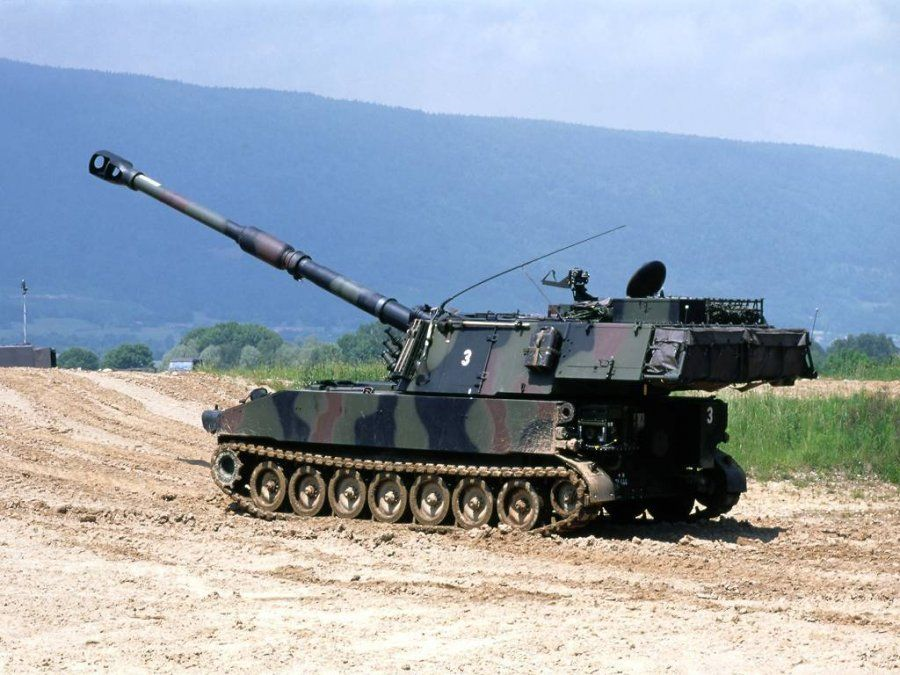

Hanwha Aerospace has made the K9 Thunder self-propelled howitzer one of the most advanced and sought-after artillery systems by pursuing innovations that improve its ability to deliver fires more efficiently.
At the K9 User Club event held 2 – 4 September at the National Museum in Estonia, the company debuted another such innovation incorporating vertical take-off and landing (VTOL) drones directly into the K9 fires operations. This close integration of observations and associated target-fire mission details significantly increases the ability to deliver fires within a more compressed time frame.
The K9 User Club event is an annual gathering of military and industry representatives from the seven K9 operating nations, joined by delegates from Spain and Sweden. Participants included South Korea, Estonia, Poland, Norway, Finland, Romania and Australia.
During the event, end-users exchanged details on their experiences with the K9, and Hanwha officials met with users and presented the system’s latest developments. Coupling the vertical take-off and landing drone (VTOL) with the K9 is one of the “next generation” artillery capabilities Hanwha is developing. In this approach, K9 artillery units use the VTOL drone to locate, access, engage, and conduct battle damage assessment of targets. The VTOL drones allow the artillery firing unit itself to detect and track targets and generate coordinates for fire missions, with the data transmitted directly into the K9 fire control system. In addition, drone observation enables real-time impact monitoring and fire adjustments. This process keeps the sensor controlled and responsive to the gun. Demonstrations have shown a reduction in fire mission response from tens of minutes to as little as one minute. This “sensor-to-shooter” cycle is significantly shorter than is possible using third-party forward observers.
The ability to introduce the “drone-to-gun” engagement capability takes advantage of the K9A2’s automated turret and integration of advanced digital electronics into the operation of the gun and associated functions. In particular, the latest versions of the K9 replace voice and manual functions with automated and mechanical operations. When tied to the K9’s autoloading, firing-solution calculation, laying, and burst-firing, the drone-to-shooter capability adds another dimension to indirect fires on future battlefields.
by Stephen W. Miller
