The French DGA has launched a formal tender for embarked, long-endurance surface drones to support French Navy ISR missions, but the technical requirements for the USV are quite challenging.
The French defence procurement agency (DGA) has issued a formal contract notice to acquire embarkable, long-endurance surface drones dedicated to intelligence, surveillance, and reconnaissance (ISR) missions. As global naval forces increasingly pivot toward the “hybrid navy” model, this procurement marks a major milestone for the French Navy (Marine Nationale) as it moves unmanned surface vehicles (USVs) deeper into operational service.
According to the tender documents, the project focuses on acquiring long-endurance drones designed for intelligence gathering and tactical situation awareness both above and below the water surface. These systems must be capable of being embarked and deployed from various French Navy vessels—such as the Mistral-class landing helicopter dock (LHD) and the Loire-class offshore support vessels—operating around the clock in conditions up to sea state 4.
The procurement calls for a modular, scalable platform featuring diverse payloads and a command-and-control (C2) system, integrated directly into the carrier vessel. Performance requirements specify an operational range of at least 100 nautical miles and an endurance ranging from 5 to 10 days depending on the assigned mission. The framework envisions a maximum quantity of a few dozen drones under a composite contract structure that includes fixed pricing, order forms, and provisional portions.

Hybrid Navy / Marine Hybride ?
This new tender builds upon the momentum of France’s broader naval autonomous initiatives, closely aligning with the ongoing goals of the DANAE project (Drone Autonome Naval avec de l’Armement Embarqué). As previously reported by Naval News, DANAE aims to rapidly field a fleet of autonomous and armed surface drones for naval base protection, maritime security, and high-value unit escort duties. While initial testing phases have evaluated various industrial consortia focusing on navigation, sensor integration, and non-lethal effectors, this latest DGA procurement pushes the roadmap further toward formal operational acquisition and industrial scaling.
Bidders must demonstrate a minimum global annual turnover of 10 million Euros, and production facilities or design offices must be anchored within the European Union or European Economic Area. Furthermore, strict security of supply and information protection protocols will apply, given the sensitive nature of defense installations and naval vessels involved.
Submissions for the procedure are open through the French State Purchasing Platform (PLACE), with a deadline for receipt of applications set for October 15, 2026. However, Naval News understands that achieving these high-performance thresholds represents a major hurdle.
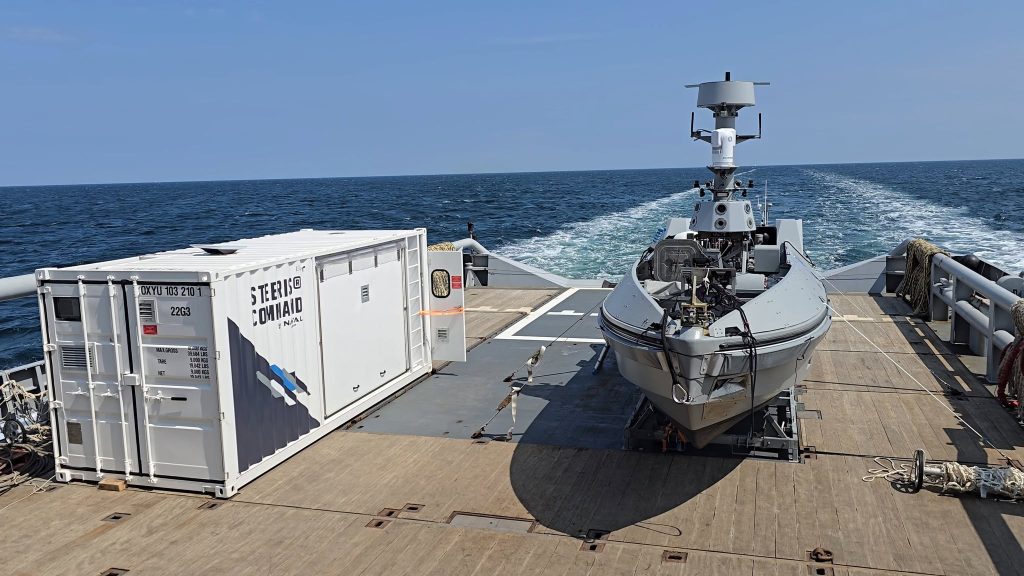
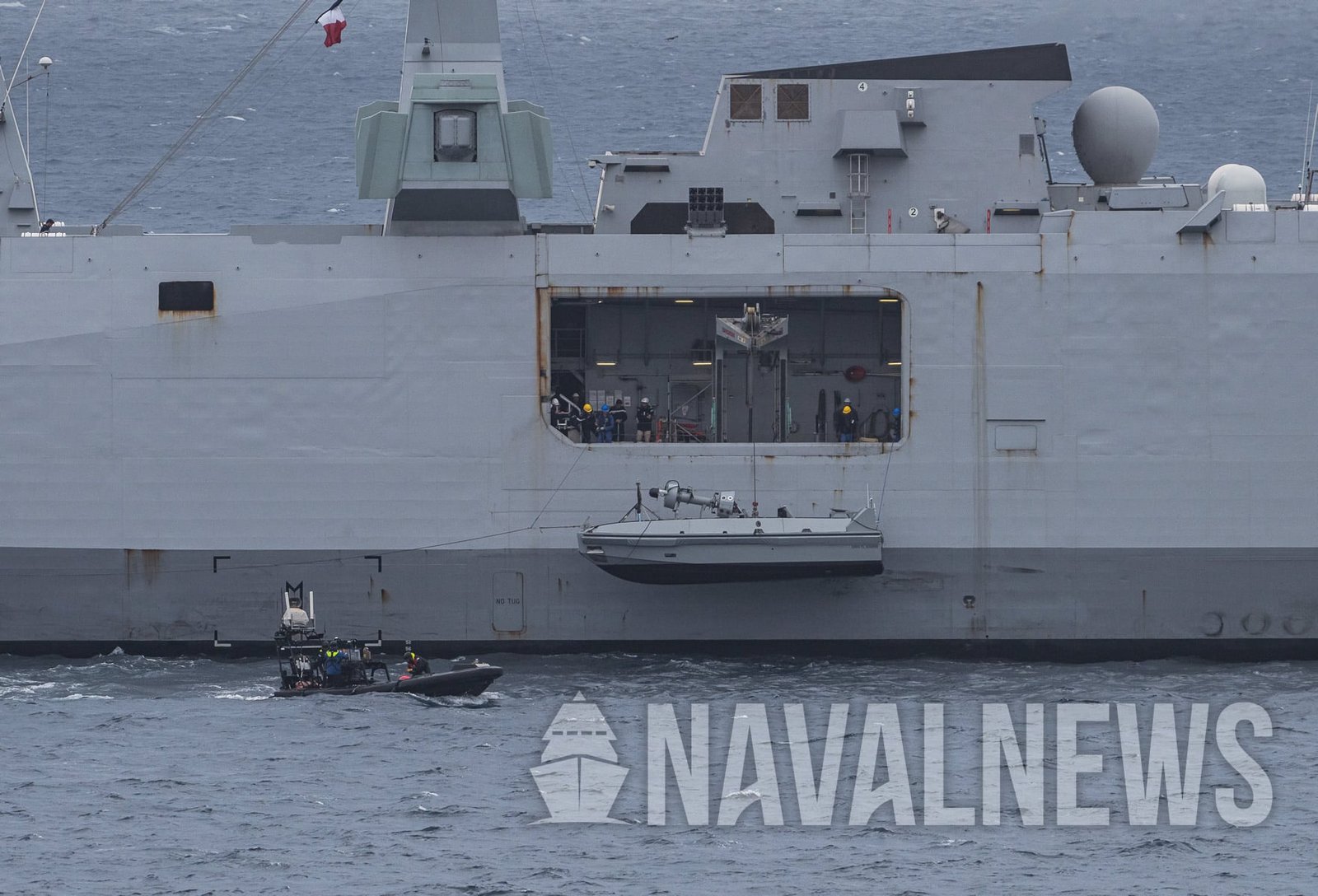
Designing an embarkable USV that can sustain multi-day operations and long-range missions within the strict size, weight, and deployment constraints of a naval vessel will likely push the current technical capabilities of the French and broader European industrial base to their limits. That said, the feat is not unachievable: Exail, last year, demonstrated a 1,100-nautical-mile autonomous transit with its larger DriX O-16 USV (though its size, 15.8 meters in length, may limit ship-embarkation options), while US-based MARTAC demonstrated this year an 8-day mission 400 nautical miles offshore with its 11.5 meters T38 Devil Ray USV. The French Navy has previously conduced some integration trials with Naval Group’s Seaquest-S (header picture) aboard a FREMM Frigate. It has also successfully deployed the same USV from a Loire-class vessel during REPMUS and Baltic Sentry (picture below). Naval News understands the Seaquest has spend over 24 hours at sea during this NATO exercise.