

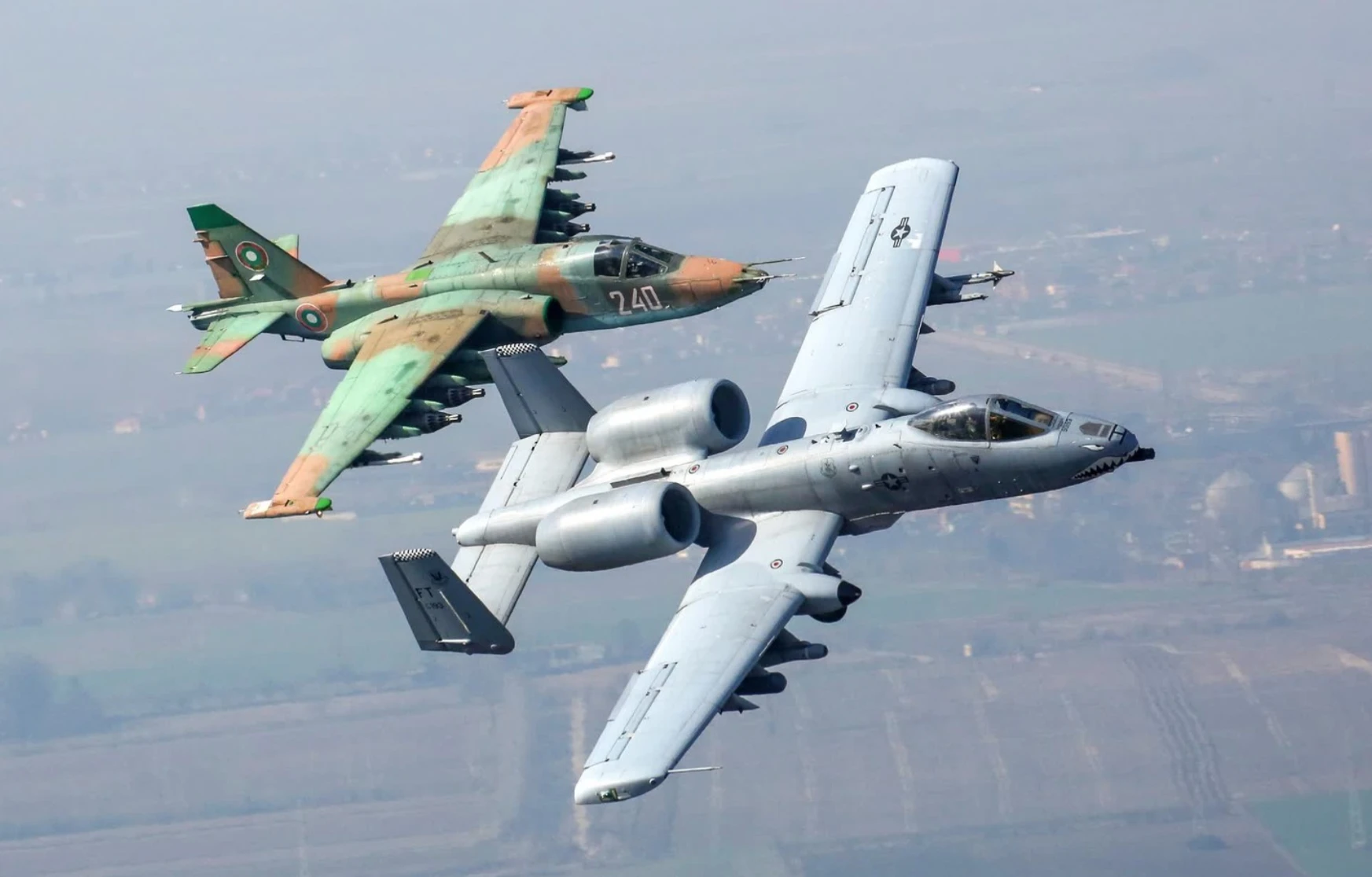
A ground-attack aircraft does something few other military aircraft are built to do: get close enough to the battlefield to make a direct difference on the ground, then survive the trip home. That sounds simple until you consider the environment, air defenses, armored vehicles, artillery, small arms, electronic warfare, and rapidly moving targets can all turn a routine sortie into a dangerous calculation.
So, what are the best ground-attack aircraft ever built?
The answer isn’t simply the aircraft with the biggest bomb load or the highest top speed. A useful ground-attack aircraft needs a combination of firepower, precision, survivability, range, sensors, and mission flexibility.
In other words, think of it less like choosing the fastest sports car and more like choosing the best tool for a messy construction job. A precision strike fighter may excel at hitting a target hundreds of kilometers away, while a dedicated close-air-support aircraft can be better suited to supporting troops directly over a battlefield.
That distinction matters because modern ground attack has changed dramatically. Aircraft once designed almost exclusively for low-level attacks now operate alongside multirole fighters equipped with sophisticated sensors and precision-guided weapons.
In this post, we’ll look at five aircraft that represent different approaches to attacking ground targets: the A-10 Thunderbolt II, Su-25 Frogfoot, F-15E Strike Eagle, Su-34 Fullback, and AV-8B Harrier II.
Rather than judging them by one flashy specification, we’ll consider how effectively each combines weapons, survivability, range, precision, and battlefield usefulness. And yes, that makes the ranking a little more complicated, but also much more interesting.
How We Rank the Best Ground-Attack Aircraft
Ranking the best ground-attack aircraft isn’t as simple as lining up their maximum speeds and choosing the aircraft with the biggest number.
Ground attack is a particularly unforgiving job. An aircraft may carry an enormous weapons load, but if it struggles to find targets, remain on station, or survive in a contested environment, that raw firepower doesn’t tell the whole story.
For this ranking, we’ll judge each aircraft across five key areas: firepower, survivability, range and endurance, precision, and battlefield role.
Firepower looks beyond the headline number of weapons an aircraft can carry. Cannons, rockets, air-to-ground missiles, guided bombs, and the ability to mix different weapons all matter. The A-10, for example, combines a 30 mm GAU-8/A cannon with precision and unguided weapons, giving it options for different types of ground targets.
Survivability is equally important. Ground-attack aircraft can operate much closer to threats than conventional high-altitude bombers. Armor, redundant systems, self-sealing fuel tanks, electronic countermeasures, and airframe durability therefore deserve serious weight. The A-10 was specifically engineered around this problem, including titanium armor and redundant flight-control systems.
Then there’s range and endurance. An aircraft that can remain near a battlefield for an extended period gives commanders more flexibility than one that arrives, drops its weapons, and immediately has to leave.
Finally, we’ll consider precision and mission usefulness. Modern targeting systems and guided weapons can matter just as much as traditional cannon firepower.
The result isn’t a ranking based on one spectacular specification. It’s an assessment of which aircraft offers the strongest overall package for attacking and supporting ground forces, because on a real battlefield, versatility often beats a single impressive number.
1. A-10 Thunderbolt II: The Close-Air-Support Specialist
If you had to design an aircraft specifically for the unpleasant business of supporting troops on the ground, the A-10 Thunderbolt II would look almost suspiciously purpose-built.
It isn’t particularly sleek, and it was never intended to win a beauty contest. Its strength is that nearly every major design decision revolves around one question: how do you deliver weapons accurately while giving the pilot a fighting chance to come home?
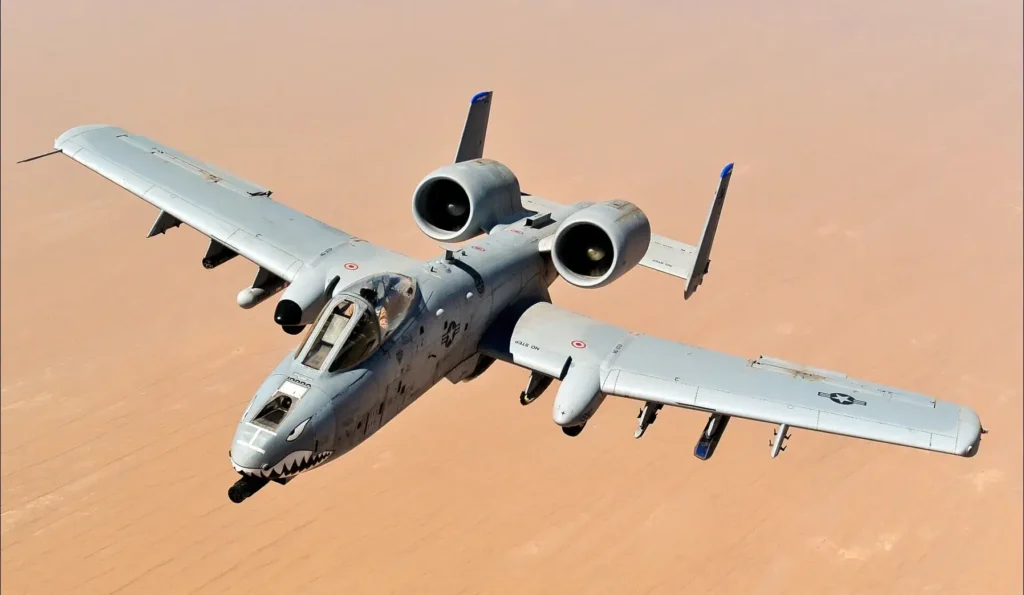
The A-10 was the first U.S. Air Force aircraft designed specifically for close air support. Its low-speed handling allows pilots to operate relatively close to the battlefield, while its long endurance gives it the ability to remain in the area rather than simply make one fast pass and disappear.
And then there’s the famous 30 mm GAU-8/A cannon. The seven-barrel gun can fire at up to 3,900 rounds per minute, while the aircraft can carry as much as 16,000 pounds (7,200 kg) of mixed ordnance across its weapon stations. That arsenal can include AGM-65 Maverick missiles, guided bombs, rockets and other air-to-ground weapons.
| Specification | A-10 Thunderbolt II |
| Primary role | Close air support |
| Engines | 2 × GE TF34 turbofans |
| Main cannon | 30 mm GAU-8/A |
| Cannon rate of fire | Up to 3,900 rounds/min |
| Maximum weapons load | 16,000 lb (7,200 kg) |
| Maximum speed | About 420 mph (676 km/h) |
| Combat range | About 800 miles (1,287 km) |
| Crew | 1 |
| First deployed | 1976 |
What really separates the A-10 from many ground-attack aircraft, however, is survivability. Its pilot is protected by titanium armor, while redundant flight controls and protected, self-sealing fuel systems were designed to keep the aircraft functioning after battle damage.
The Air Force states that the aircraft can survive direct hits from armor-piercing and high-explosive projectiles up to 23 mm.
Its Gulf War record reinforces that reputation. A-10s flew roughly 8,100 sorties during the conflict and maintained a 95.7% mission-capable rate.
That blend of firepower, endurance, accuracy and ruggedness makes the Warthog more than an iconic airplane. It makes the A-10 a compelling choice for No. 1 among the best ground-attack aircraft.
2. Su-25 Frogfoot: The Rugged Battlefield Workhorse
If the A-10 represents the American philosophy of close air support, the Su-25 Frogfoot is its Soviet-era counterpart, with a distinctly different personality.
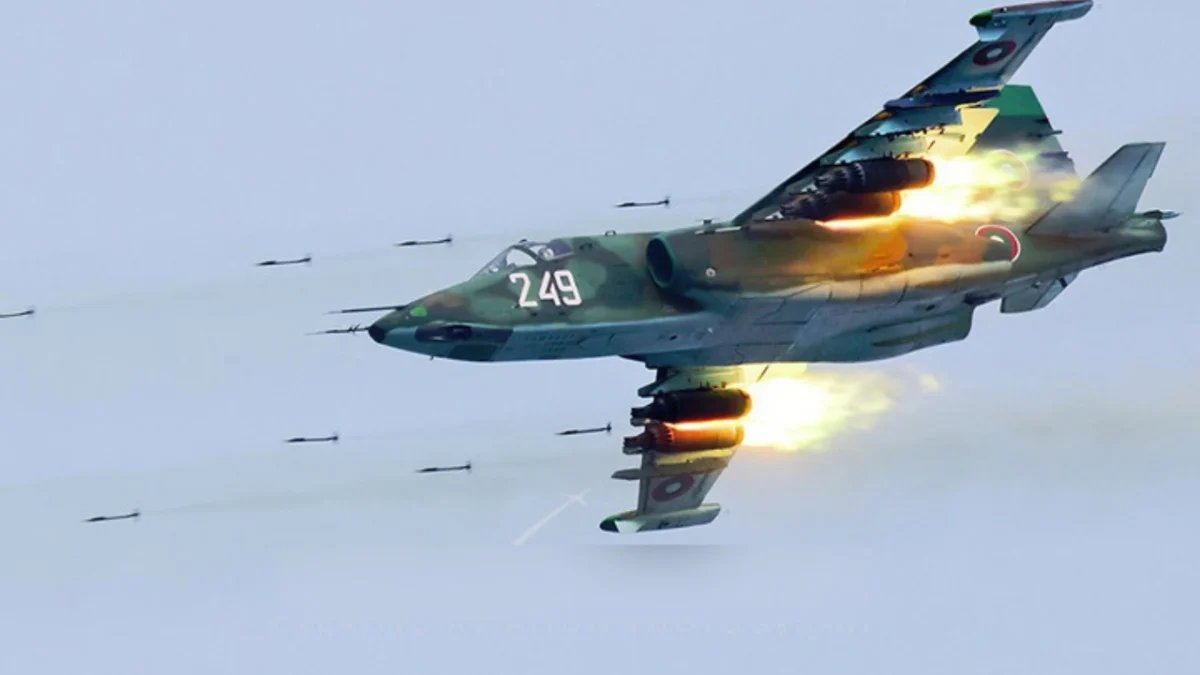
The aircraft was designed around a straightforward battlefield problem: how do you put a heavily armed jet close to enemy forces, operate from relatively rough conditions, and give it enough protection to survive the return trip?
The Su-25 first flew in 1975 and entered service in 1981. Unlike a conventional fighter adapted for ground attack, it was purpose-built for low-level close air support and battlefield strikes. Its design emphasized durability, straightforward maintenance and the ability to carry substantial air-to-ground weaponry.
| Specification | Su-25 Frogfoot |
| Primary role | Close air support / ground attack |
| Crew | 1 |
| Engines | 2 × non-afterburning turbojets |
| Main cannon | 30 mm GSh-30-2 |
| Cannon ammunition | 250 rounds |
| External weapons load | About 4,000–4,400 kg |
| Maximum speed | About 975–1,004 km/h |
| Combat radius | Varies by configuration |
| Service entry | 1981 |
Its 30 mm GSh-30-2 twin-barrel cannon provides formidable short-range firepower, while multiple pylons allow the Frogfoot to carry rockets, bombs and air-to-ground missiles. U.S. Army reference material lists approximately 4,000 kg of air-to-ground weapons across its pylons.
But here’s the interesting part: the Su-25 wasn’t designed to be delicate. Its cockpit and critical areas received armor protection, and the aircraft was engineered around the realities of low-altitude battlefield operations. Its ability to operate from less-than-ideal airfields also reflected the Soviet emphasis on keeping tactical aviation close to the front.
The aircraft’s combat history, particularly in Afghanistan, also exposed the brutal limits of flying relatively slow attack aircraft against increasingly capable air defenses. That experience drove improvements to later variants and survivability systems.
That combination of rugged construction, heavy weapons and dedicated CAS design earns the Su-25 the No. 2 position among our best ground-attack aircraft.
3. F-15E Strike Eagle: The Heavyweight Precision Striker
Here’s where the definition of a ground-attack aircraft gets more interesting. The F-15E Strike Eagle was not born as a dedicated CAS machine like the A-10 or Su-25. It evolved from an air-superiority fighter, but turned into an exceptionally capable strike platform along the way.
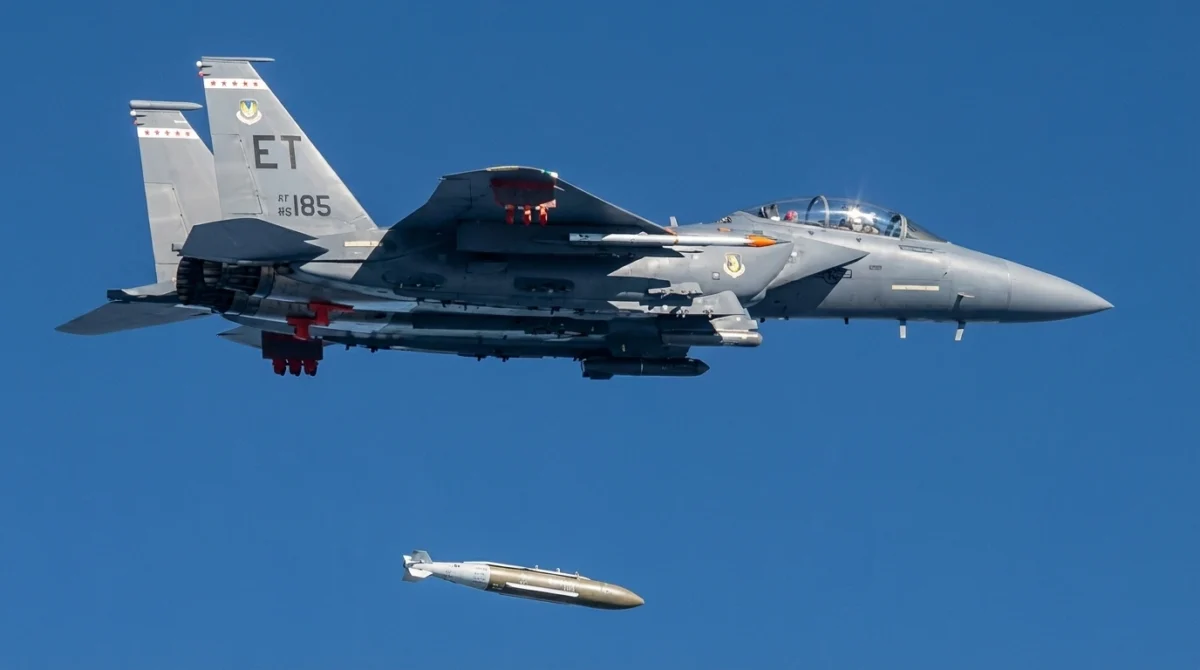
The F-15E is a two-seat, twin-engine, dual-role fighter designed for both air-to-air and air-to-ground missions. Its combination of speed, range, sensors and weapons capacity allows it to attack targets deep inside hostile territory rather than being limited to the immediate battlefield.
The U.S. Air Force specifically describes it as an air-to-ground attack aircraft capable of operating day or night and in all weather.
| Specification | F-15E Strike Eagle |
| Primary role | Air-to-ground attack / multirole strike |
| Crew | 2 |
| Engines | 2 × Pratt & Whitney F100 |
| Maximum speed | Mach 2.5+ |
| Maximum takeoff weight | 81,000 lb (36,450 kg) |
| Weapons capacity | Up to about 23,000 lb |
| Internal gun | 20 mm M61 |
| Gun ammunition | 500 rounds |
| Ferry range | About 2,400 miles (3,840 km) |
| First production delivery | 1988 |
The numbers tell only part of the story. The Strike Eagle can carry nearly 23,000 pounds of weapons, according to Air Force material, while its conformal fuel tanks help extend range without occupying conventional underwing stations. It can employ a wide range of air-to-ground weapons, from precision-guided bombs to other strike munitions.
Its real advantage, though, is the way the aircraft combines speed and precision. The F-15E’s navigation and targeting systems were designed for low-level, night and adverse-weather operations. Its two-person crew also divides the workload, with the weapons systems officer handling navigation, sensors and targeting while the pilot concentrates on flying.
That makes the F-15E a fascinating contrast to the A-10. The Warthog is a battlefield specialist; the Strike Eagle is more like a long-range toolbox with afterburners. For deep precision strike and versatility, that distinction earns the F-15E the No. 3 position among the best ground-attack aircraft.
4. Su-34 Fullback: A Long-Range Strike Heavyweight
The Su-34 Fullback takes the ground-attack mission in a very different direction. Where the A-10 is built around battlefield proximity and the F-15E blends speed with precision strike, the Su-34 is essentially a heavy strike aircraft designed to carry a substantial weapons load over long distances.
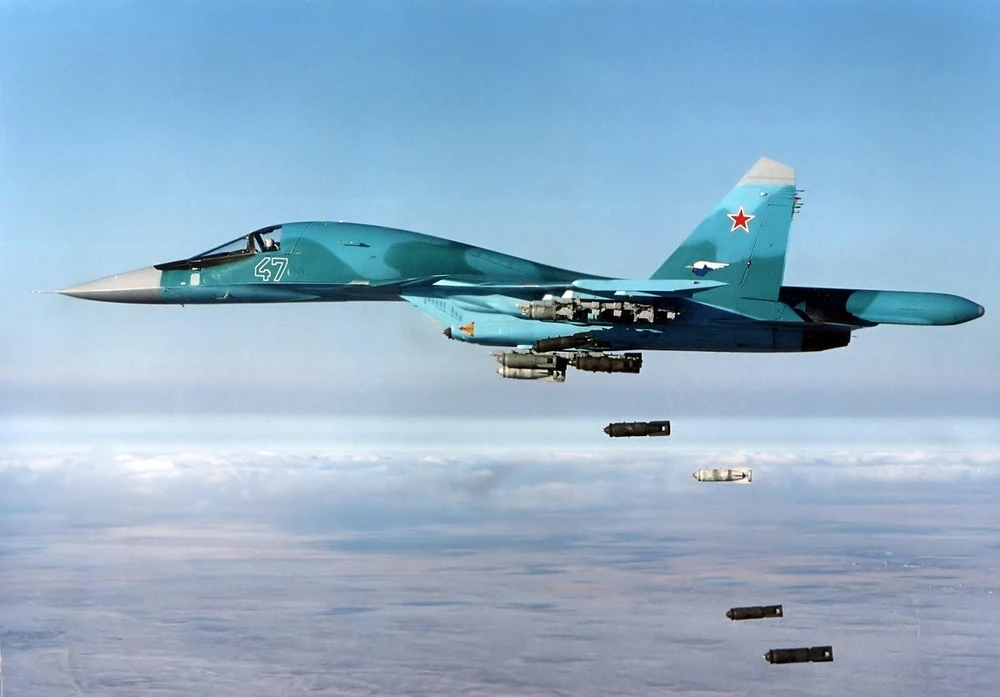
Derived from the Su-27 family, the Su-34 uses a distinctive side-by-side cockpit for its two crew members. That arrangement gives the pilot and weapons officer more room to manage navigation, sensors and mission systems during lengthy sorties.
It also hints at the aircraft’s intended job: this isn’t simply a fighter carrying a few bombs. It’s a dedicated strike platform.
| Specification | Su-34 |
| Primary role | Long-range strike / ground attack |
| Crew | 2 |
| Engines | 2 × turbofans with afterburners |
| Main cannon | 30 mm |
| Cannon ammunition | 150 rounds |
| Maximum weapons load | Up to about 8,000 kg |
| Maximum speed | About Mach 1.8 |
| Service ceiling | About 18,000 m |
| Key strength | Range, payload and strike capability |
One of the aircraft’s biggest advantages is payload capacity. A British government technical reference lists the Su-34 with up to 8,000 kg of external weapons, carried across 14 hardpoints, alongside a 30 mm cannon. Its listed weapons include guided bombs, air-to-surface missiles, anti-radiation weapons and rocket pods.
That combination makes the Su-34 particularly interesting when discussing the best ground-attack aircraft. It isn’t optimized for the same close-in role as the A-10 or Su-25. Instead, its strength lies in delivering a large and varied weapons package while covering considerable distances.
The aircraft also incorporates terrain-following and terrain-avoidance systems, radar, infrared sensors and electronic countermeasures, according to the same technical reference.
So why place it fourth? Size and specialization cut both ways.
The Su-34 offers impressive range and payload, but that doesn’t automatically make it the ideal aircraft for every close-air-support scenario. Its value is greatest when the mission calls for a powerful, long-range strike platform rather than a slow, persistent battlefield companion.
5. AV-8B Harrier II: The V/STOL Ground-Attack Specialist
Some ground-attack aircraft need a runway. The AV-8B Harrier II famously challenged that assumption. Its defining advantage was not raw speed or the largest weapons load, it was the ability to operate from places where conventional fighters had far fewer options.

The Harrier’s V/STOL capability allowed it to take off and land vertically or from very short distances, making it particularly valuable for Marine expeditionary operations.
The U.S. Navy’s NAVAIR describes the AV-8B as a V/STOL strike aircraft designed for close air support and attack missions, while Marine Corps planning documents highlight its basing flexibility from amphibious ships and expeditionary locations.
| Specification | AV-8B Harrier II |
| Primary role | Close air support / attack |
| Crew | 1 |
| Engine | 1 × Rolls-Royce Pegasus turbofan |
| Maximum speed | About 630 mph (1,014 km/h) |
| Maximum short-takeoff weight | About 31,000 lb (14,061 kg) |
| Payload | Up to about 17,000 lb including fuel and ordnance |
| Main gun | 25 mm GAU-12 |
| Weapons stations | 7 |
| Key advantage | V/STOL and expeditionary basing |
What makes the Harrier especially interesting is how its basing flexibility changes the ground-attack equation. During Operation Desert Storm, AV-8Bs operated from expeditionary airfields and a sea platform.
Some were based only about 40 miles from the Kuwait border, allowing them to remain highly responsive to battlefield requirements. NAVAIR reports that Harriers flew 3,380 sorties during the ground war while maintaining a mission-capable rate above 90%.
The aircraft could also employ precision-guided bombs, laser-guided weapons, rockets, AGM-65 Maverick missiles, and the 25 mm GAU-12 cannon.
There is an important modern footnote, though: the AV-8B is now a legacy aircraft in U.S. service. The Marine Corps held its official Harrier “sundown” ceremony in June 2026 as the fleet transitioned toward the F-35B.
That retirement does not erase its place among the best ground-attack aircraft. The Harrier demonstrated something few aircraft could match: putting effective air support remarkably close to the battlefield without depending on a conventional runway.
Are Ground-Attack Aircraft Still Relevant Today?
The battlefield has changed dramatically since the A-10 and Su-25 were designed. Precision-guided weapons, drones, advanced air defenses, and networked sensors have made the traditional low-level attack run far more dangerous. Yet that does not mean ground-attack aircraft have become obsolete.
Instead, their role has changed.
Modern air forces increasingly prefer aircraft that can detect targets from greater distances and release weapons without spending much time inside hostile air-defense zones.
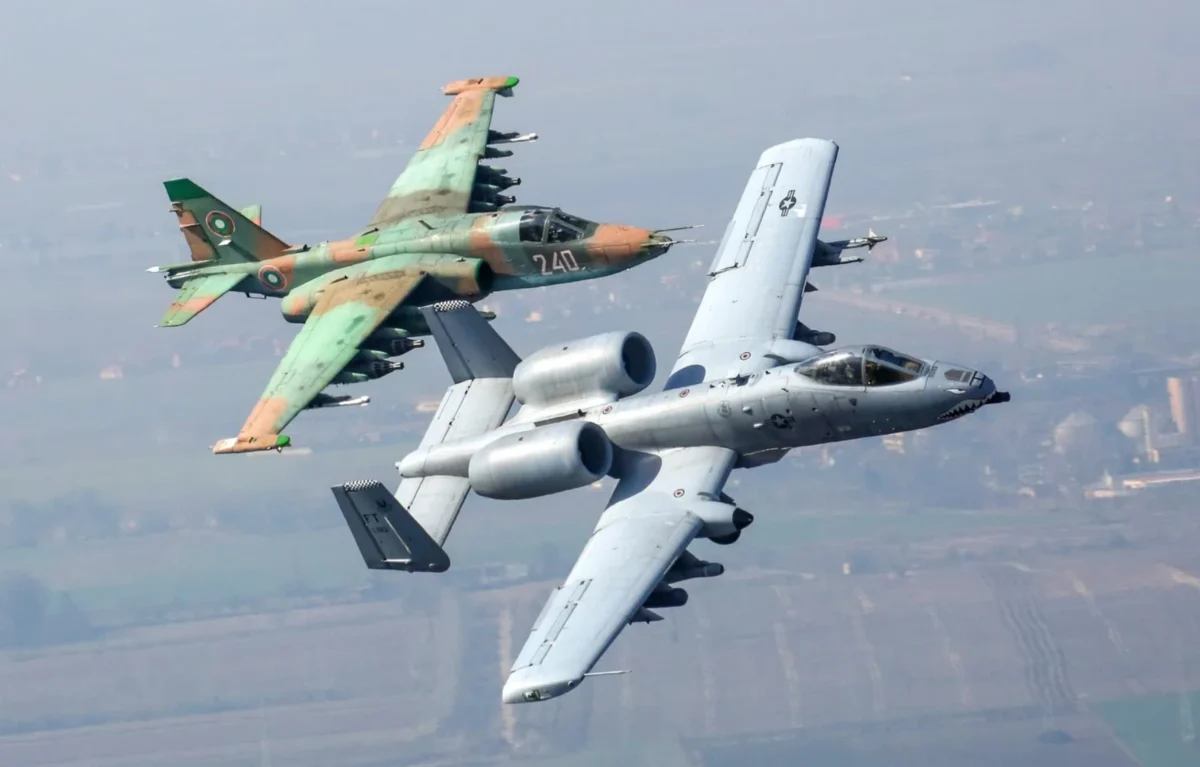
Multirole fighters such as the F-15E can perform air-to-ground missions while retaining air-to-air capability, while dedicated CAS aircraft remain valuable when forces need persistent support close to the battlefield.
The distinction is important: close air support is a mission, not simply an aircraft category.
An aircraft does not necessarily need to be a dedicated ground attacker to support troops on the ground. Fast multirole fighters and even larger bombers can perform CAS when equipped with appropriate sensors, communications, and precision weapons.
That evolution explains why today’s best ground-attack aircraft are increasingly judged by their sensors, networking, precision, survivability, and stand-off capability, rather than just their cannon or maximum bomb load.
| Traditional Ground Attack | Modern Strike Approach |
| Low-altitude attack | Greater stand-off distances |
| Heavy cannon emphasis | Precision-guided weapons |
| Armor and redundancy | Sensors, EW and networking |
| Visual target identification | Integrated targeting systems |
| Dedicated CAS aircraft | Multirole platforms |
So, are aircraft like the A-10 and Su-25 irrelevant? No, but the environment they operate in is becoming much more demanding. Their enduring value comes from what they were designed to do exceptionally well: provide responsive air support to forces on the ground.
The future of ground attack is therefore unlikely to be about choosing between “old” attack aircraft and “new” fighters. It will be about combining aircraft, precision weapons, drones, sensors and battlefield networks into one coordinated strike system.
