

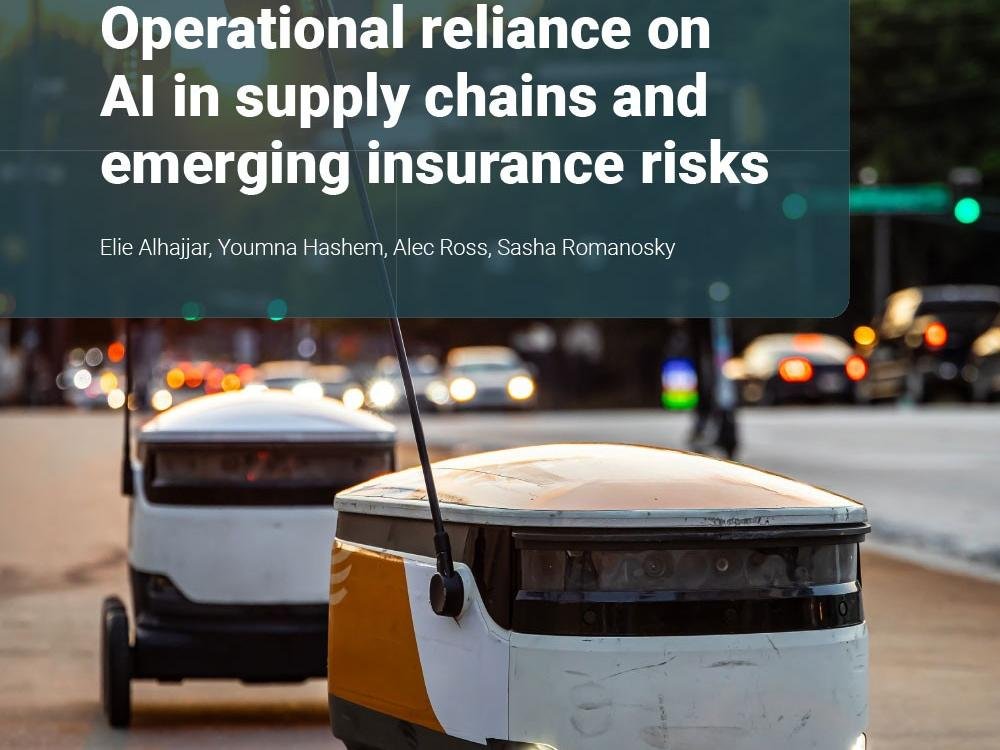
Artificial intelligence (AI) is becoming embedded in the digital infrastructure through which goods are forecast, routed, documented, stored, monitored, and delivered. In transportation, logistics, warehousing, and inventory management, AI is being used for forecasting, route optimisation, predictive maintenance, document processing, warehouse robotics, and anomaly detection. These applications may improve efficiency, visibility, and responsiveness, but they also create new forms of operational reliance on data, models, software vendors, cloud services, and automated decision rules.
This report examines how that operational reliance may translate into insurance risk, particularly where AI-related failures affect multiple firms at the same time. The focus is on transportation and logistics, and on warehousing and inventory management, with particular attention to aggregation risk: the possibility that shared AI weaknesses, common service dependencies, cyberattacks, or regulatory shocks generate correlated losses across policyholders and insurance lines.
The analysis combines a review of academic and industry literature, a desk-based review of AI-related incidents and lawsuits, stakeholder interviews across operational, legal, insurance, and technology backgrounds, and structured scenarios designed to test how AI-related losses could spread across firms and portfolios. The findings suggest that AI adoption in supply chains is likely to expand over the next five years, but unevenly. Lower risk uses such as monitoring, forecasting, and recommendations are likely to spread faster than automated execution. At the same time, insurers, operators, and regulators still lack settled approaches to identifying, governing, and underwriting AI-related supply chain risk.
