

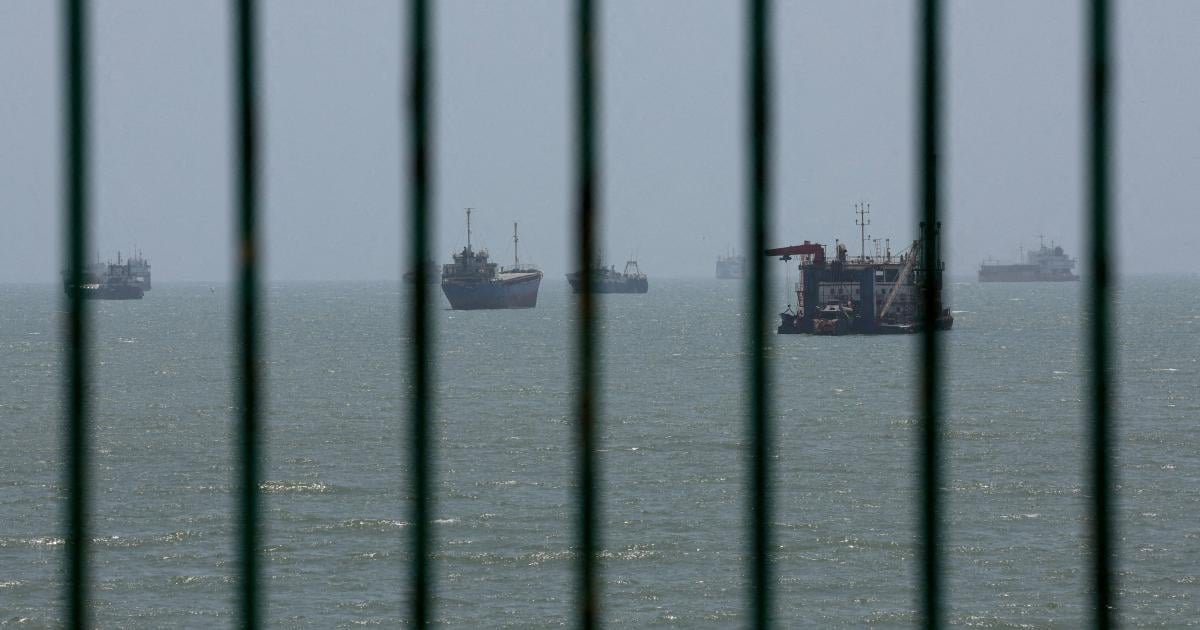
The Middle East is no stranger to conflict. But even by its standards, the last six months have been extraordinarily chaotic. Ever since the United States and Israel went to war against Iran on February 28, countries in the region have faced cycles of drone and missile strikes against their military bases, energy infrastructure, and water desalination plants. Their airports and oil refineries have repeatedly needed to pause operations. And their regular ports have at times sat idle, thanks to Iranian attacks on ships in the Strait of Hormuz.
Despite months of negotiations, Tehran and Washington seem poised to keep fighting on and off in an effort to wear down the other’s materiel and willpower. In fact, the war has expanded. More members of Iran’s regional proxy network, including the Yemen-based Houthis and Iranian-aligned Iraqi militias, joined the fray, and a port in Egypt was hit by drones. (No country has claimed responsibility for that attack, but the United States blamed Iran.)
As the conflict drags on, damage to the Middle East will extend far beyond infrastructure. It will deepen the Middle East’s fault lines. Some economies will be affected more than others, which could upend even the Gulf states’ traditionally stable politics. Institutions central to the region, such as OPEC+, could further come under extreme stress. There are measures that Middle Eastern governments can take to address these challenges, but none are straightforward, and all have their own set of consequences. To survive an era of increased disorder, then, the region’s countries will have to rethink how they relate to the wider world—and, most importantly, to each other.
A HOUSE DIVIDED
Middle Eastern states have long had their differences. They have feuded, for example, about Israel, political Islam, and oil policy. Saudi Arabia and the United Arab Emirates have contrasting visions for the region and beyond, including Libya, Sudan, and Yemen. But the war is deepening all these rifts and creating new ones. The UAE has resented the muted nature of the condemnations that Oman, Qatar, and Saudi Arabia have made of Iran’s attacks on Emirati infrastructure. The countries have differences on how to handle the war itself and an unpredictable Trump administration. These disagreements have piled onto existing disputes, feeding resentment and making the region’s differences harder to manage. They are frustrating efforts to adapt to the evolving war.
The conflict has also begun to divide the Gulf from the United States, its main security guarantor. When U.S. President Donald Trump returned to the White House, many Gulf governments believed that their relationship with Washington would improve after a turbulent four years under the Biden administration. After all, Trump had a friendly and transactional political approach toward the region during his first term. Middle Eastern officials made ostentatious efforts to win him over, including by pledging to spend trillions of dollars in the United States, raising oil output, funneling investment deals to the president’s own family, and, in the case of Qatar, gifting him a private jet. But then Trump launched not one but two wars against Iran, prioritizing Israel’s desire to debilitate the Islamic Republic over the Arab states’ desire for stability. This showed the region that Washington cannot be trusted.
The Middle East has long worried about its dependence on the United States and has thus been diversifying its partnerships since the Arab Spring, in 2011. But in the past, these efforts were largely aimed at threatening or coercing Washington to act in their favor. Now they are more serious. This month, for example, Saudi Arabia forged a mutual defense pact with Pakistan and Turkey. Regional governments are buying more weapons from suppliers in Europe, South Korea, Turkey, and even Ukraine. Finally, they continue to look to China and Russia for political and economic partnerships. They are especially interested in forging more economic ties with China, which already trades hundreds of billions of dollars worth of goods with the region. China is currently the top destination for crude from the region.
Any pivot away from the United States will be limited. There is no alternative security partner, at least right now: China is loath to use its economic might to offer military assistance, Russia is bogged down in its own war, and Europe struggles to coordinate on defense issues. (From the Gulf’s perspective, Europe is also too focused on Gulf domestic issues.) These governments are also unhappy with Chinese and Russian efforts to assist Iran in the war by, respectively, offering Tehran material that it can use to rebuild its defense industrial base and helping it improve its targeting. And although American bases can make host states targets, regional governments still want a U.S. military presence and American protection.
But unlike past efforts to diversify, this limited shift away from Washington will be more meaningful. It will focus on fulfilling Gulf needs more than hedging against U.S. policies it dislikes, and that may be enough to lessen the United States’ influence over the Middle East. In fact, some regional actors might engage more with Iran, offering it a stake in the Middle East’s security in exchange for less threatening behavior. After all, if Washington cannot keep them safe—and may even add to their insecurity through its aggressive actions, from their perspective—then they may need to talk with Tehran, particularly given that years of containment have failed. The war, and in particular Iran’s direct targeting of the Gulf, makes this approach a tough pill to swallow. But it also makes it all the more necessary. As Tehran digs in its heels on fighting Washington, Qatar, Saudi Arabia, and even the UAE will need to speak more with Iranian officials to get themselves out of the crossfire.
THE BEST OF BAD OPTIONS
The Middle East, of course, cannot rely solely on foreign powers to shield itself from long-term disruption. Its states will also need to strengthen their own defenses, starting with better air and missile interceptors and counter-drone capabilities. These countries’ domestic industries are not yet mature enough to meet the region’s needs in the near future, and they still rely heavily on partnerships with foreign manufacturers. But the sector is growing, and the war may last long enough for these firms to produce more of the weapons that the Middle East needs.
Yet the growing political fractures could make it hard for regional states to collaborate on defensive measures. The Middle East, for example, might be reticent to further integrate its air and missile defense networks or to improve early warnings for potential attacks, given that it requires sharing intelligence and sensitive information. Its countries could struggle to remain interoperable as they start deploying increasingly diverse military equipment. And if each state is jockeying for scarce military resources, such as in-demand air defense interceptors, defense could even become a new area of competition. This could prove particularly devastating to the region’s less wealthy states, such as Bahrain and Jordan, which do not have the money to substantially increase their defense budgets and will need help from their neighbors.
Furthermore, no matter how much the region spends on defense, it will not be able to intercept every future Iranian attack. No protective system is impenetrable when it needs to cover millions of square miles and shoot down an onslaught of drones and missiles, particularly given that Iran continues to improve its capabilities. Political and security fractures will further reduce the efficacy of air defense networks. That bodes ill for the region’s economic future. Most of the Middle East depends on oil and gas exports for revenue, and Iran has proved more than capable of slowing this trade by threatening to strike its infrastructure. Tehran, for example, can indefinitely disrupt the Strait of Hormuz, through which most of the region’s oil and gas passes, simply by firing on vessels that pass through it—or even merely threatening to do so. Some Middle Eastern countries can instead export via the Red Sea, which is bookended by the Suez Canal and the Bab el Mandeb Strait. But these waterways are still vulnerable to attacks from Yemen’s Houthi military group, which is aligned with Iran and has periodically disrupted the waterway over the last three years. Even the few countries directly connected to the wider ocean, such as Oman and the UAE, must worry about Iranian strikes on their ports.
Middle Eastern actors have figured out how to improvise under pressure.
Should the Middle East keep struggling to export oil and gas, it could experience domestic political trouble. This is most obviously true for more oil-dependent states, such as Iraq, which will struggle to pay its substantial public wage bill without hydrocarbon earnings. It is also true for Bahrain, which runs one of the highest debt burdens in the world. But richer countries could run into trouble, too. Over the last two and a half decades, the Gulf has used the proceeds from oil and gas sales to build up some of the world’s largest sovereign wealth funds. (Three, one in Kuwait, one in Saudi Arabia, and one in the UAE, have assets close to $1 trillion.) Oil has long funded the Gulf’s expensive social contract, in which governments provide citizens with cushy jobs and high-quality services in return for political acquiescence. If the closure of the region’s waterways and the drying up of hydrocarbon exports become a lasting norm, that deal may come under strain.
Arab countries are certainly aware of these risks, and they are taking steps to avoid facing them. Some, for instance, will invest in pipelines that can bypass the region’s chokepoints. But regional pipeline politics have proved tricky in the past, complicating relations between, among other states, Iraq and Turkey, and Qatar and Saudi Arabia. This infrastructure also remains vulnerable to attacks or sabotage. As a result, Middle Eastern governments will likely converge on one solution: building oil storage abroad. The mechanism is simple. Whenever the Strait of Hormuz is open, countries can rush out supplies and fill up overseas tanks. Importing states can then draw these supplies down when the waterway closes. Such a system will work for everyone, not just the countries that have unfettered access to the Strait of Hormuz thanks to geography. Overseas oil storage also has the benefit of distance, making it much harder for Iran to attack, although this process will not be immune from other disruptions. Some Middle Eastern states are, in fact, already taking steps to increase their overseas storage. Kuwait, for example, is looking to expand its oil-storage network, potentially in South Korea and Japan. The UAE is weighing plans to increase crude storage in India, and several Middle Eastern producers in addition to Kuwait have indicated that they are interested in storing their oil and gas inside South Korea.
But the solution is only partial: storage facilities are, after all, finite. And by partially solving one problem, they will create another one. The Organization of the Petroleum Exporting Countries and its ten affiliated states (known as OPEC+) has contentious quotas around oil production. Increasing overseas storage could worsen these disputes. It could also lead more countries to produce above the agreed limit, as states use overseas storage to justify excess production, furthering various OPEC+ divisions.
ENDURANCE CONTEST
Despite all these challenges, history offers signs that the region can make it through the U.S.-Iranian conflict, and perhaps even avoid serious lasting scars. It is not the first war that the region has had to muddle through in tough circumstances. It bounced back from the eight-year Iran-Iraq War in the 1980s. It withstood Iraq’s 1990 invasion of Kuwait and the United States’s 2003 invasion of Iraq. In several of these instances, many Middle Eastern actors figured out how to improvise under pressure. Egypt managed to write off half of its public debt and escape a crisis by siding with the United States against Iraq in 1990. Qatar overcame the restrictions of pipeline geopolitics in the same decade by making a debt-funded bet on a new technology: turning natural gas into a liquid to export it on ships. When that gamble paid off, Qatar became one of the richest states in the world.
The Middle East today has some thinking to do. It will need to draw up new ways to preserve its wealth, to pursue greater self-sufficiency, and to diversify—and even own—its security. It needs a new mechanism that can help local countries manage their differences and unify against common threats. Doing so is the only way the region can survive this conflict and withstand the next one.
Loading…
