

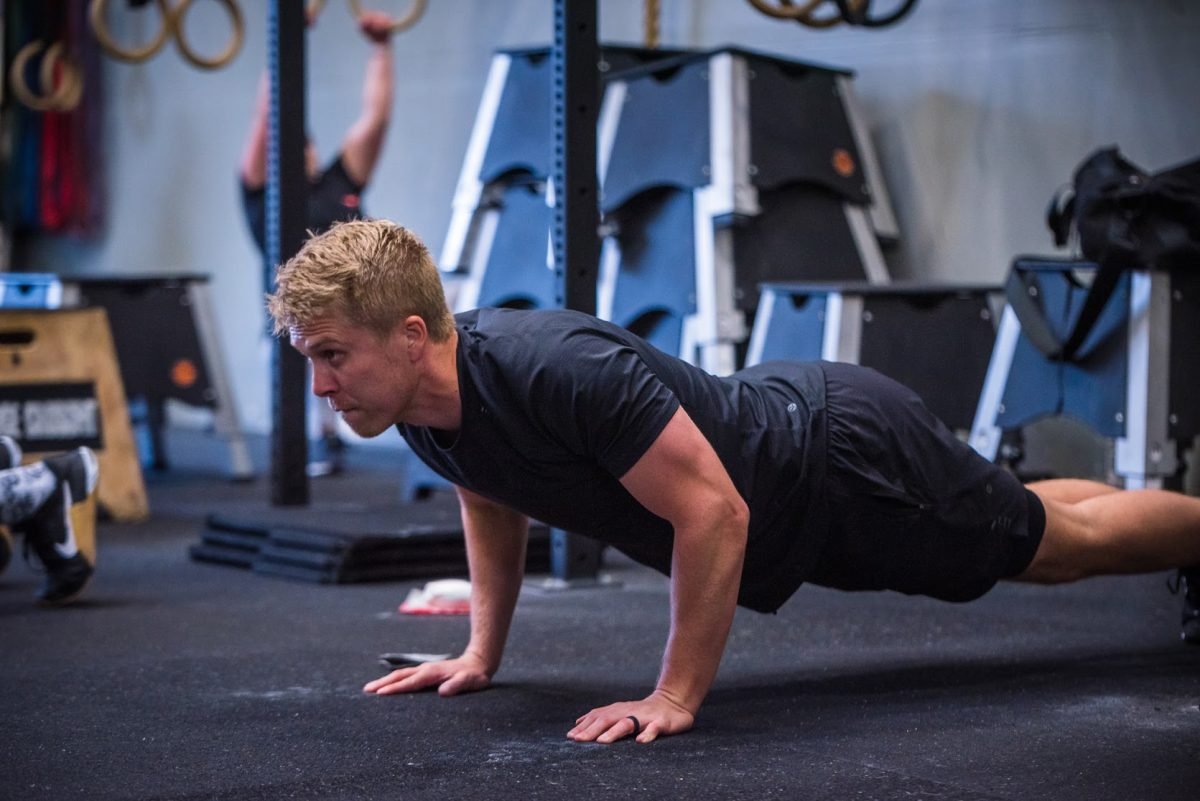
Doing 100 push ups a day can improve your push up endurance, build some muscle in your chest, triceps, and shoulders, and make the movement feel dramatically easier within a few weeks. It can also become a fast route to stalled progress, sore joints, or an unbalanced program if every repetition is rushed and no other training is included. The result depends on your current strength, your technique, how close the sets are to failure, and whether you keep making the exercise harder as you adapt.
The push up is a legitimate resistance exercise, not a lesser substitute for the bench press. Research comparing low load push ups with low load bench pressing found similar improvements in chest and triceps muscle thickness and upper body strength when participants trained hard enough. That said, a daily target of 100 repetitions is a training challenge, not a magic number. Your body responds to the quality, difficulty, and progression of the work, rather than the number printed on a calendar.
What 100 Push Ups Actually Train
A standard push up is a horizontal pressing movement. The chest, triceps, and front of the shoulders produce most of the movement, while the muscles around the shoulder blade and the trunk work to keep your body stable. Your core is not being trained in the same way as during a heavy squat or a dedicated abdominal exercise, but a strict push up still requires the torso to resist sagging and rotation.
The movement also trains a skill. Repeating it often improves coordination, timing, and your ability to distribute effort across the working muscles. This is one reason beginners can see a rapid rise in their push up count before major physical changes are visible. Better movement efficiency and neural adaptation contribute to early strength gains from resistance training.
It Is Primarily an Endurance Challenge
For many people, 100 daily repetitions means using sets that are far below their maximum capacity. You might perform ten sets of ten, five sets of twenty, or accumulate repetitions across the day. That structure develops local muscular endurance, meaning the ability of the pressing muscles to repeat contractions before fatigue stops the set.
The American College of Sports Medicine describes higher repetition, lighter resistance training as an effective approach for local muscular endurance. This makes daily push ups useful for improving a fitness test, building work capacity for bodyweight circuits, or making ordinary pushing tasks feel less demanding. It does not automatically make someone exceptionally strong in a one repetition bench press, because strength gains are partly specific to the load and movement practiced.
Muscle Growth Is Possible, Especially at First
Push ups can build muscle, particularly if you are new to resistance training or if ordinary push ups are challenging. A large review of resistance training studies found that muscle growth can be similar across light and heavy loads when sets are performed close to muscular failure. In practical terms, a set of push ups that ends with only a few good repetitions left may provide a meaningful growth stimulus.
The catch is that bodyweight does not increase by itself. As you get stronger, the same 100 repetitions become less demanding. The first month may provide a useful stimulus, while the fifth month may simply maintain what you have already gained. Resistance training needs progressive overload to keep producing adaptation, which means gradually increasing the challenge through resistance, range of motion, exercise selection, or training volume.
What You May Notice Over Time

During the First Two Weeks
If 100 push ups is well above your normal workload, soreness in the chest, triceps, and front shoulders is likely at the beginning. Delayed onset muscle soreness commonly develops after unaccustomed or demanding exercise, especially when the muscles experience a new level of eccentric loading. It often settles as your body adapts, but severe soreness that changes your movement pattern is not a sign that you need to push harder.
Your technique may also deteriorate near the end of early sessions. A shortened range of motion, flared elbows, collapsing shoulder position, or sagging hips can reduce the value of the exercise and make the repetitions harder to recover from. Splitting the work into manageable sets allows you to preserve the same movement standard from the first repetition to the last.
After Several Weeks
Most consistent trainees will improve their push up performance. You may need fewer sets to reach 100, recover faster between sets, and feel less local fatigue in the chest and triceps. These changes reflect improved muscular endurance and familiarity with the movement, not necessarily a large increase in overall upper body strength.
3 Best Beginner Exercises for a Wider V-Shaped Back
Some people will also notice modest changes in the chest, triceps, and shoulders, particularly when sets are difficult and nutrition supports training. Protein supplementation can produce small additional gains in lean mass and strength during prolonged resistance training, although supplements are not required for progress. Total food intake, adequate dietary protein, sleep, and a suitable training stimulus matter more than finding a perfect post workout shake.
After Months
At some point, daily standard push ups usually stop being difficult enough to drive much further improvement. The body becomes efficient at the exact task it repeats. Research on resistance training volume shows that higher weekly training volume can support greater muscle growth, but more repetitions are not an unlimited answer. If the sets are easy, adding another hundred easy repetitions may create more fatigue and time cost than useful new adaptation.

A more productive next step is to progress the movement. Elevating the feet, adding a weighted vest or backpack, using rings, slowing the lowering phase, increasing the range of motion with handles, or choosing harder variations can restore challenge. These options should be introduced gradually, because a harder variation changes the stress on the wrists, elbows, shoulders, and trunk.
The Important Limitation: Your Program Can Become Unbalanced
Push ups train pressing. They do not provide enough pulling work for the upper back, do not train the legs through a meaningful range, and do not replace conditioning. A routine built only around push ups can therefore improve one physical quality while leaving major movement patterns undertrained.
Resistance training guidance supports using a range of exercises and training the major muscle groups. For a more complete plan, pair push ups with a row or pull up variation, a squat or split squat pattern, a hip hinge such as a Romanian deadlift, and some form of aerobic activity. This approach gives the shoulders more balanced work and develops strength that carries over beyond one exercise.
Daily training itself is not automatically a problem. Frequency can be useful when the total workload is manageable, and research suggests that training a muscle more than once per week can support muscle growth. However, frequency is only helpful when recovery and total volume are appropriate. Daily push ups should not mean daily failure training if your joints are sore, your technique is slipping, or performance is declining.
Is 100 Push Ups a Day Safe?
For a healthy person with good technique and an appropriate starting level, push ups are generally a practical bodyweight exercise. The risk rises when someone jumps from little or no pressing work to a large daily target, ignores pain, or forces repetitions through a poor shoulder position. Tendons and joints often adapt more slowly than motivation.
Muscle soreness that improves over a few days is different from sharp, persistent, or worsening pain in a shoulder, elbow, or wrist. Pain that changes your range of motion, produces weakness, interrupts sleep, or continues despite reducing training deserves assessment by a qualified health professional. Anyone with an existing upper body injury, recent surgery, or a medical condition affecting exercise tolerance should seek individualized medical advice before beginning a daily high repetition challenge.
The simplest way to make the challenge safer is to earn the volume. If you can currently perform only ten clean push ups, one hundred daily repetitions is a large jump. Begin with a number that allows strict form and leaves you able to recover, then build gradually. Knee push ups, incline push ups, and smaller sets are valid starting points because they let you practice the same pattern with less resistance.
How to Make the Challenge Worthwhile
Keep Every Rep Strict
Start in a high plank with your hands placed where you can lower comfortably. Keep your trunk braced, lower under control, and use a depth that brings the chest close to the floor without discomfort. Press back up while keeping the shoulders controlled rather than allowing them to shrug toward the ears.
Strict repetitions make the daily count meaningful. If the last thirty repetitions are half range and poorly aligned, you have changed the exercise and made the number less useful. Stopping a set before form breaks is better training than chasing a target with compromised movement.
Use Sets That Match Your Ability
There is no scientific prize for completing all 100 repetitions without rest. Breaking the work into several sets can preserve performance and make the total manageable. Choose a set size that leaves a small margin before failure for most sets, especially during the first weeks.
If you are advanced enough that sets of twenty or thirty are easy, the answer is not always more repetitions. Harder variations or external load can make the work more time efficient and provide a better strength stimulus. Heavier resistance tends to produce larger improvements in maximum strength than very light resistance, even though both can support muscle growth when effort is high.
Treat the Number as a Tool, Not a Rule
The best outcome from 100 push ups a day is not merely becoming someone who can complete 100 push ups. It is learning how to apply progressive training, recover from it, and use it within a balanced routine. If the target helps you build consistency, it can be worthwhile. If it creates pain, dread, or repetitive training that no longer challenges you, changing the plan is the smarter move.
Key Takeaways
| Focus | What 100 Daily Push Ups Can Do | What It Cannot Do Alone |
|---|---|---|
| Muscular endurance | Improve your ability to repeat upper body pressing work | Guarantee large increases in maximum strength |
| Muscle growth | Build or maintain chest, triceps, and shoulder muscle when sets are challenging | Provide endless growth once standard push ups become easy |
| Skill | Improve push up technique and movement efficiency with high quality practice | Fix poor form when repetitions are rushed |
| Health | Reflect good fitness in some populations and add useful physical activity | Prove that push ups alone prevent heart disease |
| Program design | Support a simple consistency habit | Replace pulling, leg training, aerobic work, and recovery |
References
- American College of Sports Medicine (2009) ‘American College of Sports Medicine position stand. Progression models in resistance training for healthy adults’, Medicine and Science in Sports and Exercise, 41(3), pp. 687 to 708. doi: 10.1249/MSS.0b013e3181915670.
- Cheung, K., Hume, P. and Maxwell, L. (2003) ‘Delayed onset muscle soreness: treatment strategies and performance factors’, Sports Medicine, 33(2), pp. 145 to 164. doi: 10.2165/00007256-200333020-00005.
- Morton, R.W., Murphy, K.T., McKellar, S.R. et al. (2018) ‘A systematic review, meta analysis and meta regression of the effect of protein supplementation on resistance training induced gains in muscle mass and strength in healthy adults’, British Journal of Sports Medicine, 52(6), pp. 376 to 384. doi: 10.1136/bjsports-2017-097608.
- Schoenfeld, B.J., Grgic, J., Ogborn, D. and Krieger, J.W. (2017) ‘Strength and hypertrophy adaptations between low load versus high load resistance training: a systematic review and meta analysis’, Journal of Strength and Conditioning Research, 31(12), pp. 3508 to 3523. doi: 10.1519/JSC.0000000000002200.
- Schoenfeld, B.J., Ogborn, D. and Krieger, J.W. (2016) ‘Effects of resistance training frequency on measures of muscle hypertrophy: a systematic review and meta analysis’, Sports Medicine, 46(11), pp. 1689 to 1697. doi: 10.1007/s40279-016-0543-8.
- Schoenfeld, B.J., Ogborn, D. and Krieger, J.W. (2017) ‘Dose response relationship between weekly resistance training volume and increases in muscle mass: a systematic review and meta analysis’, Journal of Sports Sciences, 35(11), pp. 1073 to 1082. doi: 10.1080/02640414.2016.1210197.
- Kikuchi, N. and Nakazato, K. (2017) ‘Low load bench press and push up induce similar muscle hypertrophy and strength gain’, Journal of Exercise Science and Fitness, 15(1), pp. 37 to 42. doi: 10.1016/j.jesf.2017.06.003.
- Yang, J., Christophi, C.A., Farioli, A. et al. (2019) ‘Association between push up exercise capacity and future cardiovascular events among active adult men’, JAMA Network Open, 2(2), e188341. doi: 10.1001/jamanetworkopen.2018.8341.
