

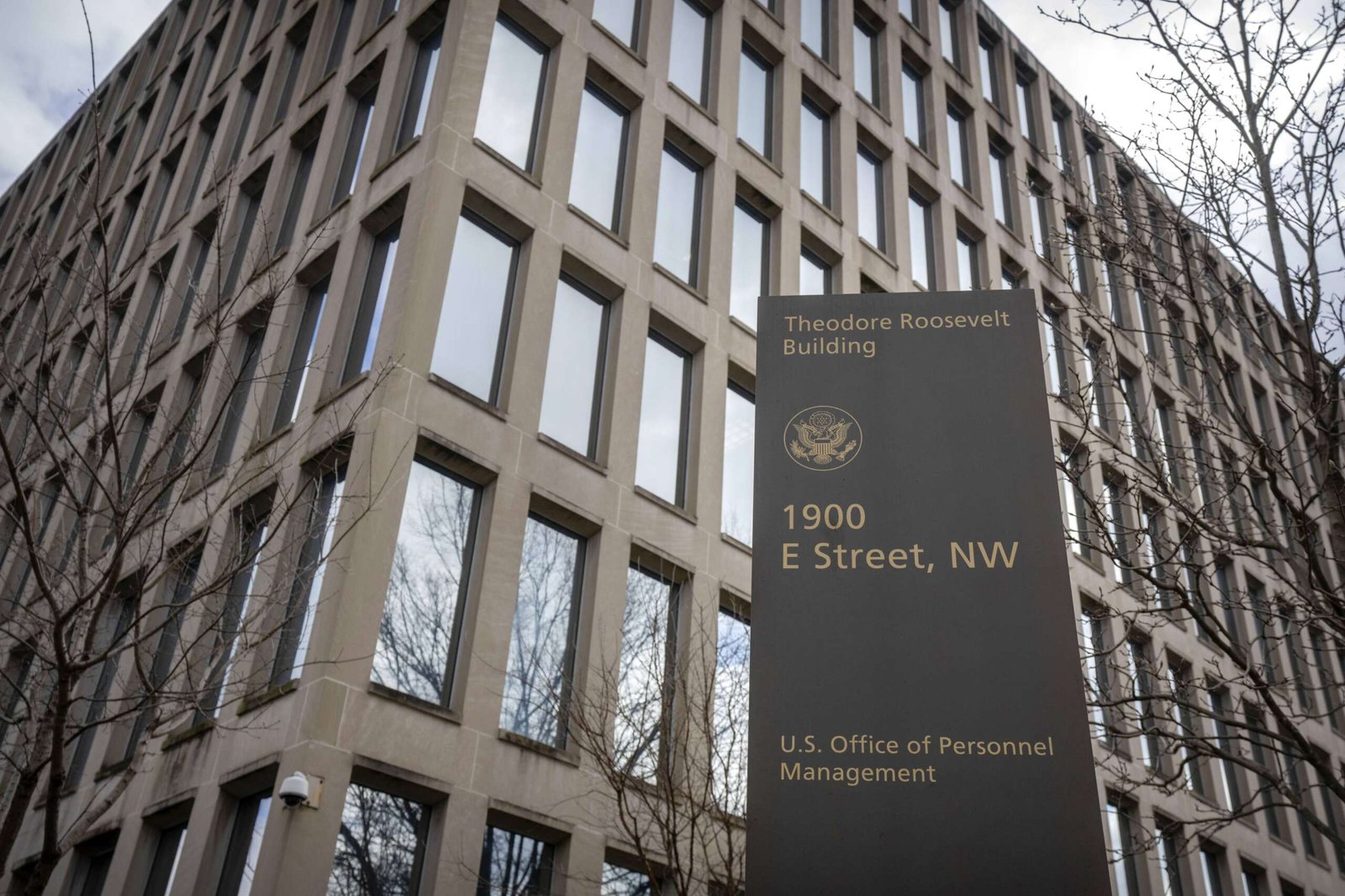
Terry Gerton You’ve done a recent analysis of workforce changes at OPM, and it’s so interesting. For the last year and a half or so, OPM’s really been one of the principal architects of federal workforce change, and yet your report finds that OPM itself lost about 35% of its own workforce during that same time period. It seems like OPM is essentially becoming a case study in its own work force policies.
Dawn Locke That is true. What I can say about this is that OPM obviously wasn’t immune to the recent workforce changes. In 2025, we know that across the federal government, there was a decline about 11% of the workforce. But OPM had a decline, as you know, of 34%, which is well above that average. So what this means is that they’re going to need to assess what skills and knowledge gaps this created in order to keep fulfilling their mission. And as for the case study, yes, because OPM was unresponsive to our request, we remain interested in seeing whether this was an effective decision or if these workforce losses will have negative consequences.
Terry Gerton Well, let’s drill into some of the specifics about what you were able to observe. That 35% reduction translates to a little bit more than 1,000 people. When GAO looked at those changes, what did you notice about the people who left OPM between that timeframe, December 24 and March 26?
Dawn Locke Sure. So we noticed that the majority of the people who were hardest hit were those over 60 years old and those under 30 years old. And this is important because almost 60 percent of people over the age of 60 were separated. And this is a massive institutional knowledge going out the door. Whereas, when you look at the 40 percent that were separated who are under age of 30 years old, that is a solid pipeline that is now being let go of. And what’s interesting is that the administration has made hiring youth and emerging career professionals a priority. So it’s really difficult to understand why the youth were so drastically impacted. And it wasn’t just at OPM, it was across the federal government.
Terry Gerton When you look at those changes, what really concerns you more? Is it the size of the reduction, the loss of the institutional experience that you talk about there, or the concentration of departures, maybe in particular segments of OPM?
Dawn Locke Sure. So I would say that the concern isn’t the number of people or the shuffling of offices, it’s whether OPM can still meet mission need. And for years, GAO and even OPM’s own IG have identified skills gaps as an existing issue and top management challenge for OPM. So really, Terry, it’s one thing for an agency to decrease its workforce and reorganize, it’s a whole other thing to make changes that may decrease capability. So it’s really important for OPM and all of us to understand the impact of what’s happened.
Terry Gerton As you describe those impacts, OPM is a customer-facing organization. They’re not just a policy shop, so federal employees interact with them in lots of different ways, hiring, classification, retirement. If OPM’s operational capacity is weakened, as you sort of described here, where do you agencies and employees will feel or see it first.
Dawn Locke Truly, we have no indication of where the impact would be first felt. Certainly, OPM’s remaining employees would feel it, as would OPMs customers. But of course, as mentioned, at this point, we don’t know the details of how OPM is reorganizing or how it’s leveraging the staff left to ensure continued customer service.
Terry Gerton Dawn Locke is a director in GAO’s strategic issues team. Dawn, you’ve been very clear to point out the challenges with figuring out the strategic balance of what’s left in OPM. And the case study gives a really interesting example, the case of the Merit System Accountability and Compliance shop that lost 41% of its FTEs over this timeframe that we’re talking about. And yet, as we’ve watched new guidance come out from OPM over the last 18 months, the same time frame, they have been consolidating more and more and more responsibilities to that shop in terms of reviewing merit system claims and cases. Is this an example of where the strategic balance looks out of whack? What are you finding there?
Dawn Locke Well, from the outside looking in, it certainly does look out of whack. It’s hard to understand how they can reduce some of these offices so drastically and increase the responsibility of those offices at the same time. But again, we’re not sure to what extent they’re moving around staff or, or how they’re strategically going to accomplish some of the demands that are coming from these offices. And that’s why it’s important for us to get in there and see what they’re doing.
Terry Gerton What kind of information did you all ask for that OPM was unwilling or unable to provide?
Dawn Locke So we asked for a number of things. For example, we asked for information regarding strategic workforce plans, we asked for their staffing plans. We also asked for their agency RIF and reorganization plan. And this plan is important, because it’s a plan that lays out how workforce reductions have impacted agencies as well as any potential cost savings. But we were not able to receive those documents. I will say Terry though that the day that this report was issued, OPM did send some of the information that we had requested that same afternoon, but unfortunately it didn’t include some of those key documents that we were hoping for.
Terry Gerton They did provide some explanation, though, about how this was all going to work. And the same answer, or the answer that they provided is one we see in a lot of agencies as well. AI is going to solve this problem. When you at GAO get that kind of a response, especially to such a dramatic workforce reduction, what’s your first inclination? Is that going to solving the problem?
Dawn Locke Sure. Well, let me first say that we haven’t specifically looked at OPM occupations to know which would be good candidates for AI. We haven’t done that work yet, but based on GAO’s work looking at artificial intelligence in the workforce in general, what’s important to keep in mind is that AI isn’t something that can be jumped into quickly. It can get things wrong. It can’t get things really wrong. So if OPM or other agencies are going to leverage AI, They need a skilled workforce that knows how to identify when AI is making mistakes. In addition, one of my GAO colleagues who specializes in IT continues to hone in to me that machines can’t be held accountable. So they shouldn’t be making important decisions. And as you know, OPM has to make millions of important decisions every day. So when using AI, it’s critical to have humans in the loop to identify those hallucinations, especially on decisions that would be difficult to undo. So although AI could help OPM, it may not be the ultimate answer to all their staffing challenges.
Terry Gerton Those are key points around accountability, especially when you’re dealing with human information, which can be so variable. Let’s go back to the skills gaps question. You’ve been watching these in OPM for a long time. What are the most obvious skill gaps that you’ve had record of and what will you be watching for in the future?
Dawn Locke Sure. So skills gaps have been on our high risk list, as I said, for a very long time, especially in areas like project management, leadership development. They also have skills gaps in organizational performance and data analytics. And as you can imagine, these gaps put OPM at significant risk of being unable to meet some of its goals. So when looking at the future of work at OPM. It’ll be essential for them to determine how they can adjust for these gaps to meet mission needs.
Terry Gerton And if Congress wanted to evaluate whether OPM’s workforce reductions were succeeding or failing, or even the broader government-wide workforce reductions that this administration has pursued, what evidence should it demand over the next year?
Dawn Locke Yeah, so I’ll just take you back to the OMB and OPM required plans that they’re again called the agency riff and reorganization plans. And these are critical to seeing how workforce reductions have impacted mission as well as the cost savings of these changes. So Congress, Congress is very aware of them and we’re working with Congress now to determine next steps and we are hopeful for more collaboration and timeliness with OPM in future work.
Terry Gerton Now that you at least have some information, even though it wasn’t in time to evaluate and publish when you put this summary out, will you be looking to share a follow up?
Dawn Locke So the information that was provided, unfortunately, I don’t think is enough to really do a follow-up, but it will spur more questions for us. We will share it with Congress and just, like I said, determine next steps.
Copyright
© 2026 Federal News Network. All rights reserved. This website is not intended for users located within the European Economic Area.
