

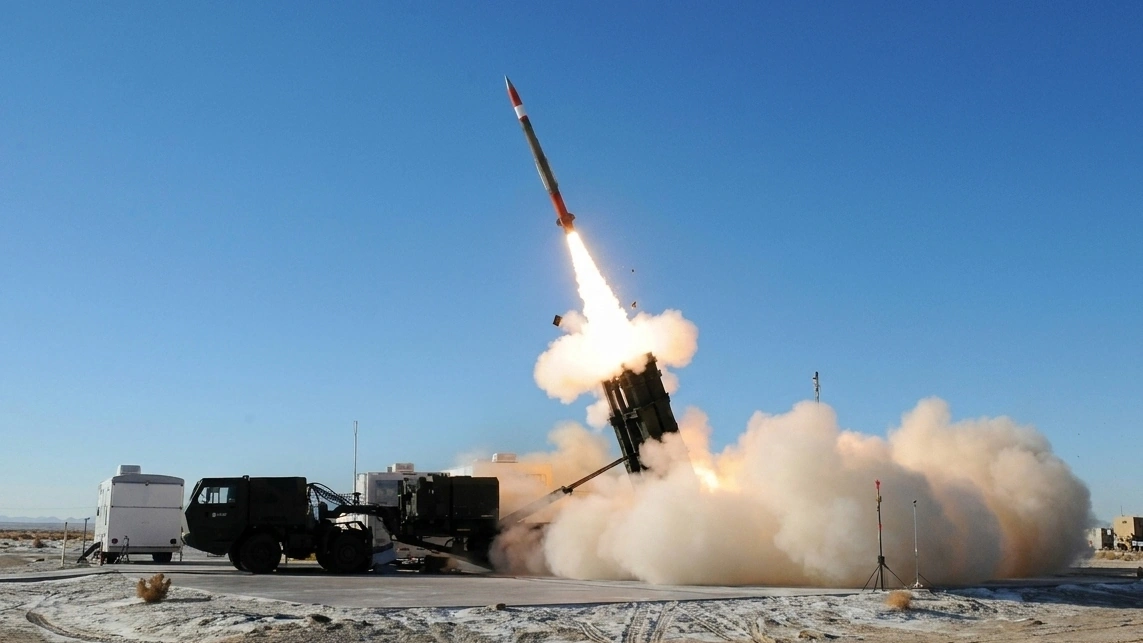
A missile can cross hundreds of kilometers in minutes. A drone can arrive from an unexpected direction. A cruise missile can fly low enough to hide among the clutter of the terrain. And a ballistic missile? By the time its warning appears, the defender may have only moments to react.
That is the uncomfortable reality behind the world’s most advanced air-defense systems in 2026.
But here’s the catch: the best air defense system isn’t necessarily the one with the longest missile range or the biggest radar. Modern air defense is more like an orchestra than a single instrument. Radar detects the threat, command networks decide what matters, and interceptors attempt to destroy it before it reaches its target. If one part fails, even an impressive missile battery can struggle.
The stakes are becoming increasingly visible. Patriot and THAAD systems, for example, have been heavily used in recent conflicts, while concerns about interceptor stocks have pushed the United States to accelerate production.
In July 2026, the U.S. awarded a potential $58.6 billion multiyear contract for Patriot PAC-3 MSE interceptors, with production capacity targeted to triple by 2030.
So, which systems deserve to be called the best air defense systems in the world?
This ranking looks beyond headline specifications. We’ll consider range, radar capability, interceptor technology, target types, mobility, integration, combat experience, and, perhaps most importantly, how useful each system is against the complicated mix of threats modern militaries actually face.
The result is a list of five systems that stand out in very different ways.
How We Rank the Best Air Defense Systems in the World
Calling one system the best air defense system sounds straightforward, until you compare what these weapons are actually designed to do.
A long-range system built to hunt aircraft hundreds of kilometers away is solving a different problem from a system designed to intercept a ballistic missile plunging down at extreme speed. Comparing them by missile range alone is a bit like choosing the “best” car by looking only at its top speed.
For this ranking, the focus is on real-world defensive value in 2026, not simply the most impressive specification sheet.
The Six Factors That Matter Most
| Factor | Why It Matters |
| Detection & radar | A missile cannot intercept a threat it cannot reliably detect and track. |
| Interceptor performance | Speed, guidance, maneuverability, and accuracy determine whether an engagement succeeds. |
| Target coverage | The strongest systems can address several threat categories rather than just one. |
| Range & altitude | Greater engagement envelopes can create more opportunities to defeat incoming threats. |
| Networking | Modern batteries increasingly depend on shared sensors and command networks. |
| Combat experience | Operational use provides evidence that specifications alone cannot. |
There is another factor worth keeping in mind: interceptor availability. A theoretically excellent system becomes much less useful if a defender cannot maintain enough missiles for a prolonged campaign. Recent demand for Patriot PAC-3 interceptors illustrates this problem; production capacity and stockpiles have become strategic issues in their own right.
The ranking also treats manufacturer claims carefully. A published maximum range is not the same thing as a guaranteed engagement distance against every target. Terrain, target altitude, radar horizon, electronic warfare, weather, and the target’s behavior can all change the equation.
Finally, these systems aren’t necessarily rivals in the traditional sense. THAAD, Patriot, S-400, David’s Sling, and SAMP/T occupy overlapping but distinct roles. A sophisticated air-defense network may use several layers together, allowing one system to compensate for another’s limitations.
That’s why the question isn’t simply, “Which missile goes the farthest?”
The better question is: which system gives its operator the strongest combination of capability, flexibility, survivability, and demonstrated performance?
1. Patriot PAC-3 MSE — United States
If you ask which best air defense system combines maturity, versatility, and real-world use, the Patriot PAC-3 MSE is one of the hardest systems to overlook.
The Patriot family has been around since the Cold War, but the modern system is a very different machine from its early versions.
The PAC-3 Missile Segment Enhancement (MSE) represents a major evolution, particularly for ballistic-missile defense. Instead of relying primarily on a large explosive warhead, PAC-3 uses hit-to-kill technology, the interceptor physically collides with the incoming target at very high speed.
That distinction matters.
A successful interception isn’t simply about getting close enough to damage a missile. The interceptor has to detect, track, maneuver toward, and strike a rapidly moving target.
PAC-3 MSE was developed to improve that engagement envelope, including through a more powerful propulsion system and enhanced maneuverability.
Why Patriot Stands Out
| Capability | Patriot PAC-3 MSE |
| Primary role | Air and missile defense |
| Key interceptor | PAC-3 MSE |
| Guidance approach | Hit-to-kill |
| Major targets | Aircraft, cruise missiles, ballistic missiles |
| Deployment | Mobile |
| Major strength | Versatility and combat experience |
Patriot’s biggest advantage isn’t one spectacular specification. It’s the ecosystem surrounding the system.
It has been operated by numerous countries, integrated with wider air-defense architectures, repeatedly upgraded, and used in combat. That accumulated experience gives operators something a brochure cannot provide: lessons from actual engagements.
The system has also become strategically important enough that interceptor production is receiving enormous attention. In July 2026, the U.S. Army awarded Lockheed Martin a potential $58.6 billion multiyear PAC-3 MSE contract, with production capacity expected to rise substantially over the coming years.

But Patriot isn’t invincible.
It is expensive, interceptors are a finite resource, and a battery cannot protect an entire country by itself. Saturation attacks can force difficult decisions about which threats deserve an interceptor.
That limitation actually highlights what makes Patriot interesting: the best air defense system isn’t simply the one with the most powerful missile. It’s the one that can remain useful when the sky gets complicated.
For 2026, Patriot PAC-3 MSE earns the No. 1 position because it combines mature technology, broad mission coverage, international adoption, and substantial operational experience in a way few competing systems can match.
2. S-400 Triumf — Russia
The S-400 Triumf takes a very different approach from Patriot. Where Patriot’s reputation has been built heavily around integrated air and missile defense and extensive operational use, the S-400 is famous for something immediately eye-catching: long-range engagement capability.
Developed by Russia as a successor to the S-300 family, the S-400 was designed as a mobile, long-range surface-to-air missile system capable of engaging several categories of aerial threats. Its architecture can employ different interceptor missiles, allowing operators to tailor engagements according to the target and required range.
That flexibility is central to the system’s appeal.
What Makes the S-400 Notable?
| Feature | S-400 Triumf |
| Primary role | Long-range air defense |
| Major targets | Aircraft, cruise missiles and selected ballistic threats |
| Missile family | Multiple interceptor types |
| Mobility | Road-mobile |
| Notable strength | Long-range engagement envelope |
| Main challenge | Combat-performance evidence is more limited than Patriot’s |
The S-400’s headline specifications have attracted enormous attention. Russia has stated that certain S-400 interceptor configurations can engage targets at distances of up to 400 kilometers. But that number needs context.
Maximum advertised range does not mean that every aircraft, cruise missile, or missile can be detected and destroyed at 400 kilometers. Target altitude, radar line of sight, target radar signature, electronic warfare, interceptor selection, and engagement geometry all influence what is actually possible.
That’s an important distinction when comparing the S-400 with other top air defense systems.
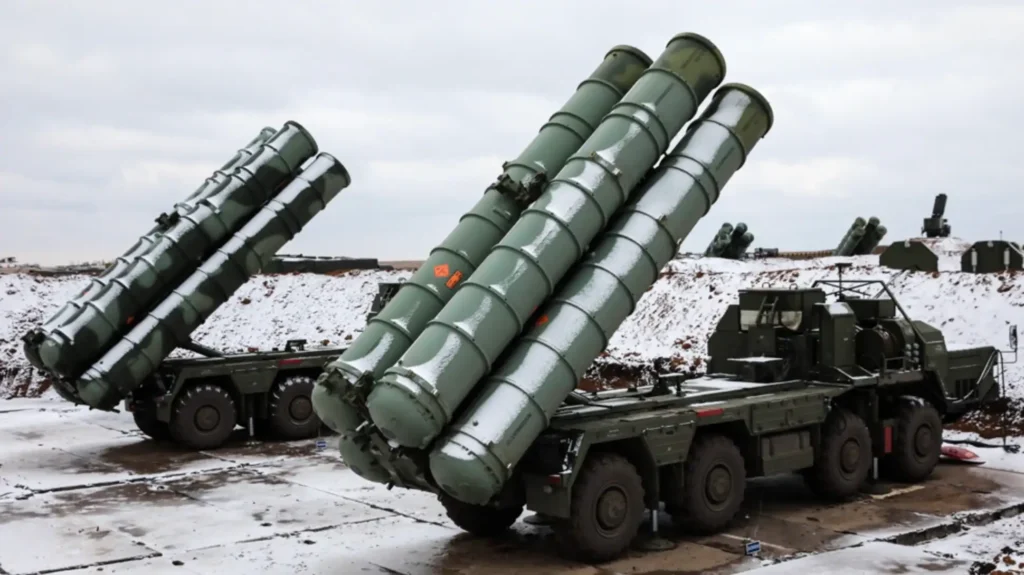
The system’s architecture is built around multiple radars, command-and-control equipment and different missile types, creating a layered engagement capability within the battery and the wider network. Its mobility also allows units to relocate rather than remaining tied permanently to a fixed installation.
Yet the S-400 faces a difficult question in any 2026 ranking: how much weight should advertised capability receive when publicly verified combat evidence is comparatively limited?
That prevents it from taking the top position here.
Still, its combination of long-range reach, multiple interceptor options and mobile deployment makes the S-400 one of the world’s most prominent long-range air-defense platforms.
On paper, its reach is formidable. In practice, its true effectiveness depends on the entire sensor-and-command network supporting it, not just the missile sitting on the launcher.
3. THAAD — United States
Some air-defense systems are designed to create a wide protective umbrella. THAAD is built for a more specialized job: stopping ballistic missiles during the terminal phase of their flight.
That distinction is important when comparing the best air defense systems in the world. THAAD isn’t intended to replace Patriot or serve as a universal shield against every aircraft and drone. Instead, it occupies a higher layer in a broader missile-defense architecture.
THAAD stands for Terminal High Altitude Area Defense. Its interceptor uses hit-to-kill technology, meaning the interceptor destroys the incoming ballistic missile through direct impact rather than depending primarily on a conventional explosive warhead.
What Makes THAAD Different?
| Capability | THAAD |
| Primary mission | Ballistic missile defense |
| Interception phase | Terminal phase |
| Interceptor method | Hit-to-kill |
| Main target | Ballistic missiles |
| Key advantage | High-altitude interception |
| Typical role | Upper layer of integrated defense |
The system’s greatest strength is therefore specialization.
Imagine an incoming ballistic missile as a stone thrown high into the sky. A lower-tier defense might have to wait until that stone is already falling toward its target. THAAD attempts to engage it much higher, giving the defender another opportunity before the threat reaches the final stage of its trajectory.
That makes THAAD particularly valuable when combined with systems such as Patriot. The two aren’t simply competing products. They can provide different layers of protection, with THAAD operating at a higher tier while Patriot can address threats closer to the defended area.

THAAD has also become increasingly important as demand for ballistic-missile defense grows. In 2026, the United States has been working to expand production of key missile-defense systems amid increased operational demand and concerns about interceptor inventories.
There is, however, a major caveat.
THAAD’s specialization is also its limitation. It shouldn’t be judged as though it were a conventional long-range surface-to-air system designed primarily to hunt fighter aircraft. Its real value comes from what it adds to a layered defense network.
That specialization earns THAAD the No. 3 position. It may not be the most versatile system on this list, but when the threat is a ballistic missile descending toward a critical target, few systems have a more clearly defined mission.
4. David’s Sling — Israel and United States
Modern air defense is increasingly a game of finding the gap between layers. That is where David’s Sling becomes particularly interesting.
Developed jointly by Israel and the United States, David’s Sling was designed to address threats that sit beyond the traditional mission of short-range defenses such as Iron Dome but below the higher-altitude ballistic-missile role associated with systems such as Arrow.
In other words, it fills an important middle layer.
The system uses the Stunner interceptor, which employs hit-to-kill technology and advanced guidance to engage threats such as medium- and long-range rockets and certain ballistic and cruise-missile threats.
David’s Sling at a Glance
| Capability | David’s Sling |
| Primary role | Medium-range air and missile defense |
| Key interceptor | Stunner |
| Main targets | Rockets, missiles, aircraft and other aerial threats |
| Guidance | Advanced multi-mode guidance |
| Key strength | Flexible middle-layer defense |
| Development | Israel–U.S. partnership |
Its importance becomes clearer when you stop thinking about air defense as a single giant shield.
Picture a city protected by several fences. The first fence deals with small, nearby threats. A second fence catches more dangerous objects approaching from farther away. Another layer is positioned to deal with specialized missile threats. David’s Sling is part of that middle fence.
That makes direct comparisons with systems such as THAAD somewhat misleading. THAAD is optimized for a different part of the missile-defense problem, while David’s Sling is intended to handle a broader collection of medium-range threats.

The system has also attracted attention beyond Israel. Finland, for example, selected David’s Sling for its future long-range air-defense capability, giving the system an increasingly international role.
But there are limits to what can confidently be said from public information. Detailed engagement data, interceptor inventories, and the full results of operational encounters are not always available, making precise claims about effectiveness difficult.
Still, David’s Sling earns a place among the top air defense systems in 2026 because of its combination of modern interceptor technology, a flexible target set, and its role within a layered architecture.
Its real strength isn’t simply how far its missile can fly.
It’s the fact that there’s a specific layer of the sky it’s built to own.
5. SAMP/T — France and Italy
The SAMP/T may not have the same household recognition as Patriot or S-400, but overlooking it would mean missing one of Europe’s most capable ground-based air-defense systems.
Developed through Franco-Italian cooperation, SAMP/T uses the Aster 30 interceptor and was designed to protect mobile military formations, infrastructure, and populated areas from a range of aerial threats. Its role has become increasingly significant as European countries look for stronger, interoperable air and missile defenses.
Unlike a system built around one spectacular capability, SAMP/T is better understood as a balanced European package.
SAMP/T at a Glance
| Capability | SAMP/T |
| Primary role | Medium- to long-range air defense |
| Main interceptor | Aster 30 |
| Major targets | Aircraft, cruise missiles and ballistic threats |
| Deployment | Mobile |
| Operators | France, Italy and other users/partners |
| Key strength | European interoperability and versatility |
The Aster 30 gives SAMP/T a substantial engagement envelope, while its radar, command system, and mobile launchers allow the battery to operate as part of a wider integrated network.
That network-centric approach matters more than it might first appear.
A modern air-defense battery rarely fights alone. Sensors may detect a target before the launcher itself has a clear picture. Command systems can distribute information across multiple units, allowing the defense network to decide which interceptor is best positioned to respond.
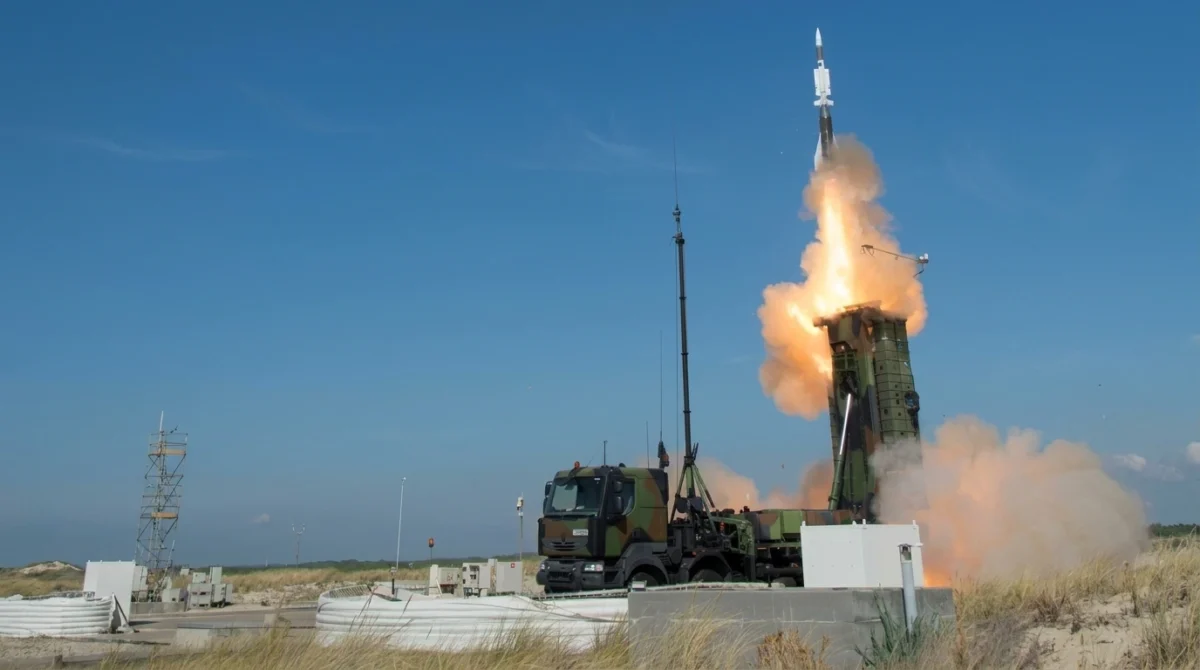
SAMP/T has also gained greater attention as European governments seek alternatives and complements to American-made systems. Its development is particularly relevant to the broader European push for greater air-defense capacity and industrial independence.
The system isn’t without weaknesses, though. Its global user base and combat experience are considerably smaller than Patriot’s, while publicly available operational data remain more limited. The SAMP/T NG modernization also needs to be distinguished from earlier SAMP/T configurations when discussing capabilities.
So why put it at No. 5?
Because SAMP/T offers a compelling combination of mobility, modern sensors, Aster 30 interceptors, and multi-threat capability. It may not dominate every category, but it doesn’t need to.
In a world where air defense increasingly depends on connected layers rather than isolated missile batteries, SAMP/T’s ability to function as part of a broader European architecture could prove just as important as the specifications printed on its missile containers.
Final Thoughts
The search for the best air defense system in the world doesn’t have a simple winner. Modern air defense is too complex for a single number, whether missile range, radar power, or interceptor speed, to settle the debate.
Patriot PAC-3 MSE stands out for its versatility, maturity, and extensive operational experience. The S-400 remains notable for its long-range architecture, while THAAD specializes in high-altitude ballistic-missile interception. David’s Sling provides an important middle layer, and SAMP/T demonstrates Europe’s growing ability to field advanced, networked air-defense capabilities.
But perhaps the biggest lesson is this: the strongest air defense is rarely a single weapon. It is a layered network in which different sensors, interceptors, command systems, and defensive platforms work together.
That matters even more as drones, cruise missiles, ballistic missiles, and increasingly sophisticated threats crowd the modern battlespace.
So, if you had to choose one system for a real-world defense network, would you prioritize range, versatility, combat experience, or layered integration?
