

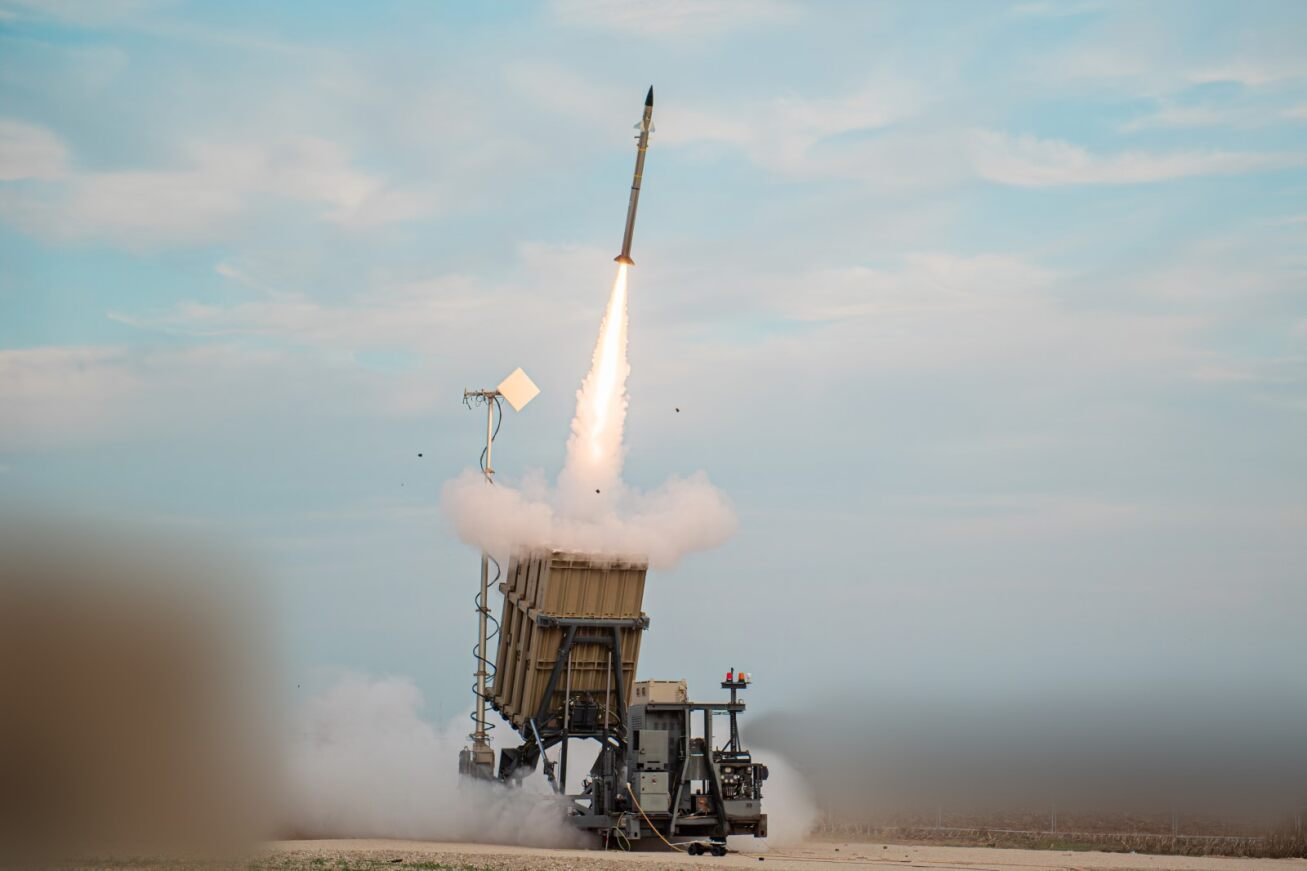
Behind the success of modern missile and other air defense systems lies a growing vulnerability: interceptor stockpiles are shrinking while threats continue to grow. Israeli experts say recent clashes with Iran exposed a challenge facing not only Israel but also the United States and its allies — whether defense industries can produce missiles fast enough to sustain a prolonged, high-intensity war.
Missile Interceptor Shortages Raise New Security Concerns
The debate over whether a shortage of ballistic missile interceptors contributed to the reported cancellation of a planned U.S. strike on Iran in late July continues. Regardless of that specific question, defense experts say it highlights a broader strategic issue: what constitutes a sufficient stockpile of interceptors when facing an adversary equipped with a large arsenal of ballistic missiles?
Israeli experts argue that the challenge encountered by both the United States and Israel during the recent confrontation with Iran is far from unique.
“Most countries rely on a basic arsenal of weapons, including those for air defense,” one Israeli source told ESD. “Wars have become longer, and arsenals should be adapted to the new reality.”
A Production Gap Exposed
According to defense analysts, the United States currently lacks sufficient production and assembly capacity to rapidly replenish missile interceptor inventories during a sustained, high-intensity conflict.
Modern missile warfare consumes interceptors at a pace that can vastly exceed industrial production timelines, creating a widening gap between battlefield demand and manufacturing capacity. As interceptor inventories decline, even highly sophisticated air defense networks become increasingly vulnerable.
Lessons from the Iran-Israel Conflict
Israel’s multi-layered air defense architecturem— consisting of Arrow, David’s Sling, and Iron Dome — was developed over decades through close U.S.-Israeli cooperation. However, analysts note that the system was not originally designed to withstand prolonged saturation attacks involving hundreds of ballistic missiles and drones.
During the recent Iran-Israel conflict, Iran launched approximately 550 ballistic missiles and 1,000 drones toward Israel. According to the available figures, 31 missiles struck populated areas, killing 28 Israelis and injuring more than 3,000 people.
Israel’s retaliatory campaign reportedly destroyed more than 1,000 Iranian missiles, but doing so required the expenditure of thousands of precision-guided munitions and more than 600 aerial refueling sorties.
Saturation Remains the Greatest Challenge
Modeling of the Iron Dome system suggests that its effectiveness remains high as long as incoming missile salvos stay below its interception capacity. Once that threshold is exceeded, however, damage rises sharply.
Analysts point out a paradox: the more capable an air defense system is under normal conditions, the more vulnerable it may become when overwhelmed by large-scale saturation attacks.
The Cost Imbalance of Air Defense
Low-cost drones create an additional challenge by exploiting the economic imbalance between offensive and defensive systems.
According to the analysis, a Shahed-136 drone costs approximately $20,000 to $50,000, while a single Tamir interceptor for the Iron Dome system costs roughly $70,000 to $120,000.
Under swarm attack conditions, defense costs increase rapidly — not only because of interceptor expenditure, but also due to the broader economic disruption caused by repeated air raid alerts.
While Iron Dome continues to save lives and remains tactically effective, analysts argue that its long-term economic sustainability becomes increasingly difficult when facing mass-produced drones.
Industrial Constraints
Several structural factors contribute to interceptor shortages, including limited legacy production capacity, obsolete components, delays in reactivating skilled manufacturing workforces, and dependence on critical minerals sourced from geopolitically sensitive regions.
Defense analysts also argue that the U.S. industrial base has traditionally prioritized high-value weapons platforms over high-volume munitions such as artillery ammunition and missile interceptors — systems that become essential during prolonged wars of attrition.
Ukraine’s experience reinforces this concern. Despite continuous Western military assistance, Ukrainian forces repeatedly faced shortages of missile interceptors while Russia launched more than 5,000 long-range weapons in a single month.
The report also notes that U.S. homeland missile defense inventories remain limited relative to emerging threats, with additional improvements in both capacity and capability considered necessary.
Historical experience illustrates the challenge. During the Iraq War, U.S. missile defense units failed to detect or intercept five Iraqi cruise missiles, while Patriot batteries were also involved in several friendly-fire incidents. Earlier, during the 1991 Gulf War, Patriot interception rates initially reported at 95 percent were later revised to 59 percent, with some analysts estimating the actual success rate at below 10 percent.
Deterrence Depends on Industrial Capacity
Without major investment in surge production capacity, analysts warn that the United States risks entering future conflicts with insufficient missile inventories, potentially weakening strategic deterrence.
Although Israel’s air defense systems significantly reduced casualties during the recent conflict, they did little to prevent billions of dollars in infrastructure damage.
Analysts also caution that Israel could face future attacks on the scale of 1,500 rockets per day from Hezbollah. Public confidence that interception systems will always provide complete protection, they argue, risks creating dangerous complacency.
The broader conclusion is that even the most sophisticated air defense systems cannot sustain high-tempo operations indefinitely unless supported by an industrial base capable of rapidly replacing expended interceptors.
CSIS: High Success, But Stockpiles Are Shrinking
A report published by the Center for Strategic and International Studies (CSIS) concludes that the recent air defense campaign was largely successful, achieving high — though not perfect — interception rates.
While some Iranian attacks penetrated air defenses, causing casualties and damage to military bases, the report concludes they did not significantly disrupt U.S. or coalition operations.
The campaign, however, required extensive interceptor use. According to the report, U.S. Patriot inventories have fallen to fewer than 1,000 interceptors, while THAAD inventories stand at approximately 250.
“Diminished stockpiles may force the United States and its coalition partners to take more risks with interceptions. There are no good alternatives to Patriot and THAAD for ballistic missile defense. Navy ships, with Standard Missiles that can intercept such threats, generally are too far away.”
Planning Before the War Begins
Brig. Gen. (Ret.) Zvika Haimovitz, former commander of the Israeli Air Defense Corps, told ESD that countries should determine the required size of their interceptor inventories based on an agreed “reference scenario” developed jointly by all relevant defense experts.
Such planning, he emphasized, must take place well before any conflict begins. “When the war breaks out, it is too late to find a solution,” Haimovitz said. “I’m afraid that countries are not acting according to this rule.”
Author: Arie Egozi, Israel Correspondent
Click here to read the latest issue of ESD.
