

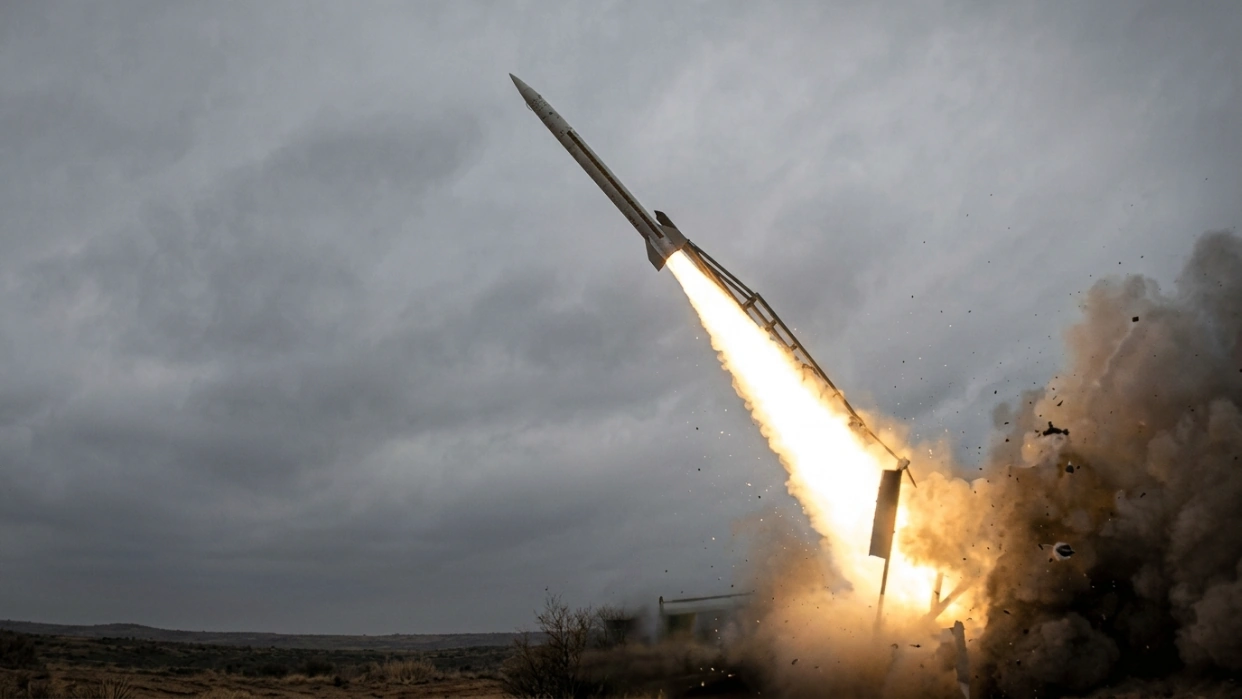
Defense Feeds, Kyiv – Ukraine advances FP-7X interceptor for FREYJA air defense system, outlining plans to scale production of a new interceptor missile that could become a key component of Europe’s evolving short-range air defense architecture.
Ukrainian officials indicated that the program aims to manufacture up to 2,000 FP-7X missiles, highlighting the growing emphasis on expanding interceptor production alongside the development of new air defense technologies.
The initiative reflects broader European efforts to strengthen layered air defense capabilities as demand increases for systems capable of countering drones, cruise missiles and other low-altitude aerial threats.
Ukraine Advances FP-7X Interceptor for FREYJA Air Defense System
The announcement that Ukraine advances the FP-7X interceptor for the FREYJA air defense system places the FP-7X at the center of a new European air defense concept focused on scalable and cost-effective interception. Designed for integration with the FREYJA system, the interceptor is intended to engage a range of aerial threats while supporting distributed air defense networks.
According to program details, the long-term objective is to establish production capacity for approximately 2,000 interceptor missiles, demonstrating an emphasis on industrial scalability as much as technological capability. Expanding manufacturing capacity has become increasingly important as modern air defense systems require sustained inventories to maintain operational readiness.
The initiative also reflects Ukraine’s growing role in developing indigenous defense technologies while working alongside European industrial partners.

Interceptor Production Is Becoming a Strategic Priority
Air defense planning increasingly extends beyond system performance to include the ability to manufacture interceptors at scale. Recent operational experience has demonstrated that maintaining sufficient missile inventories is essential for sustaining long-duration defensive operations, particularly against large numbers of relatively inexpensive aerial threats.
As a result, governments and defense companies across Europe are investing in production infrastructure, supply chain resilience and modular manufacturing approaches that can increase output without significantly extending delivery timelines.
The FP-7X program reflects this industrial shift, emphasizing both technological development and production capacity as complementary elements of future air defense readiness.
Layered Air Defense Continues to Evolve
The FREYJA concept aligns with the broader trend toward layered air defense architectures in which different interceptors are optimized for specific categories of threats. Rather than relying on a single missile to counter every aerial target, modern networks combine multiple systems capable of engaging drones, cruise missiles, aircraft and ballistic threats at different ranges and altitudes.
Short-range interceptors such as the FP-7X can complement larger strategic air defense systems by engaging lower-cost threats more efficiently while preserving high-end interceptors for more demanding engagements. This layered approach improves operational flexibility and helps commanders allocate defensive resources according to the evolving threat picture.
The growing integration of advanced sensors, digital command networks and distributed launchers is also expected to improve the effectiveness of future air defense architectures across Europe.
Strengthening Europe’s Defense Industrial Base
The announcement that Ukraine advances FP-7X interceptor for FREYJA air defense system highlights how European defense cooperation is increasingly focused on combining technological innovation with industrial expansion. Developing an effective air defense capability now depends not only on advanced missile design but also on the capacity to manufacture interceptors in sufficient quantities to meet operational requirements.
For Ukraine, participation in programs such as FP-7X supports the continued growth of its domestic defense industry while strengthening collaboration with European partners on next-generation security initiatives. Expanding interceptor production could also contribute to a more resilient regional supply chain capable of supporting future multinational procurement efforts.
The fact that Ukraine advances FP-7X interceptor for FREYJA air defense system demonstrates the increasing importance of scalable interceptor production in modern air defense planning.
As European nations continue investing in layered defensive networks, programs that combine indigenous innovation with high-volume manufacturing are expected to play an increasingly significant role in strengthening regional air and missile defense capabilities.
