

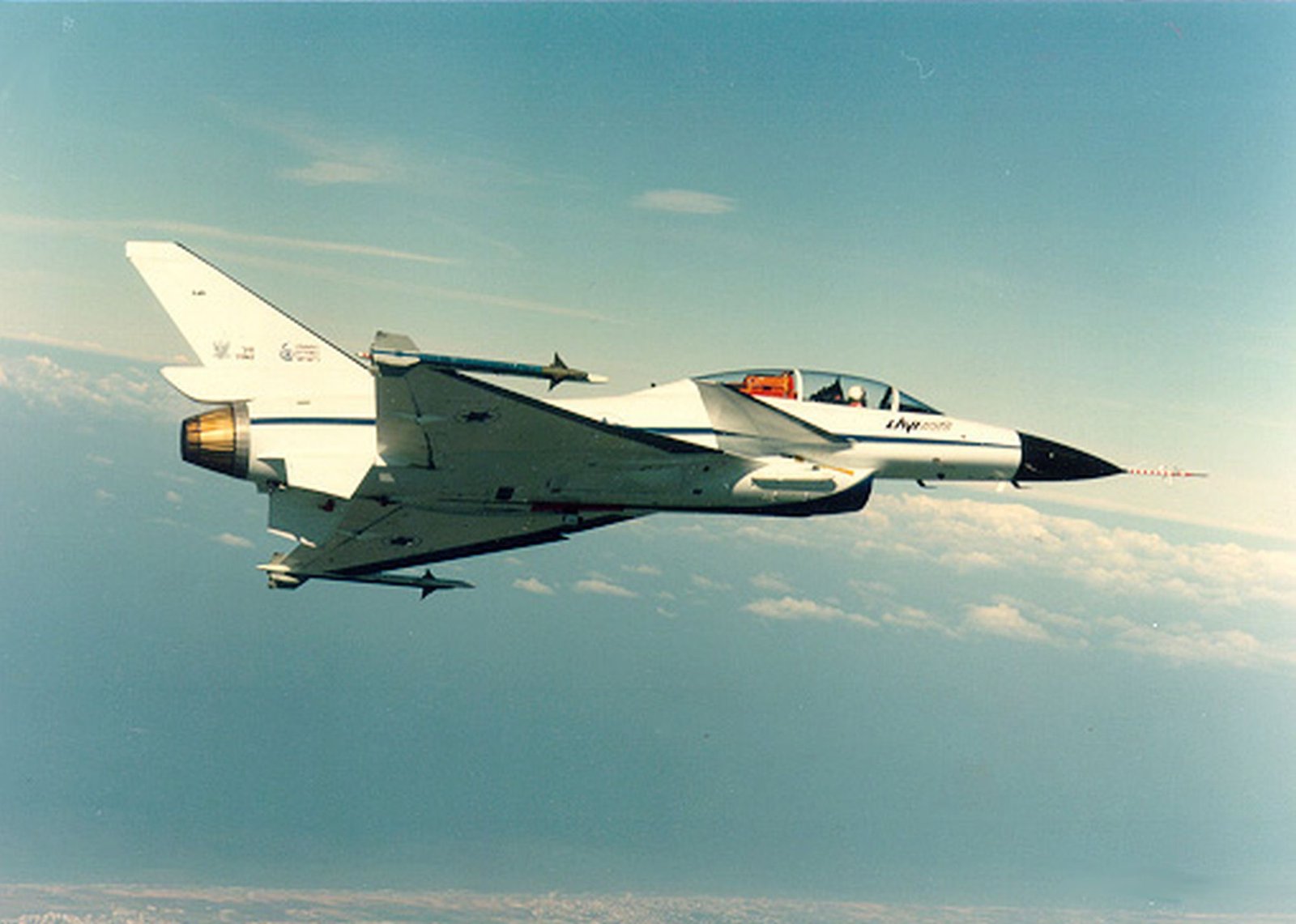
Could Israel once again build its own combat aircraft? Growing concerns over the future of U.S. defense policy and the risk of potential arms restrictions are fueling a renewed debate in Jerusalem over greater defense autonomy. While reviving the iconic Lavi fighter is considered unrealistic, defense officials and analysts are increasingly discussing a new generation of indigenous stealth aircraft and autonomous combat drones designed to reduce Israel’s dependence on foreign suppliers.
Israel revisits the idea of an indigenous combat aircraft
As part of a broader effort to strengthen the independence of its defense industry, Israel is once again debating the need for a domestically developed aerial combat platform.
The discussion comes amid growing concerns that future changes in U.S. defense policy toward Israel could eventually affect the supply of critical military equipment. According to Israeli defense sources, voices within the defense establishment argue that the Israeli Air Force should possess an indigenous platform capable of maintaining operational freedom even in the event of a future American arms embargo.
The legacy of the Lavi
The debate inevitably recalls the Lavi, Israel’s indigenous fighter aircraft program of the 1980s. The Lavi was intended to become the Israeli Air Force’s standard fighter and one of the world’s most advanced combat aircraft at the turn of the century. The program officially began in February 1980, when the Israeli government authorized the Air Force to define the technical requirements for its future fighter aircraft.
Eighteen months later, in October 1982, Israel Aerospace Industries (IAI) began full-scale development after selecting a Pratt & Whitney engine for the aircraft.
On December 31, 1986, the first Lavi prototype completed its maiden flight, marking the beginning of an extensive flight-test program.
IAI ultimately built three of the five planned prototypes before the Israeli government decided to cancel the project on August 30, 1987, mainly as a result of heavy U.S. pressure.
A new approach to air power
While restarting the original fourth-generation Lavi program is widely viewed as impractical, recent discussions focus instead on developing a new generation of indigenous combat aircraft.
According to Israeli sources, the emphasis has shifted toward stealth technologies and advanced autonomous combat drones, rather than another manned fourth-generation fighter.
Recent statements by defense officials indicate that growing geopolitical uncertainty and the possibility of future supply restrictions have made greater self-reliance a strategic priority.
Calls for a “Lavi 2.0”
The debate has also been reinforced by a research paper written by defense analyst David Rodman and published by the Begin–Sadat Center for Strategic Studies (BESA).
Rodman argues that Israel should prepare now for the possibility that the Israeli Air Force could one day face limited access to advanced fighter aircraft: “To put it bluntly, Jerusalem needs to activate a ‘doomsday’ plan to confront the very real prospect that the IAF could one day, in the not-too-distant future, find itself without access to an adequate supply of advanced fighter-bombers. The time to activate such a plan is now, not once disaster is already on the doorstep. Why not begin today to phase out the IAF’s current complete dependence on the United States for advanced fighter-bombers by moving ahead with the design and manufacture of a similar blue-and-white aircraft, a Lavi 2.0 so to speak?”
Looking beyond manned fighters
A senior Israeli defense source said that Israel already possesses most of the technological building blocks required to develop an advanced unmanned combat aircraft.
As one of the world’s leading developers of unmanned aerial systems and advanced weapon technologies, Israel is seen as well positioned to create an indigenous autonomous platform that could eventually replace today’s manned fighter aircraft.
Author: Arie Egozi, Israel Correspondent
