

Analysts generally organize the options for a Chinese military move against Taiwan into three categories: an invasion to seize direct control of the island; a “joint firepower strike” that would bomb Taiwan’s cities and political institutions, terrorizing Taiwanese civilians into surrender; and a maritime blockade to starve Taiwan into submission. All these missions are complex, high-cost gambles for China that would consume large quantities of military assets and result in immense casualties and property damage. A blockade would add the risk of directly attacking third parties—specifically, cargo ships from other countries—making it more likely that China would also have to fight international powers, including the United States. Nevertheless, many analysts think that a blockade is the most tempting scenario of the three for Beijing, because it would avoid sending Chinese forces up against Taiwan’s prepared defenses and would capitalize on what Chinese leaders consider Taiwan’s vulnerabilities, including the island’s extreme dependence on international trade. Still, a traditional blockade risks escalation and imposes extensive military costs on China.
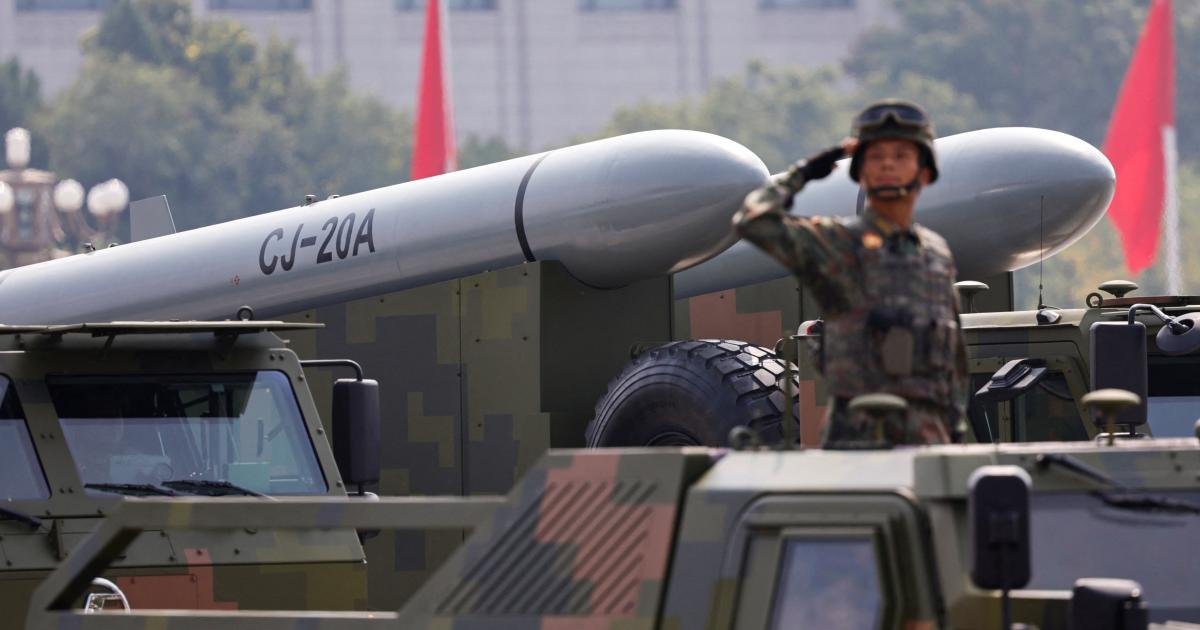
But China has an underexamined option, one that could generate the effects of a traditional blockade with a lower cost for Beijing. A “blockade by fire”—a missile strike campaign directed specifically against Taiwan’s port infrastructure—would minimize the risks that China would face. This kind of strike would not focus major combat operations in the heart of Taiwan’s cities, as in the case of an invasion or a joint firepower strike. Nor would it put third-party ships at risk, as with a traditional blockade. And because a blockade by fire would use only a small number of missiles aimed at a narrow set of targets in Taiwanese ports, it would avoid the need to enforce a cordon around the island and would not expose China’s navy to defensive missile fire from Taiwan. Under a blockade by fire, international commercial ships would still be free to sail around the island, meaning that other East Asian countries such as Japan and South Korea could continue the bulk of their trade essentially undisturbed. Ships could even sail to Taiwan, but they would be unable to load and unload cargo in the heavily damaged ports. Simulation models of attacks like this suggest that China could substantially interrupt Taiwan’s trade and keep it suppressed for an extended period, using only a few hundred ballistic missiles.
Global trade would have to adjust to any type of blockade against Taiwan. In fact, the indirect economic pain to other countries from a blockade by fire would be the same as that of a traditional blockade scenario. The key difference is that a blockade by fire would not involve direct Chinese attacks on non-Taiwanese ships. The destruction would be limited to Taiwanese assets, helping Beijing maintain its argument that the operation was strictly an internal matter and ensuring that international powers couldn’t claim a greater need to intervene.
Overall, a blockade by fire would make efficient use of China’s military assets. Given the limited number of targets, the Chinese military would be able to reserve the bulk of its capabilities, including the majority of its missile arsenal, to deter the United States and other countries from coming to Taiwan’s aid. Intervention is always possible, but a blockade by fire minimizes this risk compared to alternatives. Taiwan, and its international partners, should prepare for such a strategy. Investing in responses to China’s traditional threats is important, but will not be enough. The island should prepare its ports and its people for the supply disruptions of a potential blockade by fire.
BLOCK AID
Any move that Beijing may make against Taiwan, traditional blockade or otherwise, is fraught with risk. If they decide on conflict, Chinese leaders have strong incentives to find military strategies that minimize backlash, and although a traditional blockade is seen as less escalatory than an invasion, it still presents challenges for Beijing. To enforce a traditional blockade, China would likely need to fire its weapons. Although China’s maritime militia fleet regularly harasses other countries’ small and vulnerable fishing boats, the container ships and bulk carriers responsible for Taiwan’s commerce dwarf any Chinese militia vessel. Giant cargo carriers would have little reason to comply with Chinese requests to divert their course. Mariners follow the “law of gross tonnage”: small ships give way. In fact, it is in their interest to do so, because the hulking commercial ships will hardly notice them in a collision. Just as the U.S. Navy was forced to open fire periodically to maintain its blockade against Iran, China would likely have to fire on any determined ships headed for Taiwanese ports in order to actually stop them. China would thus have the last clear chance to back down from all-out warfare. As the American economist Thomas Schelling argued decades ago, the country with the final opportunity to avoid escalation often loses in a crisis.
In attempting a traditional blockade, China would have already chosen to fight a war against Taiwan. Any blockade is by definition an act of war. But the actions necessary to enforce a traditional blockade risk expanding the war beyond Taiwan, because the threats against non-Taiwanese vessels would not only pressure the United States and others to intervene to protect their shipping but also give them discrete targets against which to retaliate. It is easier for outside powers, notably the United States, to intervene against a traditional blockade than against other military coercion because they could do so in a limited way, focusing only on China’s aggressor ships. The intervenors could do this even if they would be unwilling to escalate to direct strikes against the Chinese mainland. Thus, a traditional blockade would inevitably create a hot conflict, and one that makes it relatively easy for China’s opponents to respond.
To enforce a traditional blockade, China would likely need to fire its weapons.
A blockade by fire, however, would accomplish the goal of a traditional blockade without these drawbacks. In our research, we ran a series of simulations that modeled Taiwanese port operations, how Chinese missile attacks might inhibit them, and what Taiwan might do to defend them. The results suggest that China would need to fire fewer than 500 missiles over 100 days to reduce Taiwan’s imports to 15 percent of their average peacetime level. Beijing would not need to actively track and intercept commercial ships traveling to Taiwan, making direct confrontation with outside powers less likely. China could also be confident that few international ships would be accidentally hit while docked and that few missiles would land outside Taiwan’s ports, where they could hurt civilians. For all these reasons, a blockade by fire might be more acceptable to Chinese leaders than other military options against Taiwan.
Although a blockade by fire involves a missile strike campaign, it is not simply an alternative form of joint firepower strike. The key difference is the type of target being attacked. Under a blockade by fire, as with a traditional blockade, the damage to Taiwan occurs through increasing supply shortages and rising prices, not conflagrations in Taiwan’s major cities. A blockade of any type would give Taiwan the chance to acquiesce before it suffered high costs. Unlike a firepower strike’s irreversibility—destroyed buildings, decapitated government institutions, and dead civilians—a blockade by fire would allow Taiwan’s people and leaders to see the suffering coming before it fully hit. China might even promise to rapidly bring aid to Taiwan if it agrees to Beijing’s stipulations, providing further incentive for Taiwan to capitulate quickly.
ADAPT AND SURVIVE
To deter a blockade by fire, Taiwan’s most obvious move would be to bulk up its missile defenses. But while some missile defense is surely a component of Taiwan’s best response, making it the centerpiece would be a losing strategy. Modern missile defense systems are increasingly effective, but they are also enormously expensive. Each interceptor missile costs somewhat more than each ballistic missile that it is designed to intercept, and the defending force often needs to fire more than one interceptor at each incoming missile to create a high chance of interception. Taiwan would wind up on the losing side of a spending race with China over short-range ballistic missiles. And even if the United States were to support Taiwanese defense efforts, the two would still struggle to keep up with Chinese capabilities.
Taiwan would similarly struggle if it tried to deter a blockade by fire by threatening China’s ports with reciprocal short-range ballistic missile strikes. Unlike Taiwan, China has many domestic resources to draw on, land borders across which it can bring imports even if its seaborne trade is disrupted, and ports that are out of Taiwan’s missile range. Any Chinese threat to hurt Taiwan therefore outpaces what Taiwan could threaten in response. Taiwan’s allies could attack Chinese ports that are out of Taiwan’s range, but that would be a dramatic escalation against a nuclear-armed power and would still not address China’s resources advantage.
Taiwan’s best hope, then, for deterring and defending itself from a blockade by fire would be to prepare to survive one. Taiwan should stockpile essential items, including the parts and materials needed to repair port infrastructure. Taiwan and its willing partners should also conduct exercises that specifically focus on preparing the island’s ports to operate under crisis conditions and to practice mitigating and repairing damage. These exercises should take cues from other countries that have faced aerial attacks on their port infrastructure, such as Germany and the United Kingdom in World War II, North Vietnam during the Vietnam War, and Ukraine in its war with Russia. Taiwan and its partners could also build or subsidize a reserve of roll-on, roll-off cargo vessels—ships with built-in ramps that allow wheeled vehicles to drive cargo directly between the vessel and the port. These ships can continue to load and unload even without the dedicated port infrastructure, such as cranes, that is needed for modern container shipping. Although these vessels are less efficient than container ships and bulk carriers, they could play a valuable role in getting essential supplies into Taiwan in the case of a blockade by fire.
OUTSIDE THE BOX
Ultimately, the greatest inhibitor of a Chinese blockade by fire is that blockades of any kind are hard. Historical experience—including during both world wars, Cuba’s long history under U.S. embargo, and more contemporary conflicts in Ukraine and the Red Sea—suggests that target economies adjust. They find ways to trade in spite of blockades, and they draw on domestic resources that they would not use in normal times but that can help under duress. These adjustments add to the fact that while blockades can impose privation, modern governments and their nationalist populations can accept a lot of suffering before considering major political concessions. Even absent Chinese aggression, people in Taiwan increasingly identify as Taiwanese and do not seem inclined to repeat Hong Kong’s experience of acquiescing to Chinese rule. Most Taiwanese prefer the status quo, and a Chinese military move might compound Taiwanese resistance by stirring a nationalist backlash.
Nevertheless, Chinese leaders are subject to their own political pressures, and they may view China’s military buildup and modernization optimistically. Leaders who come to believe they can succeed with an attack, whether through innovation or perceived military might, sometimes decide to go for it. Or they may fatalistically roll the dice in a moment of stress. Because a blockade by fire lowers the military and political risks inherent in taking action against Taiwan, there is a strong possibility that Beijing would reach for this option if Chinese leaders deemed military action necessary.
Taiwan of course needs traditional defenses. Notably, a robust force of mobile land-based antiship and surface-to-air missiles would help Taiwan against both a Chinese invasion and a traditional blockade. But analysts also need to expand their vision of creative strategies that China could use to coerce Taiwan. To maintain deterrence against a blockade by fire, Taiwan and those hoping to help it need to first acknowledge such an option and then dynamically adapt the island’s defenses to deter and survive this alternative approach.
Loading…
