

With August now underway, it’s time for my month’s first recap. The past week brought a solid lineup of new RPGs and strategy games worth keeping on your radar. That said, it’s nothing compared to what’s coming later this month. I’m already working on a roundup covering every major release scheduled for August, and trust me, there are plenty of them.
With that out of the way, here’s a look at the best recent releases from the past few days, spanning the transition from late July into early August.
Several projects are beginning their Early Access journeys, like Prelude Dark Pain, while both Quasimorph and Dramatic Road: the Origin of Wind have completed theirs. Players looking for something free can also explore the newly available demos for Grimoire of Blanks and an interesting roguelike RPG, Tuoni, but let’s see all of them.
Prelude Dark Pain – Early Access
- Developer: QUICKFIREGAMES
- Release Date: July 27, 2026
- Platform: PC
- Prelude on Steam
How could I not kick off this recap with what I believe is one of the releases that has generated the most buzz over the past few days? I’m talking about Prelude Dark Pain, a dark fantasy tactical RPG following Soren, a former warrior who has settled into life as a blacksmith.
An attack on his family pulls him back into conflict, eventually placing him at the center of a rebellion against the Order of the Ashen Crusade. Battles take place across grid-based environments where elevation, positioning, interactive terrain, and moving elements can reshape an encounter.
Players assemble squads of up to five heroes, select their active skills, improve equipment at the base, and combine abilities across multiple character classes. The initial Early Access build contains the first story act, nine playable heroes, 63 skills, and approximately 15 hours of content, including side quests, random encounters, and world-map activities.
Wonderland

Another interesting Strategy RPG that debuted this week is Wonderland. Starting with an empty tavern and a modest supply of gold, the game places players in charge of an aspiring adventurers’ guild on the fantasy continent of Elfar.
Recruited members can be organized into four-character squads and dispatched on quests, dungeon expeditions, competitions, and other assignments. Character development is not tied to rigid classes: skills change according to equipped weapons and proficiency, allowing individual heroes to move between martial, magical, and support-focused roles.
Equipment affixes, an extensive talent system, monthly recruitment cycles, and multiple guild resources provide the management layer, while battles emphasize turn-based coordination, terrain effects, healing, and mission-specific objectives. Expanding the guild also unlocks additional facilities, including shops, training grounds, and crafting services.
Moon Corona – Early Access

Moon Corona combines deckbuilding combat with free-roaming exploration and story decisions in the troubled Duchy of Reinhart. I tried it about a month ago during the Steam Next Fest of June 2026, and its mix of exploration, Dark Souls-style challenge, and tactical combat makes it a title that, in my opinion, is well worth keeping on your radar.
After awakening inside an ancient temple, the protagonist travels through settlements, wilderness areas, castles, cathedrals, and forgotten dungeons while collecting cards and uncovering fragments of a larger mystery.
The character system begins with five base classes but branches into more than 40 advanced paths, while hundreds of class-specific and universal cards support unconventional combinations such as defensive hunters, melee-oriented mages, and agile berserkers.
Combat also incorporates movement, spacing, armor-breaking, targeted body parts, terrain kills, and encounters involving multiple hostile factions. The Early Access period will be used to expand the available story, regions, cards, classes, enemies, and progression systems while refining combat balance.
Quasimorph – Version 1.0
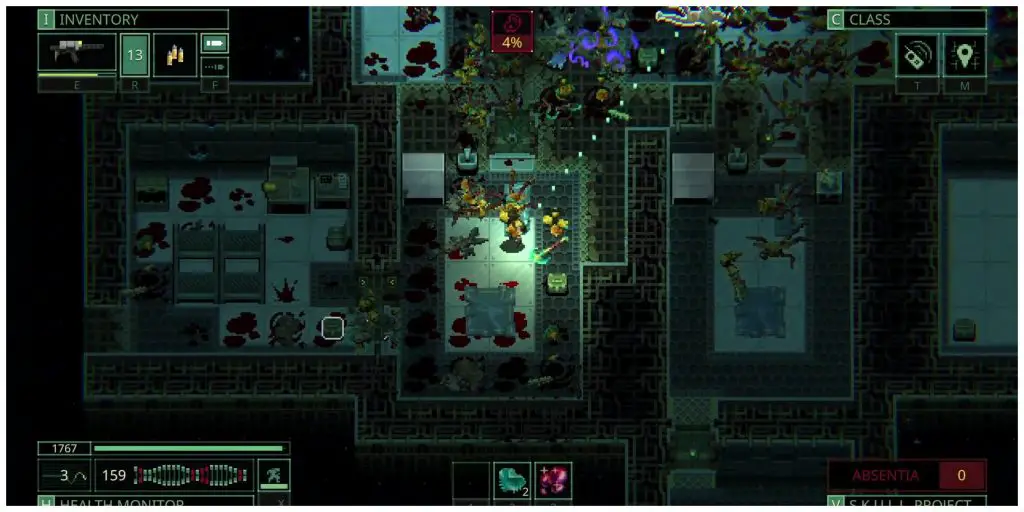
After almost three years in Early Access, Quasimorph has reached version 1.0, and this was exactly what I had been waiting for before diving headfirst into this turn-based extraction RPG that casts players as the head of a private military company operating in a corporate-controlled solar system affected by an escalating supernatural crisis.
Missions involve deploying expendable cloned mercenaries, completing contracts, collecting equipment, and reaching an extraction point before the situation collapses. Successfully extracted items can be used to strengthen the company and prepare future operatives, but death means losing everything carried into the mission.
Alongside its tactical encounters, the game includes ship management, character cloning, faction relationships, equipment production, and a strategic layer centered on choosing which corporations to support or undermine as the conflict develops.
Signy & Mino: Against All Gods

Signy & Mino: Against All Gods approaches turn-based combat like a fighting game, asking players to construct extended attack sequences one action at a time.
Timing, knockback, and enemy placement determine whether one move can flow into the next. Signy can launch opponents into the air, juggle them, strike multiple enemies in a line, or sacrifice health to continue a sequence after the original target falls. Her dog Mino acts as an active combat partner rather than a passive companion, using abilities that retrieve downed enemies, redirect airborne targets, and extend combos.
New attacks and defensive options are obtained through a skill tree as the pair become involved in a conflict with Auger, a resurrected god connected to rock and magma.
Dramatic Road: the Origin of Wind

Dramatic Road: the Origin of Wind has completed its Early Access period and launched in version 1.0. This strategy RPG takes place in modern Kanagawa Prefecture and follows students and working adults fighting with fists, bicycles, and improvised equipment.
Its large-scale battles use a simultaneous turn-based system in which friendly and hostile actions are mixed together according to the current sequence.
The Shift Change command allows players to rearrange allied positions within that order, creating opportunities to interrupt an opponent’s plan or accelerate a crucial move. The complete game also includes a three-part storyline covering three years of conflict surrounding Gyoun High School.
Shards of Order

We reviewed it just a few hours ago, and I’m the proud owner of a fantastic collector’s edition that the developers kindly sent me.
The deckbuilding RPG that thinks it’s Dark Souls goes by the name of Shards of Order. A story-driven dark fantasy RPG built around card-based combat, but it does away with conventional turns and mana. Every enemy displays a countdown showing when it will act, while playing cards advances or manipulates those timers.
The party consists of three heroes sharing a single deck, meaning every new card changes the probability of drawing abilities associated with each character. Equipment is equally important: weapons and armor can add new cards directly to the shared pool, connecting traditional RPG itemization with deck construction.
Outside battle, players level up characters, develop skill trees, pass checks, make dialogue choices, and explore a dying world where the fundamental laws governing time, identity, life, and death have been shattered.
Card Homestead

Farming, resource management, and spatial deckbuilding come together in Card Homestead. Each day begins with a choice between three delivered cards, which can be placed or stacked across a growing plot of land.
Ending the turn activates buildings in sequence, allowing nearby structures to trigger one another and form increasingly elaborate production chains. The objective is to generate enough gold to meet steadily rising taxes while reclaiming additional sections of barren territory.
Expanding provides more room for new cards and more complex layouts, but periodic Trials can disrupt an efficient setup or introduce a direct threat to the farm. Success therefore depends as much on where each card is positioned as on the individual effects included in the deck.
Grimoire of Blanks – Demo

The free demo for Grimoire of Blanks introduces a roguelite deckbuilder in which spells must be completed before they can be cast.
Cards provide sentence-like frameworks with empty spaces, and players drag words from their hand into those blanks to determine an ability’s effect, target, condition, range, or cost. As a result, the same basic card can become a direct attack, an area-wide status effect, a delayed trap, or a dangerous spell powered by the caster’s health.
The demo includes the opening act and two of the planned four classes. It can be played alone or cooperatively with up to four participants, with each player building a separate spellbook and combining status effects, protection, control abilities, and damage during the same run.
Dverghold – Early Access

Drawing inspiration from first-person dungeon crawlers such as Dungeon Master and Eye of the Beholder, Dverghold sends a party of up to four adventurers beneath the island of Rekestt.
Exploration follows a grid, while combat uses a turn-based system in which formation, timing, and the surrounding terrain influence each decision. Between expeditions, the party returns to a camp near the mining settlement of Gravhollow to recruit mercenaries, improve facilities, manage its roster, and speak with characters connected to the fallen dwarven kingdom.
The initial Early Access version contains the Inner Gate environment, four dungeon levels with randomized encounters and loot, multiple classes, a central hub, and the first portion of the campaign. Additional acts will gradually take the expedition deeper into the corrupted mountain.
Archon Soul

Archon Soul replaces the usual deck of cards with customizable dice. Players can alter individual face values, attach runes, and change a die’s body to create new effects and interactions.
With 40 runes and more than 30 bodies, the system supports thousands of possible configurations before spells are even considered. Runs begin by selecting one of several mages, including the Gaiamancer, Pyromancer, and Thaumancer, each drawing from a different collection of abilities.
More than 200 spells can then be combined with the modified dice to create specialized builds. Progress through the Archon’s palace is divided into four acts filled with branching routes, events, regular enemies, and bosses, with every choice shaping the tools available later in the run.
EXSTETRA
- Developer: FURYU Corporation
- Release Date: July 29, 2026
- Platform: PC
- Exstetra on Steam

EXSTETRA is a fantasy JRPG set in Amazea, a world created when parts of modern Tokyo merged with another dimension.
High-school student Ryoma becomes a Prisma, a chosen figure capable of absorbing a mysterious energy known as EXS. He can transfer that power to potential Prisma Knights through a kiss, awakening their abilities and unlocking special EXS Arts.
Dungeons combine monster encounters with puzzles, treasure, materials, and equipment upgrades. Combat uses turn-based commands for parties of up to four characters, with front- and back-row placement affecting their roles.
Relationships between party members can also influence performance, while the Enchanting system lets players combine skills attached to weapons, armor, and accessories to expand each character’s tactical options.
Tuoni – Demo
- Developer: Old Dog
- Release Date: July 27, 2026
- Platform: PC
- Tuoni via Steam

Inspired by Finnish mythology and traditional roguelikes, Tuoni is an open-ended turn-based RPG about traveling north in search of the land of the dead. Its world includes forests, marshes, caves, mountains, spirits, trolls, and creatures drawn from regional folklore.
The wilderness is partially procedurally generated, changing routes, caves, and roaming enemies between journeys while preserving major locations and story characters. Character building revolves around equipment, skills, and tactical choices rather than a heavily scripted progression route.
The newly released demo contains approximately one to two hours of gameplay and opens roughly one-third of the full game’s explorable area. Because it was created as a separate preview build, save data will not transfer to the finished release.
Graphite

And I’m wrapping up this recap with something truly original and stylish. Graphite, an RPG Roguelite set inside the pages of a child’s notebook, follows pencil-drawn heroes who do not realize that their world is imaginary.
Its roguelite structure combines party building with illustrated, tarot-inspired events whose outcomes depend on current characters, collected items, and earlier choices. Battles unfold along a dynamic timeline where every ability requires a specific amount of time.
Enemy intentions are visible, allowing players to interrupt dangerous actions through the Break system or delay them until the party can respond. Procedural encounters and stackable artifacts support increasingly specialized builds, although enemies can also collect artifacts and benefit from their effects.
Behind the fantasy campaign is a broader story about a child using drawings and pen-and-paper adventures to process grief, fear, confidence, and growing up.
That’s everything noteworthy that’s new this week in terms of RPGs and Strategy games. As usual, I may have missed something; it always happens, but you can let me know about any omissions on the new Reddit channel, which is closing in on 8,000 members, a milestone I never imagined we’d reach in such a short time.
In the meantime, all that’s left is to wish you a great weekend. Wish you the best. Ciao!
