

Hidden near the front line, a signal antenna intercepts a surge in Russian radio chatter, indicating a possible command node. Ukrainian soldiers dispatch a drone to the coordinates, where a thermal camera reveals a combat vehicle camouflaged beneath the trees. The real-time footage is shared with analysts who review the finding, cross-reference it with additional intelligence, and mark the position on a common operational picture that is accessible via off-the-shelf phones and tablets across the battlespace. Miles away, a Ukrainian battle captain reviews the target and sends an attack drone to engage. Within minutes, the vehicle is destroyed—not because Ukraine possessed a better sensor or more lethal drone than its adversary, but because it fused collection, analysis, and execution faster than the enemy could react.
Four years into Russia’s war in Ukraine, much has been written about the terminal phase of Ukraine’s lethal reconnaissance-strike complex: the drones that account for more than 70 percent of Russian casualties. Yet drones do not generate combat power by themselves, and comparatively little has been said about the evolution in tactical intelligence that enables their success. In a conflict shaped by ubiquitous sensors, data saturation, and compressed kill chains, tactical intelligence is transitioning from a sequential model centered on collection and reporting to a network-centric model based on targeting, validation, curation, and decision advantage. For the Army, adapting to this transition will require more than cutting-edge sensors and software; it will demand integration across the intelligence enterprise and changes in how leaders organize, develop, and incentivize intelligence personnel.
The Need for Speed
As rapidly evolving technologies mix with large-scale combat operations in a previously unseen manner, the Russo-Ukrainian War defies the rigid structures and processes that have long defined the intelligence function. Across the battlespace, intelligence is increasingly characterized by a proliferation of sensors collecting around-the-clock information. In the so-called dead zone, or unmanned contact layer, between the Russian and Ukrainian front lines, a ubiquitous drone presence monitors more than one thousand kilometers of contested territory, each producing a real-time visual feed. Meanwhile, overhead, a constellation of satellites collects various forms of imagery and signals intelligence. These drone and satellite layers combine with open-source and human intelligence to provide a comprehensive picture. Together, they have the potential to supercharge warfighters with unparalleled awareness, but only if intelligence professionals can manage immense volumes of data, separate relevant threats from noise, and disseminate actionable insights before their tactical value expires.
In Ukraine, that expiration point arrives quickly. After years of blood-stained lessons in drone warfare, Russian soldiers have adopted countermeasures to reduce the sensor-to-shoot window for Ukrainian forces—the available time from identifying a target to striking it before it slips out of range, access, or visibility. Wary of detection, Russian troops avoid exposure near the front line, and those who are forced to venture away from cover and concealment rely on adverse weather and speed to protect their movements. At the same time, innovations in passive countermeasures such as drone nets and thermal blankets and active measures such as interceptors and jamming systems mean that threats may only be detectable for a brief window before retreating behind a curtain of protection. The result is a battlespace where intelligence is more abundant than ever, but its shelf life is constantly shrinking. For the intelligence function, the challenge is moving beyond collection and processing to doing so in a manner that is fast enough to matter.
Stewards of Shared Understanding
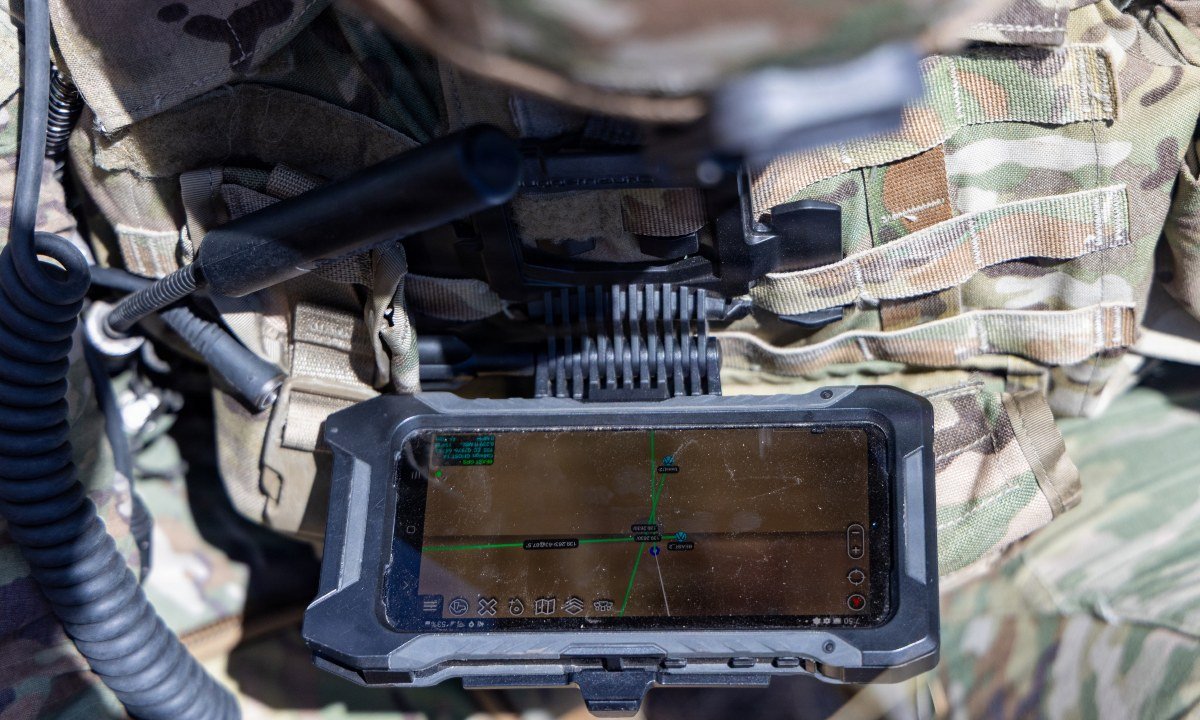
Fortunately, in Ukraine, a model for success in this complex environment is already on display. Leveraging DELTA—a battlefield management system that allows soldiers to simultaneously input and act upon a common operational picture—Ukraine is validating, curating, and democratizing intelligence at record speed and scale. DELTA Monitor, the interactive map at the heart of the system, allows soldiers to toggle layers with friendly and enemy dispositions, target information, and “locations of drones, anti-tank barriers, trenches, and electronic warfare stations,” offering real-time awareness of the battlespace. Vezha, an integrated visual interface, elevates the intelligence picture further, incorporating live footage from Ukraine’s pervasive fleet of unmanned systems. Yet the decisive feature of Ukraine’s approach is not technological architecture, but the way soldiers are using that technology to create a shared, continuously updated targeting ecosystem. Rather than passing intelligence from one staff to the next in a sequential process (an approach too cumbersome for the continuous influx of data and the demand for speed), Ukraine employs DELTA as a collaborative platform that makes intelligence readily available for the drone and maneuver elements that employ it.
Behind this shared targeting ecosystem is a network of intelligence personnel. Even with future-oriented systems, modern intelligence relies on the input and expertise of soldiers, and in Ukraine, this has driven a shift in the roles and responsibilities of intelligence professionals. While specialized personnel remain critical for directing collection and translating complex intelligence, the proliferation of unmanned sensors across the battlespace means soldiers are spending less time finding the enemy. Instead, intelligence personnel are underscoring key targets, analyzing operational patterns, and curating the common operational picture to reflect the most important elements amid a sea of raw data. They are responsible for turning abundant sensor data into actionable decisions.
At the same time, the democratization of intelligence through DELTA is reshaping traditional reporting roles. Given access to a common operational picture, commanders are no longer reliant on intelligence personnel for routine updates on the battlefield. Divorced from menial reporting tasks, however, intelligence personnel are free to provide higher-level insights and predictive analysis in an environment where the speed and sheer quantity of information risk drowning out meaningful intelligence. As they cut through the noise to highlight critical threats and insights for maneuver elements, tactical intelligence personnel in Ukraine are carrying out roles traditionally reserved for higher-ranking personnel. Their impact is faster, more widespread, and more direct than ever before.
From Modernization to Integration
While lessons from the war cannot be universally applied across the US Army, Ukraine’s experience helps clarify the direction of change. Today, the Military Intelligence Corps remains the world’s most capable land-force intelligence enterprise, with decades of operational experience and an unmatched array of collection systems. Recent investments in platforms like the Terrestrial Layer System Manpack and Future Advanced Long-Range Common Optical/Netted-fires Sensors have only reinforced these advantages, pairing advanced sensors with improved range, software, and artificial intelligence. Yet Ukraine’s experience suggests that the next intelligence advantage will come less from adding exquisite sensors than from closing the technical, organizational, and policy seams that hinder integration and information-sharing at the tactical level.
Unlike Ukraine, where DELTA is uniformly employed to synchronize intelligence with drone and maneuver elements, the Army remains fragmented in its adoption and integration of modern systems. At tactical echelons, where time to learn and field new systems is limited, legacy approaches continue to drive everyday intelligence requirements, perpetuating the stovepipes that technology is meant to eliminate. Drones and unmanned systems—another key pillar of the Army’s modernization effort—face similar integration problems. Drone operators and nearby soldiers may view live feeds on local devices, but that footage often remains separate from the common operational pictures that drive wider intelligence fusion. In effect, the Army is fielding sensors faster than it is building infrastructure and training soldiers to incorporate their findings.
With platforms like the Army Intelligence Data Platform and Maven Smart System, the Army is working to address these shortcomings. Using artificial intelligence and cloud-based storage, these systems support intelligence sharing, data management, and integration with targeting and logistics processes, often exceeding the sophistication of Ukraine’s DELTA. Further initiatives like Next Generation Command and Control aim to provide soldiers with “multiple options to communicate, the ability to push/pull more data, improved situational awareness, [and] more efficient staff processes,” suggesting the Army recognizes the problem. Recognition and investment, however, have not translated into integration across the enterprise. For now, tactical intelligence remains scattered across disconnected platforms, PowerPoint presentations, and intelligence summaries, resulting in barriers to intelligence democratization and a risk that actionable intelligence may expire before it is used.
Achieving further convergence depends on support from the broader enterprise. The ability to access and share intelligence relies on data pathways, collection relationships, and releasability policies managed across operational and strategic echelons. To support integration, US Army Intelligence and Security Command’s theater-level intelligence brigades, higher-echelon G-2 staffs, and other supporting intelligence formations will need to align their processes to deliver intelligence at the point of need. Without deliberate national-to-tactical integration, tactical units will continue to build local workarounds that may succeed during an exercise but fail to scale in conflict.
Information-sharing practices present another barrier to integration. After decades of training to protect classified information, the Army often safeguards information so readily and reliably that it slows operational effectiveness. In contrast, Ukraine relies less on sensitivity classification and more on tiered permissions, dictated by the user’s role, mission, and need. This approach provides approved personnel with streamlined access to live intelligence and operational details without giving every DELTA user exposure to the entire system. To be clear, the answer is not indiscriminate sharing, and classification remains essential to protecting warfighters, intelligence sources and methods, and critical technologies. However, in a fight characterized by perishable intelligence and compressed kill chains, traditional classification regimes can lead to overclassification and impede the distribution of time-sensitive intelligence.
These constraints become especially pronounced when operating with partners and allies, where classification and releasability barriers are often unavoidable. One way Ukraine has mitigated these constraints is through a greater reliance on commercial and open-source intelligence, which can provide operational value with fewer classification restrictions. Not long after the 2022 full-scale invasion, a Russian war correspondent posted images from a Wagner Group facility in Popasna, allowing open-source analysts to identify the location. Ukrainian forces struck the facility shortly afterward—one of many examples suggesting that open-source data is not only readily shareable but often “just as operationally lethal as a multi-million-dollar intelligence satellite.” Despite such evidence, open-source intelligence remains secondary to traditional disciplines in the US Army, reflecting what some view as “a bias in the culture rather than a gap in capabilities.” As smartphones and personal devices become increasingly prevalent on the battlefield, the Army’s limited integration of commercial and open-source capabilities risks delaying the delivery of actionable intelligence to the point of need.
Implications for Tactical Leaders
While certain integration challenges will take time and resources for the Army to address, Ukraine’s experience highlights several opportunities for tactical leaders to make an immediate and consequential difference within their units. One such opportunity lies in how units organize intelligence work. As sensors proliferate across the battlespace and sensor-to-shoot windows compress, speed and decision advantage increasingly outweigh the need for static reports and assessments. In this environment, orienting formations around separate collection disciplines and sequential handoffs reduces operational agility and slows effective decision-making. Instead, leaders can organize formations around integrated workflows that reinforce connections across disciplines and stages of the intelligence process.
Within formations, leaders can further support integration by revising metrics for intelligence success. Commanders often emphasize reports produced, collection missions conducted, or intelligence briefings delivered, but Ukraine suggests a different focus and standard. Through an e-Points system, it has gamified warfare to reward successful drone strikes with points that can be redeemed for funding or military equipment—incentivizing speed and lethality among intelligence and unmanned systems units. American formations need not replicate this controversial approach. They should, however, adopt metrics that capture their ability to identify and validate targets, accelerate kill chains, conduct battle damage assessments, and support commanders’ decisions.
Metrics should also be paired with training that prepares soldiers to meet them. For officers, this could mean learning to act as network analysts, data curators, and knowledge managers in addition to traditional intelligence roles and collection techniques. Across the enterprise, it will demand a mastery of the digital tools that support effective communication and contributions to the common operational picture. Already, US Army Intelligence and Security Command’s data upskilling program offers a promising start, while initiatives across the 513th Military Intelligence Brigade-Theater (MIB-T) and 66th MIB-T demonstrate how data proficiency can be developed across formations. Expanding these efforts can further prepare soldiers for an environment defined by speed and data saturation and ensure that innovative systems like Maven are utilized by trained personnel who can maximize their potential.
Still, Ukraine’s experience demonstrates that no amount of training can fully prepare intelligence personnel for the uncertainty and complexity of large-scale combat operations. Facing an adversary with superior manpower and resources, Ukraine has ultimately relied on a culture of innovation and resilience to fuel its success. Within the intelligence function, creative thinking led Ukraine to repurpose Diia—a Ukrainian e-governance platform originally used for services like passport renewal—into an authentication system for wartime intelligence collection, enabling hundreds of thousands of citizens to share intelligence on Russian troop movements. Similar successes in adapting DELTA and other platforms to emerging battlefield demands reflect an intelligence force capable of absorbing setbacks, adjusting its methods, and continuing to operate. As the character of warfare continues to change, leaders can cultivate flexibility and endurance by rewarding adaptive solutions and institutionalizing lessons learned. As Lieutenant General Buzzard, commander of Security Assistance Group–Ukraine, often remarks, “Innovation is a form of maneuver.”
Russia’s war in Ukraine reveals a new organizing principle in tactical intelligence: the need to transform raw data into real-time awareness, validated targets, and battlefield effects before its operational utility expires. Ukraine has responded to this shift by combining adaptive personnel and innovative platforms into a collaborative targeting ecosystem. As the United States Army prepares for future large-scale combat operations, Ukraine offers a model for study, underscoring the need to integrate sensors, analysts, and decision-makers within a shared intelligence architecture.
Recent efforts to propel these changes through systems like Maven and the Army Intelligence Data Platform are an important step forward. However, retaining the Army’s asymmetric intelligence advantages will require further convergence across operations and intelligence systems and revised information-sharing practices to promote speed and agility. While these efforts begin to take shape, tactical leaders should refine training and metrics to reflect data-rich environments, organize formations around the principle of integration, and cultivate adaptive personnel capable of rapidly delivering intelligence from collection to decision. Together, these steps can help ensure that the Military Intelligence Corps remains true to the promise of its motto: “Always out front.”
Lieutenant Colonel George Gurrola commands the 715th Military Intelligence Battalion, 500th Military Intelligence Brigade-Theater. He previously served as the executive officer to the commanding general of the Security Assistance Group–Ukraine and has held intelligence assignments in the 75th Ranger Regiment and US Army Intelligence and Security Command. He formerly served as an assistant professor at the United States Military Academy at West Point and holds a master of science in foreign service from Georgetown University and a bachelor of arts from Texas A&M University.
First Lieutenant Martayn Van de Wall is a Marshall Scholar at King’s College London, where he is pursuing a master of arts in war studies focused on the intersection of technology and intelligence. He previously completed a master of science in global governance and diplomacy from the University of Oxford and a bachelor of science in international relations from the United States Military Academy at West Point. He recently served with Security Assistance Group–Ukraine.
The views expressed are those of the authors and do not reflect the official position of the United States Military Academy, Department of the Army, or Department of Defense.
Image credit: Cpl. James Robinson, US Army
