

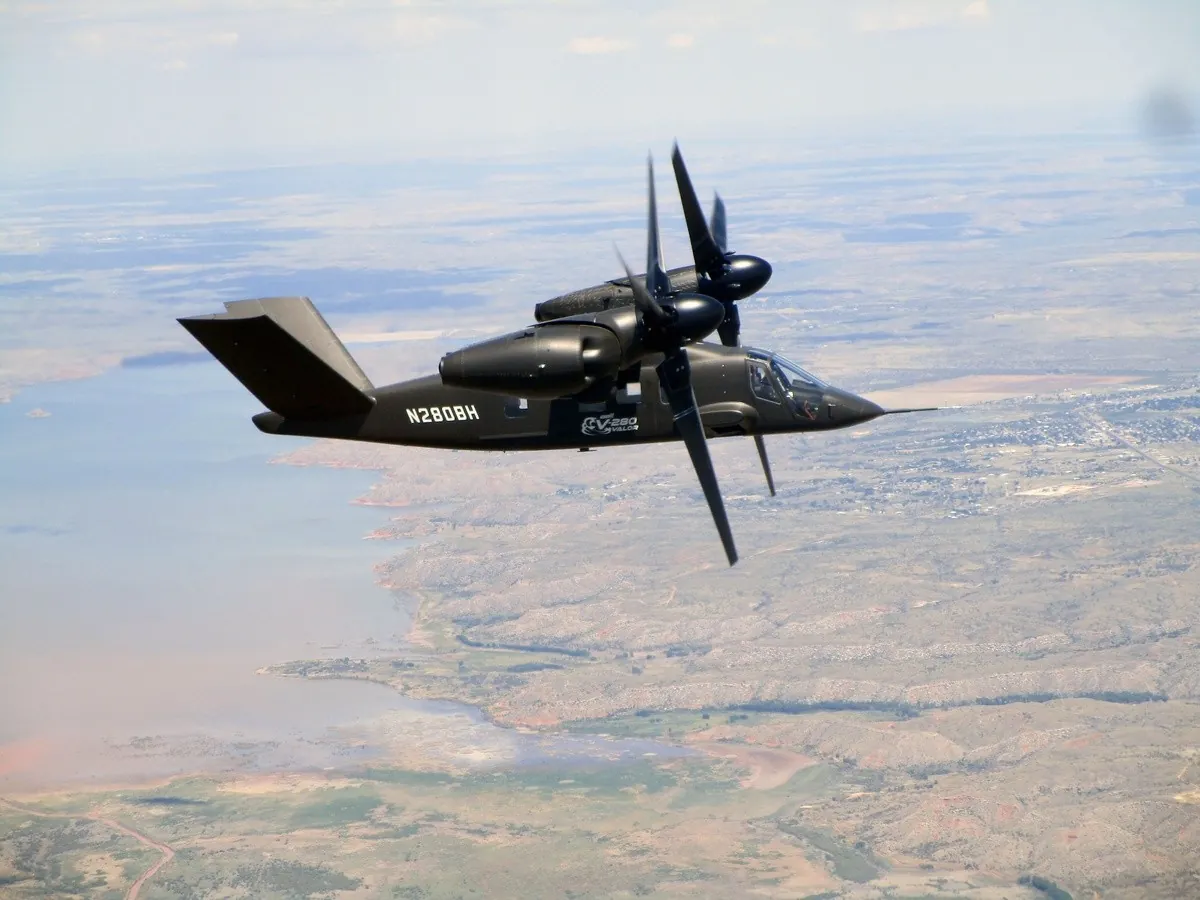
Defense Feeds, Arlington – The U.S. Army has taken another step toward fielding its next generation of assault aircraft by selecting RTX to provide critical mission systems for the MV-75 Cheyenne.
The agreement expands the aircraft’s capabilities beyond speed and range, focusing on the avionics, sensors and survivability technologies needed to operate in increasingly contested environments where traditional helicopters face growing challenges.
The decision reflects a broader shift in Army aviation. Future rotorcraft are no longer being designed simply to fly farther or faster. They are expected to function as highly connected combat platforms capable of navigating complex battlespaces, sharing data instantly and supporting multi-domain operations alongside ground forces and unmanned systems.
MV-75 Cheyenne Adds Advanced Mission Systems
The MV-75 Cheyenne is being developed under the U.S. Army’s Future Long Range Assault Aircraft (FLRAA) program, which aims to replace portions of the long-serving UH-60 Black Hawk fleet with a platform offering substantially greater speed, operational reach and battlefield flexibility.
RTX will provide a range of mission-critical technologies that support navigation, communications, aircraft survivability and mission management. While propulsion and airframe performance often dominate discussions surrounding new aircraft, these onboard systems determine how effectively crews can detect threats, coordinate with other forces and complete missions under combat conditions.
The integration of advanced mission equipment is particularly important because the MV-75 is expected to operate in environments saturated with electronic warfare systems, long-range air defenses and increasingly sophisticated surveillance networks.
Rather than functioning as standalone components, the new systems are designed to work together, allowing pilots to process information more efficiently while maintaining awareness of rapidly changing battlefield conditions.
Longer Reach Demands Better Situational Awareness
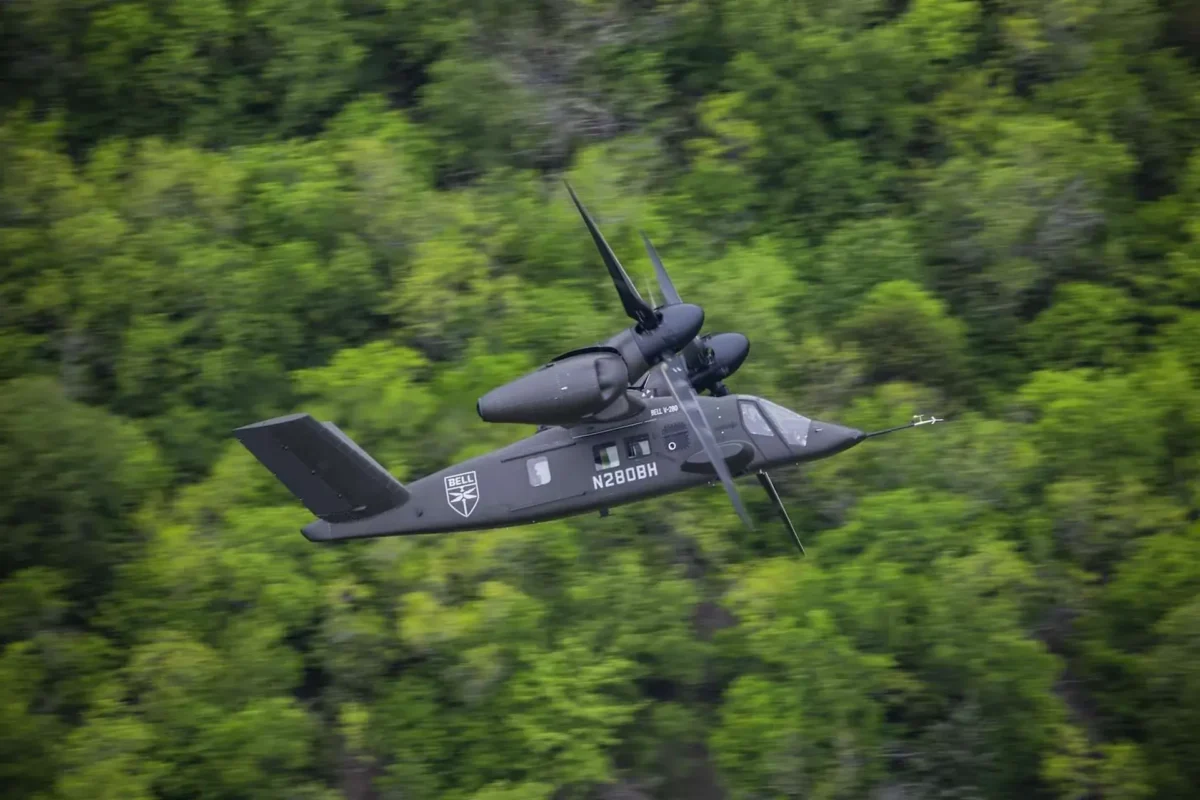
One reason the MV-75 Cheyenne has attracted significant attention is its ability to conduct assault missions over distances that would challenge conventional helicopters. Greater range, however, also creates new operational demands.
Aircraft flying deeper into contested areas require more resilient communications, improved navigation and stronger protection against electronic attack. Losing connectivity or situational awareness hundreds of kilometers from friendly forces can have serious operational consequences, regardless of how capable the aircraft itself may be.
RTX’s mission systems are intended to reduce those risks by improving how flight crews collect, process and share information throughout a mission. Faster data exchange can help crews react more quickly to changing threats while supporting coordination with other aircraft, ground units and command centers.
The architecture is also expected to remain adaptable as new technologies emerge. Instead of requiring extensive redesigns, open-system approaches make it easier to introduce future software updates, sensors and mission equipment over the aircraft’s service life.
That flexibility has become an increasingly important consideration for defense planners seeking to avoid lengthy and expensive modernization cycles.
The Army Is Redefining Assault Aviation
The development of the MV-75 Cheyenne represents more than the replacement of an aging helicopter fleet. It reflects a fundamental change in how the Army expects to conduct air assault operations over the coming decades.
Future conflicts are likely to feature longer engagement ranges, highly contested airspace and widespread electronic warfare. In that environment, aircraft will need to move troops quickly while remaining connected to a broader network of sensors, commanders and supporting forces.
The MV-75 is expected to play a central role in that vision, combining the speed and range of Bell’s tiltrotor design with digital mission systems that support faster decision-making and greater operational flexibility. The aircraft is also intended to work alongside unmanned platforms, creating a more distributed aviation force capable of operating across larger and more complex battlespaces.
From an industrial perspective, RTX’s involvement demonstrates how modern military aircraft increasingly depend on partnerships that combine airframe manufacturers with specialists in sensors, communications and electronic systems. The effectiveness of next-generation platforms will depend not only on aerodynamic performance but also on the quality of the digital architecture supporting each mission.
As the FLRAA program progresses toward operational service, the MV-75 Cheyenne is emerging as far more than a successor to the Black Hawk. Its combination of extended range, advanced mission systems and networked capabilities illustrates how the U.S. Army is preparing its aviation force for an era where information, survivability and operational reach are expected to be just as decisive as speed and lift capacity.
