

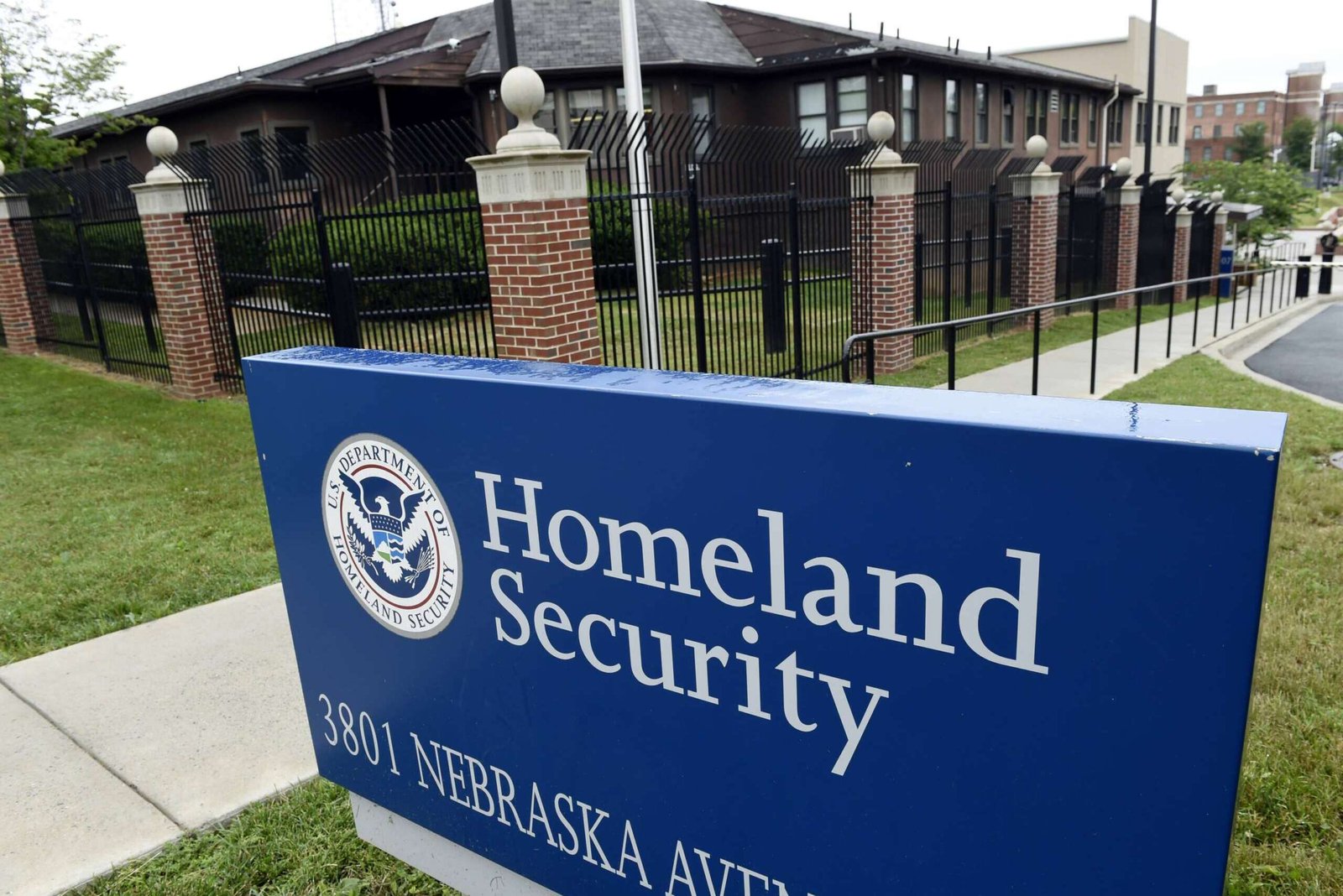
The Department of Homeland Security inspector general is investigating whether DHS ran afoul of laws and regulations when it forced senior staff to accept new roles – in some cases to support the Trump administration’s immigration crackdown – under former Homeland Security Secretary Kristi Noem.
In a July 1 notice, DHS Inspector General Joseph Cuffari announced his office was initiating a review of DHS senior executive service reassignments that occurred between Jan. 25, 2025, and March 24, 2026. That aligns with Noem’s time as homeland security secretary, before she was replaced by current Secretary Markwayne Mullin.
The review is aimed at determining “whether such reassignments were conducted in accordance with federal laws, regulations, and policies,” Cuffari wrote. In the notice, he tells DHS Chief Human Capital Officer Roland Edwards that IG staff will begin initial fieldwork this month.
The review comes after DHS sent “management directed reassignments” (MDRs) to hundreds of employees last year and in early 2026. In some cases, staff received short-notice reassignments hundreds of miles from their existing duty station, to fill jobs that were outside their area of expertise.
Democrat lawmakers have raised concerns about DHS diverting hundreds of cybersecurity and disaster response staff to support the Trump administration’s immigration enforcement agenda.
Rep. Greg Stanton (D-Ariz.), ranking member of the House Transportation and Infrastructure’s economic development, public buildings and emergency management subcommittee, has launched an investigation into mandatory reassignments at the Federal Emergency Management Agency.
Stanton had also requested that the DHS IG’s office investigate staffing cuts at FEMA, including mandatory reassignments.
Meanwhile, the Cybersecurity and Infrastructure Security Agency’s former acting director attempted to oust senior officials by giving them mandatory reassignments earlier this year, Politico reported at the time.
Wired reported in March that DHS reassigned senior career officials at Customs and Border Protection after they objected to orders to mislabel records about surveillance technologies and block them from being released under the Freedom of Information Act.
It’s unclear how many DHS employees were ultimately reassigned within the last year, as well as how many were a part of the senior executive service (SES). The number of career SES staff at DHS dropped from 723 in January 2025 to 513 by March 2026, according to Office of Personnel Management data.
But Erik Snyder, counsel with Gilbert Employment Law, said he has represented both SES and non-SES DHS staff who alleged that the MDRs they received were “either reprisal for reporting misconduct or refusing to carry out an illegal order, or in a lot of cases just pointing out that a particular policy or order appeared to be illegal.”
“These are often people who crossed paths with certain officials who are now no longer there, and not just necessarily Noem herself, but immediate deputies and other senior folks that have now left the agency,” Snyder told Federal News Network.
Since Mullin took over for Noem, Snyder said many mandatory reassignments have been rescinded.
“There seems to be an awareness within the agency that these MDRs were improper,” he said.
Civil service regulations give agencies “extensive flexibility” to reassign an employee to a different position.
However, Snyder pointed out that they still require a reassignment to be directed for a “legitimate organizational reason.” He said many clients who accepted the MDRs “invariably found themselves in another city in a job with nothing to do, because there’s no actual need for them to be there.”
Agencies are also restricted from involuntarily reassigning a career SES employee within 120 days after the appointment of the head of the agency or within 120 days after the appointment of the employee’s most immediate supervisor, if the supervisor is a noncareer appointee who oversees performance appraisals.
Dan Meyer, partner at Tully Rinckey, said he expects Cuffari’s review will look closely at whether reassignments were in line with the timing rules, given the influx of new Trump appointees at DHS through 2025 and into early 2026.
“There are clever ways of using this process to get back at people who are not towing the line, but I think it’s the timing issues that will be looked at most closely by the IG,” Meyer told Federal News Network.
Snyder said he expected the DHS IG’s office would review whether the MDRs under Noem hold up to the standards laid out in regulations.
“They’re going to be looking at whether there was a legitimate business purpose behind each of these MDRs, or whether there’s reason to believe that the MDR was retaliation for whistleblowing or for just crossing the wrong official,” he said.
Copyright
© 2026 Federal News Network. All rights reserved. This website is not intended for users located within the European Economic Area.
