

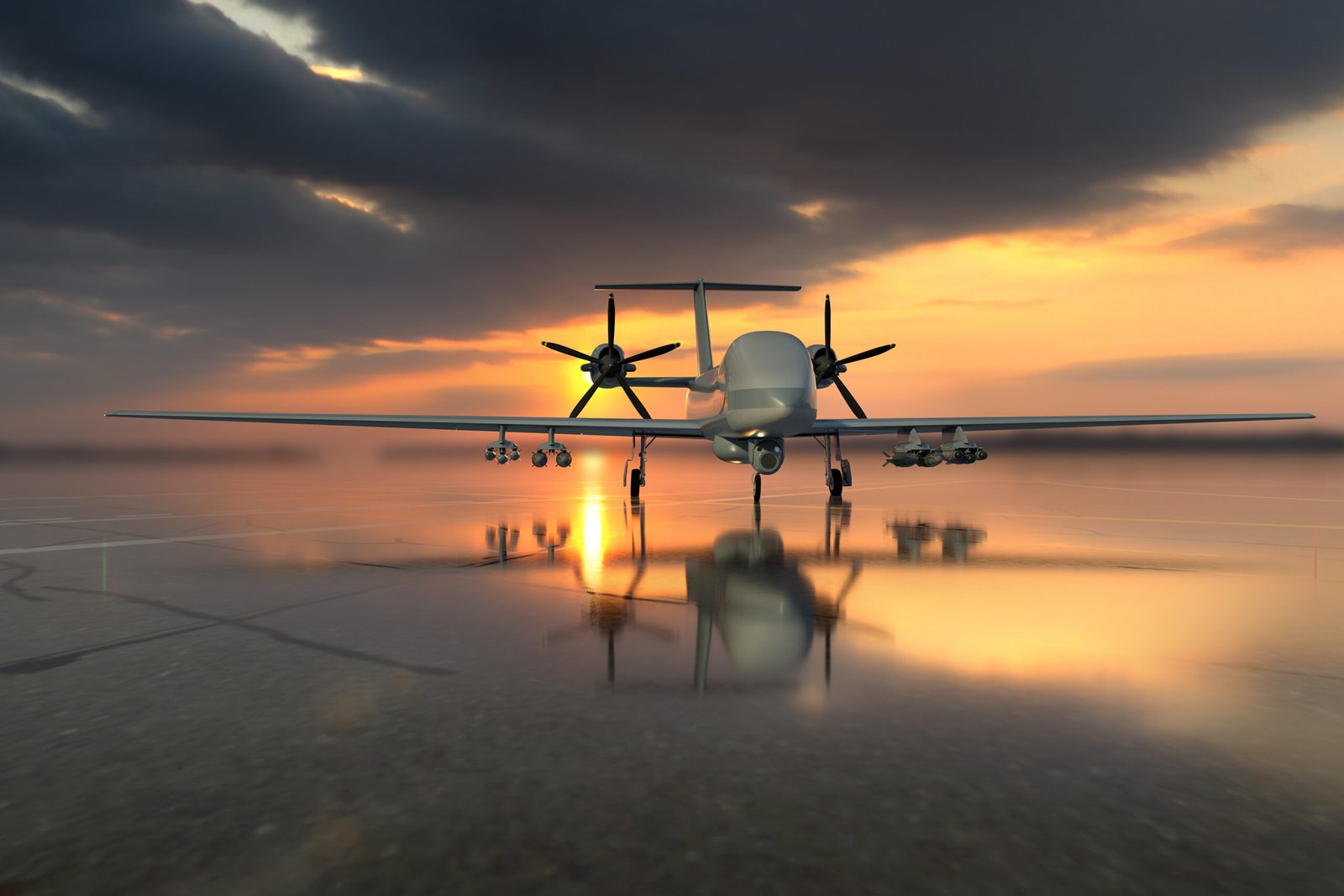
By signing a memorandum of understanding (MoU) with Airbus Defence and Space, Japan has expanded its observer status in the U950 Eurodrone programme. The new agreement signed by Kawasaki Heavy Industries (KHI) will explore the feasibility of developing a Japanese version of the Eurodrone specialising in anti-submarine warfare.
The agreement was announced on 26 June, and next steps involve Airbus and KHI discussing options for the design, development and commercialisation of a future Japanese maritime version of Eurodrone.
This would include “the definition of possible configurations, integration of Japanese sensors and effectors, and other potential workshare for Japanese industry during production and sustainment,” Airbus revealed.
Airbus further stated, “The Eurodrone is ideally suited for countries like Japan that need to monitor large maritime areas. Compared to its nearest competitor, Eurodrone has very long flight endurances and can fly with much more mission payload, including sonobuoys and torpedoes for anti-submarine warfare.”
However, it should be pointed out that Tokyo has not yet made any decision to procure the Eurodrone. In fact, the Japan Maritime Self-Defense Force and Japan Coast Guard are both leasing or buying General Atomic’s MQ-9B SeaGuardian for a similar maritime role.
The Japan Air Self-Defense Force also operates the RQ-4B Global Hawk, but it lacks any anti-submarine warfare capabilities.
Nonetheless, this MoU illustrates how Japan is exploring multiple pathways to supplement crewed maritime patrol aircraft like the Kawasaki P-1 that re gradually replacing older P-3C Orion aircraft.
Indeed, KHI said in its own press release that the agreement will “consider possible operational concepts, including, where appropriate, coordination with the P-1 maritime patrol aircraft for which Kawasaki serves as the prime contractor”. This points towards manned-unmanned teaming possibilities.

Tokyo is particularly concerned by the growing might of the Chinese navy, and its rapid modernisation and expansion that includes new conventional and nuclear-powered submarines.
Japan is already collaborating closely with Italy and the UK on the Global Air Combat Programme (GCAP), so this interest in Eurodrone reflects Tokyo’s recent willingness to work with countries other than the USA.
Airbus further stated that “insights gained from developing Japan’s specific variant are expected to provide substantial operational and logistical advantages for future European naval versions of Eurodrone”.
Four nations – France, Germany, Italy and Spain – are cooperating on the Eurodrone programme led by Airbus, Dassault and Leonardo. The four nations have ordered twelve, 21, 15 and twelve aircraft respectively. The first of these twin turboprop unmanned aerial vehicles is scheduled to fly in 2029.
Significantly larger than a Reaper, the Eurodrone can carry a payload of 2,300kg and stay airborne for up to 40 hours. Twin engines also improve safety margins, especially when flying over populated areas.
India is another observer nation in the Eurodrone project.
by Gordon Arthur
