

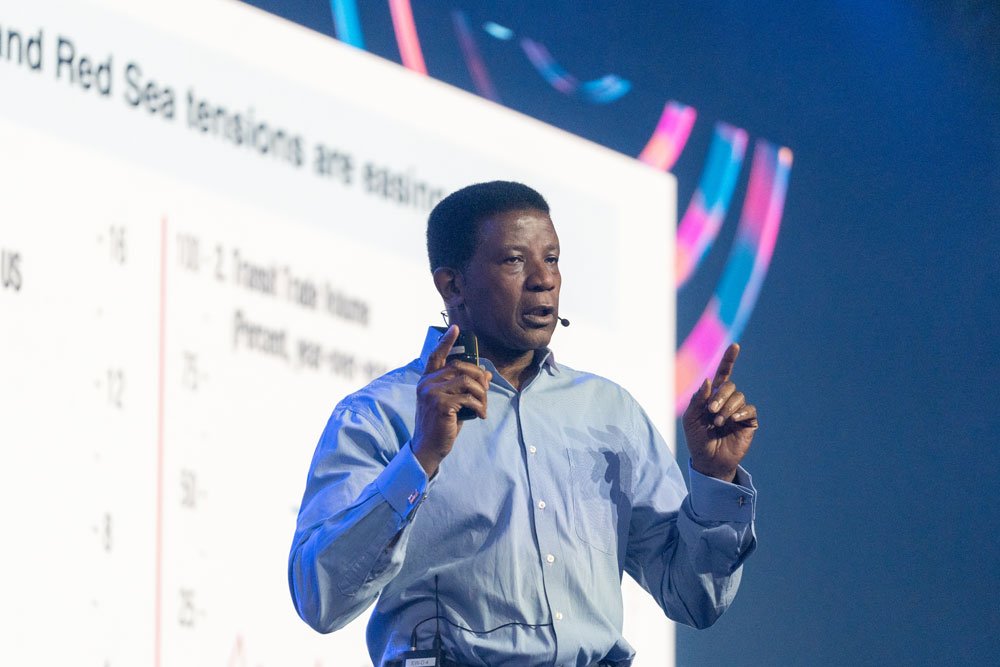
In June 2026, Procurement Leaders’ CPO community gathered to hear from Professor Trevor Williams (pictured above), former chief economist at Lloyds Commercial Banking, and a respected commentator and adviser to many leading organisations.
The timing was intentional. With 2026 almost at its midway point and the past six months providing another example of how difficult running a global supply chain has become, Trevor brought some important context and offered a pause for thought for attendees.
He covered a lot of ground – from the economic impact of a ‘Super El Niño’, which we are likely to experience in the second half of 2026; to the US’s shift from being the primary architect of global trade to, in Trevor’s words, an “insurgent”.
Much of this thought-provoking session was spent at a macro level, discussing, for example, how the global economy has remained remarkably resilient; enjoying decent levels of growth despite ongoing wars, volatility and climate-related disruption.
Trevor shared six geopolitical and economic risks he feels are worthy of further investigation and thought. First, multipolarity without multilateralism; where powerful, competing blocs are competing, but not cooperating. This leads to his second risk of great power politics, where stronger nations make increasing demands of weaker countries.
His third risk is a continuation of the theme, as a lack of cooperation and an increase in power politics results in increasing conflicts and war. Fourth is what he referred to as an “economic reckoning”, as rising national debt levels, ageing populations, persistent inflation and self-serving geoeconomics take hold. Fifth, the mega topics of technological disruption and AI sovereignty. Finally, climate risk closes out this rather bleak list.
Despite the risk landscape, Trevor remains optimistic about the picture looking forward. And, as those on the call will understand, much of what was shared can be flipped into an opportunity. After all, CPOs are central to redesigning supply networks and building in additional resilience.
For that, however, we must get beyond what one CPO described as the “paralysis of competing demands” – in other words, the costs of building greater resilience versus the need to contain costs.
The solution? Turn the debates about resilience into a competitive advantage, a licence to operate in new markets and a driver of growth. Doing so has the potential to change the board-level discussion and, with it, the dynamic entirely.
To receive weekly insights from the Procurement Leaders community, sign up to the CPO Crunch newsletter using the link at the top of this page.
