

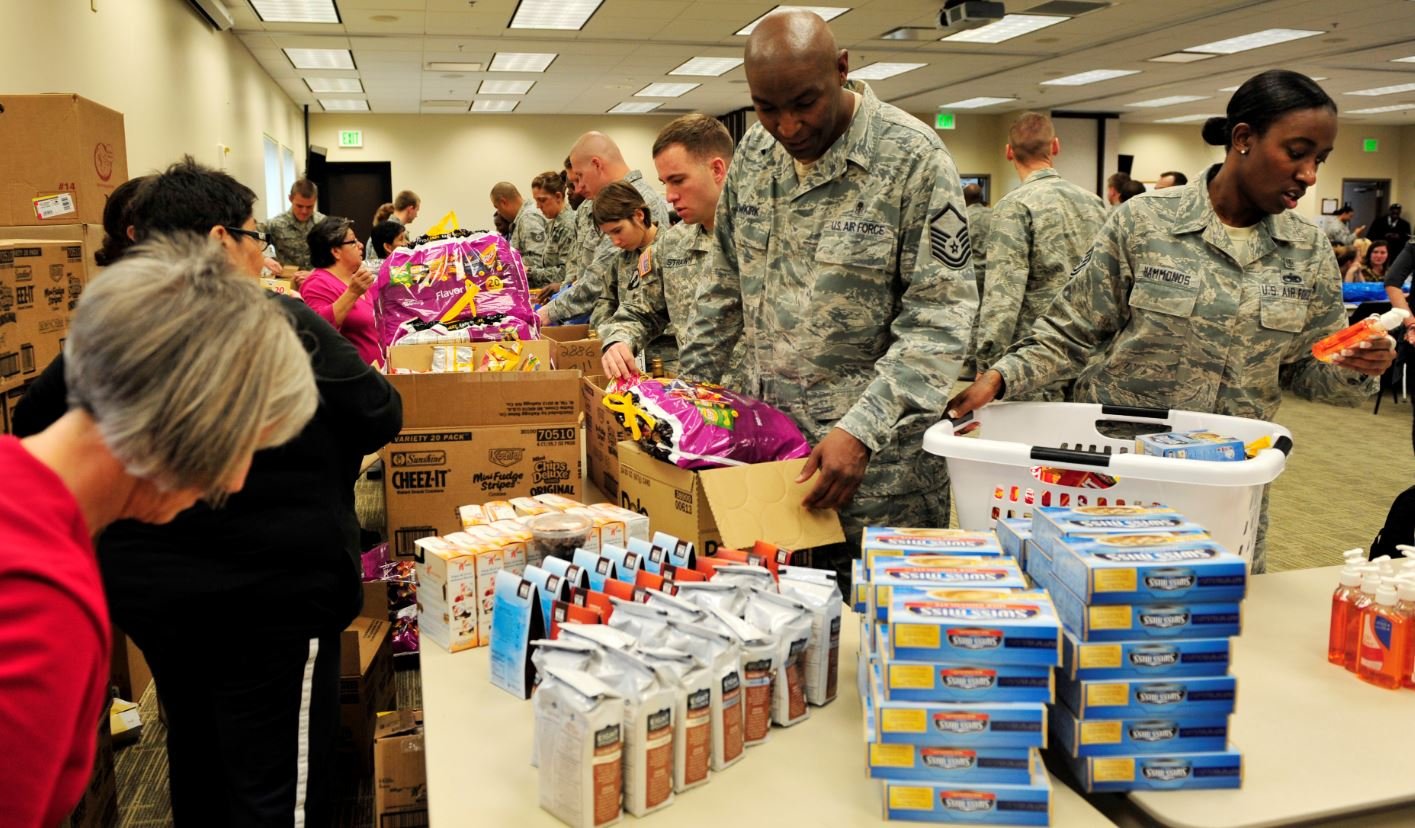
Food insecurity among military families has skyrocketed, according to a recently released survey from the Military Family Advisory Network.
The latest iteration of MFAN’s biennial survey — the largest independent research effort focused on military families — examined family well-being and explored how the experiences of military families impact overall force readiness.
The organization received over 10,000 responses in this survey cycle, with military spouses making up the largest share of respondents, followed by active-duty service members.
The survey, conducted Oct. 2 through Jan. 16, found that 41.2% of respondents reported experiencing low or very low food security, up from 15.6% in 2023.
While the survey coincided with a government shutdown that lasted over a month, the findings nevertheless point to alarming levels of food insecurity among military families.
“When we look at our food security numbers, we see an upward trend, but we see that in many other areas of the financial security section of the report broadly. We see that in financial well-being, we see it in housing burden, we see it in emergency savings, those who have experienced a financial emergency in the past two years, and so the trend is certainly growing. Families are having a more and more difficult time with finances, of which food insecurity is one symptom,” Gabby L’Esperance, Military Family Advisory Network’s vice president of research and evaluation, told Federal News Network.
The survey also found that for the first time this year, rising grocery prices were a key driver to families being unable to afford healthy meals.
“Grocery prices have risen so high that eating healthy, balanced and varied meals became a luxury and we were constantly looking for ways to eat cheaper and reduce our grocery budget,” an Air Force military spouse told MFAN.
While military families are not a monolith, currently serving families appear to be experiencing the greatest financial strain. Some respondents said they relied on credit cards to buy food. More strikingly, many reported skipping meals or reducing portion sizes so other family members could eat.
In addition, more than a third of currently serving families in 2025 said they had less than $500 in an emergency savings fund, or no fund at all. Similarly, about 36.7% of veteran and retiree family respondents — a group that fared better than currently serving families in several areas — said they also had less than $500 in emergency savings. And rising grocery prices showed up as the top barrier to having savings, followed by spouse employment issues and housing costs.
“Grocery prices arrived for the first time as one of those main barriers to savings. That’s a new trend in 2025. We’ve seen housing costs, we’ve seen some other things trickling down before, none of those are as startling as grocery prices for the first time being a key barrier,” L’Esperance said.
Broader economic pressures such as high inflation “absolutely shaped these findings,” L’Esperance said.
“We think about military family life as a microcosm of the broader United States, and so the economic impacts that civilian families are experiencing across our country are felt by military families too. Military families just have unique compounding factors, things like permanent change of station moves, things like the irregular rhythm of military life, deployments, training. So when we look at broader economics, yes, there is strain, and for military families, those things showed up in decreased emergency savings, in higher challenges with food security, with grocery prices being barriers,” L’Esperance added.
Military spouses
The survey also found that military spouses, particularly those with children, continue to experience some of the most negative outcomes across multiple measures.
L’Esperance said military spouses are experiencing challenges “above and beyond what we’ve seen in previous years.”
“If we were going to pay attention to one population in this report, I would really encourage folks to look at those military spouses,” L’Esperance said. “We know that they’re the folks managing the day-to-day life of military families. They’re carrying an invisible load, and some of that load is just part of functioning. Some of it is rewarding and meaningful, but when we see those things compound into what is a higher invisible load score, we see some negative outcomes across family health and well-being, and that shows up across many areas of the report like employment, childcare, community, family functioning. All of those things really co-locate around the military spouse and their role in the family.”
For the first time, the survey included the “invisible family load score” — researchers found that spouses carry a disproportionate share of those responsibilities in comparison to service members. And that imbalance persists even after families transition when you transition out of military life.
And while the survey found military families are increasingly willing to seek mental health support, military spouses were the most likely within their family to experience suicidal ideation. They were also the most likely family members to turn to emergency rooms for mental health care support when they are unable to access a regular appointment.
L’Esperance said researchers did not see that trend in the 2023 survey.
“Those statistics are both concerning and startling to see that families are turning more and more towards the emergency room. For half of the folks that had used the emergency room for mental health care support in the last two years, 50% had done so multiple times,” L’Esperance said.
“When we think about military spouses and the weight that they’re carrying across that invisible load score and compare that to their need for mental health support and the suicidal ideation, it paints a really clear picture about the need to address their well-being,” she added.
MFAN’s research has helped drive several quality-of-life reforms — the Senate Armed Services Committee relied on its study on military housing, which became the “cornerstone” for privatized housing reforms. When the organization’s research first identified food insecurity issues in the military, it launched the One Million Meals Challenge, distributing over a million meals to military families living in places where MFAN’s data showed the highest need.
The new survey calls for a broad shift in how policymakers approach military spouse well-being, arguing that it should be viewed as readiness issues rather than quality-of-life concerns.
“Military spouse well-being can no longer be viewed as a quality-of-life issue. It is a readiness issue, a retention issue, and ultimately a national security issue,” the report reads.
MFAN also recommends to “completely modernize” the permanent change of station process and rebuild military family support systems that were developed during the Global War on Terror.
If you would like to contact this reporter about recent changes in the federal government, please email anastasia.obis@federalnewsnetwork.com or reach out on Signal at (301) 830-2747.
Copyright
© 2026 Federal News Network. All rights reserved. This website is not intended for users located within the European Economic Area.
