

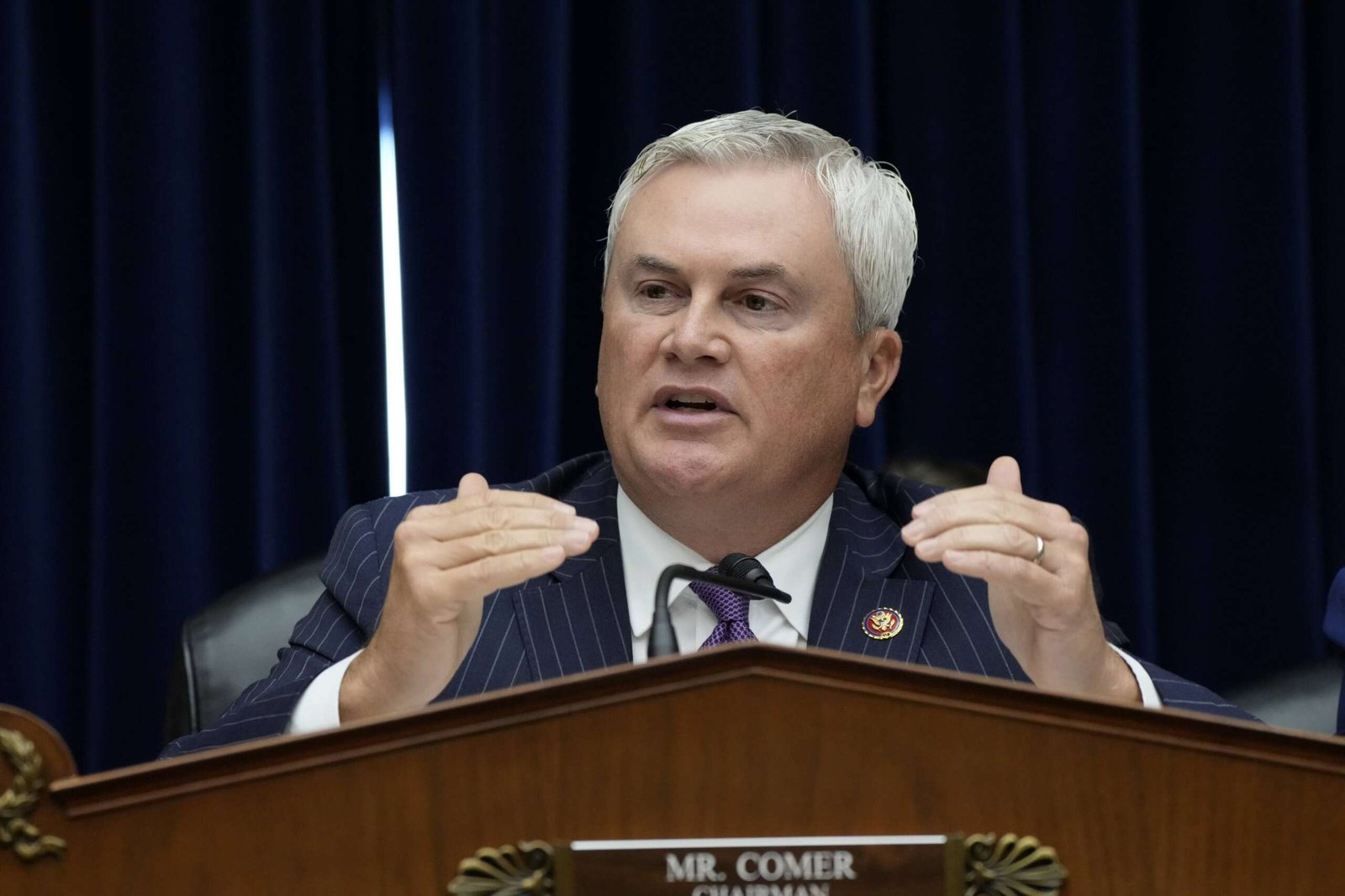
The House Oversight and Government Reform Committee is investigating tax noncompliance among current and retired federal employees.
Rep. James Comer (R-Ky.), chairman of the committee, said a recent rise in tax delinquency rates of federal employees prompted the investigation. The investigation comes after a May 6 report from the Treasury Inspector General for Tax Administration found the amount of federal employees who failed to file taxes steadily increased from 2021 to 2024.
TIGTA’s report found about 572,000 federal civilian employees owed outstanding taxes at the end of fiscal 2024, with a total amount of $6.3 billion outstanding — an increase of $1.5 billion, or 32%, from 2021. The number of tax-delinquent federal employees increased by 43% in that time, while the total size of the federal workforce increased by 4% in the same period.
The report also said about 50,000 federal employees had failed to file a tax return for multiple years, including 122 who had failed to file eight or more returns.
In a letter to Frank Bisignano, chief executive officer of the IRS, Comer asked the IRS to provide the committee, for the time period of March 6, 2023 to now, the number of federal employees who failed to file taxes and were referred to the IRS’ Federal Payment Levy Program (FPLP), and the amount of unpaid taxes recovered from that action; the number of requests for levies for federal employees and annuitants sent to the Bureau of Fiscal Service; and the number of federal employees and annuitants who had their federal salaries or payments levied, and the amount of taxes subsequently recovered.
Comer wrote that while all Americans must pay what they owe according to law, federal employees should be held to a higher standard since they are paid from taxpayers’ dollars.
“Failure to file and pay taxes sets a poor example for everyone else, and more should be done to stop noncompliance before it occurs or reoccurs,” Comer wrote in the letter.
“Non-filers flagrantly disregard the law, not only resulting in lost tax revenue, but also harming the reputation of the tax system and the federal government,” he continued. “Derelict employees send a signal to the public that filing and paying taxes is optional.”
The Federal Employee/Retiree Delinquency Initiative (FERDI), which the IRS established in 1993, works to ensure tax compliance within the federal workforce. It tracks the number of federal employees who fail to file tax returns or pay taxes every year by matching the Social Security number of delinquent tax accounts to the IRS Individual Master File’s federal employment and retirement records. The IRS then sends federal agencies the number of their employees who are noncompliant for that year, but it can only provide aggregate data.
While the IRS has tried to work with agencies to improve the delinquency rate, privacy protections make correcting noncompliance more difficult, the TIGTA report said. The IRS is not permitted to share employee return information to agencies other than the Treasury Department.
The rate of tax delinquency among federal employees has risen every year since 2021, according to analysis of FERDI data in TIGTA’s report. TIGTA pointed to the COVID-19 pandemic as one reason for the uptick, as some tax levy and collection programs were suspended because of it. The workforce within FERDI is another factor TIGTA highlighted. From January to July 2025, FERDI’s staff decreased by 121, or 50%, of its employees, as part of broader efforts to downsize the federal workforce.
TIGTA’s report identified the Postal Service and Small Business Administration as having some of the highest rates of tax-delinquent employees, with 10.1% and 8.7% delinquency rates respectively, while the Treasury Department had the lowest amount. The Postal Service also had the highest number of repeat non-filers. The IRS, by law, has the authority to hold its employees accountable for tax delinquency, Comer wrote, and must terminate employees who fail to file tax returns.
TIGTA’s report also found there are five agencies responsible for 64% of federal civilian employees’ outstanding balances. The Postal Service and Department of Veterans Affairs constitute a combined 45%, and the Departments of the Army, Navy and Homeland Security make up the rest.
Federal News Network reached out to the National Treasury Employees Union and the American Federation of Government Employees for comment about the investigation. Neither union responded.
TIGTA’s May report came as a follow-up to one from 2023. That report, which covered 2016 to 2021, found a 32% increase in tax delinquency among federal employees in that period, which saw a 6% total increase in the total federal workforce.
One way to mitigate tax delinquency that Comer proposed in his letter is the use of the FPLP, which could collect overdue taxes through levies on federal payments. Former IRS Commissioner Daniel Werfel wrote in a 2024 letter to Sen. Chuck Grassley (R-Iowa) that federal employees who fail to file tax returns can be referred to the FPLP and the Bureau of Fiscal Service. The programs can levy federal employees’ salaries up to 15%, Werfel wrote.
Comer also highlighted a recently proposed rule from the Office of Personnel Management that would speed up the process of firing federal employees for a lack of suitability or misconduct. Though, since the Treasury Department isn’t permitted to share information about who is noncompliant, it wouldn’t be a reliable solution, Comer wrote.
Between June and July 2025, the IRS sent notices to federal employees and retirees who had outstanding balances or delinquent accounts, encouraging the recipients to voluntarily resolve the payments they owed. Of 427,000 federal employees and retirees who received the notices, 59,000 made a payment, and 4,700 paid their balances in full, TIGTA wrote in its May report. Taxpayers sent in 23,000 returns and 32 established payment plans.
Comer requested a response from the IRS by July 9. He also asked for a staff-level briefing on the issue.
Copyright
© 2026 Federal News Network. All rights reserved. This website is not intended for users located within the European Economic Area.
