

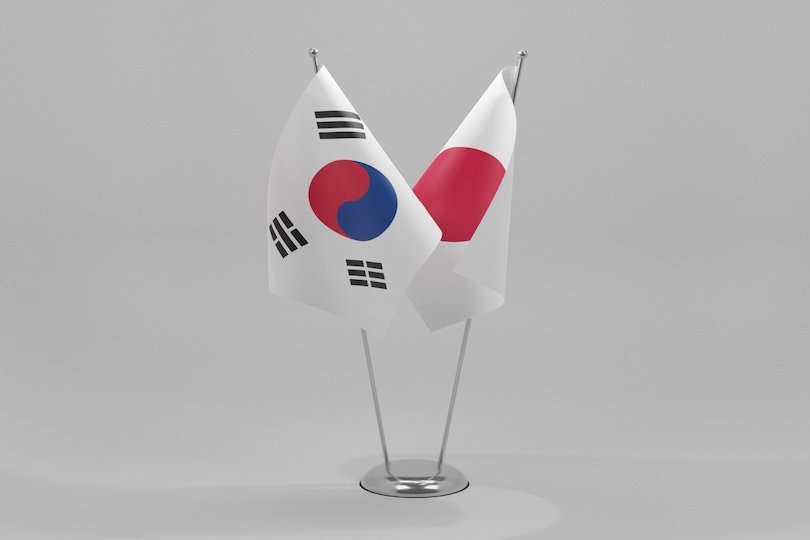
France and Germany reconciled not because they had forgotten history. They were able to pursue a path towards rapprochement because institutions that made practical cooperation possible were created before trust developed naturally over time. This feature is probably the most important lesson for contemporary Japan and South Korea. To be sure, their historical experience is different, and Northeast Asia is not Europe. Nonetheless, the Franco-German case illustrates how erstwhile enemies could embark upon limited, functional cooperation based on rules in areas where shared interests are clear and political sensitivities are high.
The process began with strategic restraint. The Schuman Declaration of May 1950 proposed pooling coal and steel production under a common authority. Coal and steel mattered because they were the industrial foundation of a nation’s warfighting capacity. Placing them under shared rules did not obviate France’s fear of Germany or Germany’s disgruntlement after the war. However, it made unilateral military mobilization difficult and cooperation routine The European Atomic Energy Community (Euratom) enlarged this logic toward more sensitive areas. The treaty that established Euratom was signed in 1957 by France, West Germany, Italy, Belgium, the Netherlands, and Luxembourg. Nuclear energy symbolized technological modernity, energy security, and state power. At the same time, it aroused concerns about nuclear proliferation, secrecy, and unequal advantage. The birth of Euratom facilitated research on civilian nuclear power, investment, common standards, supply systems, and safeguards. Its purpose was not emotional reconciliation. Rather, it was disciplined cooperation in a sector too important to leave to state-to-state competition.
This is why Euratom is highly relevant to today’s Japan-South Korea security cooperation. Euratom demonstrated that even sensitive technology could be successfully managed by transparency, restricted authority, and repeated consultations. France and West Germany did not—and perhaps, could not—settle all historical issues before initiating cooperation on civilian nuclear energy. Moreover, Euratom did not require a bilateral military pact. It created habits of cooperation, technological trust, and institutional predictability. Although landmark events such as the 1963 Elysée Treaty and later the 1975 Helsinki Final Act deepened political consultation between the two sides, they rested on the prior outcome of the late 1950s that transformed cooperation into normalcy.
For Japan and South Korea, a similar approach—instead of a mechanical imitation—is needed. South Korea’s experience of Japan’s thirty-five years of colonial rule is dissimilar to the record of interstate war between France and Germany or the latter’s occupation of the former during World War II. In addition, Tokyo and Seoul are not currently in the process of building a regional union akin to the European Union or even the European Economic Community (EEC). However, both countries are technologically advanced nations, major US treaty allies in the region, and established democracies that are faced with a riskier strategic environment. North Korea’s nuclear and missile programs are directly threatening both countries, while China’s maritime coercion, cyber activities, and a potential Taiwan contingency, whether involving a full-scale invasion or a naval blockade, affects Tokyo and Seoul’s security calculations in different but overlapping ways. The 2023 Camp David trilateral summit offered new momentum to trilateral cooperation. Afterward, real-time data sharing on North Korean missile warning was activated—it could be considered a practical achievement. Yet such progress remains vulnerable if it is solely dependent on leader-level diplomacy. Tokyo and Seoul require dedicated and more durable institutions that could withstand changes in leadership and generate visible benefits. To that extent, seven policy recommendations seem worth considering.
First, a Japan-South Korea Security Resilience Forum should be established. This should not be portrayed either as a formal alliance or a Northeast Asian version of Euratom. Instead, it should be a permanent bilateral mechanism that is open to US participation, where necessary, focused on non-aggressive and resilience-related areas such as missile alert, cyber, maritime domain awareness (MDA), space domain awareness (SDA), logistics support, civilian nuclear safety, and defense supply chains. It would be preferable to meet twice a year at the vice-ministerial level while maintaining working groups among defense, diplomacy, industry, energy, and science ministries. If these practices are regularized, they could demonstrate the two countries’ cohesiveness vis-à-vis regional spoilers, resulting in meaningful deterrence akin to that of the 1904 Anglo-French Entente Cordiale.
Second, Tokyo and Seoul should develop missile warning data sharing into a crisis management system. Together with the United States, both governments should adopt a playbook on missile-alert procedures. The playbook should define what information is shared automatically, how to address false alarms, how public statements are coordinated after a North Korean missile is launched, and how related officers communicate during a fast-moving scenario. The key goal is not an integrated command. It is a trustworthy procedure. This could help enhance the existing missile-warning systems operated by both countries: J-ALERT in Japan, and South Korea’s Korean Public Alert Service (KPAS).
Third, Japan and South Korea should negotiate a limited Acquisition and Cross-Servicing Agreement (ACSA). To make this politically feasible, it should be clearly defined as a logistics support agreement, rather than a military pact. The agreement should include fuel, food, transport, repair, medical assistance, search and rescue, evacuation operations, disaster relief, and exercises. However, it should not authorize combat operations or automatic support in a Taiwan contingency. Both governments should publicly release what the agreement does and does not permit in plain English, while continuously educating their respective constituents about the necessity of the agreement amid growing tensions in the region.
Fourth, although the two countries could be inspired by Euratom, a dialogue on civilian nuclear safety that is adapted to the circumstances of Northeast Asia should be launched. The dialogue should include reactor safety, radiation monitoring, cyber protection of nuclear facilities, emergency communications, medical isotopes, fuel-supply risk, and small modular reactor standards. It should be explicitly civilian, transparent, and in accordance with IAEA standards. This would enable cooperation in sensitive technological fields while avoiding dangerous implications of nuclear military cooperation.
Fifth, Tokyo and Seoul should cooperate on critical infrastructure protection. Ports, undersea cables, energy terminals, satellite networks, cloud systems, and semiconductor facilities are all strategic assets. In that context, both countries should conduct joint tabletop exercises involving cyber agencies, coast guards, port authorities, telecom companies, and energy firms. The initial exercises should be based on unclassified scenarios—it could, for example, deal with North Korea’s cyberattack against logistics networks during a missile crisis or undersea cable disruption during a regional contingency. Given the recent evidence from the European battlefield that critical infrastructure plays a crucial role in modern warfare, such preparation would reinforce both countries’ resilience under strain.
Sixth, defense industrial cooperation should start from unglamorous yet essential fields. Rather than initiating joint weapons development – which would be politically symbolic – Japan and South Korea should jointly map vulnerabilities in ammunition, rare resources, batteries, energetics, secure communications components, unmanned systems parts, machine tools, and maintenance standards. A small bilateral industrial resilience cell could identify bottlenecks—that would affect both countries—if simultaneous crises occur in both the Taiwan Strait and on the Korean Peninsula. In that sense, Japan’s recent decision to lift its ban on exporting lethal weapons should not be interpreted negatively by South Korea. If coordinated wisely, it could, in the long term, not only help strengthen regional deterrence but also offer a timely opportunity to pursue serious industrial cooperation.
Finally, political foundations should be managed openly and transparently. Franco-German reconciliation was durable since agreements among the elites were gradually supported by broader societal, educational, and legislative linkages. In that sense, Japan and South Korea should structure a Security Cooperation Transparency Track involving legislators, retired military officers, historians, journalists, and civil society experts. The goal is to explain security cooperation—albeit limited in scope—reveal misinformation, and provide channels for critics to systematically raise questions. In that sense, building a convincing narrative would be extremely important. While the memory of the first half of the twentieth century will remain largely unchanged, the narrative should clearly outline the necessity of bilateral cooperation, given the emerging threat in the region, and the high stakes at hand.
The core lesson of Euratom is that sensitive areas should not be avoided simply because they are politically difficult. Such areas should be carefully governed. It is worth mentioning that there are historical cases in which Tokyo and Seoul contemplated cooperation in sensitive areas purely out of necessity—most notably in the late 1960s, when leaders of both countries, shell-shocked by combined developments such as the 1968 Blue House Raid and the Guam Doctrine, discussed transferring Japanese counter-guerilla equipment to South Korea. For today’s Japan and South Korea, the relevant sectors would include missile alert, logistics support, civilian nuclear energy safety, cyber defense, critical industrial facilities, and defense supply chains instead of coal and steel. Cooperation should be useful enough to be defended, and institutionalized enough to survive political upheaval.
France and Germany did not start from complete trust. They began from practical institutions and arrangements that made future trust possible. Japan and South Korea should do the same. The objective is not to create a bilateral military alliance or an Asian version of the European Union. Rather, the ultimate goal is to establish a disciplined and sustainable structure of cooperation that takes history seriously while refusing to allow history to paralyze policy.
