

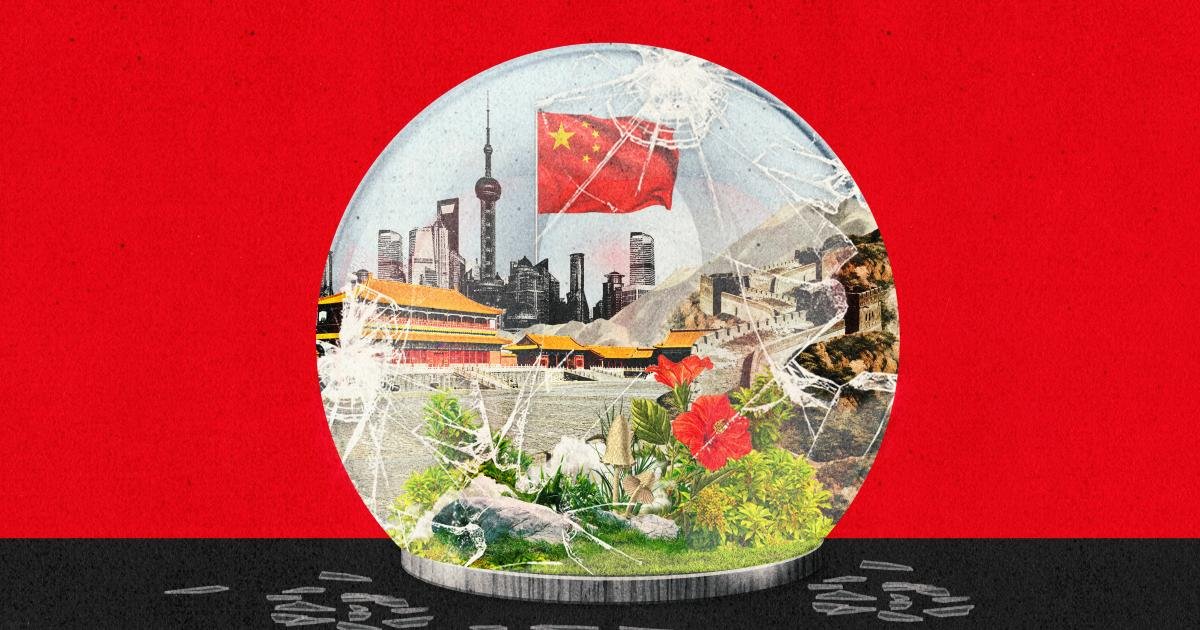
For nearly eight decades, the United States has served as the chief architect and guarantor of the international order. But today, under the banner of “America first,” Washington is abandoning responsibility for sustaining the system it built after World War II. As the United States retreats from global leadership and challenges the norms it once fostered and the order it once upheld, the world is waiting to see whether Beijing steps up.
In countries long allied with the United States, views of China are becoming more favorable. A survey conducted by Politico in February 2026, for instance, showed that people in Canada, France, Germany, and the United Kingdom support deeper engagement with China amid declining confidence in the United States as a global leader. Beijing has been quick to encourage this view, presenting itself as a defender of multilateralism, a champion of the developing world, and a guardian of what it calls a more “just and equitable” international order. In this telling, China offers stability and cooperation at a time when the United States is acting erratically and unilaterally.
Yet a closer look at China’s record suggests that Beijing is not trying to replace Washington as a global leader or take on the burdens traditionally associated with superpower status. Unlike the United States, which built a network of alliances and underwrote the postwar order, and the Soviet Union, which controlled a formal bloc of communist states through the Warsaw Pact, China has shown little interest in assuming responsibility for a rival order or even a tightly organized coalition. Beijing instead seeks global reach without entanglement, partnerships without binding obligations, and great-power status without the burdens of leadership.
As China has rapidly expanded its network of strategic partnerships and positioned itself at the center of non-Western coalitions, such as the Shanghai Cooperation Organization (SCO), it has prioritized flexibility over cohesion or control. China avoids formal alliances and resists long-term commitments in favor of arrangements that can be tightened or loosened at will. Beijing values the ability to act decisively when its core interests are at stake, but it is content to let others bear the costs of managing regional and global crises that fall outside those interests. In this sense, China has been practicing what might be called a “China first” strategy—prioritizing its narrow interests while disclaiming global responsibilities—long predating the current “America first” policy championed by the Trump administration.
Nowhere is China’s approach clearer than in its dealings with its closest partners. In Russia’s war in Ukraine and Iran’s confrontation with Israel and the United States, Beijing has provided economic and diplomatic backing while largely avoiding direct military involvement. Even as its strategic partners have faced existential threats, China has kept its distance. Beijing has also shown little willingness to restrain its partners’ destabilizing behavior or to take on the onus of bringing global conflicts to an end.
This “China first” strategy has in many respects worked to Beijing’s advantage. China has extended its reach without taking on much risk. It has projected the appearance of international leadership and persuaded many governments to support its preferences. Yet this same strategy comes with downsides. By eschewing deeper commitments, especially security guarantees, Beijing has struggled to convert its expanding network into ties that foster loyalty or collective power. Its partners are unwilling to incur major costs on Beijing’s behalf, and they hedge by forging relationships with China’s adversaries. China’s approach also risks destabilizing the broader global system. By minimizing its exposure to crises rather than actively managing them, Beijing perpetuates instability that threatens its own interests.
Although the United States and China have distinct geographies and historical legacies, Beijing’s experience nevertheless offers a cautionary lesson for Washington. A more transactional, narrowly self-interested global posture may reduce short-term burdens, but it comes at the cost of weaker alignment, less reliable support from partners, and a more unstable global order that ultimately leaves the United States—and the world—worse off.
BEEN BURNED BEFORE
China’s preference for flexible partnerships over formal alliances has deep roots in the country’s history. Since its founding, in 1949, the People’s Republic of China has faced what its leaders describe as the persistent threat of strategic encirclement—the belief that hostile powers, near or far, will rally together to constrain China’s sovereignty, security, and development.
At the outset of the Cold War, Chinese leader Mao Zedong sought to prevent that encirclement by forging ties with the Soviet Union. In 1950, Beijing entered into a formal alliance with Moscow that promised Soviet economic and technological support and a security umbrella. In many respects, the arrangement provided exactly what the new regime needed: resources, training, and protection. But it also came with steep costs. The alliance drew China into the Korean War on terms largely set by Pyongyang and Moscow, resulting in staggering human and economic losses. The war also derailed Beijing’s plans to seize Taiwan. In response to fighting on the Korean Peninsula, the Truman administration deployed the Seventh Fleet to the Taiwan Strait, and the Eisenhower administration later signed a mutual defense pact with Taiwan. With Washington’s help, the island eluded Beijing’s control, leaving what Chinese leaders still regard as an unfinished task of national unification.
Within a decade, however, the alliance between China and the Soviet Union had collapsed. Ideological disagreements, rivalry over regional spheres of influence, and long-standing suspicions culminated in their split. For Chinese leaders, the lesson was enduring: alliances constrain autonomy and expose China to risks arising from the ambitions and conflicts of others. Since then, Beijing has avoided forging new alliances. Its only remaining mutual defense pact is with North Korea, an agreement it signed in 1961. Today, this lone alliance looks less like a strategic asset than a burden.
Even while formally allied with Moscow, Beijing began gravitating toward a more flexible approach to international alignment. From the early 1950s, Zhou Enlai, China’s first premier and the architect of its early diplomacy, warned against viewing the world as “simply divided into two conflicting camps,” one led by Washington and the other by Moscow. China, he urged, must maneuver among multiple powers, not bind itself to a single bloc. This logic later crystallized in Mao’s concept of “the three worlds.” According to this framework, at the apex stood the great powers of “the first world”: the United States, long viewed in Beijing as the country most responsible for China’s strategic encirclement, and the Soviet Union, a power that oscillated between partner and threat. Beneath this tier sat “the second world” comprising U.S.-aligned industrialized powers, including Japan and countries in Europe, many of which lacked nuclear weapons and fell short of superpower status. In the eyes of Chinese leaders, these middle powers were key enablers of U.S. containment efforts—and thus prime targets for loosening their country’s strategic encirclement. Finally, “the third world” encompassed the states of Asia, Africa, and Latin America. China regarded these countries as a natural constituency, bound by shared histories of anti-imperialism and aspirations for development.
Mao envisioned uniting the second and third worlds in opposition to the first world. But in practice, China’s global contest with Washington and Moscow proved a lonely one. Beijing lacked the resources of its great-power rivals, resulting in a struggle to cultivate partners. Outside a handful of communist friends, such as Albania and Cambodia, which offered rhetorical solidarity in exchange for Chinese aid, Beijing’s appeals for collective resistance against “imperialist powers” garnered little support. Yet the underlying rationale behind the “three worlds” framework foreshadowed the flexible, nonaligned approach that would come to define China’s global strategy.
PUT A LABEL ON IT
The strategy of cultivating diverse partnerships across multiple tiers of the international system remained the organizing principle of China’s diplomacy after the Cold War ended—and has become more important under China’s current leader, Xi Jinping. When Xi took power, in 2012, China faced a security environment it perceived as increasingly hostile, shaped by tightening U.S.-led alliances and growing scrutiny of China’s global ambitions. At the same time, Beijing possessed far greater economic scale, diplomatic reach, and coercive capacity than at any previous point in its history. By the early 2010s, China had become the top trading partner of more than 120 countries. It sat at the center of global supply chains, and its military was rapidly modernizing. In Xi’s telling, the world was undergoing “changes unseen in a century”: Western dominance was eroding, multipolarity was advancing, and China was moving “closer than ever to the center of the world stage.”
This assessment underpinned a more proactive phase of foreign policy. Early in his tenure, Xi called for China to pursue “a distinctive diplomatic approach befitting its role as a great power.” This marked a clear departure from his three predecessors, Deng Xiaoping, Jiang Zemin, and Hu Jintao, who had urged Beijing to “keep a low profile.” China began to push back more forcefully against perceived strategic encirclement and the U.S.-led international order. But Xi made clear that Beijing would not replicate the American alliance model, which he claimed was outdated and rooted in confrontation. Instead, China would practice a “new type of international relations” and forge a “new path for state-to-state relations.” Under Xi, Beijing accelerated the expansion of China’s global network of partnerships by upgrading diplomatic ties and investing more heavily in Chinese-led forums.
Today, China maintains formal partnerships with more than 100 countries and regional organizations. Beijing avoids publicly ranking these relationships, but a loose hierarchy is evident. At the top stands Russia, whose ties with China are officially described as a “Comprehensive Strategic Partnership of Coordination for a New Era.” A smaller group of countries—including Belarus, Pakistan, and Venezuela—are designated “all weather” partners, signaling strong political alignment. Below this tier lies a broad and diverse array of “comprehensive strategic partners” and “strategic partners” spanning Africa, Europe, the Middle East, and Southeast Asia. These labels obscure as much as they reveal. Nearly all Pacific Island states, for instance, are considered “comprehensive strategic partners” despite wide variation in their engagement with China. Djibouti, which holds the same designation, cooperates with Beijing much more substantially. It even hosts China’s first overseas military base.
Beijing perpetuates instability that threatens its own interests.
For Beijing, this ambiguity is a strength. The elasticity of its partnership system allows China to deepen relationships when interests align and scale back when risks or costs increase. Even as Beijing has prioritized closer alignment with Russia and its partners in the global South, it continues to cultivate ties with U.S.-aligned middle powers in Europe and Northeast Asia. South Korea and several European states are officially “strategic partners,” reflecting their importance to China. Engaging these countries allows Beijing to blunt the sharper edges of American competition while maintaining access to advanced markets and technologies.
Beyond bilateral ties, Beijing has relied on multilateral coalitions to broaden its influence. Groupings such as the SCO, the BRICS—a ten-country bloc named for its first five members, Brazil, Russia, India, China, and South Africa—and an array of Chinese-led regional forums provide platforms on which Beijing can shape global agendas, coordinate diplomatic positions on international issues, and amplify its voice at relatively low cost.
For years, China’s leaders avoided direct security engagements abroad, relying instead on economic and diplomatic tools to build influence. But as China expanded its global presence, and its citizens and investments spread across every region, this minimalist posture began to shift. Over the past decade, China has expanded its participation in UN peacekeeping operations, participated in antipiracy missions in the Gulf of Aden, and evacuated its citizens and foreign nationals from conflict zones. Joint military exercises and law enforcement with members of the SCO and the Association of Southeast Asian Nations, often framed around counterterrorism, maritime security, or humanitarian assistance, have allowed Beijing to deepen security ties with its partners without formal commitments.
STAYING ON THE SIDELINES
For many of China’s partners, particularly developing countries and authoritarian governments overlooked or kept at arm’s length by the United States and its allies, Beijing offers valuable diplomatic attention, economic opportunity, and international legitimacy.
But China’s partnership model is defined as much by what it withholds as by what it provides—and nowhere is this more apparent than in moments of acute crisis. Chinese leaders have long viewed the burdens of American global leadership—especially the United States’ role as a security guarantor—as causes of overextension and decline. China generally avoids mutual defense pacts, security guarantees, or binding obligations. It instead offers a narrower package: economic engagement, diplomatic backing, and selective security cooperation while keeping its distance when the stakes escalate.
As conflicts have erupted across Europe, Latin America, and the Middle East, the boundaries of Beijing’s partnerships have become more obvious. Take Iran, for example. China is the Islamic Republic’s largest trading partner and the top buyer of Iranian oil, and in 2021 the two countries signed a much-publicized 25-year comprehensive strategic partnership. Two years later, Beijing helped mediate an agreement restoring diplomatic relations between Saudi Arabia and Iran, a breakthrough seen at the time as evidence of China’s emergence as a power broker in the Middle East.
Yet as the region has descended into conflict, China has remained notably aloof. When Israel and the United States launched strikes on Iran in 2025 and a full-scale air war earlier this year, China condemned the attacks, continued to purchase Iranian oil in defiance of U.S. sanctions, and supplied Iran with dual-use goods, including electronics and industrial chemicals with potential military applications. U.S. intelligence reports suggest that Beijing may have provided Iran with shoulder-fired missiles, although China has largely refrained from overt or large-scale military assistance. Nor has Beijing taken steps to secure the Strait of Hormuz, even though the closure of the waterway has threatened China’s energy imports and export-dependent economy.
Beijing has instead confined itself largely to rhetoric. It issued a five-point statement with Pakistan calling for a cease-fire and pressed Tehran to negotiate with Washington. But China has been careful to avoid assuming responsibility for the conflict’s outcome, declining Tehran’s requests that it serve as a guarantor of a cease-fire and provide Iran with broader security assurances.
In Europe, as the Ukraine war continues into its fifth year, China has pursued a strategy of calibrated support for Russia, its most important strategic partner. Less than a month before Russia invaded Ukraine, Beijing and Moscow described their relationship as having “no limits.” Beijing has maintained trade with Moscow, increased purchases of Russian oil, and supplied dual-use goods, while offering steady diplomatic backing. Such Chinese support has sustained Moscow economically and enabled it to reconstitute its defense industrial base. But as with Iran, China has shied away from providing major lethal military assistance. Instead, Russia has had to turn to North Korea for troops and arms, a telling sign of the limits of China’s support.
China’s unwillingness to go all in for its partners became even clearer during Russian President Vladimir Putin’s most vulnerable moment, when the Wagner Group, a powerful Kremlin-linked paramilitary force, launched an armed rebellion in June 2023. Despite the much-publicized personal ties between Xi and Putin, neither the Chinese government nor Xi personally issued any statement explicitly supporting the Russian leader. Instead, China’s Ministry of Foreign Affairs issued a terse, two-sentence statement that called the crisis an “internal affair” for Russia to deal with. When its closest partner faced a serious internal crisis, Beijing chose caution over solidarity.
Venezuela provides another revealing example. In January 2026, the United States captured Venezuelan President Nicolás Maduro—just hours after he met with Beijing’s special representative for Latin American affairs—and installed new leadership under U.S. auspices. For years, China had served as one of Venezuela’s most important economic lifelines, extending tens of billions of dollars in loans and purchasing vast quantities of Venezuelan oil. Yet when the Maduro government faced its most direct external challenge, Beijing did little beyond condemning the intervention.
A consistent pattern emerges from these cases. China sustains its partners economically and shields them diplomatically but won’t defend them when it matters most. And although it regularly invokes principles such as sovereignty, territorial integrity, and the international rule of law, it has shown little willingness to defend those principles, especially when its partners violate them.
YOU GET WHAT YOU GIVE
At first glance, China’s model appears to have paid dividends. Beijing has cultivated an expansive network of partners and platforms that provide international legitimacy and diplomatic support for its core interests. Many partners publicly back China at international forums and endorse Beijing’s positions on controversial issues such as Taiwan and China’s repressive governance in its Xinjiang region. Yet these gains are often more symbolic than substantive. They may bolster the legitimacy of the Chinese Communist Party and help Beijing shape international discourse, but they rarely translate into meaningful alignment or costly action. It remains unclear whether China could lean on its friends in a major crisis.
There are already signs that Chinese leaders doubt the reliability of their partners. For instance, when the Trump administration imposed sweeping global tariffs at the height of last year’s U.S.-Chinese trade tensions, Beijing feared that its partners might strike side deals with Washington—restricting Chinese exports in exchange for tariff relief. Chinese officials responded with threats of “reciprocal countermeasures.” The fact that China felt the need to warn its partners shows that their alignment is neither assured nor automatic. To be sure, U.S. alliances are not without strain, but deeper institutional ties and security dependence have, at least until recently, underpinned more reliable coordination.
More broadly, although China’s partnerships amplify its diplomatic voice, they rarely generate collective power. The emerging economies and developing states that China seeks to rally against a U.S.-led international order do not constitute a cohesive bloc. Divergent national interests and internal rivalries, most notably between China and India, continue to constrain coordination. Initiatives that the BRICS countries promoted as alternatives to U.S.-led financial bodies illustrate these constraints. For example, more than a decade after its launch, the group’s New Development Bank still lends a fraction of what the World Bank does and remains deeply embedded in the dollar-based global financial system. The BRICS Contingent Reserve Arrangement has likewise failed to play a meaningful role in financial crises.
At the same time, China’s expanding economic footprint has led to friction. Concerns about debt, trade imbalances, and the influx of low-cost Chinese goods have sharpened skepticism of China in countries that once embraced it as a development partner. Over the years, China has attracted charges of extractive behavior that once plagued the United States and European countries, fueling local protests and prompting governments across Asia and Africa to review or cancel major Chinese-backed projects.
Moreover, in China’s own neighborhood, endemic disputes and historical mistrust continue to hurt its reputation. The country’s assertive behavior along disputed maritime and land borders, as well as its use of coercive economic measures, has undermined its claims to be a benign, nonhegemonic power. Even countries that believe, as Beijing does, that the global order is unfairly dominated by the United States and its allies continue to seek close ties with them. China’s neighbors remain fundamentally pragmatic: they want to diversify relationships, hedge risks, and avoid dependence on any single power, including Beijing.
The United States should resist the temptation to follow China’s example.
The same pattern is evident among U.S.-aligned middle powers in Asia and Europe. Even as confidence in the United States has wavered and American allies have strengthened economic ties with China, Beijing has struggled to convert that engagement into strategic alignment. For states such as France, Germany, Japan, and South Korea, China is an important economic partner and a consequential great power that must be dealt with, but it is seen as neither a potential security partner nor a credible leader of a durable global order.
China’s reluctance to fully support its partners in moments of crisis has led to questions about what Beijing can expect in return. Nowhere would the limits of Beijing’s “China first” strategy be more exposed than in a conflict over Taiwan. Beijing could probably count on Moscow and Pyongyang for narrow, transactional assistance, such as the provision of dual-use goods, intelligence, military equipment, or, in Russia’s case, energy supplies. But such aid would fall short of the well-planned, high-cost, and operationally integrated assistance the United States has traditionally been able to mobilize from its treaty allies. China’s partnerships generally lack the formal institutional bonds—joint planning, integrated logistics, and interoperability—required for collective military action at scale. As a result, any support from Moscow or Pyongyang would likely be parallel and opportunistic, not coordinated or sustained.
Most of China’s other partners would likely declare themselves neutral in a conflict over Taiwan. Few would willingly incur significant costs on China’s behalf, including by openly defying U.S. sanctions or fighting alongside Chinese forces. In the event of U.S. intervention to defend Taiwan, Beijing would pressure U.S. allies in Asia, such as Japan, the Philippines, and South Korea, to deny Washington access to bases or other forms of operational support. Assuming that U.S. alliances remained broadly intact, these countries would nonetheless have reason to support Washington: their treaty commitments, their dependence on U.S. security guarantees, and the presence of American troops in their territory.
China would be left to bear the burdens of a conflict over Taiwan largely on its own. Even if Beijing were not counting on help from partners, it would be harder to sustain a prolonged conflict, withstand economic pressure, or manage the risks of U.S. intervention without a reliable coalition. A partnership model designed to preserve flexibility might curb China’s ability to drum up support when it matters most.
LONELY AT THE TOP
Recent crises in the Middle East and Latin America have exposed the limits of Beijing’s ability to protect overseas interests. These developments have prompted experts at Chinese think tanks and academics to debate whether China should adopt a more assertive, interventionist posture abroad. But for the most part, Chinese leaders still believe a more expansive global role, particularly one involving broader security responsibilities, would ultimately sap Chinese power.
What would cause China to change course? The United States assumed global leadership after World War II by necessity: Asia and Europe lay in ruins, and only Washington possessed the capacity to rebuild and stabilize the system. For China to underwrite a new international order and overhaul its global strategy, a disruption of similar magnitude would likely be needed: a world so destabilized that Beijing would see no alternative but to take on the costs of stabilizing it. Short of such a shock, China’s approach is unlikely to fundamentally change in the near term.
Rather than a straightforward transition from one global leader to another, from U.S. dominance to Chinese primacy, the international system is entering a leaderless era, one in which great powers are less interested in sustaining order than in preserving their freedom of action. In such a world, great powers are not building alliances, cultivating deep interdependence, or investing in public goods. They consider economic and security ties to be vulnerabilities, not assets, and see transactional relationships as the best way to advance their national interests.
China’s experience illustrates both the appeal and the drawbacks of this logic. By avoiding binding commitments and responsibilities, Beijing has preserved its autonomy and reduced its exposure to risk. But it has also struggled to translate its global reach into real collective power. Its relationships remain shallow, its partners hedge, and its ability to mobilize a coalition in moments of crisis appears tenuous.
Washington should take note. Some in the United States have argued that retrenching from global engagement, scaling back commitments to allies and partners, and putting “America first” will ultimately serve the country’s interests. China’s record suggests otherwise. A foreign policy built around transactional ties and narrowly defined national priorities may appear attractive in the short term, but it comes at the cost of reliable support from partners and contributes to a more fragmented and disorderly world. Without a great power at least trying to helm the international system, crises become harder to manage and collective responses more difficult to organize, leaving even the strongest states less secure. The lesson for the United States, then, is clear: resist the temptation to follow China’s example.
Loading…
