

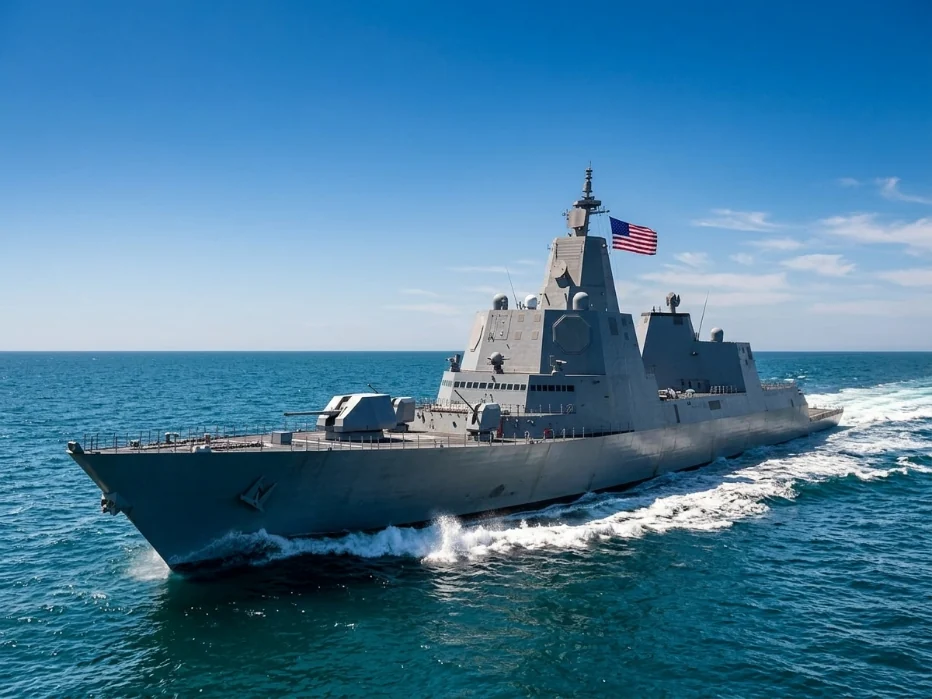
Defense Feeds, Washington — Debate is intensifying over the proposed US Navy Trump-class battleship plan sparks $700B cost debate as estimates surrounding the ambitious naval concept continue to draw attention. The project, which envisions a next-generation heavily armed battleship designed for future maritime warfare, has raised major questions about affordability, operational relevance and long-term defense priorities.
The proposed Trump-class battleship concept has been discussed as a potential platform combining advanced missile defense systems, heavy strike capabilities and modern survivability technologies. However, projections suggesting total program costs could approach $700 billion have triggered growing scrutiny within defense circles.
The scale of the estimate reflects not only ship construction but also decades of development, infrastructure, sustainment and integration costs. Such a figure would place the project among the most expensive naval initiatives ever considered. The debate now centers on whether such a platform would provide sufficient strategic value in modern warfare environments increasingly dominated by missiles, drones and autonomous systems.
Trump-Class Battleship Concept Revives Heavy Naval Firepower
The Trump-class battleship proposal reflects renewed interest in large heavily armed surface combatants capable of surviving in high-threat maritime environments. Unlike traditional destroyers or cruisers, the concept envisions a platform with greater durability, expanded missile capacity and advanced defensive systems.
Supporters argue that larger warships could provide improved survivability against missile saturation attacks while carrying greater offensive capability. Future naval conflicts are expected to involve intense long-range engagements, making fleet endurance and layered defense increasingly important.
The concept reportedly includes advanced missile defense architecture, long-range strike systems and potential integration of directed-energy weapons. Such technologies are intended to counter emerging threats including hypersonic missiles, drone swarms and precision-guided weapons.
At the same time, critics question whether concentrating so much capability into a single platform creates strategic vulnerabilities. Modern naval warfare increasingly favors distributed operations involving smaller and more flexible assets. Large warships may face growing risks from low-cost asymmetric threats.

$700 Billion Estimate Raises Strategic and Budget Concerns
The reported $700 billion cost projection has become one of the most controversial aspects of the proposal. Defense analysts note that such figures likely include research, shipbuilding, modernization, logistics and long-term sustainment expenses over the life of the program.
Naval procurement costs have risen significantly in recent years as ships become more technologically advanced. Integrating next-generation radar systems, missile defenses and power-intensive weapons dramatically increases both construction and operational expenses.
The debate also comes as the US Navy faces competing modernization priorities. Investments in submarines, unmanned systems, aircraft carriers and missile defense networks are already placing heavy pressure on defense budgets. Funding a large-scale battleship program could potentially affect other critical programs.
Critics argue that future naval warfare may rely more heavily on distributed autonomous systems rather than extremely large manned platforms. Smaller unmanned vessels and long-range missiles are often viewed as more cost-effective solutions for maintaining maritime deterrence and operational flexibility.
However, supporters of the concept believe heavily armed surface combatants could still play an important role in future power projection and fleet defense. They argue that advances in defensive technologies may allow larger ships to remain viable despite evolving threats.
Future Naval Warfare Drives New Strategic Debate
The discussion surrounding the Trump-class battleship reflects a broader strategic debate over the future of naval warfare. Modern navies are attempting to balance traditional power projection with emerging technologies such as autonomous systems, hypersonic weapons and networked warfare capabilities.
Missile proliferation has significantly altered maritime combat dynamics. Even smaller nations and non-state actors can now field anti-ship systems capable of threatening major warships. This has led some strategists to favor more distributed and survivable fleet structures.
At the same time, major powers continue investing in larger and more capable naval platforms. Aircraft carriers, amphibious assault ships and advanced destroyers remain central to force projection strategies. The Trump-class concept appears to represent an effort to adapt the traditional battleship idea to modern combat realities.
The proposal also highlights how naval modernization increasingly involves balancing operational capability against financial sustainability. Advanced technologies offer greater combat effectiveness but often come with rapidly escalating costs. Future fleet planning will likely depend on finding the right balance between capability, survivability and affordability.
Whether the Trump-class battleship concept moves forward or remains a theoretical proposal, the discussion itself reflects how rapidly naval strategy is evolving. As maritime competition intensifies and technology continues to reshape warfare, navies worldwide are reassessing what future surface combatants should look like and how they should operate.
