

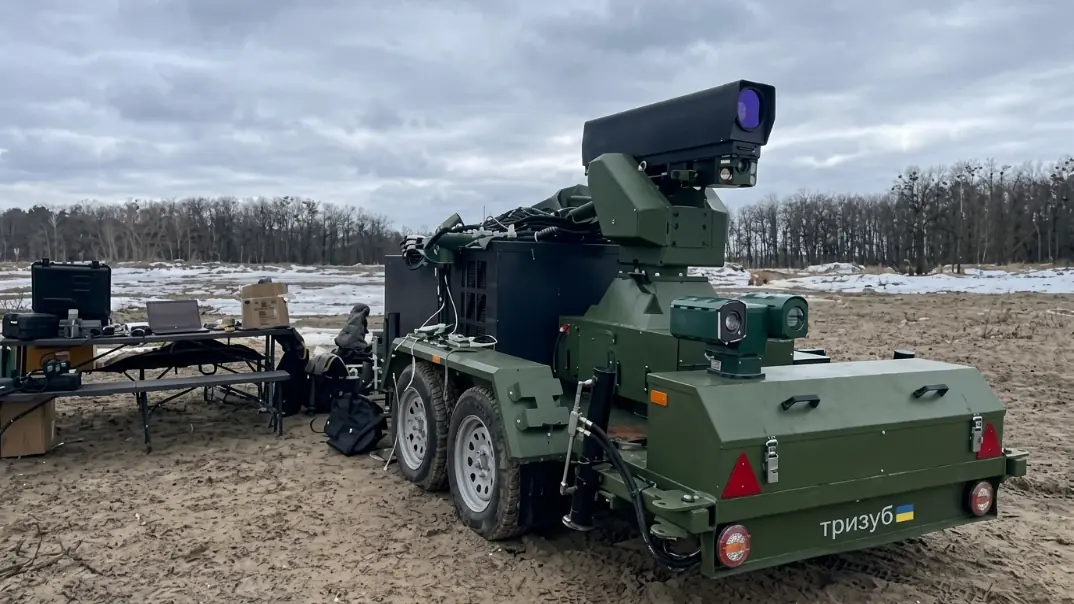
Defense Feeds, Kyiv — Ukraine is continuing to advance its air defense innovation as the Ukraine Tryzub laser weapon expands counter-drone defense range with the ability to engage unmanned aerial threats at distances of up to five kilometers. The development highlights Kyiv’s growing focus on directed-energy systems as drone warfare increasingly shapes modern combat operations.
The Tryzub laser system is being developed as part of Ukraine’s broader effort to counter the rising threat posed by unmanned aerial vehicles. Since the beginning of the conflict, drones have become one of the most widely used tools on the battlefield, supporting reconnaissance, strike missions and swarm attacks. Traditional air defense systems, while effective, can become expensive when used repeatedly against low-cost drones.
Laser-based systems offer a different approach. Instead of relying on missiles or ammunition, directed-energy weapons use concentrated energy to disable or destroy targets. This can significantly reduce operational costs while allowing rapid engagement of multiple aerial threats.
Laser Defense Designed for Modern Drone Warfare
The Tryzub system has reportedly demonstrated the ability to strike drones at ranges of up to five kilometers. This represents a notable improvement in the operational reach of laser-based air defense technology. Greater engagement distance allows operators to neutralize threats earlier before they reach critical infrastructure or frontline positions.
Drone warfare has become one of the defining features of the conflict in Ukraine. Both reconnaissance drones and loitering munitions are used extensively, creating constant pressure on air defense networks. Low-cost unmanned systems can overwhelm traditional defenses through quantity and persistence.
Laser weapons provide several potential advantages in this environment. They can engage targets rapidly without requiring expensive interceptors for each engagement. This makes them especially attractive against swarms of smaller drones.
In addition, directed-energy systems can operate with minimal logistical burden compared to conventional missile-based defenses. As long as sufficient power is available, laser systems can continue operating without relying heavily on ammunition stockpiles. This increases sustainability during prolonged operations.

Ukraine Accelerates Indigenous Defense Innovation
The development of the Tryzub laser system also reflects Ukraine’s increasing emphasis on domestic defense innovation. The conflict has accelerated efforts to produce indigenous military technologies capable of addressing rapidly evolving battlefield conditions. Autonomous systems, electronic warfare and counter-drone technologies have become major priorities.
Developing local defense systems offers several strategic advantages. It reduces dependence on foreign supply chains while allowing faster adaptation to operational needs. This flexibility has become increasingly important in a high-intensity conflict environment.
Ukraine’s defense sector has shown a growing ability to integrate emerging technologies into combat operations. The rapid evolution of drone warfare has forced both sides to adapt quickly. Directed-energy weapons are now being explored as part of this broader technological competition.
The Tryzub project may also contribute to future export potential if the technology proves effective. Many countries are seeking affordable solutions to counter expanding drone threats. Laser systems capable of engaging UAVs efficiently could attract significant international interest.
Directed-Energy Weapons Gain Strategic Importance
The growing interest in laser weapons reflects broader changes in modern warfare. Militaries around the world are increasingly exploring directed-energy systems for air defense, missile interception and drone countermeasures. These technologies offer the possibility of lower operating costs and faster engagement times.
Counter-drone operations are considered one of the most practical near-term applications for laser systems. Small drones are often difficult and inefficient to engage using conventional missiles. Laser weapons provide a more sustainable solution against these threats.
At the same time, significant technical challenges remain. Weather conditions, atmospheric interference and power requirements can affect laser effectiveness. Maintaining stable energy output over longer distances also requires advanced engineering and cooling systems.
Despite these challenges, the progress of systems like Tryzub demonstrates how rapidly directed-energy technology is evolving. As conflicts continue to highlight the importance of drone defense, investment in laser weapons is expected to increase worldwide.
Ukraine’s reported advancement of the Tryzub laser system underscores the growing role of unconventional defense technologies in modern combat. As unmanned threats continue to expand, directed-energy systems may become an increasingly important layer within future air defense networks.
