

You don’t usually see the weapon that saves the ship.
That’s the strange thing about the RIM-116 RAM, it exists for the split-second when everything else has already failed. Picture a modern warship slicing through open water. Radar is humming, systems layered like an onion. And then, somewhere beyond the horizon, a sea-skimming missile appears. Fast. Low. Angry.
This is where the Rolling Airframe Missile (RAM) steps in.
The RIM-116 RAM isn’t built for long-range duels or dramatic launches seen in movies. It’s a last-ditch shield, a compact, brutally efficient system designed to intercept incoming threats when they’re already uncomfortably close. Think of it less like a sniper rifle and more like a reflex, quick, automatic, and unforgiving.
What makes it fascinating, almost counterintuitive, is how it blends simplicity with sophistication. No bulky radar guidance required during the final phase. No drawn-out targeting dance. Instead, it locks onto the threat and… goes. Fast decisions, faster outcomes.
And here’s the kicker: modern naval combat increasingly depends on systems like this. Anti-ship missiles have become faster, stealthier, and harder to detect. Which means ships need something that doesn’t hesitate. Something that reacts in milliseconds.
That’s the niche the RAM missile system fills.
In this post, we’re not just skimming specs or listing features. We’re unpacking how the RIM-116 RAM actually fits into real-world naval defense, why navies trust it, where it shines, and where its limits quietly sit.
Because sometimes, the most important system on a ship… is the one you hope never fires.
What Is the RIM-116 RAM?
At first glance, the RIM-116 RAM feels almost understated. No towering launch tubes. No dramatic radar arrays spinning like something out of a sci-fi film. And yet, this compact system has quietly become one of the most trusted naval point-defense missiles in the world.
So what exactly is it?
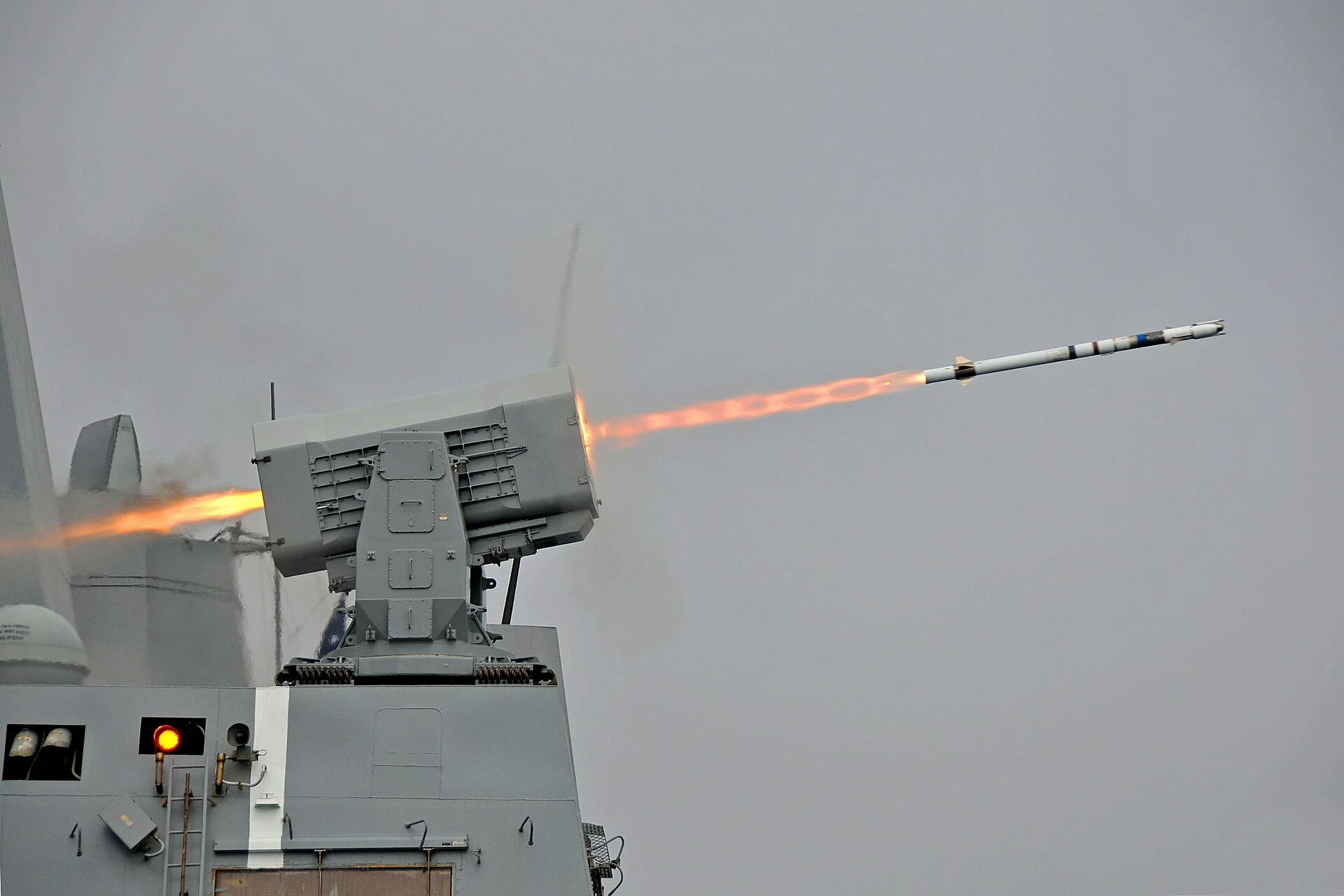
The Rolling Airframe Missile (RAM) is a short-range, ship-based surface-to-air missile system built for one job: stopping incoming threats at the very last moment. We’re talking about anti-ship cruise missiles, hostile aircraft, even fast-moving drones, targets that are often detected late and leave almost no time to react.
Here’s where it gets interesting. Unlike many missile systems that rely heavily on ship-based radar guidance throughout the engagement, the RIM-116 RAM is designed to be largely fire-and-forget. Once launched, it tracks and hunts its target on its own. No babysitting required. That autonomy? It’s a big deal in high-stress combat environments where seconds matter.
The system itself is usually mounted in a 21-cell launcher (Mk 49), a compact, rotating unit that can be installed on a wide range of vessels, from large destroyers to smaller patrol ships. That flexibility is one reason it’s been adopted by multiple navies across the globe.
But the real story behind RAM isn’t just what it is, it’s how it came to be. A joint effort between the United States and Germany, it reflects a kind of Cold War-era pragmatism: build something fast, reliable, and brutally effective against the growing threat of sea-skimming missiles.
In short? The RIM-116 RAM is less about dominance, and more about survival.
How the RIM-116 RAM Works
The RIM-116 RAM doesn’t “hunt” like most missiles. It reacts, almost instinctively. And that’s not just a poetic way to put it; the system is literally engineered to behave more like a reflex than a calculated strike.
Here’s the sequence, stripped of the usual technical fog.
An incoming threat, say, a sea-skimming cruise missile, is detected by the ship’s sensors. The RAM system is cued. Within moments, a missile launches from the Mk 49 launcher. No dramatic pause. No long lock-on ceremony.
Then something unusual happens.
Instead of relying on continuous radar guidance from the ship, the Rolling Airframe Missile uses a dual-mode passive guidance system. Early versions lock onto radio frequency (RF) emissions, basically homing in on the enemy missile’s own radar signals. Later, it transitions to infrared (IR) tracking, zeroing in on the heat signature.
And yes, it literally rolls.
The missile spins along its axis during flight. Sounds odd, but this rotation stabilizes it and improves tracking accuracy, kind of like a well-thrown spiral football, but significantly more lethal. This rolling motion also helps its sensors “scan” the environment more effectively without needing complex gimbal systems.
The result? A missile that reacts quickly, adapts mid-flight, and doesn’t depend on constant communication with the ship.
In a chaotic engagement, multiple threats, electronic interference, limited time, that independence isn’t just helpful.
It’s everything.
Key Specifications of the RIM-116 RAM
Numbers don’t always tell the full story, but with the RIM-116 RAM, they get surprisingly close. This is a missile designed with constraints in mind: limited space, minimal reaction time, maximum reliability. Every specification reflects that philosophy, tight, efficient, no wasted motion.
Let’s lay out the essentials first, then unpack what they actually mean in real-world scenarios.
| Specification | Details |
| Length | ~2.79 meters |
| Diameter | ~127 mm |
| Weight | ~73.5 kg |
| Speed | Mach 2+ |
| Range | ~8–10 km |
| Warhead | Blast-fragmentation |
| Launcher Capacity | 21 missiles (Mk 49) |
On paper, a range of under 10 kilometers might seem… modest. But that’s by design. The RAM missile system isn’t trying to engage threats early, it’s built for terminal defense, when an incoming missile has already slipped through outer layers.
Speed, on the other hand, matters a lot. At Mach 2+, the RIM-116 closes distance quickly, shrinking the already tiny engagement window into something manageable. You’re not chasing the threat, you’re intercepting it almost head-on.
The blast-fragmentation warhead is another deliberate choice. Instead of requiring a perfect hit, it detonates near the target, releasing high-velocity fragments that shred incoming missiles. In close-range defense, proximity beats precision.
And then there’s the weight. At just over 70 kg, it’s relatively lightweight, which allows ships to carry more missiles without sacrificing space or stability. That 21-round launcher? It’s not just capacity, it’s breathing room in a high-threat environment.
Put it all together, and the specs reveal something subtle: the RIM-116 RAM isn’t built to impress on paper.
It’s built to work when everything else has already gone sideways.
Role of RIM-116 RAM in Naval Defense
If a modern warship is a layered fortress, the RIM-116 RAM sits at the innermost wall, the last barrier between survival and catastrophe. Not glamorous. Not distant. Uncomfortably close to the action.
Naval defense today isn’t a single system doing everything. It’s a stack of overlapping protections. Long-range missiles try to intercept threats far out. Medium-range systems pick off anything that slips through. And then, when something still gets through, you’re left with seconds.
That’s where the RAM missile system earns its keep.
Point Defense: The Final Shield
The RIM-116 RAM is a classic point-defense weapon. It doesn’t patrol the horizon or engage targets miles away. Instead, it waits, armed, loaded, and watching, for threats that are already inside the danger zone.
We’re talking distances where a missile can cover the gap in mere seconds.
And here’s the uncomfortable truth: at that stage, there’s no room for hesitation. Systems must react almost automatically. The RAM’s fire-and-forget design means once it launches, it doesn’t compete for radar time or operator attention. It just does its job.
How It Fits into the Bigger Picture
The RAM doesn’t operate alone. It’s part of a broader defensive ecosystem:
| Defense Layer | Example Systems | Role |
| Long Range | Aegis / Standard Missiles | Engage threats far out |
| Medium Range | Sea Sparrow | Intercept mid-course threats |
| Close-In | Phalanx CIWS | Gun-based last resort |
| Terminal Defense | RIM-116 RAM | Missile-based final interception |
What’s interesting is how the RIM-116 RAM bridges a gap. It offers missile-level precision at close range, where gun systems like Phalanx rely on sheer volume of fire. Different philosophy. Different strengths.
Why Navies Rely on It
Modern threats are faster, stealthier, and often designed to overwhelm defenses in waves. In that chaos, the RAM provides something deceptively simple:
certainty under pressure.
It doesn’t need perfect conditions. It doesn’t wait for ideal targeting data. It reacts, fast, independently, and with just enough intelligence to make the difference.
Because when a threat gets that close, you’re not asking for perfection.
You’re asking for something that works.
Advantages of the RIM-116 RAM
There’s a reason the RIM-116 RAM keeps showing up on warships across very different navies, U.S., German, Korean, Japanese. Different doctrines, different budgets… same choice. That usually means one thing: it solves a problem cleanly.
But its advantages aren’t always obvious at first glance. They’re subtle, almost quiet, until you imagine a real engagement.
1. Reaction Speed That Feels Instant
The biggest edge? Speed of response.
The RAM missile system is built for moments when time has basically run out. Once cued, it launches quickly and doesn’t wait around for continuous guidance. No prolonged targeting loop. No back-and-forth.
In a scenario where an incoming missile is seconds away, that shaved-off time isn’t a luxury, it’s survival.
2. Fire-and-Forget Simplicity
Here’s something operators appreciate (even if they don’t always say it out loud): less workload.
Once fired, the RIM-116 RAM handles tracking on its own. That frees up the ship’s combat system to deal with other incoming threats, which is crucial during saturation attacks, when multiple missiles are inbound at once.
It’s like handing off a task to someone you trust completely… and immediately moving on to the next crisis.
3. High Probability of Kill
While exact numbers vary, the system is often credited with a very high interception success rate in testing environments.
That’s partly due to its dual-mode guidance (RF + IR) and partly because of its proximity-based warhead, which doesn’t require a direct hit to neutralize a target.
Close is good enough, and often devastating.
4. Compact and Versatile Design
Not every ship can carry large, complex missile systems. The RAM’s compact Mk 49 launcher changes that.
- Fits on smaller vessels
- Minimal deck footprint
- Easy integration with existing combat systems
That flexibility makes it attractive for fleets that need capability without massive redesigns.
5. Resilience in Electronic Warfare
Modern battlefields are messy, jamming, decoys, signal confusion. The RIM-116 RAM sidesteps a lot of that by using passive tracking. It doesn’t broadcast signals that can be easily disrupted.
In simple terms: it’s harder to fool.
Limitations and Challenges
For all its strengths, the RIM-116 RAM isn’t some flawless, all-purpose shield. In fact, its biggest advantage, being a close-in, last-ditch defense system, also defines its limits. And those limits matter more than people think.
Let’s start with the obvious one.
1. Short Range by Design
With an effective range of roughly 8–10 km, the RAM missile system only engages threats when they’re already dangerously close.
That’s intentional. But it creates a dependency.
If earlier layers of defense fail, or worse, get overwhelmed, the RAM is suddenly dealing with very little reaction time and very little margin for error. There’s no second attempt at this distance.
2. Limited Engagement Envelope
The RIM-116 RAM is optimized for specific types of threats:
- Incoming anti-ship missiles
- Low-flying aircraft
- Some drones
But it’s not designed for:
- Long-range interception
- High-altitude engagements
- Ballistic missile defense
In other words, it’s highly specialized. Brilliant at its job, but not flexible beyond it.
3. Reliance on External Detection
Here’s something that often gets overlooked: the RAM doesn’t search for targets on its own.
It depends on the ship’s radar and sensor suite to detect and designate threats. If those systems are degraded, through jamming, damage, or sheer overload, the RAM’s effectiveness drops.
It’s a bit like having a fast reflex… but needing someone else to point out the danger first.
4. Saturation Risk
Modern naval threats don’t come one at a time anymore. They come in waves.
While the 21-missile launcher offers solid capacity, a coordinated saturation attack, multiple incoming missiles from different angles, can strain even a capable system like the RAM.
And once you run out of interceptors… that’s it.
5. Cost vs. Volume Trade-off
Compared to gun-based systems like Phalanx, each RAM interceptor is more expensive. That creates a subtle tension:
- Missiles offer precision and higher kill probability
- Guns offer volume and sustained fire
Navies have to balance both. There’s no perfect answer.
The Reality Check
The RIM-116 RAM isn’t meant to stand alone. It was never supposed to.
It’s the final piece in a layered defense puzzle. Remove the outer layers, and suddenly you’re asking it to do more than it was designed for.
And even the best last line of defense… is still the last line.
RIM-116 RAM vs Other CIWS Systems
Put the RIM-116 RAM next to other close-in weapon systems, and you start to see a philosophical split in naval defense. It’s not just about what stops the threat, it’s about how you choose to stop it.
Do you throw a wall of bullets into the sky and hope something connects?
Or do you send a guided interceptor that thinks, just a little, on its way in?
That’s essentially the difference.
RAM vs Phalanx CIWS (Missile vs Gun)
The classic comparison is between the RAM missile system and the Phalanx CIWS, a rapid-fire gun that spits out thousands of rounds per minute.
| Feature | RIM-116 RAM | Phalanx CIWS |
| Type | Guided missile | Gatling gun |
| Range | ~8–10 km | ~1–2 km |
| Engagement Style | Precision intercept | Volume of fire |
| Reaction | Fast, autonomous | Extremely fast, automated |
| Cost per Shot | High | Relatively low |
Here’s the trade-off:
- Phalanx creates a “cloud” of projectiles, great for last-second defense
- RAM reaches farther and destroys threats before they get that close
Some ships carry both. That’s not redundancy, it’s insurance.
RAM vs SeaRAM
Now this is where things get interesting. SeaRAM is essentially a hybrid system, it combines the Phalanx radar and sensors with RAM missiles.
Same missile. Different brain.
That means:
- Faster autonomous targeting (thanks to Phalanx radar)
- No need for external sensor input
- Ideal for smaller ships without advanced combat systems
It’s like giving the RAM its own eyes instead of relying on the ship’s.
So, Which Is Better?
Not the most satisfying answer, but the honest one:
Neither.
They solve different problems at different distances, under different conditions. The RIM-116 RAM excels in that narrow window where precision still matters, but time is almost gone.
And in naval combat, that window shows up more often than anyone would like to admit.
