

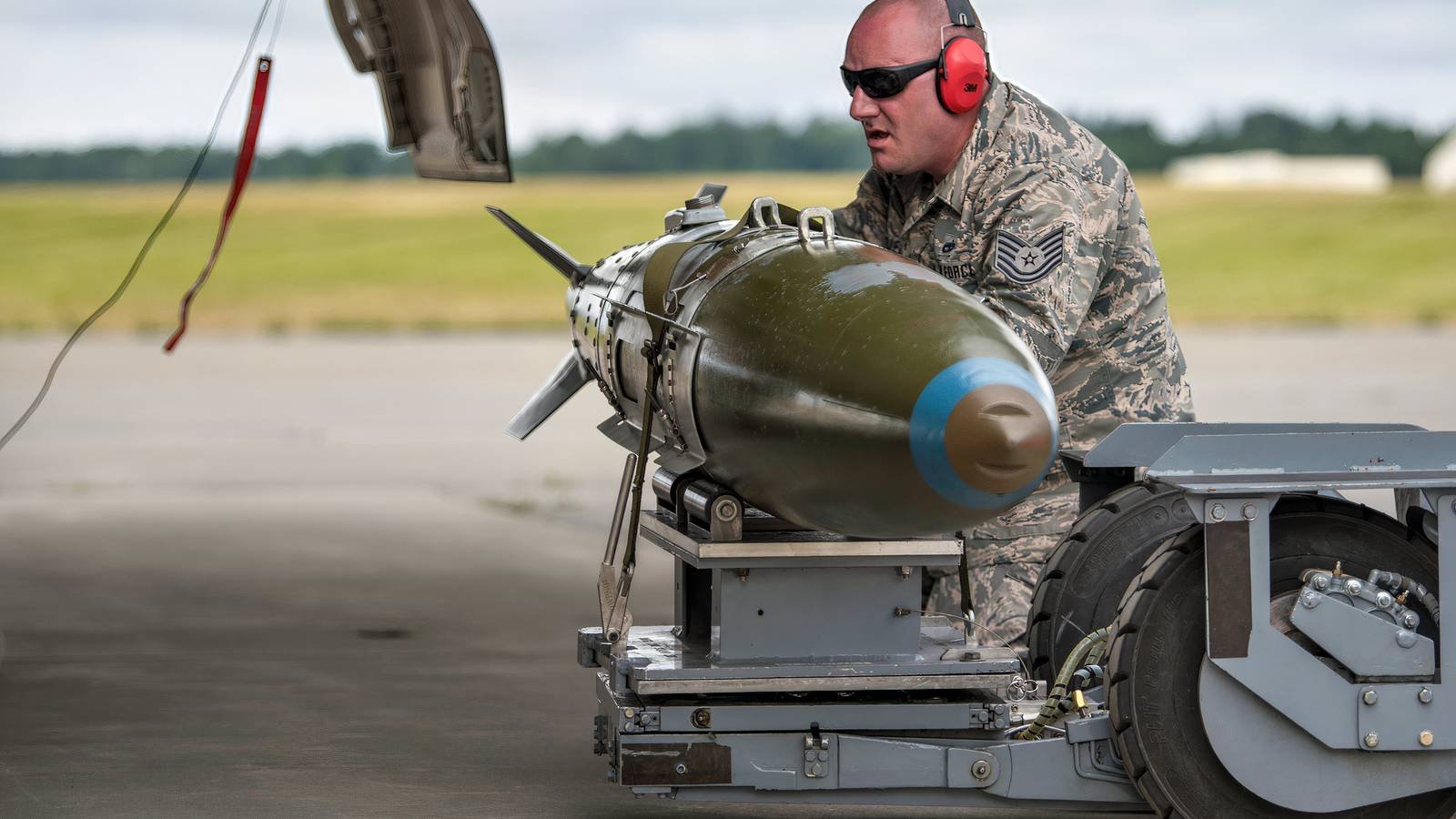
The U.S. on Tuesday approved a potential $373.6 million long-range precision bomb package for Ukraine, offering the East European nation more leeway to potentially strike Russian targets from farther away.
The package includes Joint Direct Attack Munition-Extended Range, or JDAM-ER, kits and related equipment, according to the State Department. Boeing is listed as the primary contractor for the proposed sale.
Russia invaded Ukraine in February 2022, prompting strong U.S. support. But that support, in terms of both weapons and financial aid, has dramatically decreased over the past 1 1/2 years. Last week, the second U.S. ambassador to Ukraine announced her pending resignation roughly a year after her predecessor.
Joint Direct Attack Munition kits convert unguided bombs into GPS-guided precision weapons, allowing aircraft to hit targets with far greater accuracy. The extended-range variant adds wing kits that enable strikes from significantly longer distances, in some cases more than 40 nautical miles depending on altitude and release conditions.
That added range allows Ukrainian aircraft to launch strikes from farther outside the reach of Russian air defenses, a critical advantage in heavily contested airspace where surface-to-air missile systems remain a constant threat.
Ukraine has used JDAM-ER systems since 2023, adapting them to Soviet-era aircraft while preparing for integration with Western platforms, including F-16 fighter jets expected to expand its strike options.
However, the system’s reliance on GPS guidance has exposed vulnerabilities. Russian forces have increasingly used electronic warfare to jam signals, at times degrading the effectiveness of precision-guided munitions and forcing Ukrainian forces to adjust tactics.
Package Still Needs a Green Light
The approval, however, does not mean the weapons have been delivered. It clears a potential foreign military sale, a process that still requires final contracting, production and transfer before the systems reach Ukraine.
The package comes as Ukraine continues to rely heavily on long-range strikes to hit Russian logistics hubs, ammunition depots and command centers beyond the front lines, particularly as ground fighting remains largely static in key areas.

JDAM-ER systems are expected to complement other Western-provided precision munitions by allowing Ukrainian aircraft to launch strikes from farther distances, reducing exposure to Russian air defenses while maintaining pressure on high-value targets.
Ukraine has leaned on drones, missiles and other long-range systems to offset Russia’s larger force structure and pressure targets beyond the front.
JDAM-ER weapons have been used to target Russian logistics hubs, ammunition depots and command positions beyond the front lines, allowing Ukrainian forces to strike deeper while limiting exposure to air defenses.
Expanding that precision strike capability, particularly from safer stand-off distances, has become increasingly important as the battlefield remains largely static in key areas and both sides rely heavily on long-range fires and attrition.
