

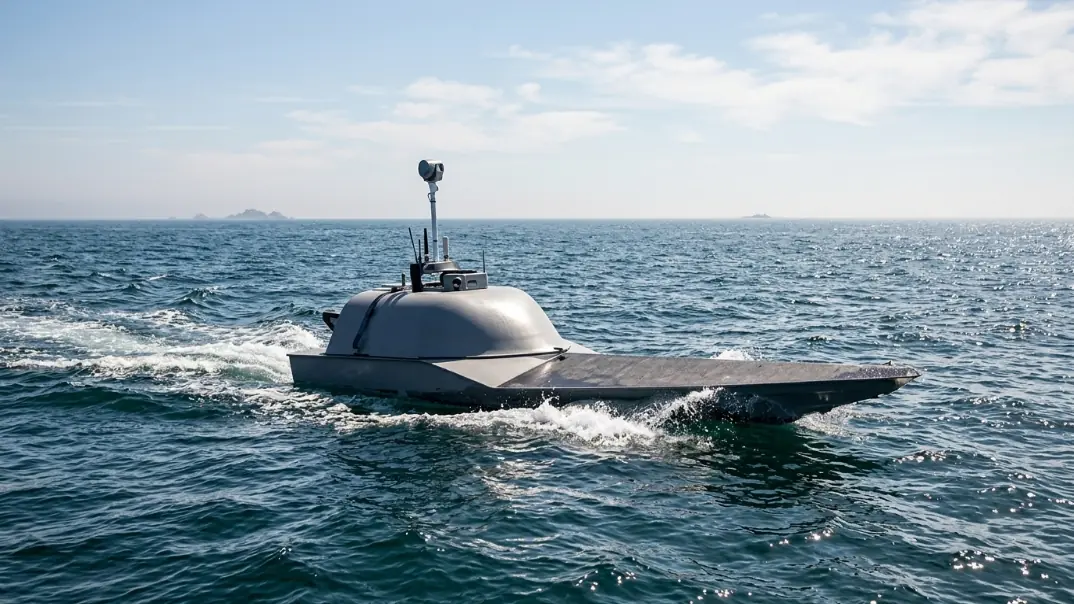
Defense Feeds, Manila — The United States is expanding its use of unmanned systems in maritime environments as the US Army Rampage USV test boosts coastal intelligence operations during recent trials in the Philippines.
The testing reflects a growing emphasis on enhancing surveillance and reconnaissance capabilities in complex coastal regions. As strategic competition intensifies in the Indo-Pacific, improving real-time intelligence has become a key operational priority.
The Rampage unmanned surface vessel is designed to operate in littoral environments where traditional platforms may face limitations. Its ability to conduct intelligence, surveillance and reconnaissance missions without onboard personnel makes it particularly suited for high-risk or sensitive areas. The trials in the Philippines highlight the importance of adapting to regional operational requirements.
This development also underscores increasing cooperation between the United States and regional partners. Conducting tests in the Philippines provides valuable insight into how such systems perform in real-world conditions. The focus now is on evaluating effectiveness and potential future deployment.
Enhancing Coastal Intelligence and Surveillance Capabilities
The Rampage USV is specifically designed to improve intelligence gathering in coastal and near-shore environments. Equipped with advanced sensors, it can monitor maritime activity and provide real-time data to command units. This enhances situational awareness in areas where visibility and access may be limited.
Coastal regions present unique challenges for military operations. Shallow waters, dense traffic and complex terrain can complicate surveillance efforts. Unmanned systems like the Rampage offer a flexible solution by operating in these environments with reduced risk.
The ability to remain deployed for extended periods is another advantage. Without the need for onboard crew, the USV can conduct continuous monitoring missions. This supports persistent surveillance and improves the overall intelligence picture.
In addition, the data collected by the system can be integrated into broader networks. Sharing information with other platforms enhances coordination and decision-making. This is particularly important in dynamic operational scenarios.

Testing in the Philippines Supports Indo-Pacific Strategy
The choice of the Philippines as a testing location reflects its strategic importance in the Indo-Pacific region. With extensive coastlines and proximity to key maritime routes, the country plays a vital role in regional security. Conducting trials there provides valuable operational insights.
The collaboration also strengthens defense ties between the United States and the Philippines. Joint activities such as these contribute to interoperability and shared understanding of emerging technologies. This supports broader security objectives in the region.
Testing the Rampage USV in real-world conditions allows for evaluation of performance under diverse environmental factors. Conditions such as weather, sea state and maritime traffic all influence operational effectiveness. Gathering this data is essential for refining the system.
The trials also demonstrate the growing role of unmanned systems in regional operations. As threats evolve, adopting new technologies becomes increasingly important. The Rampage USV is part of this broader transition.
Future Role of Unmanned Systems in Coastal Operations
The use of unmanned surface vessels like Rampage reflects a wider shift in military strategy. Modern operations increasingly rely on autonomous and remotely operated systems to enhance capability and reduce risk. This trend is expected to continue as technology advances.
USVs offer several advantages over traditional platforms. They can operate in hazardous areas without endangering personnel and can be deployed quickly when needed. Their flexibility makes them suitable for a wide range of missions.
In coastal operations, where conditions are often unpredictable, such adaptability is particularly valuable. The ability to gather intelligence, monitor activity and support other units enhances overall effectiveness. This contributes to more informed decision-making.
Looking ahead, further development and integration of systems like Rampage will be key. Improvements in autonomy, communication and sensor technology are likely to expand their capabilities. This will enable more complex and coordinated operations.
The US Army’s testing of the Rampage USV in the Philippines highlights the growing importance of unmanned systems in maritime security. As the operational environment becomes more challenging, leveraging such technologies will be essential. The trials represent a step toward a more advanced and adaptable approach to coastal operations.
