

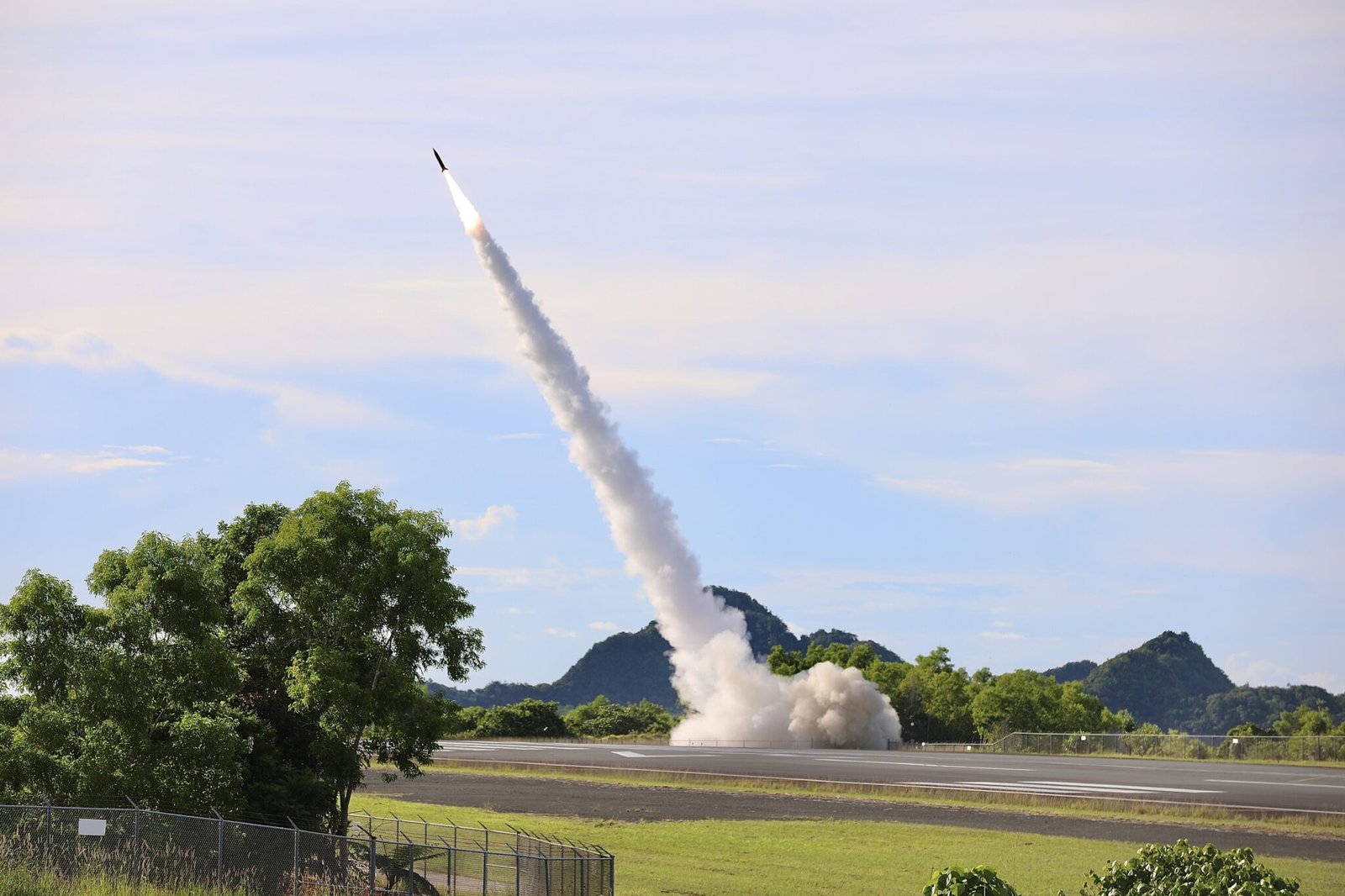
A future variant of the U.S. Army’s future Precision Strike Missile (PrSM) anti-ship ballistic missile should be able to strike maritime targets at ranges up to 1,000 kilometers and must be able to operate in the Indo-Pacific, according to recent program documents.
The fielding of PrSM Increment 4 (Inc 4), one of several variants planned for the service’s expanding portfolio of next-generation long-range strike systems, has been earmarked for acceleration by the Army in its effort to equip its High Mobility Rocket Artillery System (HIMARS) formations with ground-based maritime strike capabilities.
These versatile launchers possess a maneuver and transportation capability that allow them to be inserted across the difficult littoral environments of the Western Pacific by aerial and maritime means.
A request for solutions for the PrSM Inc 4 specified that the prototype of the missile “must be operable in the Indo-Pacific Area of Operations” under the parameters of an unspecified supplied operational scenario.
The ability to be able to operate in the region was among the key priorities listed for the development of PrSM Inc 4. Further priorities reflected include solutions that could hold mobile and maritime threats under threat at ranges equal to or equivalent to 1,000 kilometers.
“The United States Army and Joint Forces must penetrate Global Positioning System contested environments and decisively engage moving maritime and relocatable land targets at ranges equal to, or greater than, 1,000 km,” read the capability gap identified in the request for solutions for PrSM Inc 4.
U.S. Training and Preparations Ahead of the Arrival of Ground-Based PrSM Anti-Ship Capabilities in the Indo-Pacific
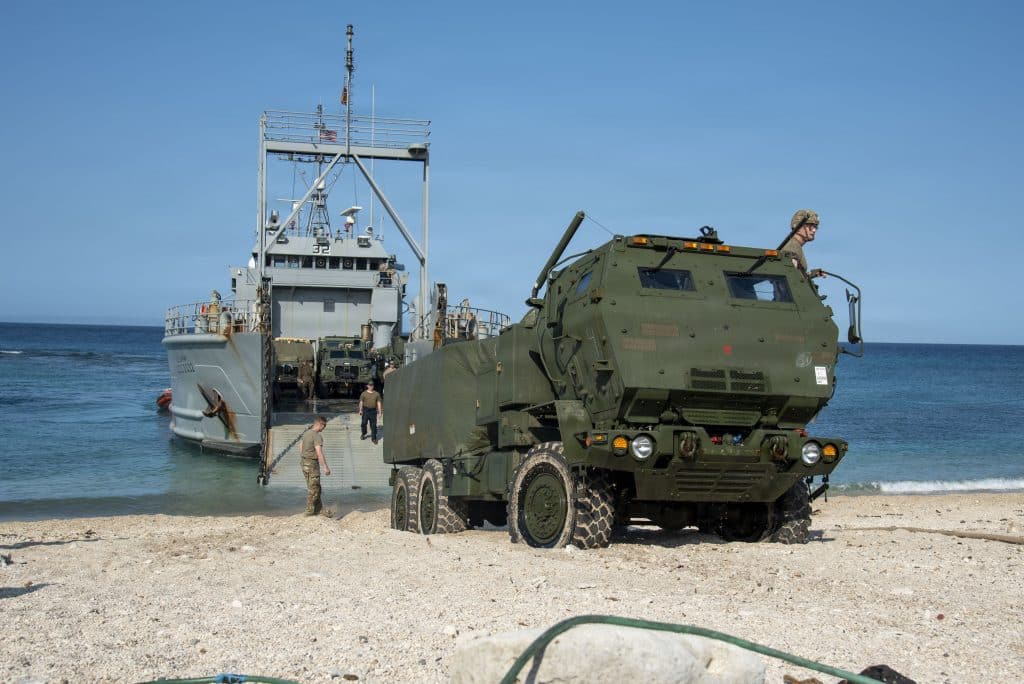
From strategic positioning on austere islands near key maritime chokepoints, Washington seeks to use HIMARS-capable missiles such as PrSM to deny and defeat Beijing’s large fleet in the event of a conflict. Army statements and documents have repeatedly stressed the service’s efforts to complicate People’s Liberation Army efforts against American partners and allies through the deployment of HIMARS.
“These munitions coupled with relevant positions in the Indo-Pacific set conditions for the U.S. Army to provide a highly mobile maritime strike capability in a territorial defense scenario,” Lt. Col. Alex Mullin, commander of the 1st Multi-Domain Task Force’s Long-Range Fires Battalion, said in a press release covering the potential of future PrSM-equipped HIMARS in a U.S.-Philippine alliance contingency.
While American forces have yet to widely field these missiles, Marines and Army troops have practiced for years on the deployment of their launchers for maritime strike roles. A U.S. Army HIMARS crew at the 2024 Asia Defense and Security exhibition highlighted that while their current capabilites allowed for precision strike against tradional ground-based targets, a new capability was needed to permit the proper targeting of vessels.
