

Defense Feeds, Arlington – The U.S. Navy has launched a dedicated effort to field affordable hypersonic strike capability across its surface fleet.
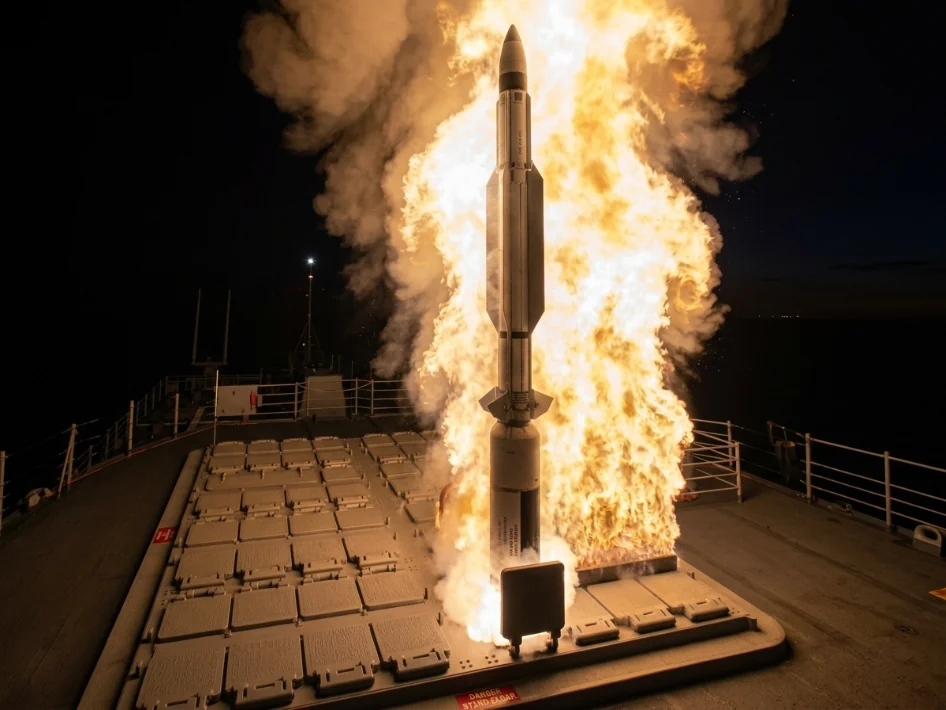
The service unveiled its Flight Advancement of Structures for Hypersonics program this week, aiming to prove “surface-launched, tactical-range, hypersonic strike capability” that can be fielded in Mark 41 VLS cells and Virginia-class Payload Module cells.
The U.S. Navy Mk 41 hypersonic weapons initiative represents the service’s first dedicated effort to field tactical-range hypersonic strike systems on surface ships since the SM-6 Block IB program paused last year.
The FLASH program takes a fundamentally different approach than previous hypersonic initiatives. Rather than pursuing exquisite, highly specialized systems, the Navy is targeting high-technology readiness level products that leverage thermal protection materials, demonstrable flight test products and proven command-and-control mission systems.
The focus centers on “tactically relevant range, low cost, hypersonic capability via advanced aerodynamics, control techniques and resulting relaxed reliance on exquisite materials. Current hypersonic efforts concentrate around the Zumwalt-class Conventional Prompt Strike weapon, which requires specialized launch tubes found only on three Zumwalt-class hulls.
Those specialized ships currently undergo complex refits before relocating to Pearl Harbor for Indo-Pacific operations.
The U.S. Navy Mk 41 hypersonic weapons approach solves this constraint by integrating boost-glide systems into existing Mark 41 VLS cells already prevalent across Navy assets. Ships can receive hypersonic strike capability without extensive refits or extended dry-dock periods.
Affordable Integration and Technical Approach
The FLASH program directly addresses vehicle structural performance, aerodynamic design, thermal protection and controllability while maintaining affordability. The initiative will assess compatibility with the Vertical Launch System and Virginia Payload Module, ensuring seamless integration without platform modifications. This modular approach means existing vessels can receive hypersonic strike capability relatively quickly.
The U.S. Navy Mk 41 hypersonic weapons program belongs to a broader category of Innovative Naval Prototype efforts designed to mature high-risk, high-payoff technologies that can transform surface fleet capability.
The service is already playing catch-up in growing competition to field long-range strike weapons against the PLA Navy. The FLASH INP will “design, develop, manufacture and flight test a number of prototype vehicles to inform decisions” about moving forward in that strategic competition.
Rear Admiral Derek Trinque emphasized the importance of maximizing vertical launcher potential during the Surface Navy Association’s National Symposium. “We have to continue building not just better missiles, but finding better ways to use our vertical launchers,” Trinque stated.
“By using up a full-sized propulsion stack, one that takes up an entire VLS cell, I can now have a long-range offensive counter air weapon or another option for hypersonic strike.

Strategic Competition and Industrial Approach
The U.S. Navy Mk 41 hypersonic weapons initiative reflects acknowledgment that American naval forces require enhanced strike reach to maintain operational advantages against peer competitors.
Chinese forces are simultaneously expanding hypersonic ship-killer missile capabilities across submarine platforms and surface vessels. This strategic competition drives urgency in fielding affordable, mass-producible hypersonic systems that can equip numerous platforms.
The service is examining broad range of capabilities and vendors for non-exquisite, mass-producible weapons across multiple programs. Addition of surface and submarine-launched affordable hypersonic weapons represents new emphasis within the Navy’s modernization strategy.
Unlike previous hypersonic efforts that emphasized technological perfection, the Navy Mk 41 approach prioritizes affordability, producibility and rapid integration into existing platforms.
The Navy Modular Missile program complements FLASH initiatives by focusing on standardized missile architecture that maximizes vertical launcher utilization. This philosophy drives design efficiency, reduces development risk and enables rapid capability insertion across the fleet. Multiple hypersonic strike systems in development represent hedged approach to ensuring at least one program achieves operational maturity.

Operational Impact and Fleet Readiness
Once validated, U.S. Navy Mk 41 hypersonic weapons capability could transform surface ship lethality across the fleet. Current destroyers and cruisers equipped with Mark 41 VLS cells could receive hypersonic strike capability without major modifications. That distributed capability across numerous hulls provides strategic flexibility and increases overall fleet strike power significantly.
The FLASH program addresses critical gap in current naval strike architecture. Ships currently lack true long-range, hypersonic offensive capability. Fielding affordable boost-glide systems in standard VLS cells eliminates that vulnerability and provides surface combatants with weapons matching emerging threats.
This capability becomes particularly important in Indo-Pacific operations where extended ranges matter enormously.
The U.S. Navy Mk 41 hypersonic weapons program represents calculated investment in affordable mass-production capability rather than pursuit of singular exquisite weapon system. That strategy provides greater flexibility, supports distributed fleet operations and enables rapid fielding across numerous platforms.
