

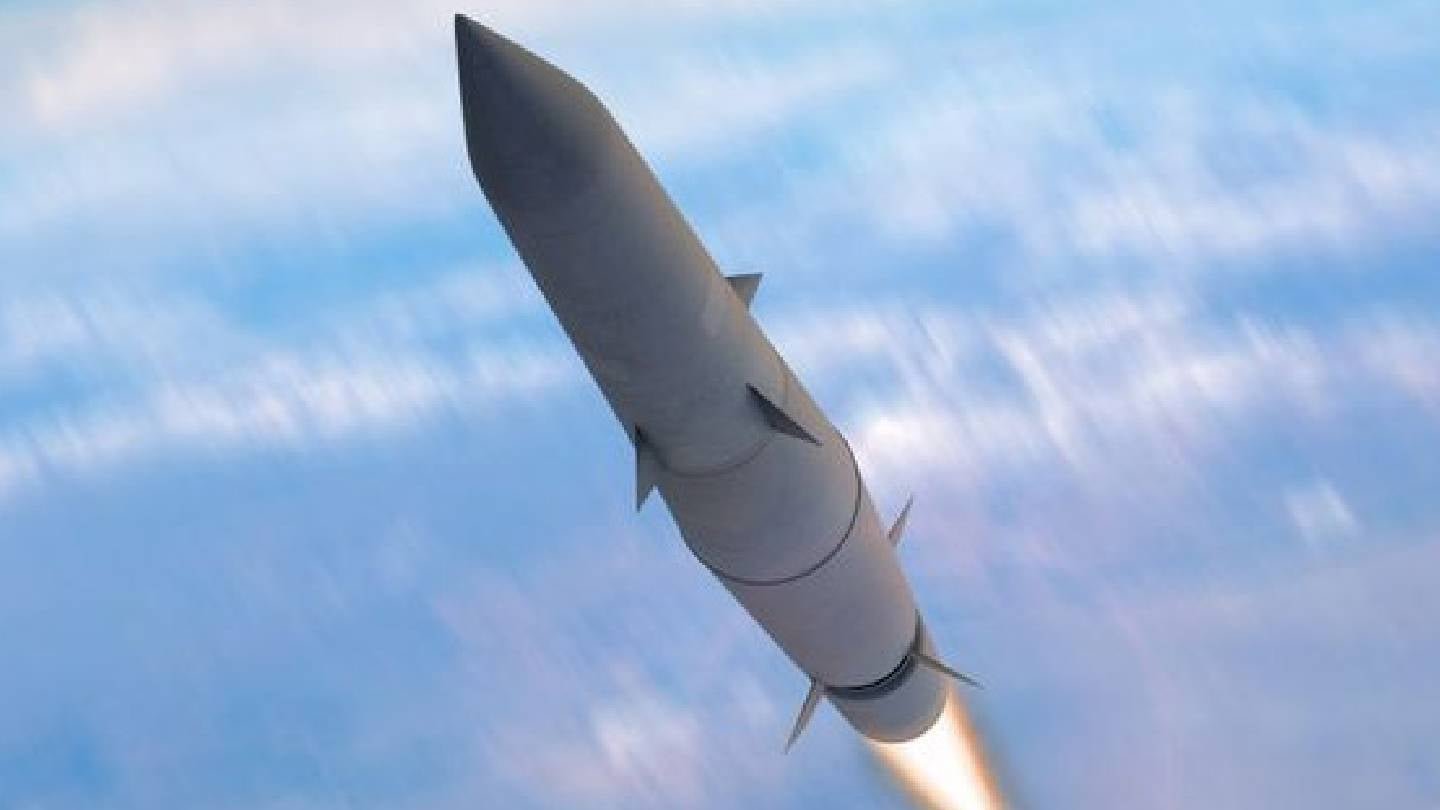
Northrop Grumman has received an additional $475.3m from the Missile Defense Agency (MDA) to accelerate development of its Glide Phase Interceptor (GPI).
With this modification, the total value of the GPI programme rises to just over $1.3 billion.

Discover B2B Marketing That Performs
Combine business intelligence and editorial excellence to reach engaged professionals across 36 leading media platforms.
Awarded under the Prototype Project Other Transaction Agreement, the contract aims to advance the programme with an expedited timetable, targeting a Preliminary Design Review by 2028.
The latest funding will support further critical flight tests intended to reduce technical risks and refine the interceptor’s design.
The programme also seeks to develop additional launch options to facilitate integration with future national defence structures and extend multi-mission capabilities for operational flexibility and cost-effectiveness.
The project’s completion is estimated for June 2028, according to the MDA, which manages the contract from its offices in Dahlgren, Virginia.
Northrop Grumman launch and exploration vice president and general manager Wendy Williams said: “Northrop Grumman is moving with speed to streamline and deliver a first-of-a-kind countermeasure against hypersonic threats. This award underscores the critical need for missile defence technologies, which Northrop Grumman is uniquely equipped to provide.”
The Glide Phase Interceptor (GPI) forms part of the US layered missile defence strategy, designed to detect, track, and engage hypersonic threats during their glide phase while integrating into the Missile Defense Agency’s broader missile defence system.
Northrop Grumman said that its team continues to validate GPI design through testing including simulation of extreme temperature conditions and trials of interstage separation mechanisms.
The company’s engineers are also integrating the GPI with the Aegis Weapon System to ensure compatibility within the MDA’s broader missile defence architecture, geared toward confronting regional hypersonic dangers.

