

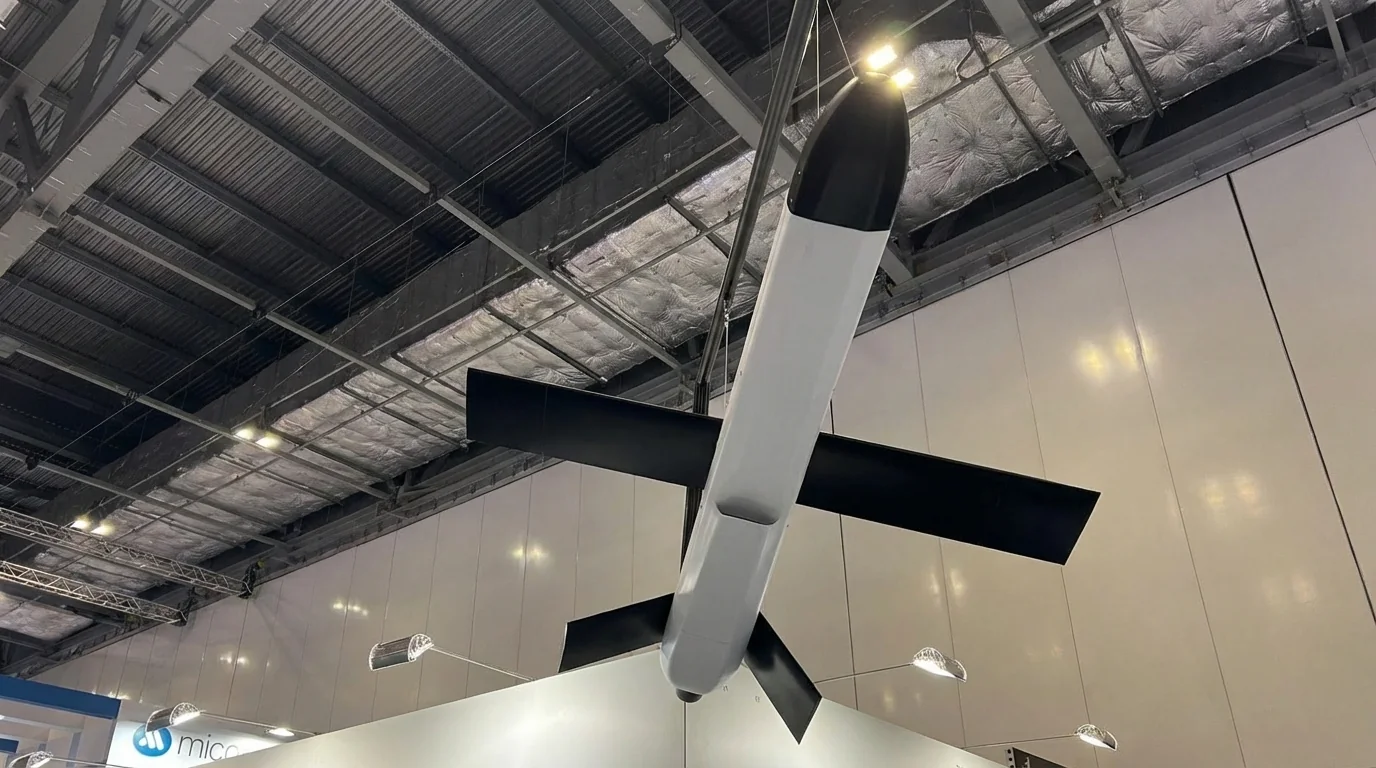
Defense Feeds, London — UK Skyhammer anti-drone interceptor procurement was announced by Defence Secretary John Healey at the London Defence Conference as part of accelerated defense contracting with innovative British firms.
Cambridge Aerospace will supply the Skyhammer system and associated launchers to UK forces and Gulf partners. Initial deliveries are expected as early as May 2026, subject to final contract agreement.
The missile represents a strategic shift toward affordable, mass-producible counter-drone systems addressing threats from Iranian-designed Shahed drones and coordinated drone swarms.
The UK Skyhammer anti-drone interceptor features a reported range of approximately 30 kilometers and maximum speed around 700 kilometers per hour. The procurement reflects lessons learned from recent conflicts in Ukraine and the Middle East demanding rapid air defense solutions.
Affordable Mass Air Defense Strategy
UK Skyhammer anti-drone interceptor design prioritizes cost-effective interception against large volumes of low-cost drones rather than expensive single-target systems.
Cambridge Aerospace CEO Steven Barrett emphasized that Skyhammer brings “affordable mass to protect our skies” through rapid deployment and streamlined procurement. The system addresses the growing asymmetry between expensive air defense missiles and inexpensive unmanned threats.
The first tranche of missiles and launchers will arrive within weeks, with additional deliveries planned over the following six months.
The Ministry of Defence contract includes integration support, technical training, and operational guidance for UK forces and Gulf allies. The procurement is expected to support over 175 jobs at Cambridge Aerospace, creating approximately 50 new positions.

Strategic Impact on Allied Air Defence
UK Skyhammer anti-drone interceptor procurement strengthens Britain’s counter-drone capabilities while supporting Gulf partners facing escalating Iranian drone threats.
The system complements existing air defense architectures by providing rapid-response capability against unmanned aerial vehicles at operational ranges. British innovation in defense technology demonstrates industrial capacity to field solutions faster than traditional procurement timelines.
The announcement reflects government commitment to accelerating contracts with smaller, innovative firms demonstrating rapid delivery capability. This procurement approach enables faster adaptation to emerging drone threats compared to legacy air defense systems.
UK forces and allied nations gain affordable defensive options addressing drone swarms that would overwhelm traditional point-defense systems.

Operational Deployment and Future Expansion
UK Skyhammer anti-drone interceptor integration into air defense networks provides layered protection for critical infrastructure and forward-deployed military assets.
The system operates autonomously or under integrated command guidance from centralized fire control centers. Gulf partners benefit from the cost-effective approach enabling broader geographic coverage than expensive legacy systems.
Future procurement phases may expand production capacity beyond current delivery schedules. The success of Cambridge Aerospace in rapid system fielding establishes precedent for innovation-focused procurement within the UK Ministry of Defence. Integration with existing air defense networks enables seamless operational employment without extensive infrastructure modifications.
Skyhammer production injects new momentum into Britain’s defence industrial base, anchoring high-value work in the Cambridge technology corridor.
The contract secures more than 175 existing jobs at Cambridge Aerospace while creating around 50 additional specialist roles in engineering, integration, and support. This sustained workload helps preserve critical skills and manufacturing capacity that can be leveraged for future air defence and counter-drone programmes.
By choosing a homegrown start-up for a frontline capability, London is signalling confidence in British innovation as a driver of both security and export growth. Gulf partners gain access to a combat-relevant counter-drone solution while deepening industrial and operational ties with the UK.
As Skyhammer deployments expand, shared training, support, and technology transfer could reinforce Britain’s position as a preferred supplier for affordable air defence across the region.
Beyond immediate operational gains, the programme creates a reference case for fast-track procurement with smaller firms that can iterate and deliver at speed. Follow-on orders, export licences, and potential co-production deals would channel additional investment into the UK supply chain.
In the longer term, Skyhammer could act as a springboard for a broader family of British-made counter-drone systems, sustaining jobs and know-how while widening the country’s defence export portfolio.
