

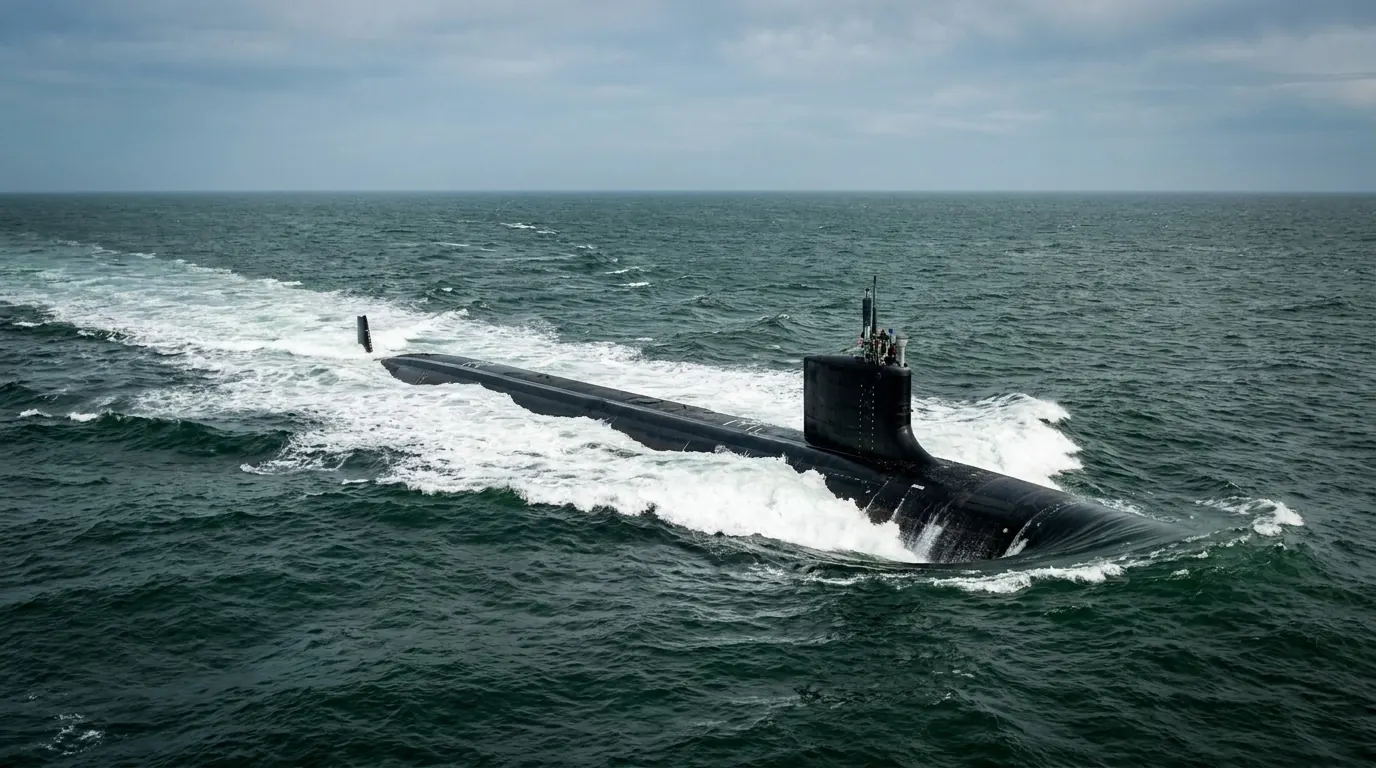
Imagine spending weeks beneath the ocean, moving through thousands of tons of seawater while trying to make almost no sound. You can’t see your opponent. Your opponent can’t see you. And in many cases, the first side to detect the other may already have the advantage.
That is the strange world of the most advanced submarine designs.
Modern attack submarines are no longer simply underwater hunters carrying torpedoes. They are floating sensor networks, missile platforms, intelligence-gathering stations, and special-operations vehicles rolled into one remarkably quiet machine. The latest designs combine nuclear propulsion, sophisticated sonar, digital sensors, precision weapons, and technologies intended to reduce their acoustic signature.
The U.S. Navy, for example, describes the Virginia class as its most advanced attack submarine, highlighting its combination of stealth, firepower, maneuverability, and multi-mission capability. Meanwhile, the Royal Navy calls its Astute-class the largest, most advanced, and most powerful attack submarine class it has operated.
But here’s the catch: there is no official global scoreboard for submarine technology. Some of the most important specifications, especially acoustic performance and sensor capabilities, remain classified.
So, which boats deserve a place among the 5 most advanced submarines in the world?
This ranking focuses on publicly available evidence and weighs stealth, sensors, propulsion, weapons, endurance, and mission flexibility rather than simply counting missiles or measuring speed. The result is a fascinating mix of newer designs and one older submarine class that still refuses to look obsolete.
What Makes a Submarine One of the Most Advanced in the World?
A submarine can be fast, heavily armed, and still fall short of being the most advanced submarine in the world. Underwater warfare doesn’t work like a car race. The winner isn’t necessarily the boat that moves fastest; it’s often the one that can hear first, think first, and remain hidden longest.
That makes submarine technology a balancing act involving several systems that have to work together almost perfectly.
Stealth Comes First
For a modern nuclear attack submarine, noise is the enemy. Pumps, machinery, water flow, and propulsion can all create acoustic signatures that another submarine may detect.
Designers therefore use techniques such as machinery isolation, specialized hull coatings, and quieter propulsion systems to reduce what reaches the surrounding water.
Pump-jet propulsion is another important development. Rather than exposing conventional propeller blades directly to the water, a pump-jet uses a shrouded rotor arrangement designed to improve efficiency and reduce certain sources of noise, particularly at higher speeds.
Sonar Is the Submarine’s Real Set of Eyes
A submarine may spend much of its patrol unable to see more than a few meters through dark, murky water. Sonar solves that problem.
Modern boats combine multiple arrays and sensors to detect, classify, and track contacts. The Royal Navy’s Astute class, for example, uses Sonar 2076, an integrated system incorporating hull and towed arrays.
This creates an interesting paradox: the best submarine is often the one that knows the most while revealing the least.
Read also: Top 5 Biggest Submarines in the World Ever Built
Firepower Is Only Part of the Equation
Weapons still matter, of course. Modern attack submarines can carry heavyweight torpedoes, land-attack cruise missiles, mines, and other payloads. But flexibility increasingly matters as much as raw weapon count.
The Virginia class illustrates this shift. Its design includes modular architecture, photonics masts, advanced sonar, special-operations facilities, and provisions for future payloads. Later Block V boats add the Virginia Payload Module, giving the class substantially greater payload capacity.
So when we rank the most advanced submarines, the question isn’t simply, “How many missiles can it carry?”
It’s a tougher question: How well can the entire machine sense, hide, adapt, and fight beneath the surface?
1. Virginia-Class Submarine — United States
If you had to pick one platform that best represents where modern underwater warfare is heading, the Virginia-class submarine is a strong place to start. It isn’t simply a nuclear-powered boat with a large weapons room.
The class was designed as a flexible underwater system, one that can hunt submarines, attack surface ships, strike targets ashore, gather intelligence, and support special operations.
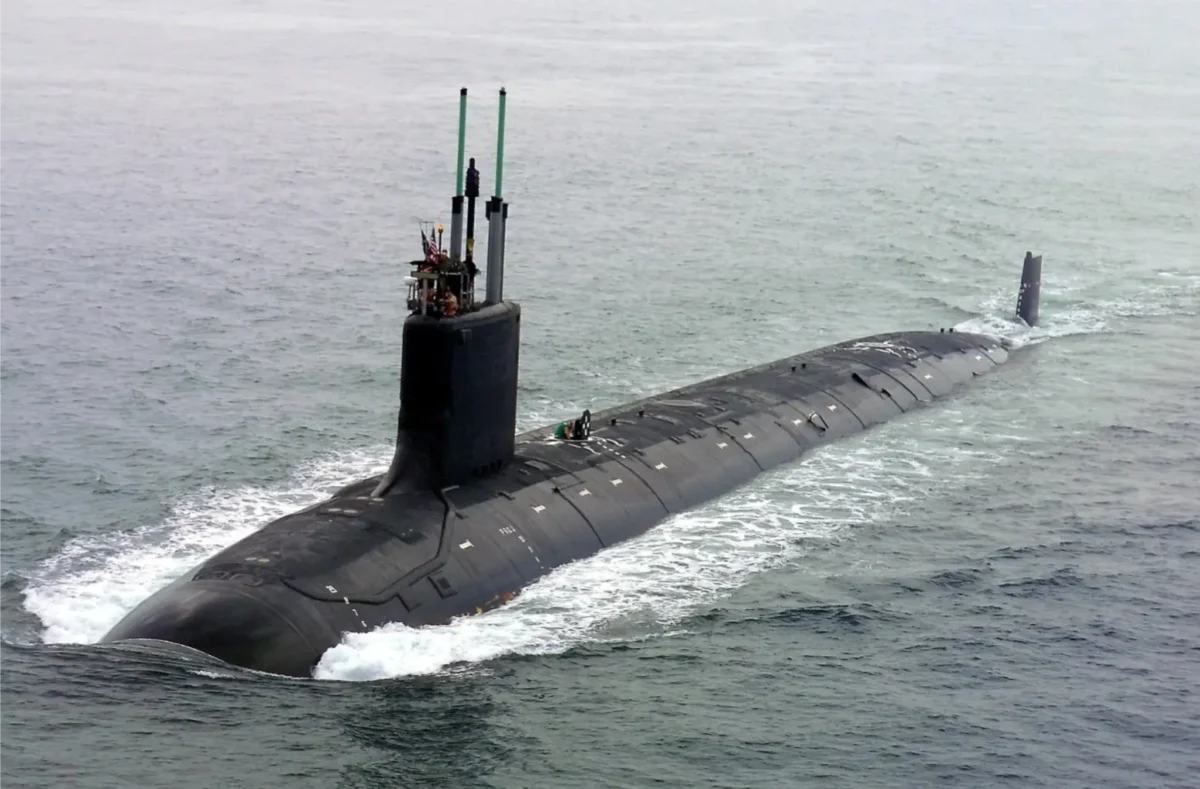
The U.S. Navy currently describes the Virginia class as its next-generation attack submarine and highlights its stealth, endurance, mobility, and payload. As of November 2025, 24 Virginia-class submarines had been commissioned, with additional boats continuing through newer blocks.
Why Virginia Is So Advanced
One of its most interesting features is the use of photonics masts instead of traditional periscopes. Cameras mounted on telescoping masts transmit visible and infrared imagery to displays inside the control room. That seemingly small change allowed the control room to be moved lower inside the hull, giving the crew a different layout and improved situational awareness.
Then there’s the sonar. Later Virginia boats use a Large Aperture Bow array, designed to improve passive detection while reducing some acquisition and lifecycle costs. In submarine warfare, passive detection is especially valuable because listening doesn’t necessarily announce your own position.
The class also keeps evolving. Block V submarines introduce the Virginia Payload Module, adding four large-diameter payload tubes. Each can accommodate seven Tomahawk cruise missiles, potentially raising the missile capacity from 12 to 40 Tomahawks on boats equipped with the module.
That adaptability may be Virginia’s biggest advantage. Its open architecture and modular construction are intended to make future upgrades easier. In other words, the submarine isn’t designed to peak on the day it enters service.
It’s designed to keep changing.
That makes the Virginia-class arguably the strongest, most advanced submarine candidate when stealth, sensors, weapons, endurance, and multi-mission flexibility are considered together.
2. Yasen-M Class — Russia
If the Virginia-class represents the idea of a submarine as a highly adaptable underwater network, the Yasen-M class takes a different route: put an enormous amount of sensing and long-range striking power into one nuclear-powered hull.
That makes Russia’s Project 885M Yasen-M one of the most formidable candidates for the title of most advanced submarine in the world. The class is often described as a hybrid between an attack submarine and a cruise-missile submarine because its design places unusual emphasis on stand-off weapons.
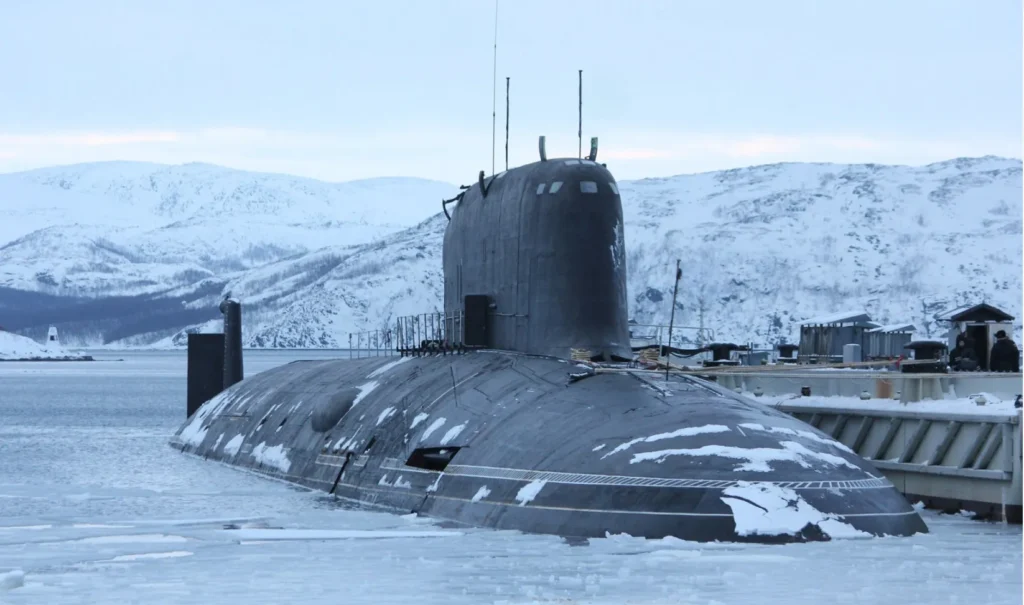
RUSI analysts have noted that the Yasen-M combines reported high levels of quietness with long-range strike capability that exceeds that of many Western counterparts.
A Smaller, More Refined Yasen
The Yasen-M isn’t simply the original Yasen with a new coat of paint. The first Yasen-M, Kazan, is roughly nine meters shorter than the original Severodvinsk. That reduction came alongside significant internal and engineering changes, including a fourth-generation monoblock reactor design.
The result is a more compact submarine that emphasizes reducing machinery-related noise. Its sonar arrangement was also redesigned, with the Yasen-M moving away from the original boat’s large spherical bow arrangement toward a conformal sonar configuration.
Where Yasen-M Really Stands Out
Weapons are the obvious headline.
The class can employ Oniks and Kalibr cruise missiles, while Russian sources have also associated the design with the Tsirkon hypersonic missile. Kazan demonstrated its strike capability during trials by launching an Oniks against a sea target and a Kalibr missile against a land target.
That combination changes how the submarine can be used. It doesn’t necessarily need to approach a target like a traditional torpedo submarine. Instead, it can operate as a concealed launch platform capable of threatening targets at considerable distance.
And that’s the fascinating part: Yasen-M’s sophistication isn’t just about being quiet. It’s about being quiet while carrying a remarkably broad strike package.
Its exact acoustic and sensor performance remains difficult to verify publicly, so claims that it is definitively quieter or better than every Western submarine should be treated cautiously.
Still, the combination of nuclear endurance, advanced sonar, stealth-oriented engineering, and heavy missile capability places Yasen-M firmly among the world’s leading modern submarine designs.
3. Astute-Class Submarine — United Kingdom
The Astute-class submarine takes a different approach to underwater dominance. Instead of making headlines through a huge missile battery, Britain built a hunter-killer designed around stealth, sensing, endurance, and precision. The Royal Navy describes Astute as its largest, most advanced, and most powerful attack-submarine class.
That description isn’t just ceremonial language. At 97 meters long and displacing about 7,400 tonnes, an Astute-class boat is a substantial machine, yet it is designed to disappear into an environment where even a small amount of unwanted noise can become a liability.
Its nuclear propulsion gives it effectively unlimited range, allowing it to remain submerged for long periods without needing to surface for fuel.

The Sensors Are the Real Star
One of Astute’s most important technologies is Sonar 2076, an integrated passive-and-active sonar suite using hull and towed arrays.
Think of it less like a single pair of underwater ears and more like a distributed listening network surrounding the submarine. It feeds information into the boat’s combat-management architecture, helping the crew build a tactical picture from multiple sources.
Astute also abandoned traditional optical periscopes. Instead, it uses high-specification video technology to observe the surface, with imagery brought into the submarine electronically. It’s a small visual clue to a much larger design philosophy: replace mechanical processes with integrated digital systems wherever possible.
Quiet, Then Precise
The submarine can carry a mixture of Tomahawk land-attack cruise missiles and Spearfish heavyweight torpedoes, giving it the ability to engage land targets, surface vessels, and other submarines. The Royal Navy lists a maximum weapons load of up to 38 weapons.
What makes Astute especially interesting is the balance. It isn’t built around one spectacular statistic. Its strength comes from combining stealth, sonar, endurance, communications, and weapons into a single multi-mission platform.
That balance is exactly why the Astute class deserves a place among the most advanced submarines in the world.
4. Barracuda-Class Submarine — France
France’s Barracuda-class submarine, officially known as the Suffren class, is a good example of how a modern submarine can be advanced without chasing every headline statistic. Its designers focused on something more useful: making one relatively compact nuclear-powered boat capable of performing a surprisingly wide range of missions.
The French Ministry of Armed Forces lists the Suffren class at about 99 meters long, with a submerged displacement of roughly 5,200 tonnes and a submerged speed of around 25 knots.
More importantly, it combines nuclear propulsion with low acoustic emissions, advanced underwater detection, long endurance, and multiple weapon types.

Small Hull, Big Mission Set
The Barracuda’s design is particularly interesting because its nuclear propulsion isn’t there simply to provide speed. It gives the submarine the endurance needed for prolonged deployments while its electric propulsion arrangement helps support quiet underwater operations.
Its sensor suite includes a bow sonar, flank arrays, a very-low-frequency towed listening array, and a mine-avoidance sonar. That combination gives the crew several ways to build an underwater picture rather than depending on a single sensor.
Then comes the weapons package.
A Suffren-class submarine can employ F21 heavyweight torpedoes, SM39 Exocet anti-ship missiles, and France’s MdCN naval cruise missile. The latter is particularly significant because it gives the French Navy a submarine-launched land-attack capability reaching targets hundreds of kilometers away.
Built for More Than Hunting Ships
The Barracuda can also support special forces, conduct intelligence missions, escort high-value naval units, and perform anti-submarine warfare. Its optronic mast replaces a traditional telescopic mast, while centralized and automated control systems reduce the amount of machinery traditionally needed to operate the submarine.
And the program is becoming operational reality rather than merely an impressive specification sheet. By 2026, the first three Suffren-class boats had entered active service, while the fourth, De Grasse, began sea trials in February 2026.
That blend of stealth, sensing, endurance, precision strike, and special-operations capability earns the Barracuda a well-deserved place among the most advanced submarines in the world.
5. Seawolf-Class Submarine — United States
The Seawolf-class submarine is the odd one out on this list. It entered service in the late 1990s, long before the newest Virginia, Yasen-M, and Barracuda boats appeared. Yet writing it off as an old submarine would be a mistake.
Seawolf was conceived during the Cold War as an exceptionally capable hunter-killer, and many of the engineering decisions behind it were deliberately uncompromising.
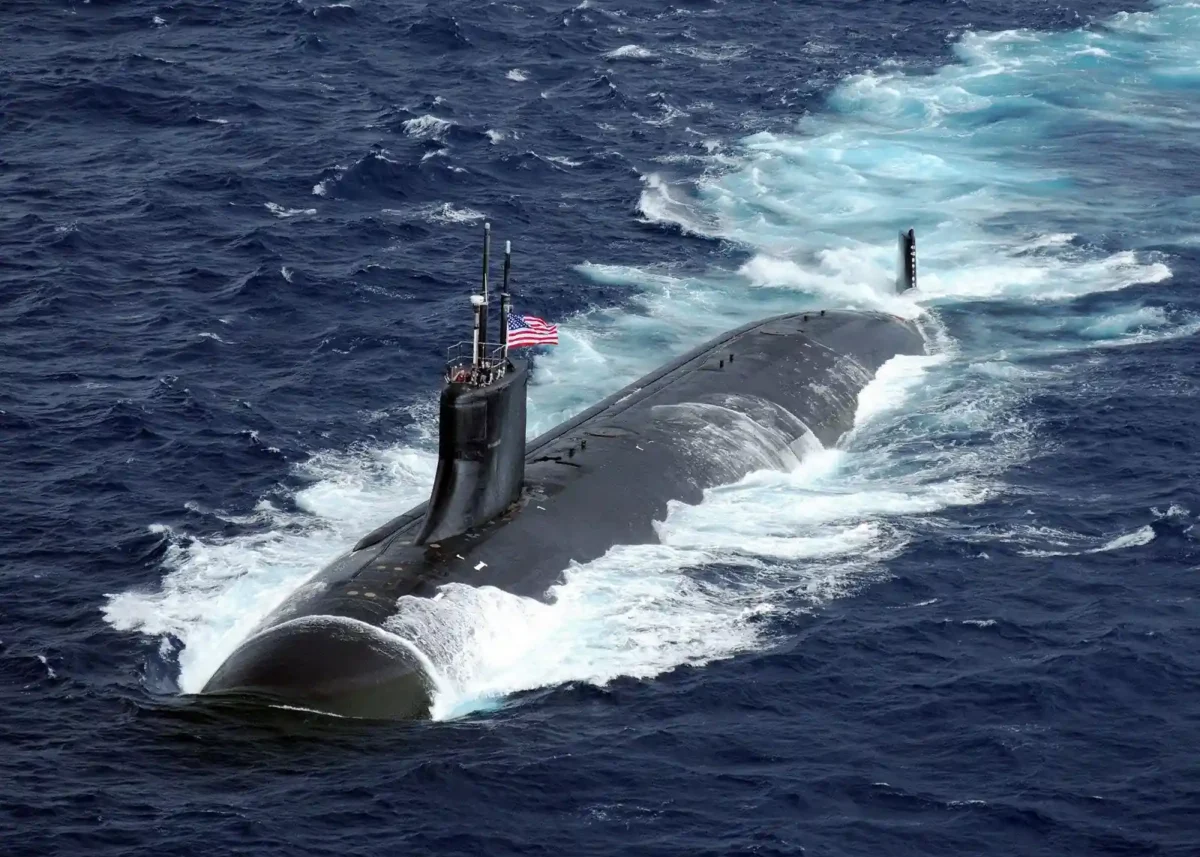
The U.S. Navy describes the class as exceptionally quiet, fast, well-armed, and equipped with advanced sensors. Only three were ultimately built: USS Seawolf, USS Connecticut, and USS Jimmy Carter.
Built Without Much Compromise
The numbers tell part of the story. A standard Seawolf-class submarine measures about 107.6 meters long, displaces roughly 9,284 metric tons submerged, and can exceed 25 knots. Its eight torpedo tubes can support a weapons load of up to 50 weapons in the torpedo room.
But raw numbers aren’t the interesting part.
The class was engineered around quiet operation across a broad speed range. U.S. naval nuclear-propulsion documentation notes that the high-power-density propulsion plant developed for Seawolf could operate quietly across its speed range, with technologies later applied to subsequent generations of nuclear-powered warships.
That makes Seawolf less like an outdated sports car and more like an unusually sophisticated prototype that happened to enter fleet service.
Then There Is USS Jimmy Carter
The third boat, USS Jimmy Carter, is something of a category of its own. Its hull was extended by approximately 100 feet to create a Multi-Mission Platform. The additional space provides access for specialized payloads, sensors, and other systems that conventional torpedo or vertical-launch tubes cannot accommodate.
Much of what makes Jimmy Carter unusual remains classified, so it’s better not to fill the gaps with speculation.
And that’s precisely why Seawolf still belongs in this conversation. It may not be the newest most advanced submarine, but its combination of speed, stealth, sensors, weapons capacity, and specialized technology remains formidable decades after its commissioning.
Sometimes, advanced engineering ages surprisingly well.
Which Is the Most Advanced Submarine in the World?
So, after looking at five very different machines, which one deserves the title of most advanced submarine in the world?
The best answer is the Virginia class, particularly the newest Block V boats. That doesn’t mean Virginia is superior in every single category. Submarine warfare is far too complicated for such a clean victory. Instead, Virginia earns the top spot because it brings together an unusually broad package of stealth, sensors, weapons, endurance, and mission flexibility.
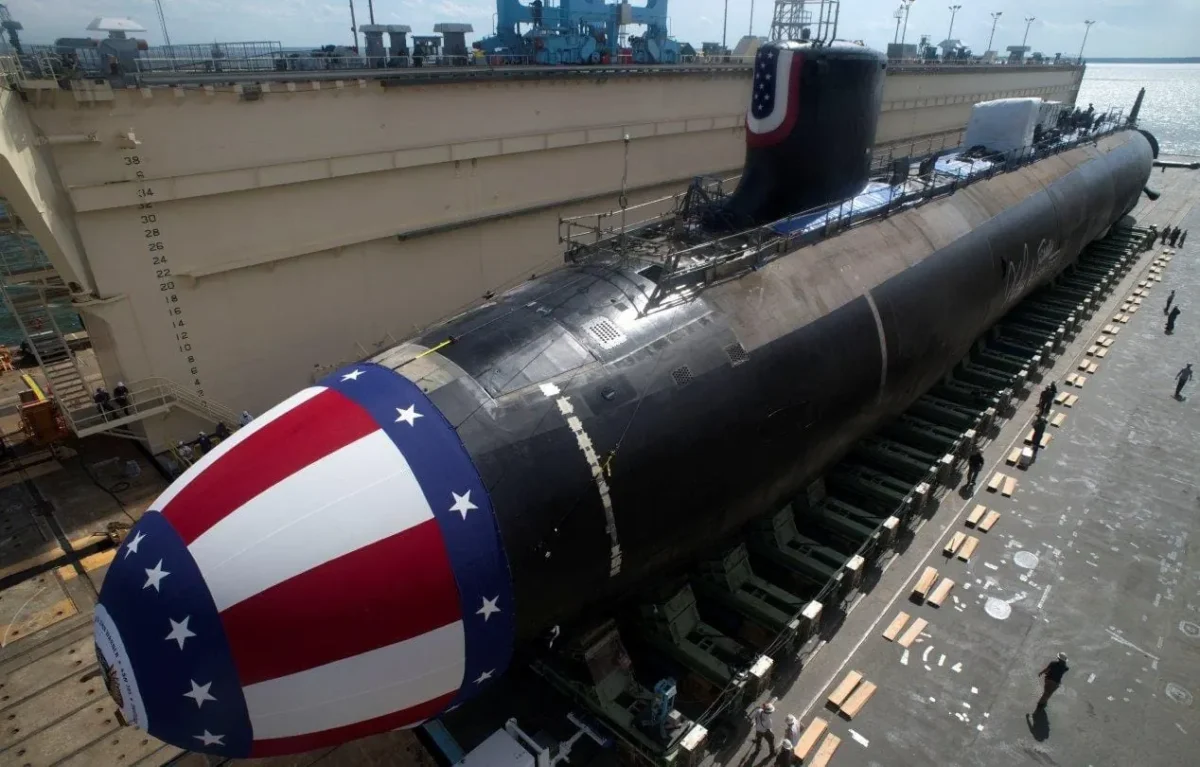
The U.S. Navy describes the Virginia class as a multi-mission nuclear-powered attack submarine designed for anti-submarine and anti-surface warfare, special operations, intelligence collection, and land attack. Its later Block V boats also introduce the Virginia Payload Module, expanding the class’s ability to carry large payloads.
That versatility matters more than it might seem.
Think of the submarine as a smartphone rather than a single-purpose tool. A specialized platform may outperform it at one task, but the Virginia can switch between missions without fundamentally changing what it is. One patrol could involve hunting another submarine; another could focus on intelligence gathering or supporting special operations.
The competition is close, though.
Yasen-M has an especially formidable long-range strike portfolio. Astute is a standout in stealth, sonar, and underwater surveillance, with the Royal Navy describing the class as its most advanced and powerful attack submarines.
Barracuda offers France a remarkably versatile modern nuclear attack submarine, while Seawolf remains impressive because of how aggressively its original design pursued speed, quietness, and undersea combat performance.
So Virginia isn’t the “winner” because it has the biggest missile magazine or the fastest published speed.
It wins because modern submarine warfare increasingly rewards integration, the ability to sense, communicate, maneuver, strike, and adapt while staying difficult to find.
And beneath the ocean, that combination can be worth more than any single impressive statistic.
